
Ed Cooley Water Bottle Incident Raises Questions About Liability and Discipline What the Law Says Could Happen Next
Georgetown men’s basketball coach Ed Cooley threw a water bottle into the stands after a December 21, 2024 loss to Xavier, striking a child who was being held by his mother. Georgetown suspended Cooley for one game, and the incident raises questions about assault, battery, and coach accountability in collegiate sports.
What Happened During the Incident
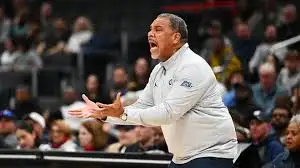
After Malik Mack missed a game-tying 3-pointer at the buzzer in Georgetown’s 80-77 loss to Xavier on Saturday, Cooley squeezed a water bottle and hurled it toward the stands. The bottle struck a child who was being held by a woman sitting a few rows behind the team’s bench.
Video evidence captured the incident at Capital One Arena in Washington, DC. The 56-year-old Cooley chucked what appeared to be a plastic water bottle into the stands immediately after the final buzzer sounded.
Immediate Response and Consequences
Cooley apologized at a news conference after the game, saying he was “really frustrated and realized I threw my water bottle, and it hit (him) and his mom”. He acknowledged the behavior was “definitely out of character to be so frustrated, but really that’s not called for”.
Georgetown athletic director Lee Reed met with Cooley and issued a one-game suspension. Reed stated that Cooley’s “conduct did not align with the standards we expect of our coaches, nor does it reflect the values of Georgetown Athletics or Georgetown University”.
Associate head coach Jeff Battle led the squad against Coppin State during Cooley’s absence. The Big East Conference supported Georgetown’s decision, emphasizing that “the safety and security of spectators and participants at Big East events is of paramount importance”.
Key Parties Involved
Ed Cooley: The 56-year-old Georgetown head coach is in his third season with the Hoyas after spending 12 years at Providence. He has a 35-43 record at Georgetown, including an 11-31 mark in Big East play.
The Nyahkoon Family: Cooley specifically apologized to the Nyahkoon family in his statement, noting he has “known them for years and regard as my own family”. The family has not publicly indicated any plans for legal action.
Related article: Hoka UK Class Action Lawsuit, Competition Tribunal Ruling on Price-Fixing & What UK Consumers Need to Know
Legal Implications: Assault and Battery Analysis
Potential Criminal Charges
Throwing an object at another person can constitute assault or battery under criminal law. Assault involves causing apprehension of harmful contact or attempting to cause injury, while battery involves actual physical contact.
If you throw something at someone, you could be charged with assault. The distinction matters: battery involves direct, physical, violent contact and using objects to strike someone counts as battery as well, even if you throw it from a long distance.
In this case, the water bottle made physical contact with the child, which could technically satisfy the elements of battery. However, any blow struck in anger or which is intended or likely to do bodily harm is a criminal assault, and prosecutors must consider whether there was intent to cause harm.
The Intent Question
Intent is crucial in determining whether criminal charges are appropriate. Cooley’s immediate apology and description of the incident as occurring in frustration, rather than deliberate targeting, affects the legal analysis.
A central issue is whether the degree of force used exceeds that which could be anticipated. Unlike sports violence between players where consent to some level of contact exists, spectators do not consent to being struck by objects thrown by coaches or players.
Why No Criminal Charges Have Been Filed
Several factors explain the absence of criminal prosecution:
- Lack of Intent to Harm: Cooley’s actions appear to have been reckless rather than intentionally aimed at harming anyone. The throw was directed generally toward the stands in frustration, not specifically at the child.
- No Serious Injury Reported: There have been no reports of the child suffering significant injuries requiring medical attention.
- Immediate Accountability: Georgetown’s swift disciplinary action and Cooley’s immediate apology demonstrate accountability without requiring criminal intervention.
- Victim’s Position: The Nyahkoon family appears to have accepted Cooley’s apology, and there are no reports of them seeking criminal charges or civil action.
Civil Liability Considerations
Even without criminal charges, Cooley and Georgetown could face civil liability through a personal injury lawsuit. The elements for civil battery include:
- Unlawful contact: The water bottle struck the child
- Lack of consent: The child and family did not consent to being struck
- Resulting harm: Any injury, even emotional distress, could support damages
Injured parties may pursue civil claims for damages, including medical expenses, lost wages, and pain and suffering. However, civil action seems unlikely given the family’s relationship with Cooley and apparent acceptance of his apology.
Protected Status of Spectators
Unlike sports violence between players, where participants consent to some physical contact, spectators have no such implied consent. A person who agrees to play a particular sport acknowledges and agrees to certain forms of bodily contact, usually within the defined rules of the sport, but this protection does not extend to fans in the stands.
Precedents in Sports Incidents
Similar Coach Misconduct Cases
While player-on-player violence has occasionally resulted in criminal charges—particularly in hockey—incidents involving coaches throwing objects at spectators are relatively rare in recent collegiate sports history.
In 1988, Dino Ciccarelli became the first National Hockey League player to receive jail time for hitting another player with his hockey stick. Marty McSorley was convicted of assault in 2000 and given an 18-month conditional discharge for striking another player with his stick.
These cases differ significantly from Cooley’s situation because they involved deliberate, targeted violence against other players during competition. Cooley’s incident involved reckless conduct directed toward spectators in frustration, not intentional violence.
Cooley’s Prior Incident
Last season, after Georgetown lost to Xavier, Cooley engaged in a heated argument with an Xavier fan who allegedly accosted one of his players after the final buzzer. That incident did not result in physical contact but demonstrates a pattern of losing composure after losses to Xavier.
Standards for Coach Conduct
University and Conference Expectations
Georgetown’s athletic director explicitly stated that Cooley’s conduct “did not align with the standards we expect of our coaches”. Universities hold coaches to high behavioral standards because they serve as role models for student-athletes and represent the institution publicly.
Big East Conference Position
The Big East Conference emphasized that “the safety and security of spectators and participants at Big East events is of paramount importance and fundamental to the enjoyment of our games”. This statement reinforces that protecting spectators is a priority that supersedes game-day emotions.
NCAA Regulations
The NCAA expects coaches to maintain professionalism and sportsmanship. While the NCAA has not publicly commented on this specific incident, conduct detrimental to the sport can result in additional sanctions beyond what individual institutions impose.
Implications for Coach Accountability
Institutional Response
Georgetown’s response demonstrates how universities balance accountability with proportionality. A one-game suspension acknowledges serious misconduct while recognizing the incident as aberrational behavior rather than a pattern of dangerous conduct.
The swift action—announced the day after the incident—shows institutions can respond decisively to protect spectator safety while maintaining due process for employees.
Broader Impact on Coaching Standards
This incident reinforces that coaches are held accountable for actions that endanger spectators, regardless of game context or emotional state. The suspension sends a clear message that frustration over game outcomes never justifies actions that compromise public safety.
Spectator Safety Considerations
The incident highlights venue security concerns. While arenas implement security measures to prevent fan misconduct, protecting spectators from coaches and players throwing objects requires enforcing conduct standards through swift discipline.
Current Status
Cooley returned to coaching after serving his one-game suspension. He has publicly taken responsibility for his actions and expressed commitment to ensuring such behavior never recurs.
No criminal charges have been filed, and no civil lawsuit has been announced. The Nyahkoon family has not made public statements beyond accepting Cooley’s apology.
Key Takeaways
- Throwing objects at spectators constitutes potential assault or battery, even when done in frustration rather than with intent to harm a specific person.
- Criminal prosecution remains unlikely without evidence of intent to harm, serious injury, or victim complaint.
- Swift institutional discipline can address misconduct effectively without criminal intervention.
- Coaches are held to high conduct standards that prohibit actions endangering spectators, regardless of game circumstances.
- The absence of criminal charges does not mean conduct was legal—it reflects prosecutorial discretion based on intent, harm, and circumstances.
The Ed Cooley water bottle incident serves as a reminder that coaches’ responsibilities extend beyond winning games to maintaining professional conduct that ensures spectator safety. While criminal charges were not filed, the incident demonstrates that institutions will act swiftly to address conduct that falls below expected standards, protecting both the public and the integrity of collegiate athletics.
About the Author

Sarah Klein, JD, is a licensed attorney and legal content strategist with over 12 years of experience across civil, criminal, family, and regulatory law. At All About Lawyer, she covers a wide range of legal topics — from high-profile lawsuits and courtroom stories to state traffic laws and everyday legal questions — all with a focus on accuracy, clarity, and public understanding.
Her writing blends real legal insight with plain-English explanations, helping readers stay informed and legally aware.
Read more about Sarah