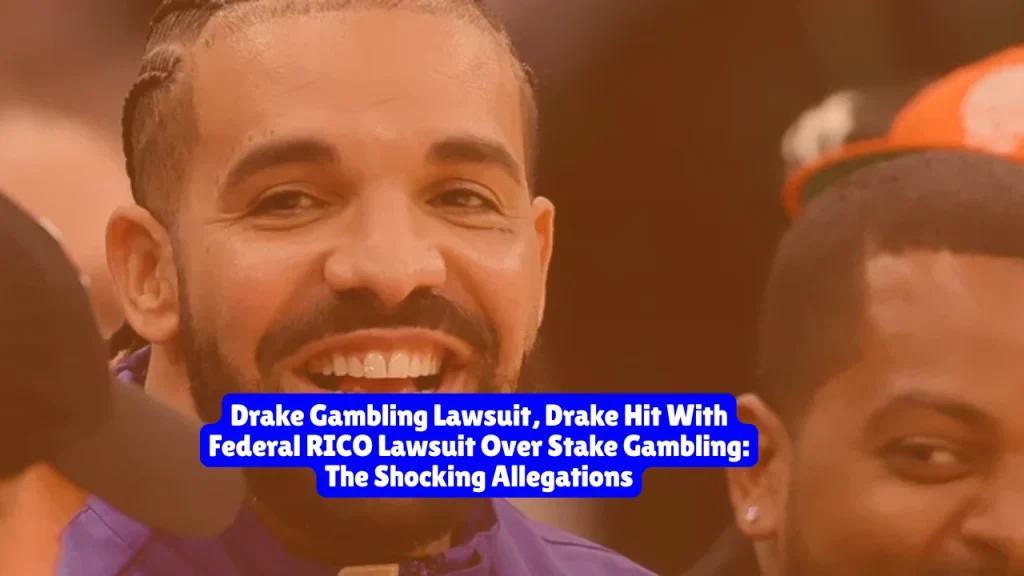
Drake Stake Gambling Lawsuit, Drake Hit With Federal RICO Lawsuit Over Stake Gambling The Shocking Allegations
Drake is facing a federal racketeering lawsuit filed on New Year’s Eve 2025, accusing him of promoting illegal gambling on Stake.us and using casino money to artificially boost his music streaming numbers. Two Virginia users, LaShawnna Ridley and Tiffany Hines, filed the lawsuit seeking at least $5 million in damages—potentially tripled under RICO law—claiming Drake, streamer Adin Ross, and Stake.us ran an illegal gambling operation disguised as a harmless “social casino.”
What Is the Drake Lawsuit About?
The lawsuit landed in U.S. District Court for the Eastern District of Virginia on December 31, 2025—case number 1:25-cv-02511. The timing wasn’t accidental. Just days earlier, Drake posted on social media showing off a new $1 million balance on his Stake.com account, asking fans if they were “back” together after a public falling out with the platform.
The complaint tells a different story than Drake’s glamorous gambling streams. It claims Stake.us has been running an illegal online casino since 2022 by masquerading as a “social casino” that doesn’t involve real money gambling. That label matters because social casinos avoid the strict regulations that protect consumers from gambling addiction and financial ruin.
But according to the lawsuit, Stake.us crossed the line. Users could buy virtual currency called “Gold Coins,” which came bundled with “Stake Cash”—a second currency that could be wagered on casino games and cashed out for real money. The lawsuit argues this dual-currency system turned Stake.us into a “vehicle for real-money gambling” that deliberately misled consumers about what they were actually doing.
The RICO Charges: What Makes This Lawsuit Different
This isn’t just another celebrity endorsement dispute. The plaintiffs filed under the Racketeer Influenced and Corrupt Organizations Act—the same federal law used to prosecute organized crime.
RICO allows for triple damages if plaintiffs prove the defendants engaged in a pattern of racketeering activity. That means the $5 million the plaintiffs are seeking could balloon to $15 million if they win.
The lawsuit alleges Drake, Ross, and Australian national George Nguyen formed an “enterprise” that used Stake.us to facilitate illegal gambling while concealing how money moved through the platform. The RICO claims rest on allegations that the defendants violated federal laws against illegal gambling operations and used Stake.us as an unlicensed money transmitter.
The Streaming Fraud Allegations
Here’s where the lawsuit gets truly wild. The complaint alleges Drake didn’t just promote Stake.us—he used money from the platform to manipulate his music streaming numbers on Spotify and other platforms.
According to the filing, Drake, Ross, and Nguyen used Stake.us’s “Tipping” feature to transfer money between themselves. The lawsuit describes this tipping program as an “unlimited and wholly unregulated money transmitter that appears to exist outside the oversight of any financial regulator.”
The complaint claims these transfers funded “bot farms” that artificially inflated Drake’s play counts to “fabricate popularity” and “distort recommendation algorithms.” Nguyen allegedly acted as the middleman, using Stake money to pay for “clipping campaigns” on social media and fake streaming activity.
One example: The lawsuit mentions a $100,000 tip transfer between Ross and Drake in 2023. It also points to Drake’s 2024 “Drizzmas” livestream with Ross, alleging they cycled tips among themselves to finance these botting operations.
Days before the lawsuit was filed, Stake allegedly gifted Ross a $220,000 car—a detail the complaint includes to show the ongoing financial relationships between the defendants.
Related article: Jake Claver Lawsuit, XRP Influencer Caught Creating Fake Websites and Forging Documents And What the Crypto CEO Admitted to in Court Settlement
Drake’s $100 Million Stake Deal
The court document reveals Drake’s compensation from Stake: $100 million per year.
That’s not a typo. According to the lawsuit, Drake admitted publicly that Stake pays him nine figures annually to promote the platform. Ross and other influencers also received millions each year.
The lawsuit argues this massive payment gave Drake a financial incentive to mislead his millions of followers about Stake.us. When Drake livestreamed himself gambling on the platform, fans assumed he was risking his own money. But the complaint alleges Drake and Ross were actually gambling with “house money” that Stake provided secretly.
“Though Drake and Ross purported to be gambling with their own Stake Cash, it was in fact provided to them by the house,” the lawsuit states.
This created what industry experts call the “Drake Effect”—a massive boost in Stake’s popularity, especially among younger audiences who idolize the rapper and want to gamble like he does.
Who Filed the Lawsuit?
LaShawnna Ridley and Tiffany Hines are the named plaintiffs. Both are Virginia residents who used Stake.us and lost money on the platform.
They’re seeking to represent all Stake.us users in the United States who wagered and lost money using Stake Cash within the last three years. That’s potentially hundreds of thousands of people.
The lawsuit claims Ridley and Hines were “influenced to participate” in Stake’s “predatorial gambling environment” after watching Drake’s paid promotions, including his livestreamed gambling sessions and giveaways. They say they suffered financial harm and mental distress because they were misled about the platform’s legality and how it actually operated.
The Other Drake Gambling Lawsuits
This Virginia case is actually the third lawsuit Drake faces over Stake.us.
Missouri Lawsuit: Filed October 27, 2025, in Jackson County Circuit Court by Justin Killham. This 34-page class action makes similar allegations—that Drake, Ross, and Stake.us violated Missouri gambling laws by promoting an illegal operation disguised as a social casino. The Missouri complaint emphasizes how Stake targeted vulnerable consumers prone to gambling addiction and younger users through “free play” marketing.
New Mexico Lawsuit: Also filed in 2025, challenging Drake and Ross’s promotion of Stake.us and arguing the platform’s sweepstakes model violates state law.
All three lawsuits share a common theme: Drake and Ross promoted Stake.us as harmless entertainment when it allegedly functioned as an illegal gambling platform that caused real financial harm.
What Legal Claims Are Being Made?
The Virginia lawsuit includes two main legal theories:
Federal RICO Violations: The plaintiffs allege Drake, Ross, Nguyen, and Stake.us formed a criminal enterprise to facilitate illegal gambling and used Stake.us as an unlicensed money transmitter. The complaint argues they engaged in a pattern of racketeering activity including violations of 18 U.S.C. § 1955 (illegal gambling businesses).
Virginia Consumer Protection Act Violations: The lawsuit claims the defendants engaged in deceptive trade practices by misrepresenting Stake.us as a legal, harmless social casino when it actually exposed Virginia consumers to illegal gambling.
The plaintiffs are seeking:
- Class certification for all U.S. Stake.us users who lost money using Stake Cash in the past three years
- Damages of at least $5 million (potentially tripled to $15 million under RICO)
- Restitution and disgorgement of “ill-gotten gains”
- Injunctive relief to shut down Stake.us in Virginia
- Attorney’s fees and costs
How Stake.us Allegedly Worked
The lawsuit breaks down Stake.us’s business model in detail.
Stake.us marketed itself as a “social casino” where users play with virtual currency for fun. In theory, social casinos are legal because no real money changes hands. But the complaint alleges Stake.us created a workaround that turned virtual play into real gambling.
Here’s how it allegedly worked:
Step 1: Users sign up and receive free “Gold Coins” to play casino games
Step 2: When users want more coins, they purchase Gold Coin packages
Step 3: Every Gold Coin purchase comes bundled with “Stake Cash”—a second currency that Stake.us claims has no monetary value
Step 4: Users can gamble with Stake Cash on the same casino games (slots, blackjack, roulette, etc.)
Step 5: Winnings in Stake Cash can be redeemed for real money
The lawsuit argues this dual-currency system is a deliberate scheme to disguise real-money gambling as harmless virtual play. Because users pay real money to get Gold Coins (which come with Stake Cash), and can cash out Stake Cash for real money, the whole operation functions as an online casino—not a social casino.
The Drake Effect: Targeting Young Fans
The lawsuit emphasizes how Drake’s promotion specifically targeted younger audiences.
Drake has over 150 million followers on Instagram. When he posts videos of himself gambling massive sums on Stake, those videos reach millions of fans—many of them teenagers and young adults who see Drake as a role model.
The complaint quotes industry experts who described Drake’s gambling influence as “insidious,” “dark,” and “astrology for boys nursed on Barstool.”
Stake.us allegedly flooded social media platforms with influencer videos showing Drake and Ross winning big. The site even advertised that users could “win big alongside Drake,” elevating the rapper’s gambling as something fans should aspire to.
The lawsuit argues this marketing deliberately preyed on vulnerable consumers, especially those prone to gambling addiction and younger people who don’t fully understand the financial risks.
##What Has Drake Said?
Drake hasn’t publicly responded to the Virginia lawsuit. His representatives did not immediately respond to media requests for comment.
In October 2025, when the Missouri lawsuit was filed, Drake was actually beefing with Stake publicly. He accused the platform in August of blocking him from withdrawing his money. Then, just days before the Virginia lawsuit was filed, Drake posted that $1 million Stake balance video suggesting they had reconciled.
Adin Ross responded to the Missouri lawsuit in a video, calling it “f*ing bullst.” He hasn’t commented on the Virginia or New Mexico cases yet.
Stake.us: Already in Legal Trouble
Stake.us has faced cease-and-desist orders in multiple states. As of January 2026, the platform no longer operates in:
Arizona, Connecticut, Delaware, Idaho, Kentucky, Louisiana, Maryland, Michigan, Montana, Nevada, New Jersey, New York, Pennsylvania, Rhode Island, Vermont, Washington, and West Virginia
Virginia is not on that list, meaning Stake.us still operates there—which is why Virginia residents could file this lawsuit.
The UK Gambling Commission investigated Stake’s UK platform and forced it to shut down in March 2025. The Better Business Bureau website shows dozens of complaints from users claiming Stake lured them onto the platform with deceptive marketing.
The Missouri Gaming Commission issued a public service announcement in April 2025 warning residents that it cannot resolve complaints arising from illegal gaming sites like Stake.us.
What Happens Next?
The case is in its early stages. Drake, Ross, Nguyen, and Stake.us will need to respond to the complaint, likely by filing a motion to dismiss or an answer denying the allegations.
Discovery will be crucial. The plaintiffs will seek internal Stake.us documents showing how the platform operated, how much Drake and Ross were paid, and evidence of the alleged tip transfers and botting campaigns.
If the case survives dismissal, the court will consider whether to certify it as a class action. That determination will depend on whether the plaintiffs can show there are enough similarly situated people to warrant class treatment and that common legal questions predominate.
The Missouri and New Mexico cases are proceeding on parallel tracks. Depending on how those cases develop, the parties might try to consolidate all three into one multidistrict litigation.
Settlement is always possible. Drake and Stake might decide paying a settlement is less damaging than going through discovery and trial where more details about their relationship could become public.
What This Means for Celebrity Gambling Endorsements
This lawsuit could reshape how celebrities promote gambling platforms.
If Drake loses, it would establish that celebrities can face personal liability—not just the companies they promote—when they endorse illegal or deceptive gambling operations.
The RICO claims are particularly significant. RICO isn’t just about civil damages; it’s a law designed to combat organized crime. Successfully proving RICO violations would send a message that promoting illegal gambling isn’t just bad marketing—it’s racketeering.
Regulators and lawmakers are already scrutinizing sweepstakes casinos. California Governor Gavin Newsom signed legislation in late 2025 addressing the loopholes that platforms like Stake.us exploit.
If more states crack down on these dual-currency models, and if courts hold celebrities accountable for promoting them, the entire sweepstakes casino industry could face an existential threat.
The Broader Context: Drake’s Legal Year
The Stake lawsuits aren’t Drake’s only legal battle.
In December 2024, Drake filed a lawsuit in Texas against Kendrick Lamar, Universal Music Group, and iHeartMedia, alleging they artificially boosted Kendrick’s diss track “Not Like Us.” Drake claimed the song was given preferential treatment to damage his reputation.
That case was dismissed, but the irony isn’t lost on anyone: Drake accused others of artificially inflating streaming numbers, and now he’s being accused of doing the exact same thing using Stake money.
The parallels show how streaming manipulation has become a major issue in the music industry. Whether it’s record labels allegedly boosting certain artists or rappers allegedly using gambling proceeds to fund bot farms, the integrity of streaming data is under scrutiny.
What Should Stake.us Users Do?
If you used Stake.us and lost money, you may be part of the class this lawsuit seeks to represent.
Here’s what to consider:
Preserve Evidence: Save any emails, notifications, or communications from Stake.us. Take screenshots of your account history showing deposits, wagers, and losses. Keep records of any promotional materials or influencer videos that influenced you to sign up.
Monitor the Case: The lawsuit is public record. You can follow developments through the court’s electronic filing system (PACER) or through news coverage. The case number is 1:25-cv-02511.
You Don’t Need to Do Anything Yet: Class actions work differently than individual lawsuits. If the court certifies a class, Stake.us users will receive notice and instructions on how to participate or opt out.
Consider Your Options: Some people may want to opt out and pursue individual claims, especially if they have large documented losses. Most people will be better off staying in the class action. An attorney can help you evaluate your specific situation.
Watch for Scams: Whenever there’s a high-profile lawsuit, scammers try to take advantage. If someone contacts you claiming to help you get money from the Drake lawsuit and asks for personal information or upfront fees, it’s likely a scam. Legitimate class action notices come directly from the court or the settlement administrator.
Frequently Asked Questions
Q: Is Drake personally being sued, or just Stake.us?
A: Drake is a named defendant. The lawsuit seeks damages from him personally, along with Adin Ross, George Nguyen, and Stake.us.
Q: How much could Drake have to pay if he loses?
A: The lawsuit seeks at least $5 million, but under RICO that amount can be tripled to $15 million. Additionally, the court could order disgorgement of the profits Drake made from promoting Stake.us—potentially tens of millions or more given his $100 million annual deal.
Q: Can I join the lawsuit?
A: You don’t “join” a class action in the traditional sense. If you used Stake.us and lost money using Stake Cash in the past three years, you’re potentially part of the class the lawsuit seeks to represent. You’ll receive notice if the court certifies the class.
Q: What if I live outside Virginia?
A: The lawsuit seeks to represent all U.S. Stake.us users, not just Virginia residents. The case is filed in Virginia because that’s where the plaintiffs live and where Stake.us operates.
Q: Did Drake know Stake.us was allegedly illegal?
A: That’s one of the key questions the lawsuit will need to prove. The complaint alleges Drake promoted the platform knowing it was illegal gambling, or that he should have known given the circumstances. Drake hasn’t responded to these allegations.
Q: What about the Missouri and New Mexico lawsuits?
A: Those are separate cases making similar allegations under different state laws. All three lawsuits could potentially be consolidated, or they might proceed independently.
Q: Is Stake.us still operating?
A: Yes, in states where it hasn’t been banned. It no longer operates in 18 states but continues in others, including Virginia where this lawsuit was filed.
Q: What’s a “social casino” and why does it matter?
A: Social casinos are online platforms where users play casino-style games with virtual currency for entertainment, not real money. They’re generally legal because they’re not considered gambling. The lawsuit alleges Stake.us falsely claimed to be a social casino when it actually functioned as real-money gambling.
Q: What’s the “Drake Effect”?
A: Industry experts use this term to describe how Drake’s massive influence drives his fans to copy his behavior—in this case, gambling on Stake.us. The lawsuit argues Stake.us deliberately exploited this effect to target younger, vulnerable users.
Q: When will this be resolved?
A: Class action lawsuits typically take years. The case just started in December 2025. Discovery, motion practice, possible class certification, and then trial or settlement negotiations all take time. A resolution is unlikely before 2027 or 2028.
Q: What happens if Drake settles?
A: Settlement is common in class actions. If the parties reach a settlement, the court must approve it to ensure it’s fair to class members. You’d receive notice with details about how to claim your share of the settlement.
The Stakes: More Than Just Money
This lawsuit isn’t just about whether Drake has to pay damages. It’s about whether celebrities can hide behind “I’m just getting paid to promote” when the products they endorse allegedly cause serious harm.
The complaint paints a picture of Drake as more than just a pitchman. It alleges he was an active participant in an illegal gambling operation, using the platform’s money transfer features to fund schemes that benefited him personally through artificially inflated streaming numbers.
If the plaintiffs can prove these allegations, it would show Drake wasn’t simply endorsing Stake.us—he was allegedly part of the operation itself.
For the gambling industry, this case asks whether sweepstakes casinos can continue operating in legal gray areas by calling themselves “social casinos” while functioning as real-money gambling platforms.
For the music industry, it raises questions about streaming manipulation and whether the play counts we see on Spotify and other platforms accurately reflect genuine listener interest or can be gamed through bot farms funded by outside money.
And for consumers, it’s about whether they can trust that the celebrities they admire are being honest about the products and platforms they promote—or whether those endorsements are part of larger schemes that put fans at financial and psychological risk.
Final Thoughts: A Lawsuit That Could Change Everything
The timing of this lawsuit—filed on the last day of 2025—seems symbolic. It caps off a year in which Drake faced multiple legal challenges and public controversies.
But this case could have consequences far beyond Drake’s personal legal troubles. RICO lawsuits are serious business. The federal government uses RICO to prosecute organized crime, drug trafficking operations, and corruption schemes.
Applying RICO to celebrity gambling endorsements is relatively novel. If the plaintiffs succeed, it would establish a precedent that could fundamentally change how celebrities approach endorsement deals, especially for gambling, cryptocurrency, and other high-risk products.
For now, the lawsuit is just allegations. No court has found Drake guilty of anything. He and the other defendants will have their chance to respond and defend themselves.
But the 22-page complaint, backed by court documents and public statements, paints a troubling picture of how celebrity influence, illegal gambling, and streaming manipulation allegedly intersected to create what the plaintiffs call a “predatorial gambling environment” that harmed vulnerable consumers.
The next chapters of this legal drama will play out in federal court over the coming months and years. Whether Drake ultimately faces consequences—or successfully defends himself—will have implications not just for him, but for every celebrity who lends their name and influence to promote products their fans trust.
This article provides information about the Drake gambling lawsuit but does not constitute legal advice. The allegations are based on court filings and have not been proven. For questions about your specific situation, consult with an attorney.
About the Author

Sarah Klein, JD, is a licensed attorney and legal content strategist with over 12 years of experience across civil, criminal, family, and regulatory law. At All About Lawyer, she covers a wide range of legal topics — from high-profile lawsuits and courtroom stories to state traffic laws and everyday legal questions — all with a focus on accuracy, clarity, and public understanding.
Her writing blends real legal insight with plain-English explanations, helping readers stay informed and legally aware.
Read more about Sarah