
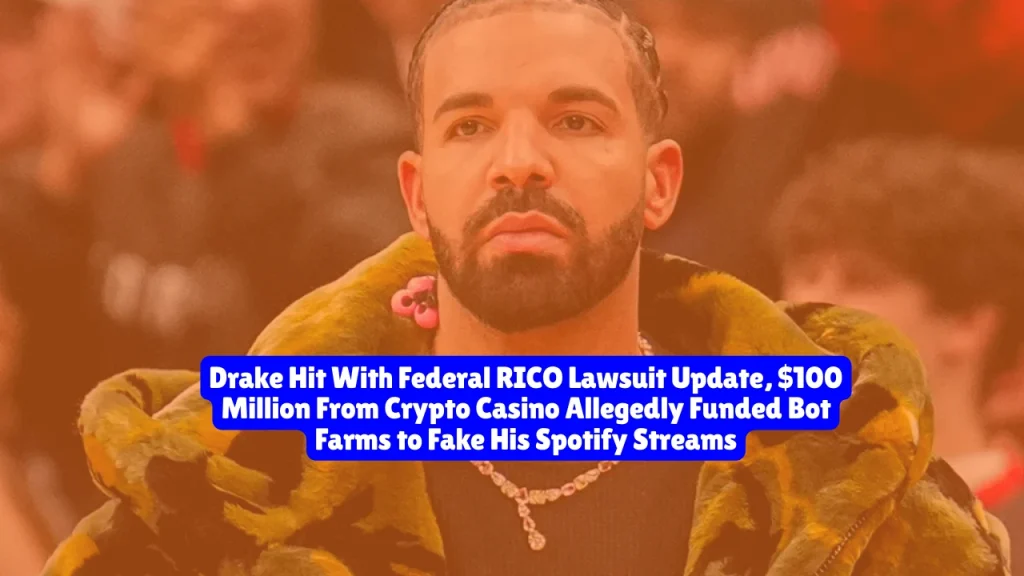
Drake Hit With Federal RICO Lawsuit Update, $100 Million From Crypto Casino Allegedly Funded Bot Farms to Fake His Spotify Streams
What’s the Drake RICO Lawsuit About?
Two Virginia consumers filed a federal RICO lawsuit on December 31, 2025, accusing Drake, streamer Adin Ross, and crypto casino Stake.us of operating an illegal gambling scheme where Drake allegedly received $100 million annually to promote the platform, then used money transferred through Stake’s “tipping” feature to pay bot farms that artificially inflated his streaming numbers on Spotify and other platforms. The lawsuit, filed in the U.S. District Court for the Eastern District of Virginia, seeks at least $5 million in damages and alleges violations of the federal Racketeer Influenced and Corrupt Organizations (RICO) Act and Virginia Consumer Protection Act.
Here’s where this gets wild: while you thought Drake’s songs were legitimately breaking streaming records, prosecutors claim he was secretly funneling millions through an illegal gambling site to pay armies of bots that fake-streamed his music. The same platform Drake promoted to his fans as harmless fun was allegedly his personal money-laundering operation for inflating his chart positions.
The Allegations: How the Scheme Allegedly Worked
Step 1: The Illegal Gambling Platform
According to the 22-page complaint, Stake.us presented itself as a “social casino” offering harmless gameplay—but plaintiffs claim it was actually “one of the largest and most profitable illegal online casinos” operating in the United States.
When Stake.com got banned from U.S. operations, the company allegedly rebranded as Stake.us to circumvent regulations. The lawsuit describes it as a “virtual clone” designed to mislead regulators and consumers into believing it was legal.
Step 2: Drake’s $100 Million Deal
Drake signed a promotional deal with Stake in 2022 reportedly worth at least $100 million per year, according to the Financial Times. The rapper admitted publicly to receiving nine-figure annual payments.
In exchange, Drake became Stake’s most visible celebrity promoter—livestreaming himself gambling, hosting giveaways, and telling his 150+ million followers to join the platform.
Step 3: The “Tipping” Money Transfer System
Here’s where it gets technical. Stake.us features an internal “tipping” system where users can send virtual currency directly to other users. The lawsuit characterizes this as “an unlimited and wholly unregulated money transmitter that appears to exist outside the oversight of any financial regulator.”
Drake, Ross, and alleged accomplice George Nguyen used this tipping feature to transfer massive sums among themselves while disguising the transactions as promotional giveaways.
Example from the lawsuit: A $100,000 tip transfer between Ross and Drake in 2023.
The complaint alleges these encrypted transfers weren’t visible to the public, allowing defendants to mask where money was actually going.
Related article: Richmond Ballet Hit With Third Abuse Lawsuit, Former Student Claims Years of Sexual Assault, “Fat Letters,” and Staff Threats While She Was Just a Child
Step 4: The “Drizzmas” Giveaway Cover
In December 2024, Drake partnered with Ross and Stake for what was publicly promoted as the “Drizzmas Giveaway”—a charitable event where Drake appeared to be generously giving away money to fans.
The lawsuit claims this was actually part of the financial coordination scheme. Instead of legitimate giveaways, defendants were allegedly cycling tips among themselves to finance botting operations.
Days before the lawsuit was filed, Stake allegedly gifted Ross a vehicle worth $220,000—a detail plaintiffs include to demonstrate the ongoing financial relationships between all defendants.
Step 5: The Bot Farms
According to the complaint, Drake—”acting directly and through willing and knowledgeable co-conspirators”—deployed “automated bots and streaming farms to artificially inflate play counts of his music across major platforms, such as Spotify.”
These bot operations allegedly:
- Fabricated Drake’s popularity by generating fake streams
- Distorted streaming platform recommendation algorithms
- Suppressed authentic artists by taking up chart positions
- Disparaged competitors and music label executives
- Misled royalty and recommendation engines
Real-World Evidence: The lawsuit points to a four-day period in 2024 where Drake’s track “No Face” gained 250,000 plays allegedly from Turkey (though VPNs made them appear to come from the UK). Fans had already been questioning these suspicious streaming patterns.
Who’s Involved in the Lawsuit?
Plaintiffs:
- LaShawnna Ridley (Virginia resident, Stake.us user)
- Tiffany Hines (Virginia resident, Stake.us user)
- Representing all Stake.us users who lost money within the last three years
Defendants:
- Drake (Aubrey Drake Graham) – Grammy-winning rapper, Stake’s primary celebrity promoter
- Adin Ross – Popular Kick platform streamer, Stake partner
- George Nguyen – Australian national, allegedly owner of Instagram account @grandwizardchatn***a, described as “broker and operational facilitator”
- Stake.us – Online sweepstakes casino
- Sweepstakes Limited – Stake’s parent company
George Nguyen’s Alleged Role: According to the complaint, Nguyen received cryptocurrency through Stake channels, then “interfaced with bot vendors, supervised coordinated amplification strategies, and integrated paid ‘clipping’ campaigns” on social media platforms including X (formerly Twitter).
The Legal Violations: Why This Is RICO
What Is RICO?
The Racketeer Influenced and Corrupt Organizations Act is a federal law originally designed to prosecute organized crime. It requires proving:
- An enterprise (in this case, the Drake-Ross-Stake operation)
- A pattern of racketeering activity (at least two predicate acts)
- Use of that enterprise to conduct illegal activity
Why RICO Applies Here:
The lawsuit alleges multiple predicate acts:
- Operating an illegal gambling operation in states where online gambling is prohibited
- Wire fraud through misleading promotions
- Money laundering through the tipping system
- Consumer fraud under state protection laws
If proven, RICO violations carry treble damages—three times the actual damages awarded—plus attorney fees.
Virginia Consumer Protection Act Violations:
Plaintiffs also claim Stake.us misrepresented itself as “legal, harmless, and safe gaming” when it was “not legal, not harmless, and not safe,” exposing consumers to gambling addiction and financial ruin.
This Isn’t Drake’s First Lawsuit Over Stake
October 27, 2025 – Missouri Lawsuit
A Missouri man filed a similar class action against Drake, Ross, and Sweepstakes Limited, claiming they promoted an illegal online gambling operation. That case is scheduled to go to trial on March 20, 2026.
October 29, 2025 – New Mexico Lawsuit
A second lawsuit was filed two days later in New Mexico making similar allegations about illegal gambling promotion.
The Virginia RICO Lawsuit Is the Most Serious
This December 31, 2025, filing is the first to include federal RICO charges, which carry significantly harsher penalties and could set a precedent for how celebrity endorsement deals are prosecuted.
Current Status: What’s Happening Now
Filed: December 31, 2025 (New Year’s Eve)
Court: U.S. District Court for the Eastern District of Virginia
Stage: Initial filing—defendants have not yet responded
Expected Timeline:
- Defendants typically have 21-30 days to respond or file motions to dismiss
- Discovery phase could last 6-12 months
- Trial unlikely before late 2026 or 2027
Defendants’ Responses So Far:
- Drake: Has not publicly commented. His representatives declined to respond to media requests
- Adin Ross: Previously called similar Missouri allegations “f**ing bullsht” but hasn’t commented on the Virginia case
- Stake.us: Has not issued a public statement
What This Could Mean for the Music Industry
Streaming Manipulation Precedent
This lawsuit echoes allegations from a separate case involving Drake and Spotify, where plaintiffs claimed similar bot manipulation. If courts find Drake liable, it could expose widespread streaming fraud across the industry.
Celebrity Endorsement Accountability
Applying RICO to celebrity endorsement deals is relatively novel. If successful, it would establish that celebrities can face racketeering charges for promoting products they know are illegal or harmful—fundamentally changing how endorsement deals work.
Gambling Industry Scrutiny
Stake.us has already faced cease-and-desist orders in 17 states, including Arizona, Connecticut, Delaware, Idaho, Kentucky, Louisiana, Maryland, Michigan, Montana, Nevada, New Jersey, New York, Pennsylvania, Rhode Island, Vermont, Washington, and West Virginia.
This lawsuit could accelerate regulatory crackdowns on online gambling platforms operating in legal gray areas.
Frequently Asked Questions
What damages are the plaintiffs seeking?
The lawsuit requests at least $5 million in damages plus a jury trial. If RICO violations are proven, actual damages could be tripled.
Can I join the lawsuit?
The plaintiffs are seeking class action status representing all Stake.us users in Virginia who lost wagers using Stake Cash within the last three years. If certified as a class action, eligible consumers will be notified.
Has Drake been charged criminally?
No. This is a civil lawsuit seeking monetary damages. No criminal charges have been filed.
What is Drake’s current relationship with Stake?
In August 2025, Drake publicly accused Stake of blocking him from withdrawing money. Then, days before this lawsuit was filed, he posted a video showing a $1 million Stake balance, suggesting they reconciled.
Could Drake go to jail?
No. RICO civil lawsuits seek financial damages, not criminal penalties. However, if federal prosecutors became interested, they could separately file criminal RICO charges.
What happens if Drake loses?
He could owe millions in damages, face injunctions prohibiting similar conduct, and suffer significant reputation damage. The precedent could also open him to additional lawsuits from other consumers or artists.
When will we know the outcome?
RICO cases are complex and take years to resolve. Expect at least 2-3 years before trial or settlement.
Key Takeaways
✓ Filed December 31, 2025, in U.S. District Court for the Eastern District of Virginia
✓ Alleges Drake received $100 million/year from Stake.us
✓ Claims Drake used Stake’s tipping system to fund streaming bot farms
✓ Seeks at least $5 million in damages under RICO statute
✓ Third lawsuit against Drake over Stake (after Missouri and New Mexico)
✓ Defendants have not yet responded
✓ Case is in earliest stages; trial unlikely before late 2026
Official Resources
- U.S. District Court for the Eastern District of Virginia: https://www.vaed.uscourts.gov
- PACER (Court Document Access): https://pacer.uscourts.gov
- Department of Justice – RICO Information: https://www.justice.gov/criminal/organized-crime-drug-enforcement-task-forces
- FTC Gambling Consumer Protection: https://consumer.ftc.gov/articles/online-gambling-whats-legal-and-whats-not
Disclaimer: This article provides general information about the Drake RICO lawsuit and is not legal advice. Allegations in a lawsuit are not proven facts. Drake and co-defendants have not admitted wrongdoing and have the right to defend themselves in court.
Last Updated: January 6, 2026
About the Author

Sarah Klein, JD, is a licensed attorney and legal content strategist with over 12 years of experience across civil, criminal, family, and regulatory law. At All About Lawyer, she covers a wide range of legal topics — from high-profile lawsuits and courtroom stories to state traffic laws and everyday legal questions — all with a focus on accuracy, clarity, and public understanding.
Her writing blends real legal insight with plain-English explanations, helping readers stay informed and legally aware.
Read more about Sarah