
Diego Pavia Lawsuit December Update, Uses NBA Draft Pick Ruling to Fight for 2026-2027 Eligibility
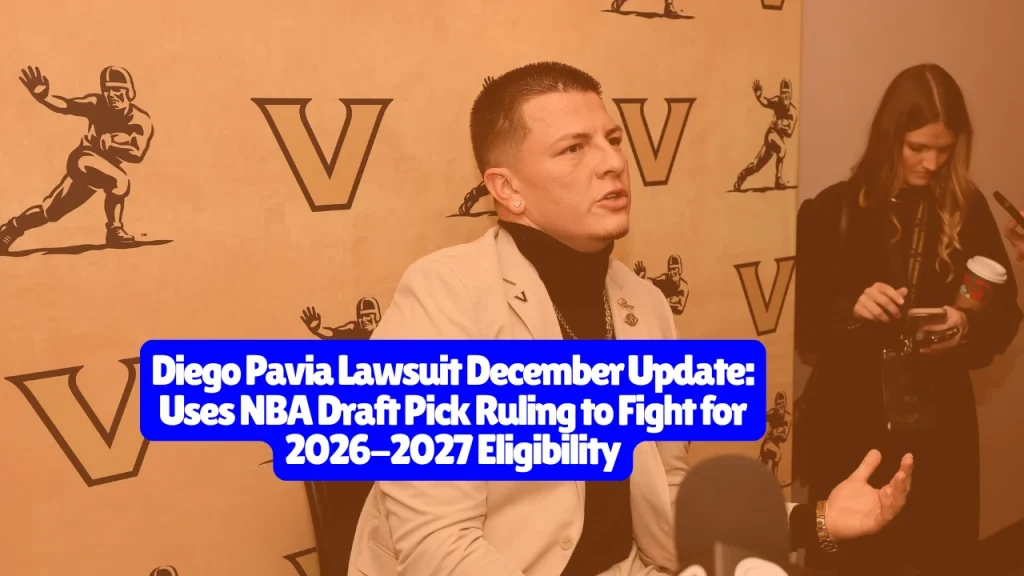
Breaking development (December 27, 2025): Diego Pavia’s attorney Ryan Downton filed a memorandum Friday citing the NCAA’s decision to let former NBA draft pick James Nnaji play college basketball as proof the NCAA enforces eligibility rules arbitrarily. The filing seeks to extend eligibility for Pavia and 26 other former JUCO players through 2026-2027 seasons, arguing if the NCAA allows pro basketball players to return, they can’t block JUCO transfers. Pavia plans to enter the NFL draft but is continuing the lawsuit to help other former junior college players.
The James Nnaji Bombshell
On Wednesday, December 25, 2025, Baylor announced that 7-foot center James Nnaji had joined the Bears men’s basketball team.
Why this matters: Nnaji was drafted No. 31 overall by the Detroit Pistons in the 2023 NBA Draft and played four seasons professionally in Europe. His rights were traded to Charlotte, then the New York Knicks. He never played in an NBA regular season game but was an active professional athlete for years.
The NCAA gave him four years of college eligibility anyway.
Pavia’s attorney seized on this news immediately, filing a memorandum Friday (December 27) in Tennessee federal court arguing:
“If the NCAA lets a former NBA draft pick who played professionally in Europe return to college basketball with full eligibility, how can they justify blocking former JUCO players from competing?”
The legal argument: The NCAA applies eligibility rules inconsistently and arbitrarily—which violates antitrust law.
What Pavia’s Legal Team Is Arguing Now
The double standard is glaring:
James Nnaji:
- Drafted by an NBA team
- Played professionally in Europe for 4 years
- NCAA grants him 4 years of college eligibility
Diego Pavia & JUCO players:
- Played at junior colleges (not professional leagues)
- Never earned professional salaries
- NCAA counts JUCO seasons against their Division I eligibility
Pavia’s argument: “The NCAA is worried about competitive balance and older players? Then why are they letting former professional athletes play college basketball while blocking JUCO transfers?”
Attorney Ryan Downton’s filing states the Nnaji decision proves the NCAA’s eligibility rules are “arbitrary enforcement” rather than consistent policy—which makes them vulnerable under the Sherman Antitrust Act.
Pavia’s Current Status and 2026-2027 Push
Where things stand now:
2025 season: Pavia played for Vanderbilt under the preliminary injunction granted in December 2024. He led the Commodores to their best season in program history (No. 13 AP ranking) and finished second in Heisman Trophy voting.
Upcoming bowl game: Vanderbilt faces Iowa in the ReliaQuest Bowl on December 31, 2025.
NFL draft plans: Pavia has publicly stated he plans to enter the 2026 NFL draft (deadline to declare is January 14, 2026).
Why he’s still fighting: Although Pavia is heading to the NFL, he’s continuing the lawsuit “to help other former junior college players” who face the same eligibility restrictions.
What he’s seeking now: The December 27 filing asks Judge William Campbell to grant preliminary injunctions allowing Pavia and 26 other plaintiffs to play in 2026 AND 2027—essentially arguing for a seventh year of college eligibility.
The 26 Other Plaintiffs in the Case
This isn’t just about Pavia anymore. The lawsuit has expanded significantly.
Named plaintiffs now include:
Tennessee QB Joey Aguilar: Former Jacksonville State quarterback who transferred to Tennessee. Facing the same JUCO eligibility restrictions as Pavia.
26 total co-plaintiffs: All former JUCO or Division II transfers seeking extended eligibility.
The goal: Create a class action that permanently eliminates the NCAA rule counting JUCO seasons against Division I eligibility for ALL affected athletes.
Even if Pavia enters the NFL draft, these 26 other plaintiffs can continue the case—and potentially hundreds more could join if it achieves class certification.
Legal Precedent: The October 2025 Appeals Court Ruling
In October 2025, the Sixth Circuit Court of Appeals issued a critical ruling in Pavia’s favor.
What happened:
The NCAA appealed Judge Campbell’s December 2024 preliminary injunction that granted Pavia eligibility for 2025.
The Sixth Circuit dismissed the NCAA’s appeal as “moot” because the NCAA had already granted Pavia (and all similarly situated JUCO players) a one-time waiver for the 2025-26 academic year.
Key quote from Judge Amul R. Thapar: “The NCAA gave Pavia exactly what he wanted—a waiver that guaranteed he could play for Vanderbilt in 2025. Because that waiver provides Pavia complete relief at the preliminary-injunction stage, we dismiss the NCAA’s appeal as moot.”
Important note from Judge Whitney D. Hermandorfer’s concurrence: The dismissal was procedural—it does NOT mean the NCAA can “immunize any trade restraint from review by deeming it ‘eligibility’ related.”
Translation: The Sixth Circuit didn’t rule on the merits. The case continues at the district court level, and the court signaled that “eligibility” rules are still subject to antitrust scrutiny.
The NCAA’s Temporary Waiver Strategy
The NCAA granted a blanket waiver in late December 2024 allowing all former JUCO athletes who would have exhausted eligibility to play in 2025.
Why they did this:
- Avoid losing the appeal at the Sixth Circuit
- Buy time to figure out a long-term solution
- Pressure Congress to pass legislation protecting NCAA eligibility rules
The problem: The waiver is temporary—only for the 2025-26 academic year. It’s not a permanent rule change.
What this means for 2026 and beyond: Unless the NCAA extends the waiver or changes the rules permanently, players like Pavia and the other 26 plaintiffs would be ineligible again starting in 2026.
That’s why Pavia’s attorney filed the December 27 memorandum seeking injunctions for 2026 and 2027.
The Broader Wave: 35+ Lawsuits Since Pavia
Pavia’s victory opened the floodgates.
Since December 2024, more than 35 athletes have filed eligibility lawsuits against the NCAA challenging various restrictions:
- Former JUCO players seeking extended eligibility
- Division II transfers facing similar caps
- Redshirt rule challenges (separate lawsuit led by Vanderbilt LB Langston Patterson)
- Athletes denied waivers in prior years now citing Pavia as precedent
The problem: Federal judges in different districts have issued conflicting rulings. Some athletes won injunctions; others were denied.
Why this matters: The inconsistency creates chaos. Whether an athlete can play depends on which federal court they file in—not on consistent legal standards.
What the NCAA Says
An NCAA spokesperson responded to Pavia’s December 27 filing with context on the James Nnaji decision:
“Each eligibility case is evaluated and decided individually based on the facts presented. Schools continue to recruit and enroll individuals with professional playing experience, which NCAA rules allow with parameters.”
Translation: The NCAA argues Nnaji’s case is different because basketball has different eligibility rules than football.
The spokesperson added: “As NCAA eligibility rules continue to face repeated lawsuits with differing outcomes, these cases are likely to continue, which underscores the importance of our collaboration with Congress to enable the Association to enforce reasonable eligibility standards.”
Translation: The NCAA wants Congress to pass legislation protecting them from antitrust lawsuits. Without it, they’ll keep losing in court.
What Happens Next (2026 Timeline)
December 31, 2025: Pavia plays in ReliaQuest Bowl (possibly his final college game)
January 14, 2026: NFL draft declaration deadline—Pavia expected to declare
January-February 2026: Judge Campbell rules on the December 27 memorandum seeking 2026-2027 eligibility for all plaintiffs
Possible outcomes:
- Campbell grants injunctions for 2026-2027: Pavia and 26 others can play two more seasons if they choose (though Pavia will likely be in the NFL)
- Campbell denies injunctions: The 26 other plaintiffs lose eligibility unless they appeal or the NCAA extends its waiver
- NCAA extends the waiver: Avoids another court loss by granting another temporary one-year extension
Spring 2026: Case proceeds toward class certification—if granted, this becomes a nationwide lawsuit representing ALL former JUCO players
2026-2027: Trial on the merits (unless the NCAA settles or Congress intervenes with legislation)
Why This Case Still Matters Even If Pavia Goes to the NFL
For the 26 other plaintiffs: They need eligibility for 2026 to keep playing. This case is their lifeline.
For hundreds of future JUCO transfers: If Pavia’s lawsuit wins permanently, the NCAA rule counting JUCO seasons against Division I eligibility disappears forever.
For the NCAA: Losing this case sets a precedent that could unravel other eligibility restrictions—redshirt rules, transfer limits, age restrictions, etc.
For Congress: The NCAA is lobbying hard for federal legislation protecting them from antitrust lawsuits. If Congress doesn’t act, the courts will keep dismantling NCAA rules one lawsuit at a time.
Related Legal Battles Paving the Way
Pavia’s case is part of a broader trend of antitrust challenges reshaping college athletics, similar to other landmark cases including the Diego Pavia lawsuit class action expanding to change NCAA rules and the original Diego Pavia lawsuit challenging JUCO eligibility rules.
FAQ: Diego Pavia Lawsuit December 2025 Update
Q: Is Diego Pavia playing in 2026?
Probably not. He’s planning to enter the 2026 NFL draft. But he’s continuing the lawsuit to help other former JUCO players who need eligibility.
Q: What is the James Nnaji argument about?
Baylor signed James Nnaji, a former NBA draft pick who played professionally in Europe, and the NCAA gave him 4 years of college eligibility. Pavia’s attorney argues this proves the NCAA enforces eligibility rules inconsistently—if they allow former pro basketball players, they can’t block JUCO football transfers.
Q: Who are the 26 other plaintiffs?
Former JUCO and Division II players seeking extended eligibility, including Tennessee QB Joey Aguilar. They’re all facing the same NCAA rule that counted their junior college seasons against Division I eligibility.
Q: What did the December 27 filing ask for?
Preliminary injunctions allowing all 27 plaintiffs (Pavia + 26 others) to play in 2026 AND 2027 seasons.
Q: Will the NCAA lose this case?
Hard to say, but the inconsistent enforcement (Nnaji getting eligibility while JUCO players don’t) strengthens Pavia’s antitrust argument. The Sixth Circuit’s October ruling suggested eligibility rules ARE subject to antitrust scrutiny.
Q: What happens if Judge Campbell grants the injunctions?
The 26 plaintiffs can play in 2026-2027 while the case continues. The NCAA would likely appeal again.
Q: Could this become a class action?
Yes. Attorney Ryan Downton has said the goal is class certification, which would represent ALL former JUCO players affected by the rule—potentially hundreds of athletes.
Q: Why does the NCAA keep granting temporary waivers instead of changing the rule?
They’re buying time and hoping Congress passes legislation protecting them from antitrust lawsuits. Changing the rule permanently would be admitting their old rule violated antitrust law.
Q: When will there be a final decision?
Not anytime soon. This case could take years to reach trial unless the NCAA settles or Congress intervenes with legislation.
The Bottom Line
Diego Pavia is heading to the NFL, but his lawsuit is far from over.
The December 27 filing using the James Nnaji ruling is a strategic masterstroke—it exposes the NCAA’s arbitrary enforcement and strengthens the antitrust argument.
For the 26 other plaintiffs: This filing could determine whether they play in 2026 or lose their final years of eligibility.
For the NCAA: The inconsistent enforcement (allowing former NBA draft picks to play while blocking JUCO transfers) makes their eligibility rules legally vulnerable.
For college football: If Pavia’s lawsuit wins, the JUCO eligibility rule disappears permanently, opening the door for hundreds of junior college players to compete at Division I schools without losing years of eligibility.
The case that started as one quarterback’s fight for an extra season has become a full-scale assault on the NCAA’s eligibility system. And it’s just getting started.
Last Updated: December 29, 2025
Court: U.S. District Court for the Middle District of Tennessee
Latest Filing: December 27, 2025 memorandum citing James Nnaji ruling
Case Status: Seeking preliminary injunctions for 2026-2027 eligibility; class certification pending
Plaintiffs: Diego Pavia + 26 other former JUCO/Division II players
Next Major Event: Judge Campbell’s ruling on 2026-2027 injunction requests (expected early 2026)
Disclaimer: This article is for informational purposes only and does not constitute legal advice. All information is based on publicly available court documents, official statements, and credible news reports as of December 29, 2025.
About the Author

Sarah Klein, JD, is a licensed attorney and legal content strategist with over 12 years of experience across civil, criminal, family, and regulatory law. At All About Lawyer, she covers a wide range of legal topics — from high-profile lawsuits and courtroom stories to state traffic laws and everyday legal questions — all with a focus on accuracy, clarity, and public understanding.
Her writing blends real legal insight with plain-English explanations, helping readers stay informed and legally aware.
Read more about Sarah