
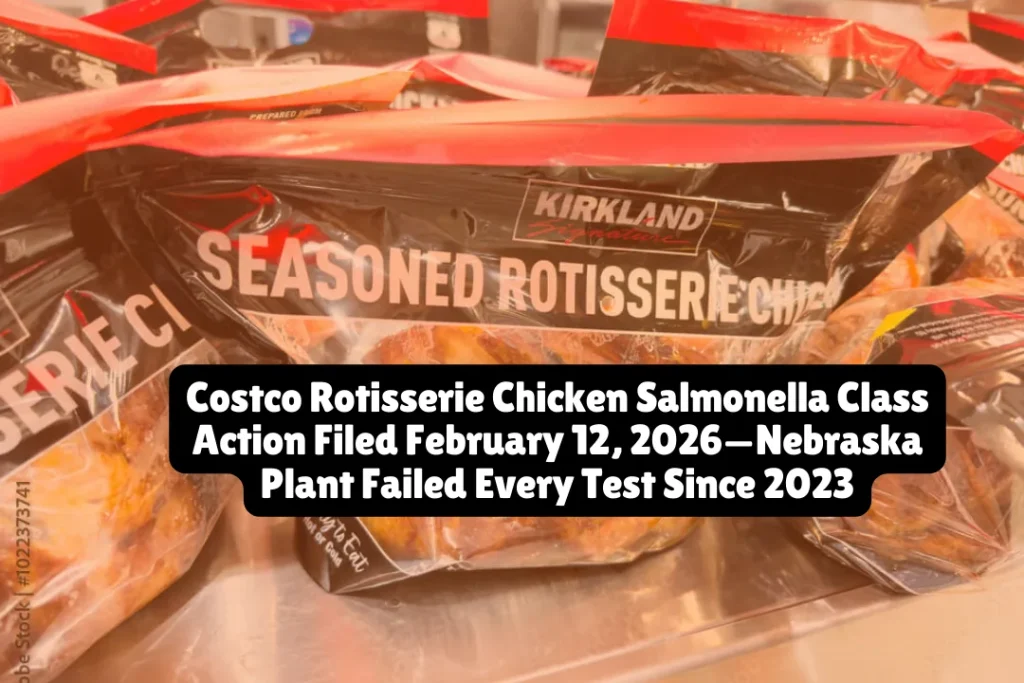
Costco Rotisserie Chicken Salmonella Class Action Filed February 12, 2026—Nebraska Plant Failed Every Test Since 2023
A class action lawsuit filed on February 12, 2026, alleges Costco’s Kirkland Signature rotisserie chicken supply suffers from chronic salmonella contamination issues due to poor, unsanitary conditions at its Lincoln Premium Poultry facility in Nebraska. If you’ve been buying Costco’s famous $4.99 rotisserie chicken, you may have unknowingly exposed your family to dangerous foodborne bacteria.
From late 2023 through mid-2025, Costco’s plant failed every single monthly salmonella test, reflecting chronic, uncontrolled and unresolved contamination levels. What started as a cost-saving strategy has spiraled into what the lawsuit calls a serious public health concern.
The Allegations Against Costco
The proposed class action lawsuit filed on Thursday in Seattle federal court by plaintiff Lisa Taylor, of Affton, Missouri, cited a December study by Farm Forward that criticized safety conditions at Costco’s Lincoln Premium Poultry plant, which opened in 2019 and can process more than 100 million chickens a year.
The 37-page lawsuit says that Costco’s poultry operation, based at the Lincoln Premium Poultry facility in Nebraska, has earned the United States Department of Agriculture’s (USDA) worst food safety rating—Category 3—in nearly all reporting periods since 2019.
A Category 3 rating means the processing plant exceeded the USDA’s allowable contamination rates, effectively “failing” salmonella safety tests. Despite these abysmal ratings, Costco continues marketing its chickens with “USDA Grade A” inspection marks while allegedly concealing the plant’s chronic contamination problems from consumers.
The Scope of Contamination
According to the complaint, the Fremont, Nebraska plant “consistently” fails U.S. Department of Agriculture safety standards, with more than 9.8% of whole chickens and 15.4% of chicken parts testing positive for salmonella contamination.
To put this in perspective, rotisserie chicken sales topped 157 million worldwide in 2025, Costco said at its annual meeting last month. That means millions of potentially contaminated chickens reaching American dinner tables every year.
An October 2025 Consumer Reports study based on five years of data found Costco’s Nebraska plant to be one of the “most contaminated poultry plants” in the United States. This information has been publicly available—yet Costco allegedly chose to bury its head in the sand rather than warn consumers.
Why Cost-Cutting Created This Crisis
The Costco class action lawsuit pins the apparent food safety crisis on “conscious business decisions,” which the suit claims stem from the retailer’s desire to keep its Kirkland rotisserie chickens at the $4.99 price point—without meaningfully disclosing to consumers the alleged litany of problems at its poultry production plant.
Costco’s $4.99 rotisserie chicken has long been viewed as a loss-leader—a product sold below cost to attract shoppers into warehouse stores. But the lawsuit alleges this pricing strategy came at the expense of food safety.
“What began as a strategy to keep prices low has spiraled into a serious public health concern,” the documents state. The lawsuit further alleges that salmonella contamination is a direct result of how the company and its contractors breed and raise the chickens in overcrowded, unsanitary conditions.
The Health Risks of Salmonella Poisoning
Salmonella is one of the top causes of foodborne illness, hospitalizations and death worldwide, including in the United States. The pervasive nature of the bacteria allows them to spread quickly among chickens, especially when bred in dense flocks.
Salmonella infection symptoms typically appear 6 hours to 6 days after exposure and include diarrhea, fever, stomach cramps, nausea, vomiting, and headache. Most people recover without treatment within 4 to 7 days, but severe cases can lead to hospitalization, bloodstream infections, and even death—particularly in young children, elderly individuals, and people with weakened immune systems.
The lawsuit emphasizes that unlike many bacterial contaminations that might be isolated incidents, Costco’s contamination is “chronic, uncontrolled and unresolved”—meaning consumers have been repeatedly exposed to this health risk for years.
Who Can Join This Class Action
The Costco rotisserie chicken class action lawsuit looks to represent all individuals in the United States and its territories who purchased a Kirkland Signature rotisserie chicken or raw chicken product sold by Costco for personal or household use at any time between January 1, 2019 and the present.
Lisa Taylor said she routinely bought one or two rotisserie chickens a month at Costco warehouses in the St. Louis area, and believes she overpaid because Costco didn’t disclose the contamination risk. She is seeking compensatory and triple damages for shoppers nationwide.
The case is not limited to consumers who became ill. Similar to claims in the Quaker Oats Class Action Lawsuit, $6.75M Settlement Claims End June 27, 2025 which involved potential salmonella contamination, you may be eligible even if you didn’t experience illness—the key is that you purchased a product marketed as safe when it allegedly carried undisclosed contamination risks.
This Isn’t Costco’s Only Chicken Lawsuit
This litigation followed a Jan. 22 class-action lawsuit claiming that Costco falsely advertised its rotisserie chickens as containing no preservatives. That earlier lawsuit, filed in San Diego federal court, alleges the chickens contain sodium phosphate and carrageenan despite prominent “NO PRESERVATIVES” labeling.
The dual lawsuits paint a troubling picture: Costco allegedly misleads consumers about both what’s in the chicken (preservatives) and what risks come with it (salmonella contamination).
What You Should Do Now
If you purchased Costco rotisserie chicken since 2019:
Save all documentation including receipts, Costco membership records, and credit card statements showing rotisserie chicken purchases. This evidence will be crucial for any potential claim.
Monitor your health and your family’s health for salmonella symptoms. If you develop fever, diarrhea, or stomach cramps after eating Costco chicken, seek medical attention immediately and tell your doctor about potential salmonella exposure.
If you experienced illness:
Document everything: medical visits, diagnoses, prescriptions, lost wages, and any other expenses related to salmonella poisoning. Take photos of Costco receipts and chicken packaging if available.
Report your illness to your local health department. This creates an official record that may be valuable for individual product liability claims beyond the class action.
Consider consulting a product liability attorney if you suffered significant medical expenses, hospitalization, or lost wages. While this class action seeks compensatory damages, individual cases with documented injuries may warrant separate legal action.
The Legal Claims
Taylor is seeking compensatory and triple damages for shoppers who bought Kirkland Signature rotisserie chicken and raw chicken parts since January 1, 2019, saying Costco violated Washington consumer protection laws and an implied promise that its chickens are safe to eat.
“Costco’s failure to control salmonella in its chicken supply is not a harmless technicality—it poses a real danger to consumers and violates their trust,” the complaint said.
The case is filed in U.S. District Court for the Western District of Washington in Seattle. As of February 15, 2026, neither Costco nor the Lincoln plant immediately responded to requests for comment.
Frequently Asked Questions
What is the Costco salmonella class action about?
The lawsuit alleges Costco knowingly sold rotisserie chickens from a Nebraska processing plant that consistently failed USDA salmonella tests from 2023-2025, exposing consumers to dangerous foodborne illness while marketing the products as safe.
Am I eligible to join this class action?
Yes, if you purchased Kirkland Signature rotisserie chicken or raw chicken products from Costco for personal or household use anytime between January 1, 2019 and the present. You don’t need to have become ill to be eligible.
Do I need proof of purchase to file a claim?
Class action settlements typically require proof of purchase, but some allow sworn statements when receipts aren’t available. Start collecting any documentation you have now—Costco membership records, credit card statements, or receipts showing rotisserie chicken purchases.
What compensation might be available?
The lawsuit seeks compensatory and triple damages. Final settlement amounts haven’t been determined, but similar food contamination cases like the Pine Sol Class Action Lawsuit, $5.65 Million Settlement For Bacterial Contamination provided refunds plus additional compensation. Individual amounts depend on purchase frequency and whether you experienced illness.
What should I do if I think I have salmonella poisoning?
Seek medical attention immediately if you have severe symptoms including high fever (over 102°F), bloody diarrhea, frequent vomiting, signs of dehydration, or diarrhea lasting more than 3 days. Tell your doctor about potential Costco chicken exposure and request salmonella testing.
Is the lawsuit only about rotisserie chicken or does it include raw chicken too?
The class action covers both Kirkland Signature rotisserie chicken AND raw chicken products sold by Costco, as both come from the allegedly contaminated Lincoln Premium Poultry plant in Nebraska.
Last Updated: February 15, 2026
Disclaimer: This article is for informational purposes only and does not constitute legal advice. For guidance on your specific situation, consult with a qualified attorney.
Stay vigilant: When America’s most popular budget rotisserie chicken allegedly carries chronic contamination risks that the retailer concealed for years, knowing your rights protects both your family’s health and your wallet.
Stay informed, stay protected. — AllAboutLawyer.com
About the Author

Sarah Klein, JD, is a licensed attorney and legal content strategist with over 12 years of experience across civil, criminal, family, and regulatory law. At All About Lawyer, she covers a wide range of legal topics — from high-profile lawsuits and courtroom stories to state traffic laws and everyday legal questions — all with a focus on accuracy, clarity, and public understanding.
Her writing blends real legal insight with plain-English explanations, helping readers stay informed and legally aware.
Read more about Sarah