
Costco Lawsuit Against Trump, Costco Sues Trump Administration Over Emergency Tariff Orders—Company Faces December Refund Deadline
Costco Wholesale filed a federal lawsuit November 28, 2025, challenging President Trump’s emergency tariffs imposed under the International Emergency Economic Powers Act (IEEPA). The warehouse retailer seeks full refunds of duties already paid and faces a critical December 15 deadline that could permanently lock in these payments.
The case targets multiple executive orders issued by Trump starting in February 2025 that imposed tariffs on imports from Canada, Mexico, China, and dozens of other countries based on declared emergencies over drug trafficking and trade deficits. Costco argues Trump exceeded his legal authority and that the tariffs are unlawful.
What Is the Costco Lawsuit Against Trump?
Costco Wholesale Corporation filed its complaint in the U.S. Court of International Trade, arguing that Trump used emergency powers to impose tariffs on goods from China, Mexico, Canada and other countries even though the statute does not allow the president to create or raise tariffs.
The lawsuit comes as Costco becomes the latest major company to seek tariff refunds through the courts, with the government having collected $205 billion in tariffs through the end of October.
Case number: Costco Wholesale Corp. v. Customs and Border Protection, 1:25-cv-316, U.S. Court of International Trade
Filing date: November 28, 2025
Court jurisdiction: U.S. Court of International Trade, Manhattan
Related Lawsuit: AT&T Settlement Deadline December 18, Claim Up to $7,500 Through Kroll Administration Before Time Runs Out
The Specific Legal Claims
Costco’s complaint challenges the legality of Trump’s tariff orders on three core grounds:
Statutory Authority Challenge Costco’s lawyer argues that “Because IEEPA does not clearly authorize the President to set tariffs, the Challenged Tariff Orders cannot stand and the defendants are not authorized to implement and collect them”.
Unlawful Emergency Tariffs The lawsuit cites previous rulings by the international trade court and the Federal Circuit that the tariffs were unlawful and claims Trump is misusing the IEEPA, which is intended for use during an extraordinary threat that constitutes a national emergency.
Revenue-Raising Function The tariffs function as taxes that raise billions in revenue from American importers, which plaintiffs argue falls under Congress’s constitutional taxing authority—not presidential emergency powers.
Critical December 15 Deadline Creates Urgency
Costco faces an urgent timeline because as of December 15, 2025, under customs law, importers may lose their ability to recover refunds even if the tariffs are later found unlawful.
The company says the government will begin finalizing—or “liquidating”—its import entries on or after December 15, and once an entry is liquidated, the duty amount becomes locked and importers may lose the ability to challenge or recover those charges.
One Costco import entry has already liquidated, and Costco requested a delay in liquidation from U.S. Customs and Border Protection, but the agency denied the request on November 18.
What Costco Is Asking the Court to Do
The retailer seeks three forms of relief:
- Declaratory judgment that the tariff orders are invalid and unlawful
- Injunction blocking Customs and Border Protection from applying the tariffs to its shipments going forward
- Full refund of all duties the company has already paid under the emergency tariff program
Costco plans to file a motion for a preliminary injunction in the coming days to halt liquidation of its tariff-affected imports.
Trump’s Emergency Tariff Orders Under IEEPA
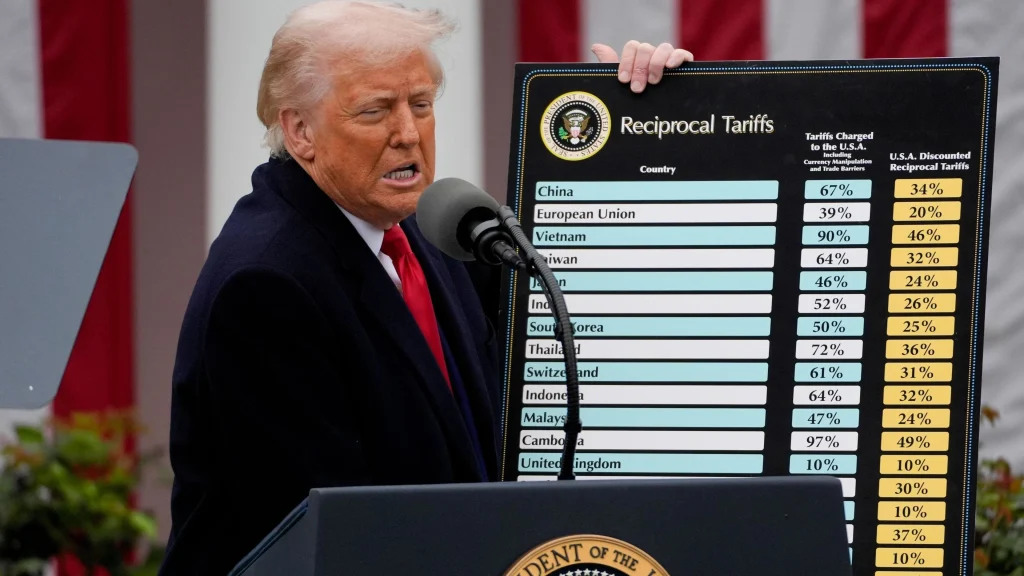
President Trump invoked the International Emergency Economic Powers Act to impose what he termed “reciprocal” and “fentanyl” tariffs throughout 2025.
February 2025 Tariffs Trump invoked IEEPA to impose tariffs on imports from China, Canada, and Mexico, declaring emergencies concerning illicit drugs and illegal immigration.
April 2025 Expansion Trump later imposed tariffs ranging from 10% to 50% on imports from nearly all U.S. trading partners based on declared emergencies over persistent trade deficits.
Trump became the first president ever to use the IEEPA law to impose import duties, and importers have paid nearly $90 billion under the IEEPA law according to U.S. Customs and Border Protection data through late September.
Understanding the International Emergency Economic Powers Act
The IEEPA, passed by Congress and signed into law in 1977, permits the president to create, eliminate, or modify economic transactions with other countries during a declared national emergency.
The law’s key provisions:
- Authorizes the president to “regulate” or “prohibit” imports during national emergencies
- Does not specifically mention “tariffs,” “duties,” or “taxes” anywhere in the statute
- Requires the emergency to involve “unusual and extraordinary threats” from outside the United States
- Contains reporting requirements to Congress
The IEEPA was enacted as a reform of the Trading with the Enemy Act (TWEA) of 1917, establishing more limited and better-regulated emergency presidential powers.
Prior Court Rulings Against Trump’s Tariff Authority
Both the Court of International Trade and the U.S. Court of Appeals for the Federal Circuit have ruled that IEEPA does not authorize the president to impose tariffs.
In August 2025, the Federal Circuit issued a 7-4 ruling affirming that Trump exceeded his authority. However, courts allowed the tariffs to remain in place while the Supreme Court reviews the case.
Supreme Court Review and Skeptical Justices
The Supreme Court heard arguments in related cases on November 5, 2025, and during those arguments, a majority of justices appeared skeptical of Trump’s broad tariff authority.
Key concerns raised by justices:
Justice Neil Gorsuch Gorsuch expressed concern about shifting too much congressional power to the president, calling it a “one-way ratchet toward the gradual but continual accretion of power in the executive branch”.
Chief Justice John Roberts Roberts questioned whether the emergency law allowed for tariffs on “any product, from any country, in any amount, for any length of time”.
Revenue-Raising Nature Justices emphasized that tariffs generate revenue from American citizens and thus implicate Congress’s core taxing authority under Article I, Section 8 of the Constitution—not merely a regulatory function.
The Supreme Court has not yet issued its decision but fast-tracked the case for expedited review.
Why Costco Can’t Wait for Supreme Court Decision
Costco’s lawsuit emphasizes that even a favorable Supreme Court ruling in the pending cases would not automatically guarantee refunds for importers who have already paid the disputed duties.
The lawsuit argues that companies “are not guaranteed a refund for those unlawfully collected tariffs in the absence of their own judgment and judicial relief”.
This creates a procedural trap: Even if the Supreme Court strikes down the tariffs as unlawful, companies that didn’t file their own lawsuits before liquidation may be unable to recover payments.
How Much Have the Tariffs Cost Costco?
Costco does not say in the filing how much the duties have cost the company, but in May 2025, Chief Financial Officer Gary Millerchip told investors that about one-third of Costco’s sales in the U.S. are imported products, with items imported from China representing about 8% of total U.S. sales.
The Issaquah, Washington-based company reported $275.2 billion in revenue in the fiscal year that ended August 2025, making it one of the largest retailers to challenge Trump’s tariff authority.
Costco’s Tariff Mitigation Strategies
Millerchip said in September that Costco continues to work closely with suppliers to find ways to mitigate the impact of tariffs, including moving the country of production where it makes sense and consolidating buying efforts globally to lower the cost of goods across all markets.
Specific actions taken:
- Price protection on staples: While seeing direct impact from tariffs on imports of fresh food items from Central and South America like pineapples and bananas, Costco decided not to increase prices “because they are key staple items” for customers
- Supplier consolidation: Reducing the number of suppliers to increase bargaining power
- Source diversification: Rerouting products to avoid tariff-heavy countries
- Inventory management: Ordering more inventory early to get ahead of tariff increases
- Private label expansion: Relying more heavily on the in-house Kirkland Signature brand
Despite these efforts, Costco determined a lawsuit was necessary to protect its financial interests.
White House Response to Costco Lawsuit
White House spokesman Kush Desai said in a statement that “The economic consequences of the failure to uphold President Trump’s lawful tariffs are enormous and this suit highlights that fact” and that “The White House looks forward to the Supreme Court’s speedy and proper resolution of this matter”.
The administration maintains that the tariffs are lawful exercises of presidential authority during declared national emergencies.
Dozens of Companies Filing Similar Lawsuits
Other companies like Bumble Bee Foods, EssilorLuxottica, Kawasaki Motors, Revlon and Yokohama Tire have filed similar lawsuits.
Costco joined dozens of other companies that are seeking to protect their rights to refunds of Trump’s tariffs without first waiting for the Supreme Court.
The wave of corporate litigation demonstrates widespread concern about:
- The legality of IEEPA-based tariffs
- The December liquidation deadline trapping companies
- Uncertainty about refund eligibility even after a Supreme Court ruling
- The unprecedented scope of presidential tariff authority being claimed
Current Status of the Costco v. Trump Case
Case stage: Initial complaint filed, preliminary proceedings
Next steps:
- Costco to file motion for preliminary injunction
- Government response to complaint expected
- Court to rule on injunction request before December 15 deadline
- Parallel track with Supreme Court’s IEEPA review
Timeline pressures: The December 15 liquidation deadline creates extreme urgency for court action on Costco’s preliminary injunction motion.
Legal Precedents and Similar Corporate Litigation
The Costco lawsuit builds on earlier successful challenges:
Learning Resources, Inc. v. Trump Educational toy companies won preliminary injunctions in district court, with judges finding IEEPA doesn’t authorize tariffs.
V.O.S. Selections, Inc. v. Trump Small wine importer’s case resulted in the Federal Circuit’s 7-4 ruling against Trump’s tariff authority.
These precedents strengthen Costco’s legal position, though the administration argues for broader presidential power in foreign affairs and national emergencies.
Implications for U.S. Business and Corporate Law
This litigation reflects several critical patterns in U.S. business law:
Corporate-Political Legal Disputes Major retailers increasingly willing to sue sitting presidents when financial stakes justify the legal and political risks.
Emergency Powers Boundaries Courts grappling with limits on presidential emergency authority in an era of expansive executive action.
Supply Chain Legal Strategy Companies using litigation as part of comprehensive tariff mitigation strategies alongside sourcing changes and supplier negotiations.
Collective Action Problem Individual companies must file separate lawsuits to preserve refund rights, creating coordination challenges across industries.
What Businesses Need to Know About Tariff Refund Claims
Liquidation Deadlines Matter Companies with tariff-affected imports must track liquidation dates carefully—once liquidated, recovery becomes extremely difficult.
Protest Procedures Under 19 U.S.C. § 1514, importers have 180 days from liquidation to file administrative protests with Customs and Border Protection.
Court Filing Deadlines After protest denial, importers have 180 days to file suit in the Court of International Trade—missing either deadline bars recovery.
Automatic Refunds Unlikely Even if the Supreme Court strikes down the tariffs, importers won’t receive automatic refunds without taking affirmative legal action.
Consider Preventive Litigation Many companies are filing lawsuits now to preserve their rights rather than waiting for the Supreme Court decision.
Frequently Asked Questions About the Costco v. Trump Lawsuit
What is the Costco lawsuit against Trump about?
Costco filed a federal lawsuit challenging the legality of emergency tariffs Trump imposed using the International Emergency Economic Powers Act, seeking full refunds of duties paid and protection from a December 15 deadline that could eliminate refund eligibility.
When did Costco file the lawsuit against Trump?
Costco filed its complaint on November 28, 2025, in the U.S. Court of International Trade in Manhattan.
What legal claims is Costco making in its lawsuit?
Costco argues that Trump exceeded his statutory authority under IEEPA, that the statute doesn’t authorize tariff imposition, and that the tariff orders are unlawful because they function as taxes that only Congress can impose under the Constitution.
Why is December 15, 2025 important in the Costco case?
December 15 marks when Customs and Border Protection will begin “liquidating” Costco’s import entries—a finalization process that locks in duty amounts and severely limits the ability to recover unlawfully collected tariffs, even if courts later rule the tariffs were illegal.
How much money has Costco paid in Trump’s tariffs?
Costco hasn’t disclosed the specific amount in its lawsuit, but about one-third of its U.S. sales (roughly $92 billion annually) come from imported products, suggesting tariff costs in the hundreds of millions of dollars.
What did the Supreme Court say about Trump’s tariffs?
During November 5, 2025 oral arguments, Supreme Court justices across the ideological spectrum expressed skepticism about Trump’s tariff authority under IEEPA, questioning whether emergency powers allow unlimited tariffs and whether this violates Congress’s constitutional taxing authority. No decision has been issued yet.
Can Costco get a refund if the Supreme Court strikes down the tariffs?
Not automatically. Costco’s lawsuit argues that even a favorable Supreme Court ruling won’t guarantee refunds for importers unless they filed their own lawsuits before their import entries were liquidated—which is why Costco filed now rather than waiting.
What other companies have sued over Trump’s tariffs?
Bumble Bee Foods, EssilorLuxottica, Kawasaki Motors, Revlon, Yokohama Tire, Learning Resources, hand2mind, V.O.S. Selections, and dozens of other companies have filed similar federal lawsuits challenging the tariffs and seeking refunds.
What is IEEPA and why does it matter?
The International Emergency Economic Powers Act is a 1977 law allowing presidents to regulate economic transactions during declared national emergencies. Trump claims it authorizes his tariffs, but critics note the statute never mentions “tariffs,” “duties,” or “taxes” and was designed to limit—not expand—presidential emergency powers.
What happens next in the Costco lawsuit?
Costco will file a motion for preliminary injunction to halt liquidation of its tariff-affected imports before December 15. The court will hear arguments from both sides, and a decision on the injunction could come within days given the urgent deadline. The case will proceed in parallel with the Supreme Court’s review of IEEPA tariff authority.
Resources and Next Steps
Official Court Information
- U.S. Court of International Trade docket for case 1:25-cv-316
- Supreme Court case Learning Resources, Inc. v. Trump (consolidated IEEPA cases)
For Businesses Affected by Trump Tariffs
- Review liquidation dates for all tariff-affected import entries
- Consult with international trade attorneys about protest procedures
- Consider whether preventive litigation is necessary before liquidation deadlines
- Explore tariff mitigation strategies including sourcing changes and supplier negotiations
Disclaimer: This article provides general information about the Costco v. Trump lawsuit and should not be construed as legal advice. Businesses affected by tariffs should consult with qualified international trade attorneys to understand their specific rights and obligations.
About the Author

Sarah Klein, JD, is a licensed attorney and legal content strategist with over 12 years of experience across civil, criminal, family, and regulatory law. At All About Lawyer, she covers a wide range of legal topics — from high-profile lawsuits and courtroom stories to state traffic laws and everyday legal questions — all with a focus on accuracy, clarity, and public understanding.
Her writing blends real legal insight with plain-English explanations, helping readers stay informed and legally aware.
Read more about Sarah