
Costco Chicken Lawsuit, False “No Preservatives” Claims Spark Federal Class Action
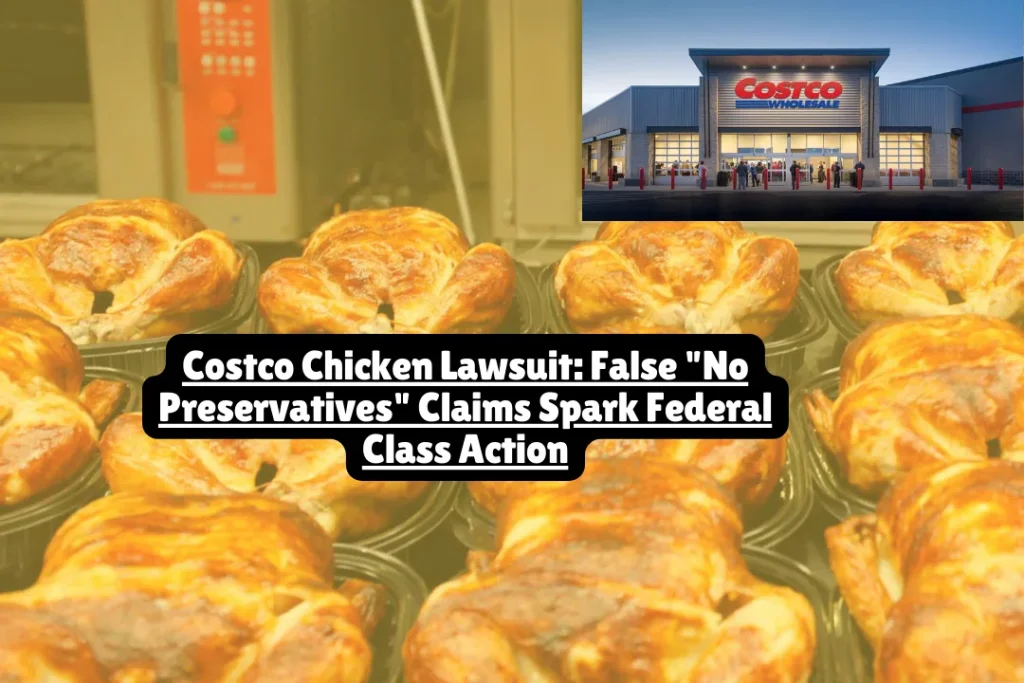
Two California consumers just filed a federal class action lawsuit accusing Costco of misleading millions of shoppers with false advertising about its popular Kirkland Signature rotisserie chickens. The complaint, filed January 23, 2026, in the U.S. District Court for the Southern District of California, alleges Costco falsely advertises its rotisserie chickens as containing “no preservatives” despite the product containing sodium phosphate and carrageenan.
What the Lawsuit Alleges Against Costco
Plaintiffs Bianca Johnston of Big Bear, California, and Anatasia Chernov of Escondido, California, claim Costco’s website and in-store signs prominently display “No Preservatives” labels without qualification. But here’s the problem: the chicken’s ingredient list tells a different story.
The lawsuit argues that sodium phosphate and carrageenan—both added to Costco’s rotisserie chickens—function as preservatives. Phosphates are used to help ingredients blend together, give foods thickness or texture, and act as preservatives. Carrageenan is used as a texturizer, stabilizer, and thickener in foods.
The complaint alleges these ingredients perform preservative functions by inhibiting spoilage, stabilizing proteins, and extending shelf stability. That contradicts the prominent “No Preservatives” claim displayed on signage and online.
The Legal Claims Being Pursued
The plaintiffs are pursuing claims under California and Washington consumer protection laws. They seek injunctive relief, restitution, damages, and disgorgement of profits obtained through Costco’s allegedly misleading marketing.
The lawsuit states neither plaintiff would have purchased the chicken or would have paid less if they had known the additives were present, and alleges Costco has “systemically cheated customers out of tens—if not hundreds—of millions of dollars” through the alleged false advertising.
The legal theory centers on false advertising and consumer deception. When companies make prominent claims like “No Preservatives,” consumers rely on those representations when deciding what to buy and feed their families.
Who Filed the Case and What Court Is Handling It
The case is Johnston vs. Costco Wholesale Corporation, filed in the United States District Court for the Southern District of California. As of January 24, 2026, a case number has not yet been assigned, indicating the litigation is in its earliest stages.
The plaintiffs are represented by the Almeida Law Group, with California Managing Partner Wesley M. Griffith serving as counsel. This is a proposed nationwide class action, meaning the plaintiffs seek to represent all Costco customers who purchased the rotisserie chickens based on the “No Preservatives” claim.
Current Status and What Comes Next
The lawsuit was just filed on January 23, 2026, making it brand new litigation. No court rulings, motions to dismiss, or settlement discussions have been reported yet.
What happens next follows the standard federal class action timeline. Costco will likely file a response to the complaint, potentially including a motion to dismiss. The court will need to decide whether to certify the case as a class action. Discovery will allow both sides to exchange evidence about the product’s ingredients, marketing materials, and consumer understanding.
This case is separate from a 2022 shareholder lawsuit about animal welfare concerns. That earlier case, filed in Washington State’s King County Superior Court, was dismissed in March 2023. The current false advertising lawsuit involves different plaintiffs, different legal claims, and a different court.
Who May Be Affected by This Case
If the court certifies this as a class action, the case could potentially affect millions of Costco shoppers nationwide who purchased Kirkland Signature rotisserie chickens based on the “No Preservatives” marketing claim.
Both plaintiffs state they intend to purchase the product again in the future if it is actually preservative free but cannot rely on Costco’s representations unless they are truthful. This suggests they’re seeking not just monetary relief but also changes to Costco’s labeling and marketing practices.
The case highlights broader consumer trends. Industry research shows consumers place significant weight on preservative-related claims and increasingly seek “clean label” products free from additives. When retailers make these claims, consumers expect them to be accurate.
Related Article: Alex Palou Lawsuit, IndyCar Champion Ordered to Pay McLaren $12 Million for Breach of Contract After High Court Ruling
What the Evidence and Arguments Show
The plaintiffs’ case relies on comparing Costco’s marketing materials against the product’s actual ingredient list. Their attorney argues the contradiction is clear. “Consumers reasonably rely on clear, prominent claims like ‘No Preservatives,’ especially when deciding what they and their families will eat. Costco’s own ingredient list contradicts its marketing. That’s unlawful, and it’s unfair”.
The core question the court will need to address: Do sodium phosphate and carrageenan function as preservatives under common consumer understanding, even if they serve multiple purposes in food products?
Costco has not publicly responded to the lawsuit or issued statements about its defense arguments. The company may argue these ingredients serve primarily as texture enhancers rather than preservatives, or that its labeling complies with regulatory standards.
What Affected Consumers Should Know
Understanding Your Potential Rights
If you purchased Costco’s Kirkland Signature rotisserie chickens based on the “No Preservatives” claim, you may be included in the class if the court certifies this lawsuit. Right now, the case is in its earliest stages with no class certification yet.
You don’t need to take immediate action. If the case proceeds and a class is certified, Costco will be required to provide notice to affected customers. That notice will explain your rights, including whether you want to participate in the class or opt out.
Preserving Documentation
If you’re concerned about this issue, consider preserving any receipts, Costco membership information, or photographs of the product packaging and in-store signage. This documentation could become relevant if you need to demonstrate your purchases or your reliance on the “No Preservatives” claim.
Keep in mind that class action cases can take years to resolve. Many settle before trial, while others are dismissed or result in judgments after lengthy litigation.
Where to Find Official Information
To monitor this case’s progress, you can access federal court records through PACER (Public Access to Court Electronic Records) at pacer.gov. Search for Johnston vs. Costco Wholesale Corporation in the U.S. District Court for the Southern District of California once a case number is assigned.
Credible legal news sources like Law360, Bloomberg Law, and Reuters regularly cover significant class action litigation developments. These sources provide verified information about court filings, rulings, and settlement agreements.
If a settlement is eventually reached, a dedicated settlement website will be created to provide claim forms and information to class members. These websites are typically announced through court-approved notice procedures.
When to Consult an Attorney
If you have specific concerns about your purchases or potential participation in this lawsuit, consider consulting with a qualified attorney specializing in consumer protection law or class action litigation. An attorney can explain your individual rights and options based on your specific circumstances.
For general questions about consumer rights and food labeling, you can contact your state’s consumer protection agency or the FDA’s consumer complaint coordinator.
Frequently Asked Questions
What exactly is the Costco chicken lawsuit about?
Two California consumers filed a federal class action lawsuit on January 23, 2026, alleging Costco falsely advertises its Kirkland Signature rotisserie chickens as containing “no preservatives” when the product actually contains sodium phosphate and carrageenan, which plaintiffs claim function as preservatives. The lawsuit seeks damages and changes to Costco’s labeling practices.
Who filed the lawsuit against Costco?
Bianca Johnston of Big Bear, California, and Anatasia Chernov of Escondido, California, filed the lawsuit as lead plaintiffs seeking to represent a nationwide class of affected Costco shoppers. They’re represented by the Almeida Law Group.
What court is handling the Costco rotisserie chicken case?
The case was filed in the U.S. District Court for the Southern District of California. As a federal class action, it will be handled in federal court with jurisdiction over California consumer protection claims and potential nationwide class members.
Are sodium phosphate and carrageenan actually preservatives?
Phosphates are used as preservatives, emulsifiers, and texture enhancers in foods, while carrageenan functions as a thickener, stabilizer, and emulsifier. Both ingredients serve multiple purposes in food products. The lawsuit argues that because these ingredients extend shelf stability and inhibit spoilage, Costco’s “No Preservatives” claim is misleading regardless of their other functions.
What could happen if Costco loses this lawsuit?
If the plaintiffs prevail, Costco could face financial penalties including refunds to affected customers, payment of damages, and disgorgement of profits earned through the allegedly misleading marketing. The company may also be required to change its labeling and marketing practices for the rotisserie chickens. However, the case could also be dismissed, settled, or result in a defense verdict.
How is this different from the 2022 Costco chicken lawsuit?
The 2022 lawsuit was a shareholder derivative case filed in Washington State court alleging animal welfare violations at Costco’s chicken facilities, which was dismissed in March 2023. The current 2026 lawsuit is a consumer class action filed in California federal court alleging false advertising about product ingredients. They involve different plaintiffs, different legal claims, and different courts.
Can I join the Costco chicken lawsuit?
Right now, no class has been certified. If the court certifies a class, affected consumers will receive official notice explaining how to participate, opt out, or object. You typically don’t need to “join” a class action—if you fall within the class definition and don’t opt out, you’re automatically included. Consult with a qualified attorney for advice specific to your situation.
Last Updated: January 24, 2026
Disclaimer: This article provides general information only and does not constitute legal advice. Individuals should consult qualified attorneys for guidance specific to their circumstances.
Stay informed about the Costco chicken lawsuit and other consumer protection cases affecting your rights.
Stay informed, stay protected. — AllAboutLawyer.com
About the Author

Sarah Klein, JD, is a licensed attorney and legal content strategist with over 12 years of experience across civil, criminal, family, and regulatory law. At All About Lawyer, she covers a wide range of legal topics — from high-profile lawsuits and courtroom stories to state traffic laws and everyday legal questions — all with a focus on accuracy, clarity, and public understanding.
Her writing blends real legal insight with plain-English explanations, helping readers stay informed and legally aware.
Read more about Sarah