
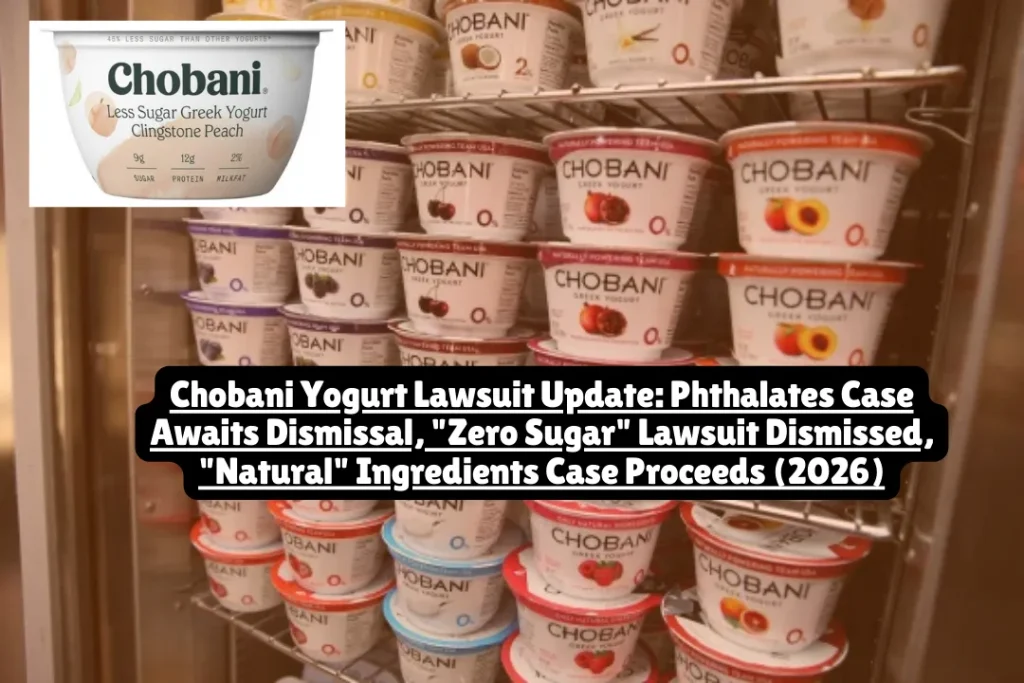
Chobani Yogurt Lawsuit Update, Phthalates Case Awaits Dismissal, “Zero Sugar” Lawsuit Dismissed, “Natural” Ingredients Case Proceeds
Chobani faces three major lawsuits as of January 2026: the phthalates “toxic chemicals” case (Wysocki v. Chobani) awaits formal dismissal after the court indicated in August 2025 it would dismiss the claims, the “Zero Sugar” allulose lawsuit was completely dismissed with prejudice on May 29, 2025, and the “Only Natural” ingredients case involving stevia and monk fruit extracts remains active after the court denied Chobani’s motion to dismiss on July 11, 2025.
What the Chobani Yogurt Lawsuits Allege
Chobani has been hit with multiple consumer protection lawsuits challenging the accuracy of its product labeling. Each case targets different products and claims, but all allege the company misled consumers about what’s actually in its yogurt.
The Phthalates “Toxic Chemicals” Lawsuit (Wysocki v. Chobani)
Filed April 16, 2025, in California federal court, plaintiff Amy Wysocki claims Chobani’s Nonfat Plain Greek Yogurt and Whole Milk Plain Greek Yogurt contain phthalates despite being labeled as having “Only Natural Ingredients.” Third-party testing by PlasticList allegedly found four types of phthalates—DEHP, DEP, DBP, and DEHT—in these products.
Phthalates are endocrine-disrupting chemicals commonly used to make plastics more flexible and durable. The lawsuit alleges these chemicals leached into the yogurt from the plastic packaging over time, contradicting Chobani’s “natural ingredients” claims.
Similar to other Balance of Nature $9.95M False Advertisement Class Action Settlement cases challenging “natural” product labeling, the Wysocki lawsuit claims consumers paid premium prices based on Chobani’s marketing representations.
The “Zero Sugar” Allulose Lawsuit—Dismissed May 29, 2025
This lawsuit challenged Chobani’s “Zero Sugar” yogurt labeling, arguing that products containing allulose—a naturally occurring sugar found in figs and raisins—cannot truthfully claim “no sugar” or “zero sugar.”
Judge John J. Tharp Jr. dismissed the case with prejudice on May 29, 2025, ruling that FDA guidance allowing companies to exclude allulose from “Total Sugars” on nutrition labels preempts state law false advertising claims. The dismissal means this case cannot be refiled.
The “Only Natural” Ingredients Lawsuit—Still Active
Filed in August 2024, this lawsuit claims Chobani’s “Zero Sugar” yogurts falsely advertise containing “Only Natural Ingredients” despite using heavily processed stevia and monk fruit extracts. Judge Benjamin J. Cheeks denied Chobani’s motion to dismiss on July 11, 2025.
The court found plaintiffs sufficiently described the 11-step manufacturing processes for stevia extract and monk fruit extract, making claims “more than speculative.” This case proceeds to discovery and potential class certification.
Related Article: Tempel Steel Data Breach Class Action Lawsuit Settlement, $175,000 Fund Pays Up To $5,000—File By April 6, 2026
Current Status of Each Chobani Lawsuit as of January 2026
Phthalates Lawsuit: Expected Dismissal
Chobani stated in August 2025 that “the court indicated it will dismiss the case in a formal order.” As of late January 2026, no formal dismissal order has been publicly filed, but the case appears headed toward dismissal based on the court’s August 2025 hearing indication.
The case is Wysocki v. Chobani LLC, Case No. 3:25-cv-00907-JES-VET, pending in the U.S. District Court for the Southern District of California. Chobani maintains “our products include only natural ingredients” and that the allegations “lack merit.”
“Zero Sugar” Lawsuit: Dismissed With Prejudice
The allulose case received complete dismissal on May 29, 2025. Judge Tharp ruled that Chobani’s labeling complies with FDA guidance documents entitled to “Auer deference”—meaning courts defer to federal agencies’ reasonable interpretations of their own regulations.
This victory establishes important precedent for food companies using allulose and other FDA-approved sweeteners that don’t count toward “Total Sugars” on nutrition labels.
“Only Natural” Lawsuit: Proceeding to Discovery
The Albrigo case remains the most significant ongoing threat to Chobani. Unlike the phthalates and allulose cases, this lawsuit survived Chobani’s motion to dismiss and will move forward with discovery and potential class certification.
The court found that processed stevia and monk fruit extracts—while derived from natural sources—undergo extensive manufacturing that may contradict “Only Natural Ingredients” claims. This case could set precedent for how food companies label products containing heavily processed plant-derived ingredients.
What Chobani Consumers Need to Know About These Lawsuits
No Settlement Payments Are Currently Available
None of the three major Chobani lawsuits have resulted in settlements as of January 2026. The phthalates case awaits dismissal, the “Zero Sugar” case was dismissed, and the “Only Natural” case is in early litigation stages.
If you purchased Chobani products, you don’t need to file anything at this stage to be included in the “Only Natural” class action if it achieves certification. Class members are automatically included unless they opt out.
Beware of Scam Websites
No legitimate Chobani settlement websites exist because no settlements have been approved. Any website claiming to process Chobani settlement claims is fraudulent. Never provide personal information or payment to supposed “settlement administrators” for these cases.
The Phthalates Allegations Highlight Packaging Concerns
The Wysocki lawsuit raises broader questions about chemicals migrating from plastic packaging into food products. While phthalates are FDA-approved for food contact applications, their presence in products marketed as “natural” creates consumer protection issues similar to the Mary Ruth Organics Lawsuit Allegations Of False Advertising & Unsafe Ingredients.
Consumer Reports testing in 2024 found phthalates in numerous food products across multiple brands, making this an industry-wide concern rather than a Chobani-specific issue.
What “Only Natural Ingredients” Actually Means Under FDA Rules
The FDA considers “natural” to mean “nothing artificial or synthetic has been included in, or added to, a food that would not normally be expected to be in that food.” However, this definition doesn’t address whether extensively processed plant-derived ingredients qualify as “natural.”
The ongoing Albrigo case will help clarify whether multi-step extraction and refinement processes disqualify ingredients from “natural” labeling—a question affecting the entire food industry.
What to Do If You Purchased Chobani Products
How to Determine If You’re Affected
The phthalates lawsuit covers Chobani Nonfat Plain Greek Yogurt and Whole Milk Plain Greek Yogurt purchased in the United States during the applicable statute of limitations period (typically 3-4 years before the April 2025 filing date).
The “Only Natural” lawsuit covers Chobani “Zero Sugar” yogurts containing stevia and monk fruit extracts. Check your product labels—if you purchased these products based on “Only Natural Ingredients” claims, you may be part of the potential class.
Monitor Case Developments
You can track case progress through PACER (Public Access to Court Electronic Records) at www.pacer.gov. The phthalates case is 3:25-cv-00907 in the Southern District of California. The “Only Natural” case details are available through Illinois federal court records.
When to Consult an Attorney
If you believe you’ve been harmed by false advertising or want to understand your rights regarding these lawsuits, consult a consumer protection attorney experienced in class action litigation. Most offer free initial consultations.
Individual claims outside the class action may be worth pursuing if you suffered documented harm beyond the price premium for “natural” products—such as allergic reactions, medical expenses, or other quantifiable damages.
Frequently Asked Questions About the Chobani Yogurt Lawsuit
What is the Chobani yogurt lawsuit about?
Chobani faces three separate lawsuits: one alleging “Only Natural Ingredients” products contain phthalates from plastic packaging, one challenging “Zero Sugar” labeling with allulose (dismissed May 2025), and one claiming stevia and monk fruit extracts are too processed to be “natural” (still active).
What is the current status of the Chobani lawsuit?
The phthalates case awaits formal dismissal after the court indicated in August 2025 it would dismiss claims. The “Zero Sugar” lawsuit was dismissed with prejudice on May 29, 2025. The “Only Natural” ingredients case involving stevia and monk fruit proceeds to discovery.
Can I file a claim for the Chobani settlement?
No settlements exist as of January 2026. The phthalates case is expected to be dismissed, the “Zero Sugar” case was dismissed, and the “Only Natural” case hasn’t reached settlement stage. Beware of scam websites claiming to process Chobani settlement claims.
What products are affected by the Chobani lawsuit?
The phthalates lawsuit covers Nonfat Plain Greek Yogurt and Whole Milk Plain Greek Yogurt. The dismissed “Zero Sugar” lawsuit covered yogurts with allulose. The active “Only Natural” lawsuit covers “Zero Sugar” yogurts containing stevia and monk fruit extracts.
Is there a deadline to join the Chobani class action?
For the active “Only Natural” case, no claim filing is required at this early stage. Class members are automatically included if the court certifies a class. You’ll receive notice if certification occurs and can opt out if desired.
How much money can I get from the Chobani lawsuit?
No settlement amounts have been announced. If the “Only Natural” case eventually settles or plaintiffs win at trial, compensation would depend on settlement terms, number of valid claims, and whether you can provide proof of purchase.
Does Chobani admit the allegations are true?
No. Chobani denies all allegations and maintains its products contain “only natural ingredients.” The company successfully defended the “Zero Sugar” lawsuit and expects to defeat the phthalates case. The “Only Natural” case remains contested.
Last Updated: January 25, 2026
Disclaimer: This article provides general information about Chobani yogurt lawsuits and is not legal advice—individuals should consult qualified attorneys specializing in consumer protection or class action litigation for case-specific guidance.
Stay informed about your consumer rights. If you purchased Chobani products based on “natural” or health-related marketing claims and have concerns about false advertising, monitor case developments and consult with a consumer protection attorney to understand your legal options.
Stay informed, stay protected. — AllAboutLawyer.com
Sources:
- Wysocki v. Chobani LLC, Case No. 3:25-cv-00907-JES-VET (S.D. Cal., filed April 16, 2025)
- U.S. District Court for the Northern District of Illinois, “Zero Sugar” dismissal order (May 29, 2025)
- Albrigo v. Chobani LLC motion to dismiss denial (July 11, 2025)
- Crowell & Moring LLP analysis of California microplastics litigation (January 2026)
- ClassAction.org Chobani lawsuit database
About the Author

Sarah Klein, JD, is a licensed attorney and legal content strategist with over 12 years of experience across civil, criminal, family, and regulatory law. At All About Lawyer, she covers a wide range of legal topics — from high-profile lawsuits and courtroom stories to state traffic laws and everyday legal questions — all with a focus on accuracy, clarity, and public understanding.
Her writing blends real legal insight with plain-English explanations, helping readers stay informed and legally aware.
Read more about Sarah