
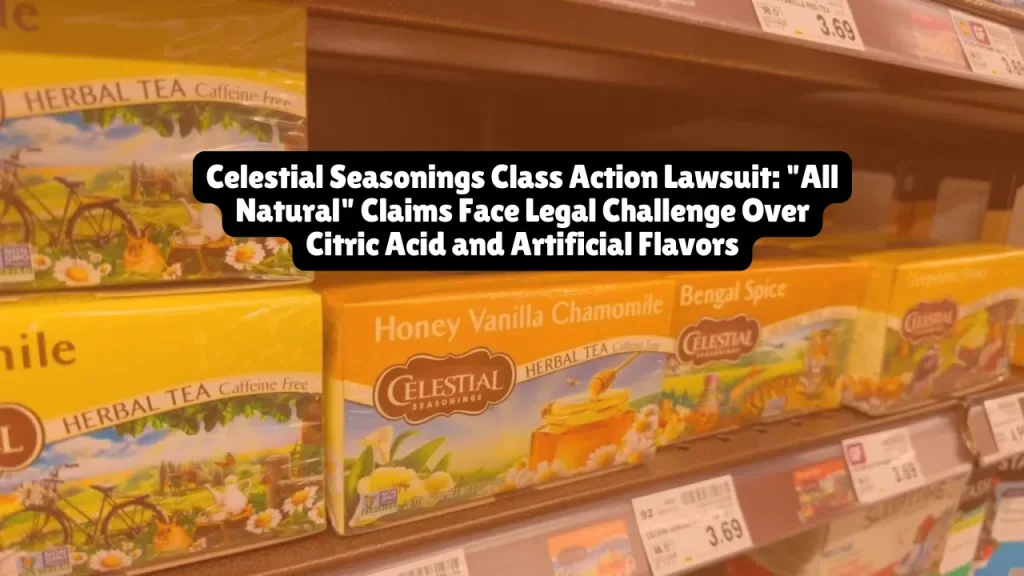
Celestial Seasonings Class Action Lawsuit, “All Natural” Claims Face Legal Challenge Over Citric Acid and Artificial Flavors
Celestial Seasonings Inc. faces a class action lawsuit filed in Colorado federal court on January 9, 2026, alleging the company falsely advertises its herbal teas as having “All Natural” flavors despite containing citric acid. The lawsuit targets five herbal tea products labeled “Naturally Flavored with Other Natural Flavors” where the ingredient list includes citric acid allegedly synthesized using Aspergillus niger rather than extracted from natural sources.
This marks the latest in a series of legal challenges against the Boulder-based tea company regarding ingredient transparency. Celestial Seasonings previously settled a 2013 class action for $7.5 million in compensation plus $2.4 million in coupons over allegations of mislabeling products as “100% Natural”.
What the Latest Lawsuit Claims
The complaint alleges Celestial Seasonings adds citric acid to its teas as a flavoring agent rather than as a preservative. According to the filing, because citric acid appears separately from “natural flavors” in the ingredient list, it implies the citric acid is manufactured rather than naturally derived.
The lawsuit references FDA regulations under 21 CFR 101.22(i), which require products containing both characterizing flavors and other natural flavors to bear the statement “naturally flavored with other natural flavors.” When a flavoring ingredient doesn’t come from the natural source it’s meant to represent, stricter labeling requirements apply.
Celestial Seasonings makes claims on its website that “the natural flavors we use are derived from real ingredients and do not contain artificial or synthetic additives”. The lawsuit challenges whether these representations align with the actual ingredient sourcing.
History of Similar Claims Against Celestial Seasonings
The company has faced multiple false advertising lawsuits over ingredient transparency. In 2013, Hain Celestial Group faced a consumer class action alleging the company falsely labeled Celestial Seasonings tea products as “all natural” even though they allegedly contained trace amounts of pesticides. That case survived a motion to dismiss and eventually settled.
Additional lawsuits have targeted specific product claims. A 2020 class action alleged Celestial Seasonings’ Honey Vanilla Chamomile Herbal Tea contains only “trace” amounts of honey and vanilla despite label representations suggesting these are primary flavoring sources. Another case claimed Sleepytime Vanilla tea doesn’t contain real vanilla but instead uses non-vanilla flavors that imitate vanilla.
These cases share a common theme: consumers alleging they paid premium prices for products marketed as natural or containing specific ingredients, only to discover the flavoring comes primarily from other sources.
Which Products Are Affected
The current January 2026 lawsuit targets five specific herbal tea products marketed with “Naturally Flavored with Other Natural Flavors” labels. The complaint focuses on products where the front packaging displays no qualifying terms like “flavored” or “natural flavors” to indicate the flavor may not be derived exclusively from the characterizing ingredients.
While the lawsuit doesn’t specify all affected products in publicly available filings, past litigation named products including Sleepytime Herbal Tea, Sleepytime Kids Goodnight Grape, Green Tea Peach Blossom, Green Tea Raspberry Gardens, Authentic Green Tea, Antioxidant Max Dragon Fruit, Green Tea Honey Lemon Ginseng, Antioxidant Max Blackberry Pomegranate, Antioxidant Max Blood Orange, and English Breakfast Black K-Cup.
What You Must Know
No settlement has been reached in the January 2026 citric acid lawsuit. The case was just filed and remains in early stages. There is no claim form available yet, and no eligibility requirements have been established.
The lawsuit follows legal precedent from food labeling cases where courts examine whether “natural” claims mislead reasonable consumers. Similar to the Sierra Mist lawsuit involving false advertising over “natural” branding, these cases hinge on whether marketing representations match actual product formulation.
The key legal question is whether synthesized citric acid qualifies as a “natural flavor” under FDA regulations. Citric acid can be derived from natural sources like lemons or synthetically produced through fermentation using microorganisms. The lawsuit claims Celestial Seasonings uses the latter while marketing products as containing only natural ingredients.
Consumer protection laws in multiple states prohibit false advertising and deceptive business practices. California’s Consumer Legal Remedies Act and Unfair Competition Law often serve as the foundation for food labeling class actions, as these statutes provide remedies for consumers misled by product marketing.
What to Do Next
If you purchased Celestial Seasonings herbal teas marketed as “All Natural” or “Naturally Flavored with Other Natural Flavors,” preserve your receipts and product packaging. Class action lawsuits typically require proof of purchase to claim settlement benefits, though some settlements accept sworn statements about purchases when receipts aren’t available.
Monitor the case progress through court records or class action settlement websites. Once the lawsuit advances, you’ll likely receive notice if you’re part of the class. Class members typically include anyone who purchased affected products during a specified time period in certain states.
The previous 2013 settlement demonstrates the potential timeline and outcomes for these cases. That litigation took approximately two years from filing to final settlement approval. Individual settlement payments depend on the settlement amount, number of valid claims filed, and whether you have purchase proof.
Similar to the Celsius Drink lawsuit settlement, which offered up to $250 with proof of purchase or $20 without receipts, Celestial Seasonings settlements may structure payments based on documentation level.
Frequently Asked Questions
Is there an active settlement I can file claims for right now?
No. The January 2026 citric acid lawsuit was just filed and has not reached settlement. The previous 2013 pesticide settlement concluded in 2015 and is no longer accepting claims. You cannot file claims until this new case reaches settlement and the court approves a claims process.
How do I know if the tea I bought is part of the lawsuit?
The complaint targets herbal teas labeled “Naturally Flavored with Other Natural Flavors” that contain citric acid in their ingredient lists. Check the back of your tea box under ingredients. If citric acid appears separately from “natural flavors,” your product may be included in the litigation.
Will I automatically receive money if I purchased affected teas?
No. Even after a settlement is reached, you must file a claim form to receive payment. Class action settlements require active participation. Courts typically mail notices to known purchasers and publish notice in newspapers or online, but filing a claim is your responsibility.
Can I still buy Celestial Seasonings tea safely?
Yes. This lawsuit addresses marketing and labeling practices, not product safety. The FDA regulates food safety separately from advertising claims. The products remain available for purchase and pose no identified health risks.
What damages can I recover in this lawsuit?
Typical food labeling class actions seek refunds for the price premium consumers paid based on “natural” claims. Some settlements offer partial refunds per product purchased, while others provide fixed amounts per household. Exact damages depend on settlement negotiations if the case doesn’t go to trial.
How long do these cases typically take?
Food labeling class actions typically take 2-4 years from filing to final settlement approval. The previous Celestial Seasonings case took approximately two years. Complex litigation involving scientific evidence about ingredient sourcing may extend timelines further.
Are there other tea companies facing similar lawsuits?
Yes. “Natural” labeling claims trigger frequent litigation across the food and beverage industry. Companies face scrutiny when marketing products as natural while using synthetic ingredients or processes. These cases reflect broader consumer demand for ingredient transparency and accurate labeling.
Last Updated: January 18, 2026
Disclaimer: This article provides information about the Celestial Seasonings class action lawsuit for educational purposes only and does not constitute legal advice.
CTA: Stay informed about the Celestial Seasonings lawsuit developments—bookmark this page for updates on settlement announcements and claim filing information.
Stay informed, stay protected. — AllAboutLawyer.com
About the Author

Sarah Klein, JD, is a licensed attorney and legal content strategist with over 12 years of experience across civil, criminal, family, and regulatory law. At All About Lawyer, she covers a wide range of legal topics — from high-profile lawsuits and courtroom stories to state traffic laws and everyday legal questions — all with a focus on accuracy, clarity, and public understanding.
Her writing blends real legal insight with plain-English explanations, helping readers stay informed and legally aware.
Read more about Sarah