
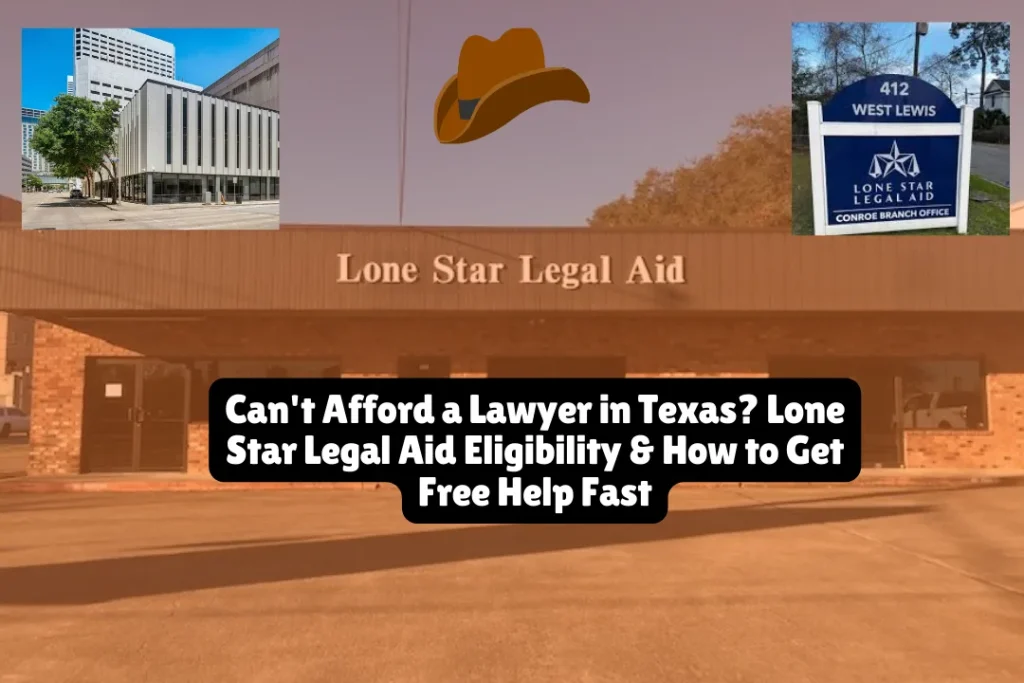
Can’t Afford a Lawyer in Texas? Lone Star Legal Aid Eligibility & How to Get Free Help Fast
Lone Star Legal Aid provides free civil legal services to low-income Texans across 72 counties covering Houston, East Texas, and parts of Southwest Arkansas. To qualify, you must earn 125% or less of Federal Poverty Guidelines ($37,650 for individuals, $77,250 for a family of four in 2026) and meet legal status requirements. Over 33,000 Texans received help in 2025.
The organization operates 14 offices and handles family law, housing, consumer protection, veterans’ benefits, disaster recovery, and more.
Why This Matters to You
Understanding how to access Lone Star Legal Aid could save you from losing your home, custody battles without representation, or predatory debt collection. Legal problems rarely resolve themselves—they escalate.
This affects you if you’re facing eviction and can’t afford a lawyer, you’re dealing with domestic violence and need protective orders, you’re a veteran struggling with benefits denials, or you’ve been scammed and need consumer protection help. Bottom line: Free legal help exists, but you must know how to access it before deadlines pass.
What You Came to Know
What Services Does Lone Star Legal Aid Provide?
Lone Star Legal Aid handles multiple civil (non-criminal) legal practice areas. Family law services include divorce, child custody, child support, adoption, name changes, and protective orders for domestic violence survivors.
Housing assistance covers evictions, foreclosure prevention, landlord-tenant disputes, fair housing violations, and mortgage modification. Consumer protection helps with debt collection defense, bankruptcy, scam victims, identity theft, and unfair business practices.
Veterans’ services through their dedicated Military & Veterans Unit provide disability benefits appeals, discharge upgrades, family law matters, and housing issues. They also handle public benefits (Social Security, Medicaid, food stamps), environmental justice, disaster recovery, and tax relief matters.
Here’s what that actually means for you: If your problem falls under civil law (not criminal charges), Lone Star Legal Aid might represent you or provide limited assistance depending on resources and case complexity.
Lone Star Legal Aid Eligibility Requirements
You must meet two criteria: financial eligibility and legal status eligibility. Financial limits follow 125% of Federal Poverty Guidelines, updated annually. For 2026, that means $37,650 for one person, $50,625 for two, $63,600 for three, or $77,250 for a family of four.
Most sites won’t tell you this, but: Even if you earn above 125% of poverty guidelines, you may still qualify under special projects like disaster recovery, veterans’ services, or domestic violence programs that have different income limits or waive them entirely.
You must also be a U.S. citizen, lawful permanent resident, or have qualifying immigration status. Undocumented individuals don’t qualify except in limited domestic violence or human trafficking cases.
Coverage Areas: Where Lone Star Legal Aid Helps
Lone Star Legal Aid serves 72 Texas counties across Houston, East Texas, Southeast Texas, and Northeast Texas, plus four counties in Southwest Arkansas. Major service areas include Harris County (Houston), Jefferson County (Beaumont), Galveston County, Montgomery County, Brazoria County, and Liberty County.
They operate 14 offices in cities including Houston, Beaumont, Conroe, Bryan, Huntsville, Lufkin, Longview, Marshall, and Bay City. If you live outside these areas, Texas has other legal aid providers—check TexasLawHelp.org to find your local organization.
How to Apply for Lone Star Legal Aid Services
You can apply three ways: online 24/7 at lonestarlegal.org, by phone during designated hours (Monday-Friday 8am-4pm at office-specific numbers), or in person at any of their 14 offices.
The application process requires providing household income documentation (pay stubs, tax returns, benefit letters), identification, and details about your legal problem including any court paperwork. Approval isn’t guaranteed—they prioritize cases based on urgency, available resources, and case complexity.
For family law matters, call Monday 8:30am-12:30pm. For other civil matters, call Tuesday-Friday 8:30am-12:30pm. These phone intake windows help manage high demand.
What Lone Star Legal Aid Cannot Help With
They don’t handle criminal defense cases—only civil matters. Employment disputes where you’re suing an employer aren’t covered. They can’t help with business formation, contracts, or lawsuits.
Personal injury cases seeking monetary damages (car accidents, slip and falls) aren’t handled. Immigration cases have limited availability depending on funding. Cases where Lone Star Legal Aid has a conflict of interest (like suing another legal aid client) are excluded.
What You Must Know
The Reality of Legal Aid Demand
Here’s the thing: Lone Star Legal Aid receives far more applications than they can accept. In 2025, they served over 33,000 clients but turned away thousands more due to limited funding and staff.
Don’t assume you’ll get full representation. Many applicants receive “brief service” (one-time consultations, document reviews, or court form assistance) rather than full case representation. Complex litigation, appeals, and trials are harder to get representation for than straightforward matters.
Apply as early as possible—waiting until the day before your court date drastically reduces your chances of getting help.
Special Programs You Might Qualify For
Lone Star Legal Aid runs specialized units with different eligibility requirements. The Military & Veterans Unit serves veterans, active duty service members, and their families regardless of income in some cases. Call 1-844-400-VETS for veteran-specific assistance.
Their Disaster Recovery Unit helps survivors of natural disasters like hurricanes, floods, and freezes with insurance disputes, contractor problems, and FEMA appeals—often with relaxed income requirements. Domestic violence survivors may qualify for help regardless of income through their family violence programs.
What to Do Next
How to Contact Lone Star Legal Aid
Visit lonestarlegal.org to apply online 24/7. This is the fastest way to submit your application and includes automatic eligibility screening.
Call their main intake line at the office serving your county (find numbers at lonestarlegal.org/offices). Have your income documentation and case details ready before calling.
Visit an office in person during business hours if you need immediate assistance or have difficulty with online/phone applications.
Alternative Legal Resources If You Don’t Qualify
If you don’t meet Lone Star Legal Aid eligibility requirements, explore other options. The State Bar of Texas Lawyer Referral Service (1-800-252-9690) connects you with attorneys offering reduced-fee initial consultations.
Texas RioGrande Legal Aid and Legal Aid of NorthWest Texas serve other parts of the state. Check TexasLawHelp.org for self-help legal forms, guides, and local resources.
Local law school clinics at University of Houston Law Center, South Texas College of Law, and Texas Southern University offer free help in specific practice areas. Many county bar associations run pro bono programs—contact your local bar association directly.
💡 Pro Tip
When applying to Lone Star Legal Aid, gather ALL income documentation before starting your application—pay stubs, tax returns, Social Security statements, unemployment benefits, child support received, and any other income sources. Incomplete applications get delayed or rejected. If you’re facing a court deadline, mention it immediately—emergency cases like evictions and protective orders may receive priority processing.
Disclaimer: This article provides information about Lone Star Legal Aid for informational purposes only. Lone Star Legal Aid eligibility and service availability vary by location, case type, and available resources. AllAboutLawyer.com doesn’t provide legal services or represent Lone Star Legal Aid. Contact Lone Star Legal Aid directly at lonestarlegal.org or consult a qualified Texas attorney for specific legal guidance about your situation.
Free civil legal services exist for low-income Texans facing serious legal problems. Knowing how to access Lone Star Legal Aid and alternative resources protects your rights when you can’t afford private representation.
Stay informed, stay protected. — AllAboutLawyer.com
Last Updated: February 9, 2026 — We keep this current with the latest legal developments
About the Author

Sarah Klein, JD, is a licensed attorney and legal content strategist with over 12 years of experience across civil, criminal, family, and regulatory law. At All About Lawyer, she covers a wide range of legal topics — from high-profile lawsuits and courtroom stories to state traffic laws and everyday legal questions — all with a focus on accuracy, clarity, and public understanding.
Her writing blends real legal insight with plain-English explanations, helping readers stay informed and legally aware.
Read more about Sarah