
Can I Refuse to Talk to ICE? Your Fifth Amendment Rights, When Silence Protects You 2026
Yes, you have the constitutional right under the Fifth Amendment to remain silent and refuse to answer ICE questions. While you may still need to provide identification documents in certain situations, your silence generally cannot be used against you in immigration court. With ICE enforcement expanding significantly in 2026—including thousands of new agents and elimination of “protected area” policies—understanding these protections matters more than ever.
How Your Right to Remain Silent Works
The Fifth Amendment Protects Everyone
The Fifth Amendment to the U.S. Constitution protects you from self-incrimination—meaning you cannot be forced to answer questions that could be used against you. This constitutional protection applies to all persons in the United States, regardless of immigration status, as established in Plyler v. Doe, 457 U.S. 202 (1982).
Under 8 U.S.C. § 1357, ICE officers have authority to question individuals about their immigration status. But the Fifth Amendment means they cannot compel you to answer. You can clearly state: “I am exercising my right to remain silent.”
Speaking Versus Showing ID: The Legal Distinction
Here’s what many people get wrong: refusing to speak is different from refusing identification. While you have an absolute right to remain silent about where you were born, how you entered the country, or your immigration status, some states require you to provide identification to law enforcement during lawful stops.
However, even when showing ID, you can still refuse to answer substantive questions about your immigration history. The key is understanding what’s mandatory (identification in certain situations) versus what’s protected by your Fifth Amendment rights (all other questions).
What Happens When You Stay Silent
When you invoke your Fifth Amendment right and remain silent, ICE cannot force you to speak. Under immigration court procedures governed by 8 U.S.C. § 1229, your silence generally cannot be used as evidence against you in removal proceedings.
Unlike in some criminal contexts, immigration law recognizes that silence is a constitutional right, not an admission of guilt. ACLU guidance on know your rights emphasizes that exercising this right is legally protected and typically does not harm your case.
Different ICE Encounter Scenarios
At Your Home: Fourth Amendment Protections Apply
When ICE agents knock on your door, the Fourth Amendment protects you from unreasonable searches and seizures. You do not have to open the door unless ICE has a judicial warrant signed by a judge—not an administrative ICE warrant (Form I-200 or I-205).
Through the closed door, you can ask agents to slide any warrant under the door or show it through a window. If it’s only signed by an ICE official rather than a judge, you have the constitutional right to refuse entry by stating: “I do not consent to your entry.”
In Public: Voluntary Encounters Versus Detention
If ICE approaches you in public, ask: “Am I free to leave?” If they say yes, it’s a voluntary encounter and you can calmly walk away while exercising your right to remain silent.
If they say no, you’re being detained. Even during detention, you retain your Fifth Amendment right to remain silent and can request to speak with an attorney before answering any questions about your immigration status or history.
During Arrest: Your Rights Continue
Being arrested by ICE does not eliminate your constitutional protections. You still have the right to remain silent, the right to request an attorney, and the right to refuse to sign documents without legal counsel reviewing them first.
For more information on what happens after ICE detention, see our guide on deportation defense.
What People Get Wrong About Refusing to Talk to ICE
“Staying Silent Makes You Look Guilty”
This is false. Immigration courts recognize that exercising your Fifth Amendment right is a constitutional protection, not evidence of wrongdoing. Silence cannot legally be interpreted as an admission of being unlawfully present or any other immigration violation.
The American Immigration Lawyers Association guidance confirms that remaining silent is often the safest choice because anything you say can be used against you in removal proceedings, but your silence generally cannot.
“ICE Can Force You to Answer or Arrest You for Refusing”
ICE cannot arrest you solely for exercising your right to remain silent. While ICE has arrest authority under 8 U.S.C. § 1357(a) for suspected immigration violations, that authority is separate from your constitutional right not to answer questions.
Related Article: How Does ICE Know You’re Illegal? Database Systems, Information Sharing, and Enforcement Priorities
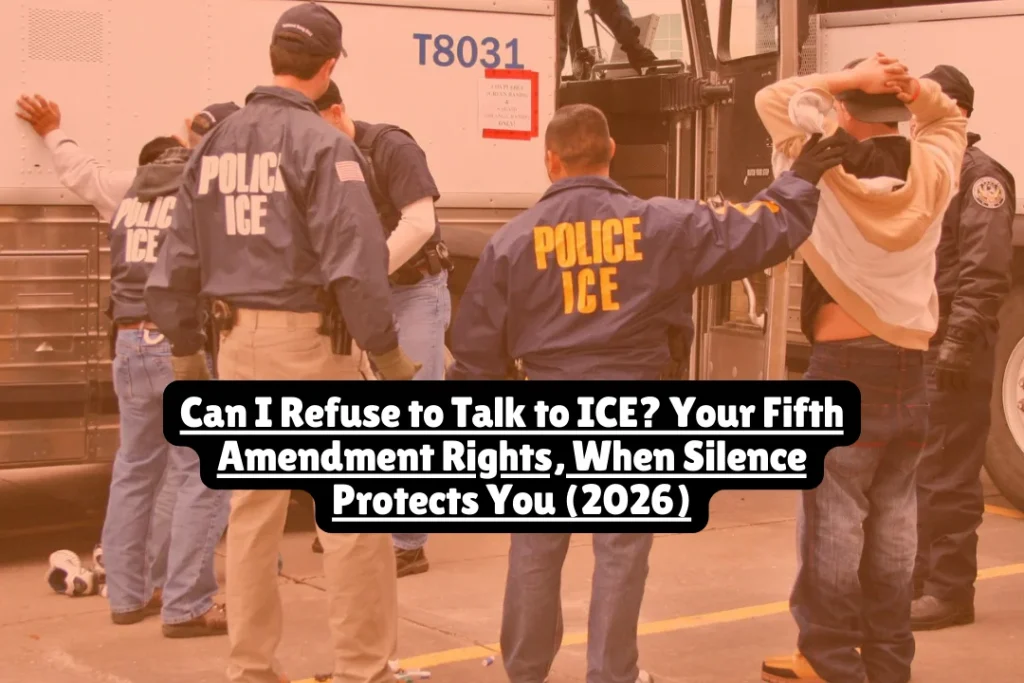
However, ICE can arrest you if they have probable cause to believe you’re unlawfully present, regardless of whether you speak to them. The point is that remaining silent doesn’t give them new authority they didn’t already have. To understand ICE’s broader enforcement powers and limitations, read Your Rights When ICE Stops You.
What to Do If ICE Approaches You
Exercise Your Constitutional Rights Clearly
If ICE approaches you, calmly and clearly state: “I am exercising my right to remain silent” and “I want to speak with an attorney.” Do not answer questions about your birthplace, immigration status, or how you entered the United States.
Ask whether you’re free to leave. If yes, walk away calmly. If no, continue to remain silent and request legal counsel.
Know What Not to Do
Never lie to ICE or provide false documents—this can result in criminal charges and eliminate future immigration relief options. Silence is legally protected; lying is not.
Do not physically resist arrest or run away, as this can provide grounds for additional charges. Remain calm, assert your rights verbally, and comply with physical directions while continuing to remain silent about substantive questions.
Document the Encounter When Possible
If you witness an ICE encounter (but are not personally detained), you have First Amendment rights to record the interaction from a safe distance without interfering. Document badge numbers, names, what was said, and any witnesses.
This documentation can be crucial if constitutional violations occurred, such as ICE entering a home without a judicial warrant or using coercion to obtain statements.
Frequently Asked Questions
Can ICE arrest me just for refusing to talk?
No. ICE cannot arrest you solely for exercising your Fifth Amendment right to remain silent. However, if ICE has probable cause to believe you’re unlawfully present under 8 U.S.C. § 1357(a), they can arrest you regardless of whether you speak to them. Your silence doesn’t create grounds for arrest, but it also doesn’t prevent arrest if they already have legal basis.
Do I have to show ICE my ID or documents?
This depends on the situation and your location. Some states have “stop and identify” laws requiring you to show identification during lawful stops. However, you generally can refuse to show documents that reveal your immigration status or nationality, such as a foreign passport. If you have valid U.S. immigration documents like a green card or work permit, carrying them can sometimes help, but consult an immigration attorney about your specific situation.
Will staying silent hurt my immigration case?
Generally, no. Under immigration court procedures governed by 8 U.S.C. § 1229, your silence with ICE officers typically cannot be used as evidence against you in removal proceedings. In fact, remaining silent often protects you from making statements that could harm your case. Anything you tell ICE can be used against you, but your silence generally cannot.
Can I walk away if ICE approaches me in public?
Yes, if it’s a voluntary encounter. Ask clearly: “Am I free to leave?” If ICE says yes, you can calmly walk away while exercising your right to remain silent. If they say no, you’re being detained and cannot leave, but you still retain your Fifth Amendment right not to answer questions.
Do I have to let ICE into my home?
No, unless they have a judicial warrant signed by a judge. Administrative ICE warrants (Form I-200 or I-205) do not authorize forced entry into your home under Fourth Amendment protections. You can refuse entry by stating through a closed door: “I do not consent to your entry.” For more details on ICE home encounters, see ICE Law Enforcement Authority.
What should I say if ICE asks about my immigration status?
You can clearly state: “I am exercising my right to remain silent” and “I want to speak with an attorney.” You are not required to answer questions about where you were born, how you entered the United States, your nationality, or your immigration status. These are exactly the types of questions the Fifth Amendment protects you from being compelled to answer.
Last Updated: January 25, 2026
Disclaimer: This article provides general educational information about Fifth Amendment rights during ICE encounters and is not legal advice for your specific situation.
If you’re facing an ICE encounter or have questions about your rights, consult an immigration attorney immediately. Every situation is unique, and an attorney can provide guidance based on your specific circumstances and immigration status.
Stay informed, stay protected. — AllAboutLawyer.com
Sources Cited:
- U.S. Constitution, Fifth Amendment (right against self-incrimination)
- U.S. Constitution, Fourth Amendment (protection against unreasonable searches and seizures)
- 8 U.S.C. § 1357 (immigration officer arrest and interrogation authority)
- 8 U.S.C. § 1229 (removal proceedings procedures)
- Plyler v. Doe, 457 U.S. 202 (1982) (constitutional protections apply to all persons)
- ACLU Know Your Rights guidance for ICE encounters
- American Immigration Lawyers Association (AILA) resources on constitutional protections during immigration enforcement
About the Author

Sarah Klein, JD, is a legal writer with experience in immigration and migration law, covering topics like green cards, marriage-based visas, and asylum applications. Through All About Lawyer, she provides straightforward legal insights to help individuals and families navigate complex immigration processes with clarity and confidence.
Read more about Sarah