
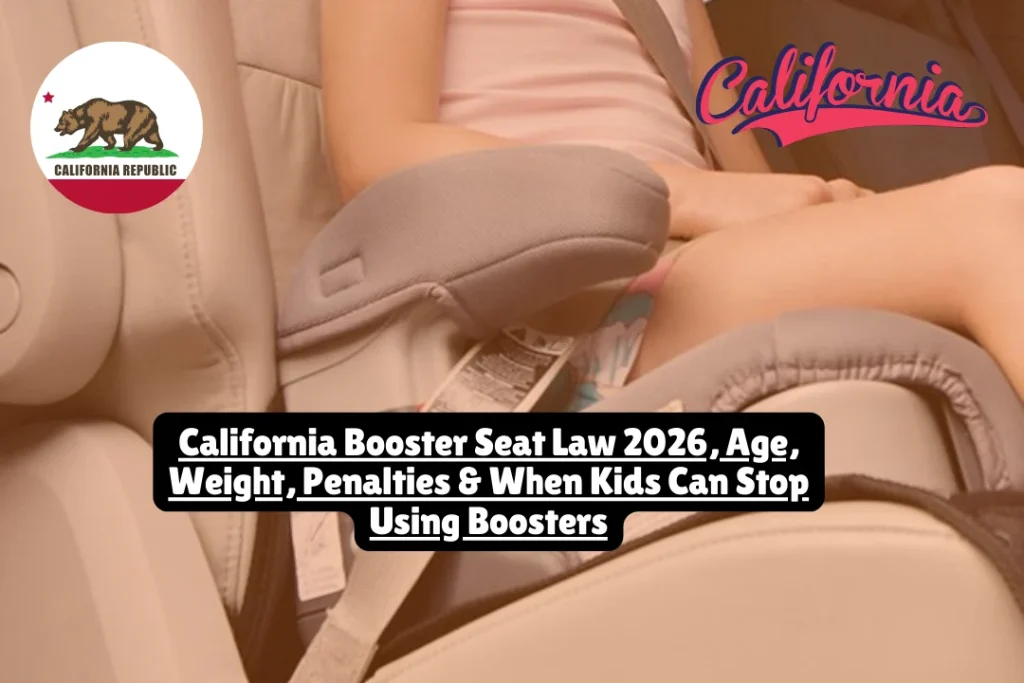
California Booster Seat Law 2026, Age, Weight, Penalties & When Kids Can Stop Using Boosters
What You Need to Know Right Now
California children under age 8 must use a car seat or booster seat in the back seat, while those 8 years old or 4’9″ tall can use a seat belt. Here’s the truth: most parents transition kids too early. Most children need booster seats until age 10-12, not just 8.
Why This Matters to You
Getting this wrong isn’t just illegal—it’s dangerous. Using a booster instead of just a belt prevents 45% of crash injuries. If you’re caught with an improperly restrained child, fines exceed $500 per child, plus one point on your driving record. That point can raise your insurance rates for years.
Bottom line: California takes child passenger safety seriously in 2026. New enforcement starting January 2027 will require kids ages 8-16 to pass a five-step seat belt fit test. If your child doesn’t pass, they legally need a booster—even at age 12.
What You Came to Know: California Booster Seat Requirements
Age and Height Requirements
Under California Vehicle Code Section 27363, children 8 years of age or who have reached 4’9″ in height may use a booster seat or regular seat belt. But here’s what most sites won’t tell you: Children under 8 are required to be secured in a car or booster seat in the back seat.
The Five-Step Test (Effective January 1, 2027)
Starting in 2027, kids 8-16 must answer yes to five questions to legally wear a seat belt without a booster:
- Does the child sit all the way back against the seat?
- Do the child’s knees bend comfortably at the seat edge?
- Does the shoulder belt cross between the neck and arm?
- Is the lap belt low on the hips, touching the thighs?
- Can the child stay seated like this the whole trip?
If any answer is “no,” your child needs a booster seat—period.
Weight and Transition Guidelines
A child is ready for a booster seat when they’ve outgrown the weight or height limit of their forward-facing harness, typically between 40 and 65 pounds. Don’t rush the transition. Each time you graduate your child to the next seat, there’s a reduction in protection.
Penalties and Fines
For each child under 16 who is not properly secured, parents or drivers can be fined more than $500 and get a point on their driving records. Second violations? The fine could exceed $1,000 per child.
What You Must Know
Common Mistakes Parents Make
Most parents think height matters more than fit. Wrong. The five-step test determines safety, not arbitrary measurements. Even a 4’10” child might fail the test if their torso is short.
Back Seat Rules
For best protection, all children should ride in the back seat—it’s twice as safe as the front. Never place a booster seat in front of an active airbag.
Insurance and Replacement
Auto insurers are required to replace safety seats that were in use or damaged during a crash under Vehicle Code 27315. File a claim immediately after any accident.
Related Article: State Law vs Federal Law, Which Wins When They Conflict? 2026
What to Do Next
Test Your Child’s Fit
Use the five-step test today. If your child fails even one step, keep them in a booster seat—even if they’re 10 or 12.
Choose the Right Booster
Look for seats meeting Federal Motor Vehicle Safety Standards (FMVSS 213). Check expiration dates and avoid seats involved in previous crashes.
Know Your Rights During Traffic Stops
If stopped, politely provide your license and registration. Don’t argue about the law—compliance protects your child and your record.
💡 Pro Tip: Document your booster seat purchase receipts and keep installation instructions in your glove box. If cited, proof of proper equipment can help reduce fines during your court hearing.
Frequently Asked Questions
Can my 8-year-old ride without a booster seat?
Only if they’re at least 4’9″ tall OR pass the five-step seat belt fit test (effective 2027). Height alone doesn’t guarantee safety.
What’s the fine for booster seat violations?
Fines exceed $500 per child, plus one point on your driving record. Second offenses can top $1,000.
Do Uber or Lyft drivers need to provide booster seats?
California law does not exempt taxis or rideshares. Parents must provide appropriate restraints or face citations.
Can my child use a booster in the front seat?
Only if there’s no back seat available. The back seat is twice as safe as the front.
How long should kids stay in booster seats?
Most kids need booster seats until age 10-12—not just age 8.
Take Action
Verify your child’s booster seat compliance today using the five-step test. For official guidance, visit the California Highway Patrol Child Safety Seats page or consult the California DMV.
Need help understanding California traffic laws? Learn about Is Lane Splitting Legal In The US for more state-specific regulations.
Last Updated: February 7, 2026
This article provides general legal information and is not legal advice. For child safety concerns or specific legal questions, consult the California DMV or a qualified family law attorney.
Stay informed, stay protected. — AllAboutLawyer.com
About the Author

Sarah Klein, JD, is a licensed attorney and legal content strategist with over 12 years of experience across civil, criminal, family, and regulatory law. At All About Lawyer, she covers a wide range of legal topics — from high-profile lawsuits and courtroom stories to state traffic laws and everyday legal questions — all with a focus on accuracy, clarity, and public understanding.
Her writing blends real legal insight with plain-English explanations, helping readers stay informed and legally aware.
Read more about Sarah