
Brian Walshe Murder Trial, Lover’s Explosive Testimony Reveals Secret Ana Walshe’s Affair as Prosecution Builds Motive Case
Breaking: Ana Walshe’s boyfriend William Fastow took the stand Thursday, revealing intimate details of their months-long affair as prosecutors work to establish motive in Brian Walshe’s first-degree murder trial. The testimony comes after jurors heard about Walshe’s gruesome internet searches including “how to saw a body” and “best ways to dispose of body parts after murder.”
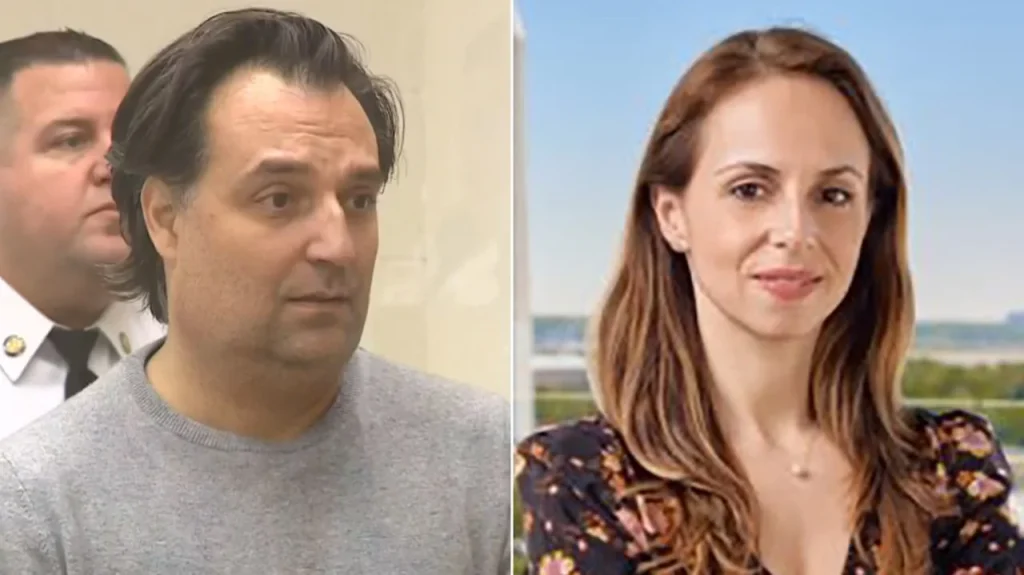
Brian Walshe, 50, is accused of murdering and dismembering his 39-year-old wife Ana on New Year’s Day 2023 after discovering her affair with a Washington D.C. real estate broker. Her body has never been found.
William Fastow’s Courtroom Testimony: The Affair Revealed
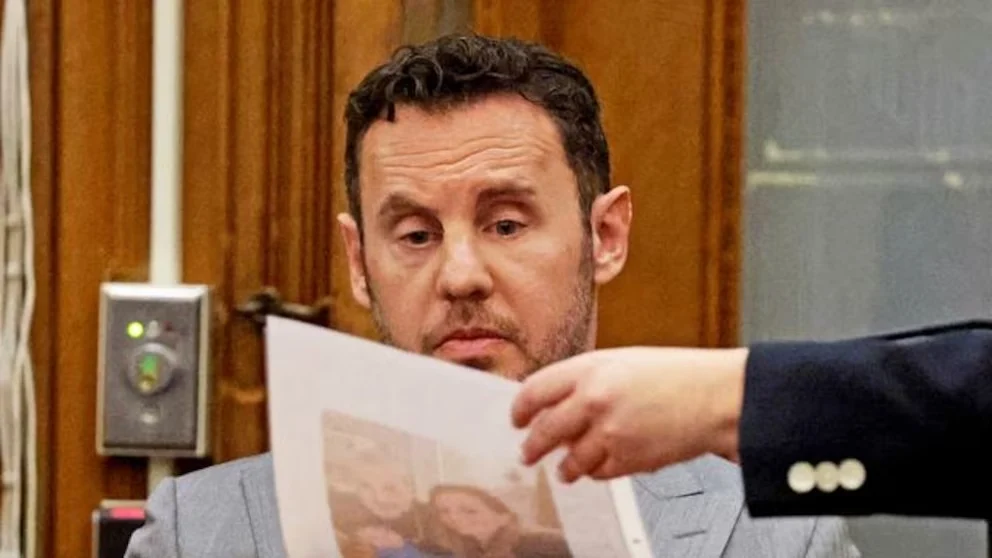
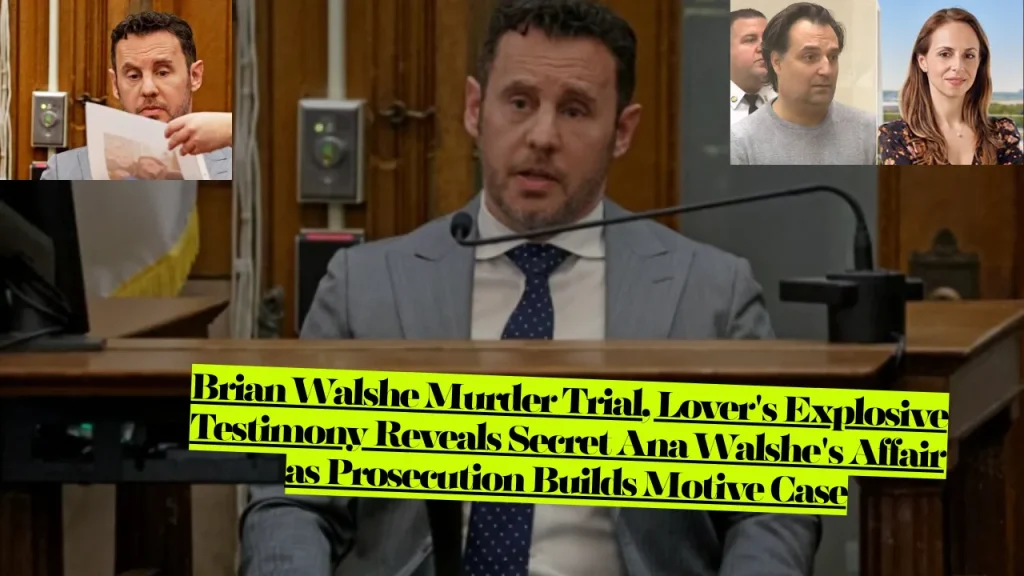
William Fastow, a Washington D.C. real estate broker, testified Thursday in Norfolk Superior Court that he had been in an intimate relationship with Ana Walshe beginning in spring 2022. The testimony marked the first time Brian Walshe came face-to-face with his wife’s lover.
Key testimony details:
- Fastow met Ana in March 2022 when he helped her purchase a townhouse in Washington D.C.
- The friendship quickly turned intimate, with the couple spending Thanksgiving 2022 together in Dublin, Ireland
- They spent Christmas Eve 2022 with Fastow’s friends in Annapolis, Maryland
- Ana’s last communication with Fastow was a text message on New Year’s Eve wishing him “Happy New Year”
- They had plans to meet January 4, 2023 to discuss their “one-, three-, five- and 10-year plans”
The Affair’s Strain on Ana’s Marriage
Fastow testified Ana’s marriage to Brian Walshe faced significant stress, particularly regarding his pending federal fraud case for selling fake Andy Warhol paintings.
According to testimony, Ana told Fastow the fraud case was a substantial burden, and they had contentious arguments about credit card charges Brian made for a sports memorabilia business.
However, Fastow also stated Ana wanted Brian to learn about the affair directly from her, not through other means.
“Ana felt it was really important that when Brian was to find out about the relationship, that he would hear it from her,” Fastow testified. “She had expressed great concern and I think she felt it would be a strike against her integrity if he found out a different way.”
Related Article: John Cena Lawsuit, Sued Over Iconic Wrestling Theme, WWE Faces Copyright Infringement Lawsuit Days Before Retirement Match
Brian’s Phone Call to the Lover
On January 4, 2023, Fastow received two calls from Brian Walshe. He ignored the first, fearing confrontation about the affair.
“I was in an intimate relationship with his wife. I had not heard from her in several days, and frankly, I was concerned that maybe he had found out and was calling to confront me,” Fastow testified.
In the voicemail played in court, Brian Walshe said in an upbeat tone that he “hoped all was going well” with Fastow before saying he was “reaching out to anybody he could” because “Ana hadn’t been in touch for a few days.”
Fastow eventually returned the call and went to Ana’s D.C. townhouse at Brian’s request to look for her. She was never found.
Defense Claims: Brian Didn’t Know About the Affair
Defense attorney Kelli Porges pushed back on the prosecution’s motive theory during cross-examination, getting Fastow to acknowledge critical points:
- Ana never told Fastow that Brian was suspicious about the affair
- Fastow had no knowledge of any plan for Ana to tell Brian about the relationship during her Christmas trip home
- There was no specific plan for Ana to “blow up her marriage” and be with Fastow
- Ana always spoke in positive terms about her husband and cared for him
The defense insists Brian Walshe had no knowledge of the affair, undermining the prosecution’s theory that the affair provided motive for murder.
Prosecution’s Evidence: Christmas Day Internet Search
Prosecutors revealed Brian Walshe searched for William Fastow on his phone on Christmas Day 2022—one week before Ana disappeared.
This digital evidence suggests Brian may have discovered or suspected the affair, directly contradicting the defense’s claim that he remained unaware.
The Gruesome Internet Searches
State Police Trooper Nicholas Guarino testified about dozens of disturbing internet searches found on Brian Walshe’s devices between January 1-3, 2023.
Searches beginning January 1 at 4:52 a.m.:
- “Best ways to dispose of a body”
- “How long before body starts to smell”
- “Can identification be made on partial human remains”
- “Can I use bleach to clean my wood floors from blood stains”
- “What does bleach do to dead bodies”
- “Can the FBI tell when you accessed your phone”
- “10 ways to dispose of a dead body if you really need to”
January 2 searches:
- “How to remove a SIM card from an iPhone”
- “How to remove a hard drive from an Apple laptop”
- “How long do stores keep security footage”
- “How to saw a body”
- “Hacksaw—the best tool for dismembering a body”
January 3 searches:
- “Cleaning up blood without leaving a trace”
- “How long for dismembered body to decompose”
- “Can a body decompose in a plastic bag?”
- “Can police get your search history without your computer?”
Prosecutors viewed a YouTube video titled “cleaning up a dead body” and accessed an article from “murdermurdermurder.com” listing “6 ways to dispose of a body.”
Physical Evidence: Bloody Tools and Ana’s Belongings
Massachusetts State Police Crime Lab Specialist Davis Gould testified Wednesday about gruesome evidence found in dumpsters near Brian Walshe’s mother’s home in Swampscott.
Items recovered from trash searches:
- Ana’s Hunter boots with red-brown stains
- Black jacket with red-brown stains containing a black purse
- Hatchet with DNA evidence
- Hacksaw with DNA evidence
- Tyvek protective suit with both Ana and Brian’s DNA
- Towels, bathrobe, and rug pieces—all with red-brown stains
- Slippers with hair and stains
- Ana’s COVID-19 vaccination card
- Ana’s jewelry including a Gucci necklace, Cartier watch, and engagement ring
DNA testing found Ana’s DNA on the hatchet, hacksaw, and other items. The Tyvek suit contained DNA from both Ana and Brian Walshe.
Blood evidence was also found inside the family’s Volvo.
The Prosecution’s Motive Theory
Assistant District Attorney Gregory Connor outlined the prosecution’s theory in opening statements: Brian Walshe killed Ana because he discovered her affair and stood to benefit financially.
Motive elements prosecutors presented:
- The Affair: Ana’s months-long relationship with William Fastow, discovered through Brian’s Christmas Day search
- Financial Gain: Brian was the sole beneficiary of Ana’s $2.7 million life insurance policy
- Control: Brian was under house arrest for federal fraud charges and Ana was planning a life in Washington D.C.
- Timing: The murder occurred after Ana spent Christmas Eve with Fastow rather than her family
Prosecutors don’t need to prove motive in Massachusetts murder cases, but establishing motive strengthens their circumstantial case when no body has been recovered.
Understanding Motive in Massachusetts Murder Cases
Legal Standard: Motive Is Not Required
Under Massachusetts General Laws Chapter 265, Section 1, prosecutors do not need to prove motive to secure a murder conviction. First-degree murder requires proof of:
- The defendant caused the victim’s death
- The defendant acted with deliberately premeditated malice aforethought, or with extreme atrocity or cruelty, or during commission of a life felony
- The killing was unlawful
Why prosecutors still present motive evidence:
Motive helps explain why a defendant would commit murder, making circumstantial evidence more compelling to jurors. In cases without a body or eyewitnesses, establishing motive becomes critical to connecting the defendant to the crime.
How Courts Handle Affair Evidence in Murder Trials
Massachusetts courts routinely admit evidence of extramarital affairs when prosecutors claim the affair motivated a murder. The evidence must be:
Relevant: The affair must logically connect to the alleged motive Probative: The evidence’s value must outweigh potential prejudice Admissible: The evidence must comply with Massachusetts Rules of Evidence
In Brian Walshe’s case, the affair evidence is highly relevant because:
- It provides potential motive for the killing
- The timing (Ana spending holidays with Fastow) created marital tension
- Brian’s Christmas Day search for Fastow suggests discovery
- The affair relates to Ana’s plans to relocate to Washington D.C.
Similar affair evidence has been admitted in numerous Massachusetts murder trials where prosecutors claimed jealousy or rage motivated the killing.
Source: Massachusetts Rules of Evidence and case law
Defense Theory: Sudden Unexplained Death
Defense attorney Larry Tipton presented a dramatically different narrative in opening statements Monday.
Tipton argued Brian Walshe found Ana dead in their bed on New Year’s Day morning after celebrating New Year’s Eve with a friend. Ana died from “sudden unexplained death,” and Brian panicked.
“When he entered the bedroom and began to get into bed, he sensed something was wrong,” Tipton told jurors. “He nudged Ana his wife. She didn’t respond.”
The defense claims Brian:
- Found Ana already deceased
- Panicked, fearing he would be blamed
- Made internet searches while “wrestling with the fact that Ana was dead”
- Disposed of her body to protect his three young sons
- Lied to police out of fear, not guilt
Tipton emphasized Brian “never thought about killing Ana” and that the couple loved each other and were planning for the future.
Sources:ABC News,Newsweek
Brian Walshe’s Prior Guilty Pleas
On November 18, 2024, just before jury selection began, Brian Walshe changed his plea to guilty on two lesser charges:
- Misleading police investigation: He admitted lying to investigators about Ana’s disappearance
- Improper conveyance of a human body: He admitted moving and disposing of Ana’s remains
Judge Diane Freniere has not decided whether jurors will learn about these guilty pleas. She will sentence Walshe on these charges after the murder trial concludes, saying the murder verdict will influence sentencing.
The guilty pleas represent a critical admission: Brian Walshe acknowledges Ana is dead and that he disposed of her body. This eliminates the defense strategy of arguing no murder occurred because Ana’s body was never found.
However, Walshe maintains he did not kill her.
Sources:CBS Boston,Biography.com
Massachusetts First-Degree Murder: Penalties and Standards
Burden of Proof
The Commonwealth bears the burden of proving every element of first-degree murder beyond a reasonable doubt. The defense need not prove anything.
Three Theories of First-Degree Murder
Massachusetts recognizes three theories for first-degree murder under M.G.L. Chapter 265, Section 1:
1. Deliberate Premeditation
Murder committed with deliberately premeditated malice aforethought. This requires:
- Intent to kill
- Premeditation (planning before the act)
- Malice (intent to do wrong)
The premeditation period can be brief—just enough time to reflect on the planned action.
2. Extreme Atrocity or Cruelty
Murder committed with extreme atrocity or cruelty, demonstrating:
- Exceptional brutality
- Callous disregard for human life
- Actions beyond what’s necessary to kill
3. Felony Murder
Murder committed during commission or attempted commission of a crime punishable with death or life imprisonment (armed robbery, rape, etc.).
Prosecutors must prove only one theory beyond a reasonable doubt for a first-degree murder conviction.
Sources:Mass.gov Model Jury Instructions,Massachusetts General Laws Chapter 265, Section 1
Penalties for Murder Convictions
First-Degree Murder: Mandatory life in prison without possibility of parole
Second-Degree Murder: Life in prison with possibility of parole after 15 years
Voluntary Manslaughter: Up to 20 years in prison
Brian Walshe faces life without parole if convicted of first-degree murder.
Timeline of Events
March 2022: Ana Walshe meets William Fastow when purchasing D.C. townhouse; relationship begins
Thanksgiving 2022: Ana and Fastow spend holiday together in Dublin, Ireland
December 24, 2022: Ana spends Christmas Eve with Fastow and friends in Annapolis
December 25, 2022:
- Brian Walshe searches for William Fastow on his phone
- Ana returns home to Massachusetts late after canceled morning flight
December 31, 2022, 11:59 p.m.: Ana’s last text message to Fastow wishing “Happy New Year”
January 1, 2023:
- Ana last seen alive at couple’s Cohasset home
- Internet searches begin at 4:52 a.m.: “best ways to dispose of a body”
- Searches continue throughout day about dismemberment, blood cleanup, DNA removal
January 2-3, 2023: Additional searches about body disposal, digital evidence removal, decomposition
January 4, 2023:
- Ana’s employer requests welfare check
- Brian Walshe calls William Fastow twice
- Ana officially reported missing
January 8, 2023: Police arrest Brian Walshe for misleading investigation
January 2023: Investigators find bloodstained tools, Ana’s belongings, and remains in dumpsters
November 18, 2024: Brian Walshe pleads guilty to misleading police and improper conveyance of body
December 1, 2025: Murder trial begins with opening statements
December 4, 2025: William Fastow testifies about affair
Sources: Multiple verified news sources listed throughout article
What Other Evidence Has Been Presented?
Surveillance and Digital Evidence:
- Video footage shows Brian Walshe buying cleaning supplies, tarps, mops, buckets, and a hatchet
- GPS data from Brian’s phones tracks his movements to multiple dumpster locations
- Phone records place Brian’s device near dumpsters where evidence was found
- No evidence Ana ever reached Washington D.C. on January 1 as Brian claimed
Financial Evidence:
- Ana’s credit cards show no purchases after December 31, 2022 except recurring charges
- Brian was sole beneficiary of $2.7 million in life insurance policies
- Brian made no payments on Ana’s accounts after her disappearance
Witness Testimony:
- Bar Method instructor confirmed Ana attended barre class on New Year’s Eve
- Nail salon patron testified she sat next to Ana getting pedicures December 31
- Multiple witnesses described Ana’s final days and interactions
- Friend Gem Mutlu testified about text exchanges with Brian after Ana’s disappearance
Sources:Court TV,CNN
Precedent Cases: Affairs as Motive in Murder Trials
Massachusetts courts have long admitted evidence of extramarital affairs as potential motive in murder prosecutions. Similar cases include:
Contextual Use: Courts permit evidence showing relationship dynamics, marital discord, and potential motives even when the affair alone doesn’t prove murder
Balancing Test: Judges weigh whether the affair evidence’s probative value (showing motive) outweighs potential prejudice against the defendant
Timing Matters: Evidence of affairs discovered shortly before the murder carries more weight than long-known relationships
In Brian Walshe’s case, the affair’s timing—Ana spending Christmas Eve with Fastow and Brian’s Christmas Day search—makes it highly relevant to the prosecution’s theory.
Current Trial Status
The trial is in its fourth day of testimony at Norfolk Superior Court in Dedham, Massachusetts. Judge Diane Freniere is presiding.
Expected trial length: 3-4 weeks
Key upcoming testimony:
- Additional forensic experts
- Digital evidence specialists
- Law enforcement investigators
- Possible defense witnesses
Jurors will ultimately decide whether Brian Walshe murdered Ana with deliberate premeditation, with extreme atrocity or cruelty, or during commission of another felony—or whether his defense of sudden unexplained death creates reasonable doubt.
Source: Multiple verified news sources
Frequently Asked Questions
What exactly is Brian Walshe charged with?
Brian Walshe faces one count of first-degree murder for allegedly killing and dismembering his wife Ana on January 1, 2023. He has already pleaded guilty to two lesser charges: misleading police and improper conveyance of a human body.
What testimony did Ana’s boyfriend provide?
William Fastow testified Thursday that he had a months-long affair with Ana Walshe beginning in spring 2022. They spent holidays together and planned to discuss their future on January 4, 2023. Ana’s last contact with Fastow was a text message on New Year’s Eve. Fastow received calls from Brian on January 4 but feared confrontation about the affair.
Does the prosecution need to prove motive in Massachusetts?
No. Massachusetts law does not require prosecutors to prove motive for a murder conviction. However, presenting motive evidence helps explain why a defendant would commit murder, making circumstantial cases stronger for jurors—especially critical in cases without a body or direct witnesses.
What is the defense’s theory of the case?
The defense claims Ana died suddenly and unexpectedly in bed on New Year’s Day from natural causes. Brian Walshe found her dead, panicked, and made poor decisions to protect his three sons—disposing of her body and lying to police. The defense insists Brian didn’t know about the affair and never killed Ana.
What evidence suggests Brian knew about the affair?
Prosecutors revealed Brian searched for William Fastow’s name on his phone on Christmas Day 2022—one week before Ana disappeared and just after she spent Christmas Eve with Fastow. This search suggests Brian discovered or suspected the affair, contradicting the defense claim he remained unaware.
What are the possible verdicts and sentences?
If convicted of first-degree murder, Brian Walshe faces mandatory life in prison without possibility of parole. If convicted of second-degree murder, he faces life with parole eligibility after 15 years. If convicted of voluntary manslaughter, he faces up to 20 years. An acquittal would mean not guilty of murder, though he’s already pleaded guilty to the lesser charges.
Why hasn’t Ana’s body been found?
Prosecutors allege Brian dismembered Ana’s body and disposed of her remains in multiple dumpsters around Massachusetts, including near his mother’s home in Swampscott. By the time investigators searched trash facilities, refuse had been processed. However, they recovered bloodstained tools, Ana’s clothing, jewelry, and personal items with her DNA.
How long will the trial last?
The trial is expected to last 3-4 weeks total. Opening statements began December 1, 2025, and the trial is currently in its fourth day of witness testimony. The prosecution will likely present additional forensic experts, digital specialists, and investigators before resting its case.
Sources:
- ABC News: Man who had affair with Ana Walshe testifies
- CNN: Jury in Brian Walshe’s murder trial heard testimony from the man who had an affair with his wife
- The Boston Globe: Man who had affair with Ana Walshe testifies in Brian Walshe murder trial
- NBC News: Brian Walshe’s search history detailed at murder trial
- Court TV: MA v. Brian Walshe Trial Coverage
- Mass.gov: Model Jury Instructions on Homicide
- Massachusetts General Laws Chapter 265, Section 1
This article is for informational purposes only and does not constitute legal advice. Criminal law varies by jurisdiction and specific circumstances. Consult with qualified legal counsel for advice on specific situations.
About the Author

Sarah Klein, JD, is a licensed attorney and legal content strategist with over 12 years of experience across civil, criminal, family, and regulatory law. At All About Lawyer, she covers a wide range of legal topics — from high-profile lawsuits and courtroom stories to state traffic laws and everyday legal questions — all with a focus on accuracy, clarity, and public understanding.
Her writing blends real legal insight with plain-English explanations, helping readers stay informed and legally aware.
Read more about Sarah