
BREAKING: Benin Government Crushes Military Coup Attempt After Soldiers Led by Lt. Col. Pascal Tigri Seize State TV and Attack Presidential Residence
December 7, 2025 — Benin’s government has foiled an attempted military coup after soldiers led by Lieutenant Colonel Pascal Tigri attacked President Patrice Talon’s residence in Porto-Novo early Sunday morning, seized the national television broadcaster, and announced Talon’s removal from office. Interior Minister Alassane Seidou confirmed at 11:09 GMT that loyalist forces thwarted the “mutiny” and that Talon is safe.
The group calling itself the “Military Committee for Refoundation” briefly controlled state TV, suspended the constitution, closed borders, and declared Tigri as transitional leader. African Union and ECOWAS condemned the attempt. This marks Benin’s first major coup attempt since 1991, coming just months after two Talon associates were sentenced to 20 years for an alleged 2024 plot.
What Happened in the Benin Coup Attempt?
Early Sunday morning on December 7, 2025, a group of soldiers launched a coordinated attack on Benin’s government infrastructure. The coup plotters attacked President Talon’s official residence at Camp Guezo in Porto-Novo around dawn, seized control of Benin’s state television broadcaster, took control of the home of Major General Abou Issa, and briefly held journalists at the state broadcaster hostage.
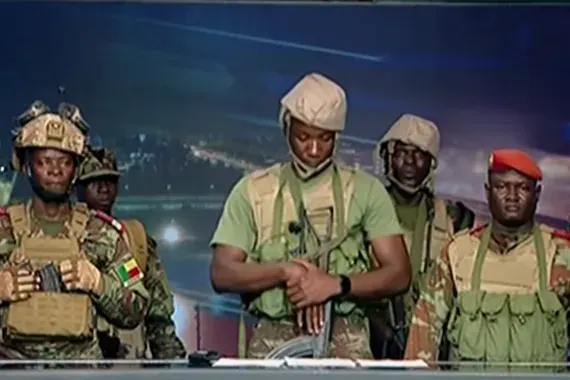
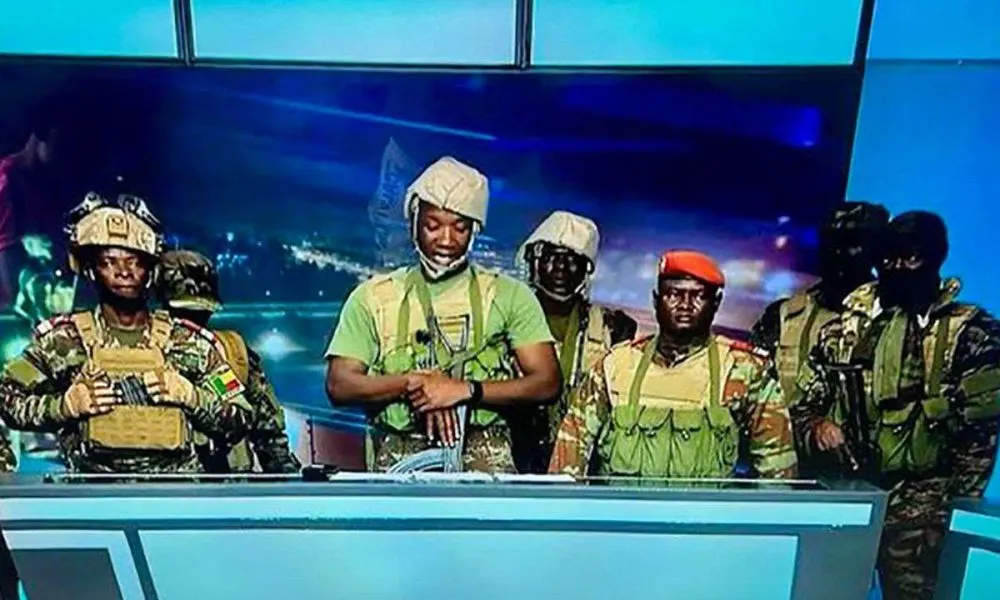
At least eight soldiers appeared on state TV identifying themselves as the “Military Committee for Refoundation” (Comité Militaire pour la Refondation, or CMR). Lieutenant Colonel Pascal Tigri, who led the group, announced that President Patrice Talon had been “removed from office as president of the republic.”
The televised statement declared all state institutions dissolved, the constitution suspended, all political parties banned, and Benin’s borders closed. Tigri was declared president of the military committee and head of a transitional government.
The signal to state television and public radio was cut shortly after the announcement. Gunfire erupted around the presidential area, near Cotonou’s port district, and at Camp Guezo. Helicopters were observed flying over the presidential palace and port areas.
Related Article: Trump HHS Deadnames Transgender Admiral Rachel Levine on Official Portrait, Legal Analysis and Civil Rights Implications
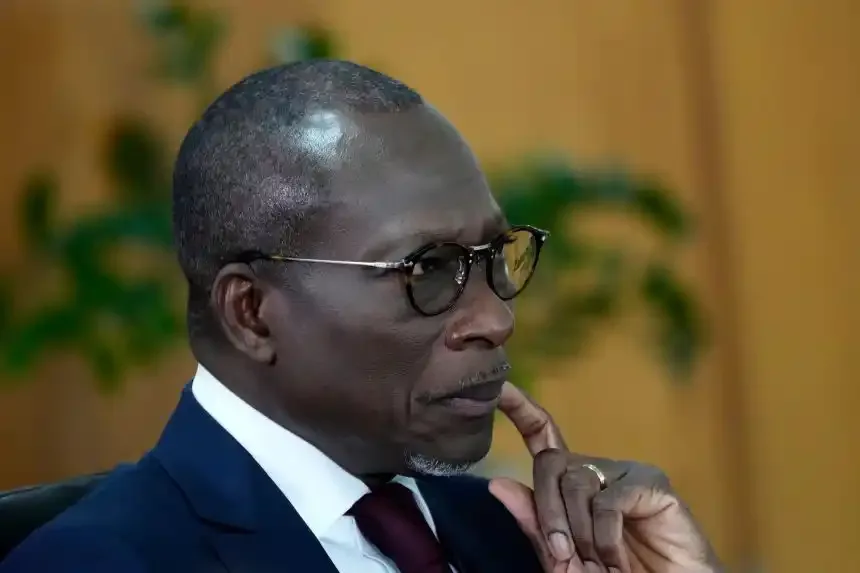
Government Response: “The Situation Is Under Control”
Within hours, Benin’s government mounted a counteroffensive. Foreign Minister Shegun Adjadi Bakari told Reuters mid-morning: “There is a coup attempt but the situation is under control. Now it’s a small group of military. A large part of the army is still loyalist and we are taking over the situation.”
Finance Minister Romuald Wadagni stated: “The mutineers are holed up. We are clearing them out, but it’s not over yet. We are safe.”
By 11:09 GMT, Interior Minister Alassane Seidou declared the coup attempt foiled in a Facebook video: “In the early morning of Sunday, December 7, 2025, a small group of soldiers launched a mutiny with the aim of destabilizing the state and its institutions. Faced with this situation, the Beninese Armed Forces and their leadership, true to their oath, remained committed to the republic.”
President Talon’s office confirmed he is safe, though his exact whereabouts have not been disclosed. Military sources confirmed coup plotters never captured Talon’s residence or the presidential offices despite the attack.
Government spokesperson Wilfried Houngbedji stated: “Everything is fine.”
Who Is Lieutenant Colonel Pascal Tigri?
Lieutenant Colonel Pascal Tigri led the coup attempt and declared himself president of the Military Committee for Refoundation. Limited information is publicly available about Tigri’s military background or motivations.
During the televised announcement, Tigri read a statement justifying the takeover: “The army solemnly commits to give the Beninese people the hope of a truly new era, where fraternity, justice and work prevail.”
The soldiers cited President Talon’s “management of the country” as their reason for attempting to seize power. No specific policy grievances were detailed in the brief televised statement.
Tigri appeared on screen with at least seven other uniformed soldiers standing behind him during the state TV broadcast.
What Are the Allegations Behind the Coup?
Coup Plotters’ Justification
The Military Committee for Refoundation offered minimal explanation for the attempted overthrow. Their televised statement cited dissatisfaction with President Talon’s governance but provided no specifics about alleged failures or grievances.
The timing suggests possible political motivations. Talon was scheduled to step down in April 2026 after serving two five-year terms (2016-2026). His handpicked successor, former Finance Minister Romuald Wadagni, was favored to win the upcoming presidential election.
Recent Political Controversies
In November 2024, Benin’s legislature extended the presidential term from five to seven years while maintaining the two-term limit. The move raised concerns about democratic backsliding.
In January 2025, two associates of President Talon were sentenced to 20 years in prison for an alleged 2024 coup plot, suggesting ongoing political tensions within Benin’s security apparatus.
Opposition candidate Renaud Agbodjo was recently rejected by the electoral commission for lacking sufficient sponsors, raising questions about free and fair electoral processes.
Government’s Counter-Allegations
Interior Minister Seidou characterized the attempt as a “mutiny” by a “small group of soldiers” aimed at “destabilizing the state and its institutions.”
The government emphasizes that the vast majority of Benin’s armed forces remained loyal to constitutional authority, with only a small faction participating in the attempted coup.
Timeline of the December 7 Coup Attempt
Early Morning (Before Dawn): Armed attack on President Talon’s residence at Camp Guezo in Porto-Novo begins. Coup plotters seize home of Major General Abou Issa.
Dawn: Soldiers led by Lt. Col. Pascal Tigri take control of Benin’s national television broadcaster. Journalists at state TV held hostage.
Morning: At least eight soldiers appear on state TV announcing Talon’s removal, suspension of constitution, closure of borders, and dissolution of all state institutions. Tigri declared president of Military Committee for Refoundation.
Shortly After TV Announcement: Signal to state television and public radio cut off. Heavy gunfire reported near presidential palace, Camp Guezo, and Cotonou port area. Helicopters observed over presidential palace.
Mid-Morning: French Embassy warns French citizens on social media platform X to stay indoors due to gunfire at Camp Guezo. U.S. Embassy issues advisory urging Americans to avoid areas around Cotonou and presidential compound.
Mid-Morning: President Talon’s office confirms he is safe and army regaining control. Foreign Minister Bakari and Finance Minister Wadagni confirm situation “under control.”
9:00 GMT: Putschists still control state television. However, they have not captured presidential office or Talon’s residence, according to Beninese Army.
11:09 GMT: Interior Minister Seidou announces on Facebook that coup attempt has been “foiled.” Benin Armed Forces loyal to republic have thwarted the mutiny.
Afternoon: African Union and ECOWAS issue statements condemning the coup attempt and supporting Talon’s government.
International Response
African Union (AU)
AU Commission Chairman Mahmoud Ali Yousouf issued a strong condemnation: “The African Union strongly and unequivocally condemns the attempted coup in Benin. The African Union stands ready, in coordination with regional and international partners, to accompany the Government and People of Benin toward the full restoration of constitutional normalcy and the strengthening of democratic institutions.”
The AU reaffirmed its support for President Talon and Benin’s constitutional order.
Economic Community of West African States (ECOWAS)
ECOWAS, the 15-member regional bloc, condemned the coup attempt: “ECOWAS strongly condemns this unconstitutional move that represents a subversion of the will of the people of Benin. ECOWAS will support the Government and the people in all forms necessary to defend the Constitution and the territorial integrity of Benin.”
United States
The U.S. Embassy in Cotonou issued a security alert urging American citizens to “avoid the areas of Cotonou and areas near the presidential compound” and to “shelter in place until the situation stabilizes.”
France
The French Embassy warned French nationals via social media that “gunfire was reported at Camp Guezo” near the president’s residence and urged them to remain indoors for safety.
What Legal Framework Applies?
Benin Constitution
Benin’s constitution establishes democratic governance with separation of powers. Article 1 declares Benin a democratic republic. The constitution provides for presidential elections and limits presidents to two terms (recently extended from five to seven years each).
Military coups violate constitutional provisions establishing civilian control of government. The constitution grants the president authority as commander-in-chief of armed forces.
African Union Constitutive Act
Article 4(p) of the AU Constitutive Act explicitly condemns and rejects unconstitutional changes of government. The AU Peace and Security Council has authority to suspend member states that experience coups until constitutional order is restored.
ECOWAS Protocol on Democracy and Good Governance
ECOWAS Protocol on Democracy and Good Governance prohibits unconstitutional changes of government including military coups. The protocol authorizes sanctions against member states experiencing coups, ranging from diplomatic isolation to economic sanctions.
Benin, as an ECOWAS member since 1975, is bound by these regional commitments to democratic governance.
International Criminal Law
Coup plotters could face charges under Beninese criminal law for:
Treason: Attempting to overthrow the legitimate government constitutes treason under most national criminal codes.
Mutiny: Military personnel who rebel against lawful authority can be prosecuted for mutiny under military justice systems.
Kidnapping/Hostage-Taking: Holding journalists hostage at the state broadcaster violates domestic and international law.
Armed Rebellion: Using weapons to attack government installations and threaten civilian authority constitutes armed rebellion.
Benin’s Coup History
Post-Independence Instability (1960-1972)
Following independence from France in 1960, Benin (then called Dahomey) experienced extreme political instability. The country suffered six successful coups and numerous attempted coups between 1960 and 1972.
Marxist-Leninist Era (1972-1991)
Major Mathieu Kérékou seized power in 1972 and established a Marxist-Leninist state, renaming the country the People’s Republic of Benin. Kérékou ruled until 1991.
Democratic Transition (1991-Present)
In 1991, Benin held its first free elections and Kérékou stepped down peacefully, marking one of Africa’s first democratic transitions. Nicéphore Soglo won the 1991 election.
Kérékou returned to power through democratic elections in 1996 and 2001 before retiring in 2006. His successor, Thomas Boni Yayi, served two terms (2006-2016).
Talon Era (2016-Present)
President Patrice Talon, a wealthy cotton magnate and businessman, won election in 2016 and reelection in 2021. His tenure has been marked by economic growth but also concerns about democratic backsliding, including restrictions on opposition candidates and extension of presidential terms.
2024 Coup Plot
In January 2025, two associates of Talon were sentenced to 20 years in prison for an alleged 2024 coup plot, suggesting ongoing tensions within Benin’s political and military establishment.
The December 7, 2025 attempt marks the first major coup attempt since Benin’s 1991 democratic transition—a 34-year period of relative stability.
Regional Context: West Africa’s “Coup Belt”
Benin’s coup attempt occurs amid a wave of military takeovers across West and Central Africa since 2020:
Mali: Military coups in August 2020 and May 2021. Military junta remains in power.
Guinea: Military coup in September 2021 overthrew President Alpha Condé. Military junta led by Colonel Mamady Doumbouya remains in power.
Burkina Faso: Military coups in January 2022 and September 2022. Captain Ibrahim Traoré currently leads military government.
Niger: Military coup in July 2023 overthrew President Mohamed Bazoum. General Abdourahamane Tiani leads military junta.
Guinea-Bissau: Ninth coup attempt in November 2024. General Horta Inta-A named head of one-year transitional government.
Gabon: Military coup in August 2023 following disputed election ended the Bongo family’s 55-year rule.
The region stretching from West Africa to Central Africa has been dubbed the “coup belt.” Factors contributing to instability include weak democratic institutions, economic challenges, jihadist insurgencies in the Sahel region, youth unemployment and discontent with civilian leadership, and corruption and governance failures.
Benin had been considered one of West Africa’s democratic success stories, making this attempted coup particularly significant for regional stability.
What Are the Implications?
For Benin’s Democracy
The failed coup attempt reveals fragility beneath Benin’s democratic surface. Despite 34 years of constitutional governance, elements within the military remain willing to overthrow civilian authority.
The government’s swift response and military loyalty to constitutional order are positive signs. However, the attempt raises questions about military morale, political grievances within the armed forces, and whether the upcoming April 2026 election will proceed smoothly.
For Regional Stability
Benin’s coup attempt adds to West Africa’s democratic decline. The region has experienced more coups since 2020 than any other period since the 1960s.
If Benin—long considered a democratic model—cannot maintain stability, it sends a concerning signal about democratic fragility across the region.
For International Relations
The international community’s unified condemnation (AU, ECOWAS, US, France) demonstrates continued commitment to supporting constitutional governance in Africa.
However, repeated coups suggest international pressure and sanctions have limited effectiveness in deterring military takeovers.
For Electoral Politics
The timing just months before Talon’s scheduled departure raises questions about the April 2026 election. Will the coup attempt destabilize the transition? Will it provide justification for postponing elections or implementing emergency measures? Does it reflect broader dissatisfaction with Talon’s handpicked successor, Romuald Wadagni?
For Military Justice
Lt. Col. Tigri and other coup participants will likely face prosecution for treason, mutiny, and related offenses. The severity of punishment will send a signal about the costs of attempting unconstitutional power grabs.
What Happens Next?
Immediate Actions
The government will likely implement security measures including arrests of coup participants, investigation of military units involved, security screening of armed forces to identify sympathizers, and potential purges of suspected disloyal officers.
Tigri and other visible coup leaders will face prosecution under Beninese criminal and military law.
Political Ramifications
President Talon may use the failed coup to consolidate power, potentially delaying the April 2026 election or implementing emergency measures.
The government may crack down on opposition figures suspected of supporting or encouraging the coup attempt.
Regional and international pressure will mount for Benin to maintain its democratic trajectory and proceed with scheduled elections.
Long-Term Concerns
The attempt reveals underlying tensions within Benin’s military and political system that may resurface. Questions remain about whether this was an isolated incident or reflects deeper institutional problems.
Benin’s ability to maintain democratic governance despite this shock will serve as a test case for West African democracy.
Frequently Asked Questions
Is President Patrice Talon safe?
Yes. Benin’s government confirmed President Talon is safe, though his exact whereabouts have not been disclosed for security reasons. Military sources confirmed coup plotters never captured Talon’s residence or the presidential offices despite the dawn attack.
Who is Lieutenant Colonel Pascal Tigri?
Lt. Col. Pascal Tigri led the coup attempt and briefly declared himself president of the Military Committee for Refoundation. Limited information is available about his military background. He appeared on state TV with at least seven other soldiers to announce the overthrow.
Has the coup been stopped?
Yes. Interior Minister Alassane Seidou announced at 11:09 GMT on December 7, 2025 that the coup attempt was “foiled.” Loyalist armed forces and national guard regained control. The government states the situation is “under control.”
Why did the soldiers attempt a coup?
The coup plotters cited dissatisfaction with President Talon’s “management of the country” but provided no specific grievances. The timing suggests possible political motivations related to the upcoming April 2026 presidential election and concerns about Talon’s handpicked successor.
What is the Military Committee for Refoundation?
The Military Committee for Refoundation (Comité Militaire pour la Refondation, or CMR) is the name adopted by coup plotters led by Lt. Col. Tigri. The group briefly controlled state television and announced the dissolution of government institutions before loyalist forces regained control.
Will Benin face sanctions?
Unlikely. Since the coup was foiled and constitutional order maintained, Benin should not face AU or ECOWAS sanctions. Both organizations condemned the attempt and expressed support for President Talon’s government.
Is it safe to travel to Benin?
The U.S. Embassy advised American citizens to avoid areas around Cotonou and the presidential compound until the situation stabilizes. The French Embassy urged French nationals to remain indoors. Check with your embassy for updated travel advisories before traveling to Benin.
What happens to the April 2026 election?
Officially, President Talon is scheduled to step down in April 2026 after serving two terms. Former Finance Minister Romuald Wadagni is the favored candidate. Whether the failed coup attempt will affect the electoral timeline remains uncertain.
Disclaimer: This article is for informational purposes only and reflects developments as of December 7, 2025. The situation in Benin remains fluid and details may change as more information becomes available. Information is compiled from verified international news sources including Al Jazeera, France 24, CNN, NPR, BBC, Reuters, AFP, and official statements from the African Union and ECOWAS. If you are in Benin or planning travel, consult official embassy advisories and local authorities for current security guidance.
Sources: Al Jazeera, France 24, CNN, NPR, CBS News, BBC, Reuters, AFP, Associated Press, Newsweek, AllAfrica, National Herald India, The Week, Per Second News, GhanaWeb, TheNiche, official statements from African Union Commission Chairman Mahmoud Ali Yousouf, ECOWAS, U.S. Embassy in Cotonou, French Embassy in Benin, and Benin government officials including Interior Minister Alassane Seidou, Foreign Minister Shegun Adjadi Bakari, Finance Minister Romuald Wadagni, and government spokesperson Wilfried Houngbedji.
About the Author

Sarah Klein, JD, is a licensed attorney and legal content strategist with over 12 years of experience across civil, criminal, family, and regulatory law. At All About Lawyer, she covers a wide range of legal topics — from high-profile lawsuits and courtroom stories to state traffic laws and everyday legal questions — all with a focus on accuracy, clarity, and public understanding.
Her writing blends real legal insight with plain-English explanations, helping readers stay informed and legally aware.
Read more about Sarah