
Bob Evans Class Action Lawsuit “No Preservatives” Mac & Cheese Exposed—Class Action Claims Hidden Sodium Phosphate and Lactic Acid Violate California Law
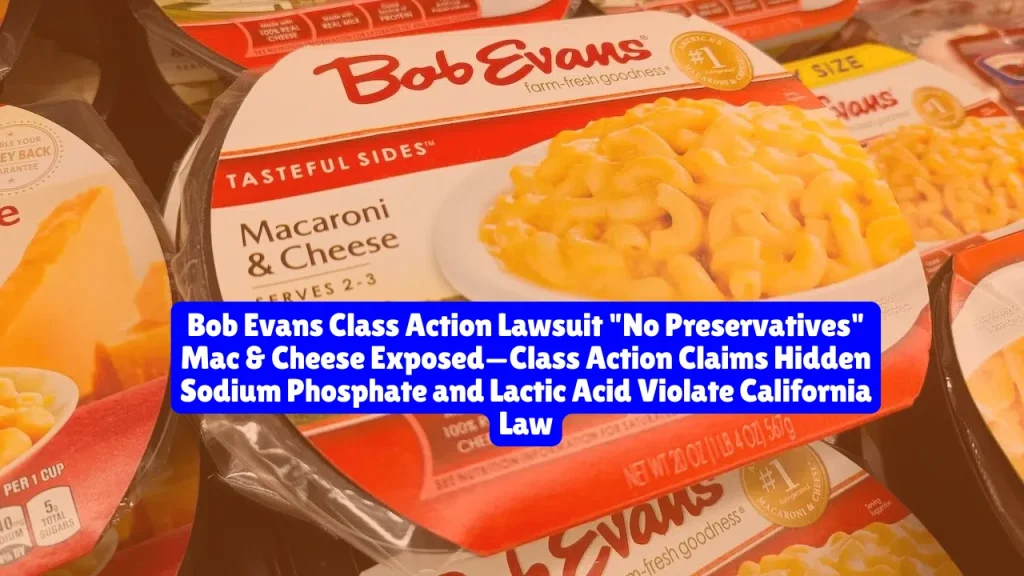
A new class action lawsuit accuses Bob Evans of falsely advertising its macaroni and cheese as containing “no artificial preservatives” when the product allegedly contains sodium phosphate and lactic acid—synthetic preservatives that prevent spoilage and extend shelf life. Plaintiff Michael Dotson filed the lawsuit in California state court, alleging violations of California’s False Advertising Law and Unfair Competition Law. The case seeks damages for consumers who paid premium prices believing they were buying preservative-free products.
You grabbed the Bob Evans mac and cheese from the refrigerated section because the package promised “no artificial preservatives.” That claim mattered to you. You wanted something natural for your family.
But according to a lawsuit filed just days ago, that promise was a lie. The product allegedly contains two synthetic preservatives hidden in plain sight on the ingredient list.
What Bob Evans Allegedly Did—The Labeling Scheme Behind the Lawsuit
According to the complaint filed January 9, 2026, in Los Angeles Superior Court, Bob Evans prominently displays the “no artificial preservatives” claim on the front of its macaroni and cheese packaging.
But here’s the problem, according to plaintiff Dotson: the ingredient list reveals sodium phosphate and lactic acid—both synthetic compounds that function as preservatives.
The lawsuit alleges that sodium phosphate salts are synthetically produced compounds commonly used in food processing to prevent oxidation, enzymatic browning, and bacterial growth. Lactic acid is industrially produced and used to prevent spoilage, according to court documents.
Dotson argues reasonable consumers understand “no artificial preservatives” to mean the product does not contain chemically manufactured ingredients added to slow deterioration or inhibit microbial growth.
Bob Evans, owned by Post Holdings Inc., allegedly violated this basic consumer expectation for profit.
The Hidden Preservatives in Your Mac & Cheese
Let’s get specific about what’s actually in the product. According to Bob Evans’ own ingredient list, the macaroni and cheese contains:
Sodium Phosphate: Listed within the pasteurized process cheese spread component. The lawsuit claims this synthetic compound prevents oxidation, enzymatic browning, and bacterial growth—classic preservative functions.
Lactic Acid: Also found in the cheese spread. According to the complaint, this industrially produced ingredient prevents spoilage and extends shelf life.
Both ingredients are disclosed in the fine print ingredient list on the side or back of the package. But the front of the package—the part consumers see when making split-second purchasing decisions—screams “no artificial preservatives.”
That disconnect is where Dotson claims the deception lies, according to legal filings.
How Food Preservatives Actually Work—The Science Behind the Claims
Understanding what makes something a “preservative” is key to this lawsuit. According to FDA regulations at 21 CFR 101.22(a)(5), a chemical preservative is defined as “any chemical that, when added to food tends to prevent or retard deterioration thereof”.
Let’s break down how sodium phosphate and lactic acid function:
Sodium Phosphate: According to USDA guidelines, phosphates provide two beneficial effects in meat and poultry products: moisture retention and flavor protection. They’re used specifically because they extend shelf life and prevent spoilage—textbook preservative functions.
Lactic Acid: Research documented by the USDA shows that lactic acid regulates microflora in food and has been found to be very effective against certain types of microorganisms, giving it pronounced efficacy as a preservative. The documents explicitly state one of the primary uses of sodium lactate and potassium lactate is as a preservative in meat.
Both ingredients fit the legal definition of preservatives. The question is whether calling them “no artificial preservatives” when they’re synthetically produced violates consumer protection laws.
Related article: Cotton On Hit With Washington Spam Lawsuit—Fake “Sale Ends Tonight” Emails Could Cost Retailer Millions in $500-Per-Email Penalties
This Isn’t an Isolated Case—The Mac & Cheese Labeling Trend
Bob Evans isn’t the only food company facing heat over “no preservatives” claims on macaroni and cheese. The pattern is striking.
Kraft Heinz has faced multiple class action lawsuits over similar allegations. In November 2024, U.S. District Judge Mary Rowland allowed a nationwide class action to proceed, ruling that plaintiffs plausibly alleged that Kraft Mac & Cheese contained a synthetic form of citric acid and sodium phosphates that function as preservatives, according to CNN reporting.
The judge specifically noted plaintiffs cited academic studies and U.S. Food and Drug Administration guidance to support their case that the ingredients functioned as preservatives despite Kraft’s “No Artificial Flavors, Preservatives or Dyes” labeling.
In September 2025, Kraft faced yet another lawsuit alleging citric acid in its mac and cheese serves as a preservative despite “no preservatives” labeling, according to reports from Top Class Actions.
The trend is clear: Food companies are using ingredient technicalities to make “preservative-free” claims that may mislead consumers about what’s actually in their products.
What the Law Says About “Preservative-Free” Claims
California has some of the strongest consumer protection laws in the nation. The Bob Evans lawsuit alleges violations of two key statutes:
California False Advertising Law (FAL): This law prohibits any untrue or misleading advertising. If Bob Evans’ “no artificial preservatives” claim is false, it’s a violation—no proof of reliance or harm required in some cases.
California Unfair Competition Law (UCL): This broader statute prohibits any unlawful, unfair, or fraudulent business practice. Misleading labeling can violate the UCL even if it doesn’t meet every element of fraud.
These laws don’t require consumers to prove they read every word of the ingredient list. Courts recognize that consumers make quick purchasing decisions based on front-label claims.
According to the Kraft mac and cheese lawsuit filed in Missouri, average and reasonable consumers do not read the fine print on the rear side or side of the package when purchasing the products. The average consumer takes less than 20 seconds to make any individual purchasing decision in a store, meaning only the front label is generally read.
This legal principle could be devastating for Bob Evans’ defense.
What Dotson Is Seeking—The Potential Damages
The lawsuit seeks to represent a California class of consumers who purchased Bob Evans macaroni and cheese products within four years prior to the filing of the complaint.
Dotson alleges consumers paid a premium price for products marketed as preservative-free and were deprived of the benefit of their bargain.
Potential relief includes:
- Monetary damages for class members who purchased the falsely labeled products
- Restitution for the price premium paid
- Injunctive relief forcing Bob Evans to stop the allegedly false labeling
- Attorneys’ fees and costs
- Punitive damages if the court finds willful deception
The lawsuit argues Bob Evans’ conduct allowed it to sell more products and at higher prices than it otherwise could have if the ingredients had been accurately disclosed.
With potentially thousands of California consumers purchasing these products over four years, the damages could be substantial.
The Legal Battle Ahead—What Happens Next
The lawsuit is in its earliest stages. Bob Evans hasn’t publicly responded to the allegations yet.
Expect the company to mount several possible defenses:
“Preservatives” Means Something Different: Bob Evans may argue that sodium phosphate and lactic acid aren’t “preservatives” under their interpretation, even if they prevent spoilage.
Ingredient List Disclosure: The company will likely argue they disclosed these ingredients, so there’s no deception.
FDA Approval: Bob Evans may point to FDA GRAS (Generally Recognized as Safe) status for these ingredients as evidence they’re not “artificial.”
No Consumer Harm: The defense might argue consumers got exactly what they paid for—safe, edible macaroni and cheese.
However, the Kraft Heinz precedent suggests these defenses may struggle. Judge Rowland rejected similar arguments when she allowed the Kraft case to proceed.
What This Means for Food Labeling—An Industry at a Crossroads
This lawsuit represents something bigger than mac and cheese. It’s about whether food companies can use technical loopholes to make claims that mislead consumers.
When you see “no artificial preservatives” on a package, you shouldn’t need a chemistry degree to figure out if it’s true. The label should mean what it says.
Legal experts say we’re seeing a reckoning in food labeling. Consumers are demanding transparency, and courts are increasingly willing to hold companies accountable for misleading claims.
The FDA has warned manufacturers about using terms like “natural” when synthetic preservatives are present. Yet companies continue to test the boundaries of acceptable marketing.
This lawsuit could force clearer standards for what “preservative-free” really means.
What Consumers Can Do—Your Rights and Options
If you’re a California resident who purchased Bob Evans macaroni and cheese products believing they were preservative-free, save your receipts and product packaging.
Watch for news about class certification. If the court certifies the class, you’ll receive notification about your rights to join and potentially receive compensation.
Know your rights under California consumer protection law. You’re entitled to truthful labeling, especially about ingredients that affect your purchasing decisions.
In the meantime, read ingredient lists carefully. Don’t rely solely on front-label marketing claims. Look for specific ingredients that function as preservatives, even if they’re not labeled as such.
For information on other active settlements you might qualify for, check our guide to class action settlements in January 2026.
Key Takeaways—What You Need to Know
The Claim Matters: “No artificial preservatives” is a specific promise that consumers rely on when making purchasing decisions.
Ingredients Can Be Preservatives: Just because something isn’t called a “preservative” on the label doesn’t mean it doesn’t function as one.
California Law Protects You: You don’t need to prove you were personally harmed to join a consumer protection class action in many cases.
Industry Trend: Multiple mac and cheese manufacturers face similar lawsuits, suggesting systemic labeling issues.
Read Labels Carefully: Front-package claims may not tell the whole story. Check ingredient lists for substances that function as preservatives.
Frequently Asked Questions
Q: What is the Bob Evans class action lawsuit about?
A: The lawsuit alleges Bob Evans falsely advertised its macaroni and cheese as containing “no artificial preservatives” when the product contains sodium phosphate and lactic acid, which allegedly function as synthetic preservatives.
Q: Who can join the Bob Evans class action?
A: The lawsuit seeks to represent California consumers who purchased Bob Evans macaroni and cheese products within four years before the lawsuit filing. If the court certifies the class, eligible consumers will receive notification.
Q: What preservatives are allegedly in Bob Evans mac and cheese?
A: According to the lawsuit, the products contain sodium phosphate and lactic acid, both synthetically produced compounds that allegedly prevent spoilage and extend shelf life—classic preservative functions.
Q: What does “no artificial preservatives” mean legally?
A: According to FDA regulations, a preservative is any chemical that prevents or retards food deterioration. The lawsuit argues consumers understand “no artificial preservatives” to mean no synthetically manufactured ingredients that prevent spoilage.
Q: How is this lawsuit similar to the Kraft Heinz case?
A: Both lawsuits challenge “no preservatives” claims on macaroni and cheese products. In November 2024, a federal judge allowed the Kraft case to proceed, finding plaintiffs plausibly alleged synthetic ingredients functioned as preservatives despite labeling claims.
Q: What damages is Dotson seeking?
A: The lawsuit seeks monetary damages for class members, restitution for price premiums paid, injunctive relief to stop the allegedly false labeling, attorneys’ fees, and potentially punitive damages.
Q: Has Bob Evans responded to the lawsuit?
A: As of January 10, 2026, Bob Evans has not publicly responded to the allegations. The lawsuit was just filed on January 9, 2026.
Q: Are sodium phosphate and lactic acid safe to eat?
A: Both ingredients are FDA-approved as Generally Recognized as Safe (GRAS). The lawsuit isn’t about safety—it’s about whether Bob Evans can label products containing these synthetic preservatives as “no artificial preservatives.”
Q: What should I do if I bought Bob Evans mac and cheese?
A: If you’re a California resident who purchased the product, save receipts and packaging. Watch for class certification news. You may be eligible for compensation if the case succeeds.
Q: Could this lawsuit affect other food companies?
A: Yes. Similar lawsuits against Kraft Heinz and the trend of challenging “preservative-free” claims suggest widespread industry impact. Companies may need to revise labeling or reformulate products.
The Bigger Picture—Fighting for Honest Food Labels
This lawsuit is about more than macaroni and cheese. It’s about whether consumers can trust what they read on food labels.
Dotson alleges he relied on Bob Evans’ “no artificial preservatives” claim when making his purchase. He wouldn’t have bought the product, or would have paid less, had he known it allegedly contained synthetic preservatives.
That’s the heart of consumer protection law—the right to make informed choices based on truthful information.
As the Kraft Heinz litigation demonstrates, courts are increasingly willing to look beyond technical definitions to ask: Would a reasonable consumer be misled by this label?
For Bob Evans, owned by cereal giant Post Holdings, this lawsuit could force a reckoning with how the company markets its “Farm Fresh Goodness” brand promise.
The outcome could reshape food labeling standards across the industry, making “preservative-free” claims mean what consumers think they mean—truly free of preservatives.
For consumers, this case represents a fight for transparency in an industry where front-label marketing often obscures back-label reality.
Case Information: Dotson v. Post Holdings Inc. d/b/a Bob Evans Farms LLC, Case No. 2:25-cv-11993, Superior Court of the State of California, County of Los Angeles
Legal Representation:
- Plaintiff: Todd M. Friedman of the Law Offices of Todd M. Friedman P.C.
This article is for informational purposes only and does not constitute legal advice. If you believe you have been affected by false food labeling, consult with a qualified consumer protection attorney. Information based on court filings, FDA regulations, legal expert analysis, and news reports from consumer protection outlets as of January 2026.
About the Author

Sarah Klein, JD, is a licensed attorney and legal content strategist with over 12 years of experience across civil, criminal, family, and regulatory law. At All About Lawyer, she covers a wide range of legal topics — from high-profile lawsuits and courtroom stories to state traffic laws and everyday legal questions — all with a focus on accuracy, clarity, and public understanding.
Her writing blends real legal insight with plain-English explanations, helping readers stay informed and legally aware.
Read more about Sarah