
Are Poppers Legal? Yes, But the FDA Is Cracking Down (2026)
What You Need to Know Right Now
Poppers can be legally bought or sold in the U.S. — as long as they’re sold under another name, such as an air freshener or deodorizer. They’re sold legally, often in bottles labeled for use as room deodorizers or leather cleaners, but are illegal to consume for recreational purposes. Here’s the truth: The legal status of poppers in the U.S. depends heavily on how they’re packaged, sold, and described.
Why This Matters to You
In March 2025, the FDA drastically changed poppers enforcement. Double Scorpio, an Austin-based poppers manufacturer, issued a statement on its website Thursday stating that the company had “stopped all operations following a search and seizure at our offices by the FDA”.
Within days of the Double Scorpio raid, rival brands such as Pig Sweat, Brown Bottle and Dumb Bitch Juice have also become scarce. Other major brands like PWD (Rush) and Nitro-Solv also vanishing from the internet, deleting websites and disconnecting phone lines.
Bottom line: Poppers have always operated in a legal gray zone. Now the Food and Drug Administration (FDA) is cracking down on their production.
Most sites won’t tell you this, but: one prominent manufacturer tells Rolling Stone the federal crackdown has been brewing for years, stretching back to the administration of President Joe Biden—this isn’t just about the current political climate.
What You Came to Know: Poppers Legal Status in the United States
What Are Poppers?
Nitrite “poppers” are a type of inhalant that people use to enhance social experiences and to make sex feel better. Alkyl nitrates, or poppers, which are meant to be inhaled, cause an immediate and short-lasting euphoric rush along with muscle relaxation.
The term poppers comes from the popping sound made when glass vials of the substance were crushed to release the vapors for inhalation. Amyl nitrite was originally prescribed in the late 1800s for the medical management of angina.
Let’s break this down: Many analogues exist, such as isoamyl nitrite, isopentyl nitrite, isopropyl nitrite, and isobutyl nitrite.
Federal Legal Status: The Loophole Explained
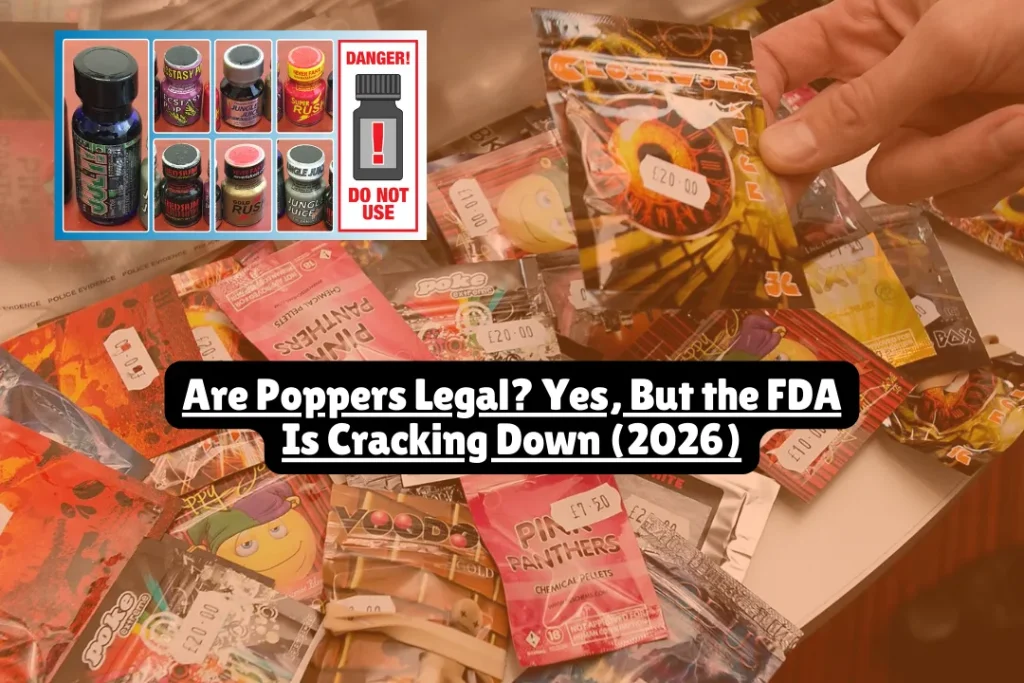
Although officially banned for human consumption by the FDA, poppers have been sold openly in thumb-sized bottles marketed—with a wink and a nod—as nail polish remover, liquid incense or VHS tape cleaner.
Poppers, which are packaged in liquid form and inhaled for a brief euphoric effect, generally need to be prescribed. Still, many manufacturers skirt the law by using alternate chemical formulas and advertising as nail polish remover and leather cleaner.
Here’s what that actually means for you: Through legal loopholes, many major poppers companies have been able to successfully register their poppers trademarks and receive legal protection.
The law has also made commercial exceptions for non-inhalant use of the chemicals under the Federal Food, Drug, and Cosmetic Act. This led to most manufacturers branding their liquids as things like tape/VCR cleaner or nail polish remover not intended for human consumption in order to continue selling their goods.
Can You Legally Buy and Possess Poppers?
Yes—possession is legal. They’re legal to buy and possess — but that doesn’t mean they’re safe.
While these items can be sold (and are widely available in places like adult novelty stores), their use is not approved in any way by the FDA and using them as a drug is illegal.
March 2025 FDA Enforcement: What Changed
For decades, the feds predominantly chose to only target businesses that expressly marketed their products as poppers intended for inhalation, concentrating their enforcement efforts on more dangerous drugs. But that uneasy truce with other “liquid” manufacturers now appears to be over.
Double Scorpio, the beloved poppers manufacturer, just announced they’re shutting down after a dramatic Federal Drug Administration (FDA) raid on March 13, 2025.
Pac-West Distributing, founded in San Francisco in 1974, makes the popular Rush brand of poppers. The company has replaced its website with just a logo and shut down its phone line.
State-by-State Variations
Unlike federal law, some states have specific poppers restrictions. However, the legal status of poppers in the U.S. depends heavily on how they’re packaged, sold, and described rather than explicit state bans.
International comparison: Poppers are legal in Australia, and from 2020, poppers can also be purchased as a Schedule 3 substance from pharmacies, or a Schedule 4 substance with a prescription.
What You Must Know
FDA Safety Warnings Are Serious
The FDA strongly warns against using them because of the risk of “severe injury or death”. Methemoglobinemia (MetHb) is a blood disorder where too little oxygen is carried in the blood. If not properly treated, MetHb can be fatal.
Side effects include headache, rapid heart rate, visual disturbances, dizziness and flushing in the face. Poppers can also cause an abnormal amount of hemoglobin to collect in the blood, low red blood cells, damage to the eyes and skin inflammation and irritation.
Sniffing poppers can make your blood pressure drop. You shouldn’t take them if you have problems with your blood pressure, are on any blood pressure medication, or if you’re taking erectile dysfunction medication such as Viagra.
The Ongoing FDA Crackdown
“As a matter of policy, the FDA does not comment on possible criminal investigations,” an agency spokesperson said.
Similar buying frenzies have been reported around the country, with some worried it’s the opening of a new front in a broader campaign against LGBTQ+ people by the federal government.
However: Everett Farr III, a longtime maker of Rush-branded nail polish remover, is credited as a pioneer in rebranding. He noted there have been several past crackdowns, and cautioned one FDA raid doesn’t necessarily spell the end. “This is not my first rodeo,” said Farr. “It’s been pursued religiously before”.
No Quality Control or Regulation
The FDA does not regulate them, so there’s no way to ensure their purity or potency. This lack of regulation means that the contents of one bottle of poppers may differ significantly from another, making it difficult for users to know what they’re inhaling.
What to Do Next
Understand Your Legal Risk
Buying and possessing poppers labeled as “cleaners” or “solvents” is currently legal. Using them for inhalation purposes is technically illegal under FDA regulations, though individual users are rarely prosecuted.
Check Current Availability
Some sellers have spiked prices. Still, more have preemptively yanked products from their shelves. Verify your local retailer still carries poppers before making a trip.
Consider Health Risks Seriously
Poppers are also known to interact with prescription medications such as Viagra and blood pressure medications. Mixing these drugs can cause a severe drop in blood pressure, leading to dizziness, fainting, or even a heart attack or stroke.
💡 Pro Tip: If you use poppers, never ingest them orally—they’re meant only for inhalation if used at all. A recent study in Clinical Toxicology found that nearly half of the smoke shop employees advised customers to inhale poppers correctly, while 8% even suggested drinking them. Drinking poppers can be fatal.
Frequently Asked Questions
Can I buy poppers online legally?
Yes, as long as they’re marketed as cleaners or solvents. However, many major poppers brands began wiping their websites and social media presences in March 2025.
Are poppers a controlled substance?
Not technically. Amyl nitrite is a prescription drug, and butyl nitrite is banned in the United States, but manufacturers have made a multitude of chemically similar products in an effort to stay ahead of the law.
Will I get arrested for possessing poppers?
Unlikely. Individual possession is legal. Yes and no. Poppers can be legally bought or sold in the U.S. — as long as they’re sold under another name.
Why is the FDA cracking down now?
Some suspect newly-appointed health secretary Robert F. Kennedy Jr., who has suggested that poppers cause AIDS, may have spearheaded the move. However, the crackdown started before the current administration.
Are poppers safe?
Even though poppers are available in stores and online, this doesn’t mean that they’re safe. Medical risks include vision damage, heart problems, and chemical burns.
What happens if I accidentally drink poppers?
If you experience any of these symptoms after inhaling poppers, seek medical attention immediately. Remember, just because something is legal doesn’t mean it’s safe.
Can poppers cause AIDS?
No. After the first signs of the AIDS epidemic were identified among gay men in 1981, scientists initially investigated whether the use of party drugs, including poppers, was causing the catastrophic collapse of the immune system. But after HIV was identified as the cause of AIDS in 1983, it became clear that poppers, though they cause disinhibition and are correlated with sexual behaviors that drive HIV transmission, were not the central culprit.
Take Action
For official FDA guidance, visit the FDA Consumer Updates page. For substance abuse resources, contact SAMHSA’s National Helpline at 1-800-662-4357.
Need help understanding other substance regulations? Explore more legal guides at AllAboutLawyer.com.
Disclaimer: This article provides general legal information about poppers, poppers legality, federal law, state law, and legal status for informational purposes only. Poppers laws vary significantly by state and may change over time. AllAboutLawyer.com does not provide legal advice or representation. For authoritative guidance on poppers, poppers legality, or current legal status in your jurisdiction, consult a qualified attorney licensed in your state, the DEA website, your state attorney general office, or local law enforcement.
Stay informed, stay protected. — AllAboutLawyer.com
Last Updated: February 7, 2026
About the Author

Sarah Klein, JD, is a licensed attorney and legal content strategist with over 12 years of experience across civil, criminal, family, and regulatory law. At All About Lawyer, she covers a wide range of legal topics — from high-profile lawsuits and courtroom stories to state traffic laws and everyday legal questions — all with a focus on accuracy, clarity, and public understanding.
Her writing blends real legal insight with plain-English explanations, helping readers stay informed and legally aware.
Read more about Sarah