
Are FRT Triggers Legal? State-by-State Guide 2026
Are forced reset triggers legal in the United States? Forced reset triggers are legal under federal law as of May 2025, when the DOJ settled its case with Rare Breed Triggers. However, over 15 states have enacted their own bans. Legality depends entirely on your state’s current firearm statutes.
Are forced reset triggers legal in the United States?
Forced reset triggers (FRTs) are legal under federal law as of May 2025, when the Department of Justice settled its lawsuit with Rare Breed Triggers and stopped classifying FRTs as machine guns. However, more than a dozen states have enacted their own bans. Whether an FRT is legal depends entirely on where you live.
What Is a Forced Reset Trigger?
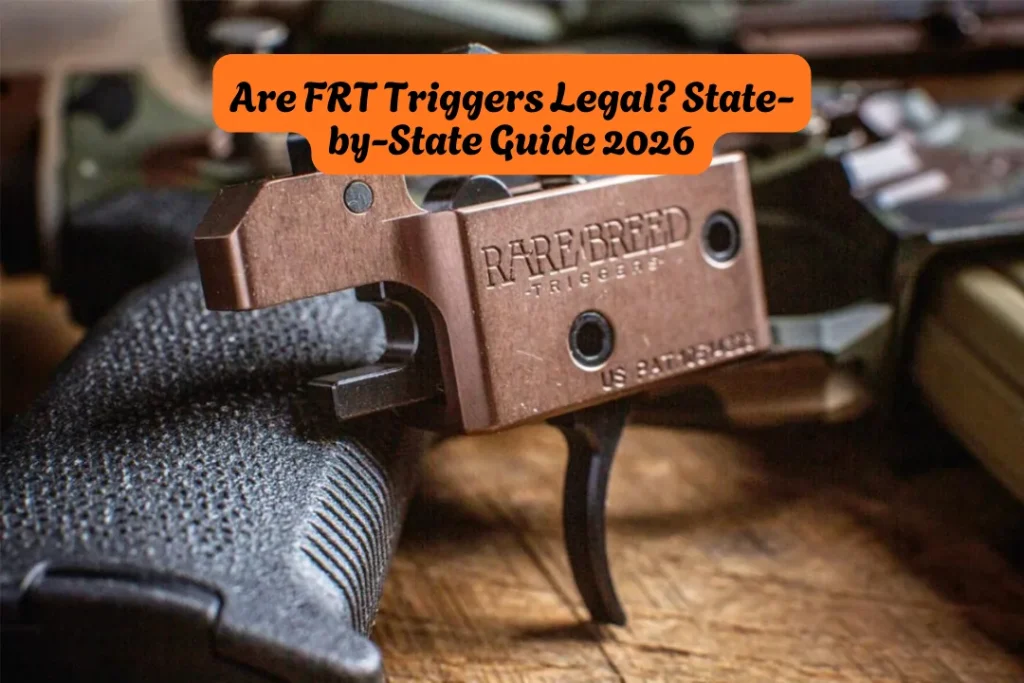
A forced reset trigger is an aftermarket firearm component that replaces the standard trigger in a semi-automatic firearm. An FRT uses the firearm’s recoil to automatically reset the trigger, enabling faster follow-up shots — but the shooter must still pull the trigger for each shot. The device merely facilitates a quicker reset between shots.
With an FRT: you pull → bang → the bolt carrier group forces the trigger reset → pull again. Every round still requires a separate, distinct trigger pull by the shooter.
This mechanical distinction is what courts focused on when evaluating whether FRTs qualify as machine guns under federal law.
The Federal Legal Status of FRTs in 2026
The legal history of FRTs moved fast. Here is the short version:
- 2021–2022: The ATF began classifying certain FRTs as illegal machine guns and pressured owners to surrender their devices.
- 2024: A federal court in Texas ruled the ATF had overstepped its authority in classifying FRTs as machine guns.
- May 2025: The Department of Justice reached a settlement with Rare Breed Triggers, ending years of litigation and confirming that FRTs are not classified as machine guns under the National Firearms Act. The federal government agreed to stop enforcement actions against FRT owners and return previously seized devices.
- January 2026: The ATF filed a “Statement of Interest” in a patent case between Rare Breed and a competing manufacturer, signaling ongoing federal interest in how FRTs spread through the market.
Bottom line on federal law: FRTs are currently legal at the federal level. But federal legality does not override state law.
States Where FRT Triggers Are Banned or Restricted
This is the most important section if you own or plan to buy an FRT. States that have banned FRTs include California, Colorado, Connecticut, Delaware, Florida, Hawaii, Illinois, Maryland, Massachusetts, Minnesota, Nevada, New Jersey, New York, Oregon, and Rhode Island.
Many of these bans target bump stocks, ghost guns, and other rate-of-fire-increasing devices under broad language that can cover accessories not specifically named.
California is the clearest example of a state acting independently of federal law. California Attorney General Rob Bonta issued a law enforcement bulletin affirming that FRTs remain illegal under California law. At a minimum, FRTs are “multiburst trigger activators” under California Penal Code section 16930, and California Penal Code section 32900 prohibits the possession, sale, manufacture, importation, giving, or lending of such devices.
A coalition of state attorneys general filed multistate litigation against the federal government in 2025, challenging the DOJ settlement on public safety grounds. That case is still working through the courts.
States Where FRT Triggers Are Generally Legal
Many states follow federal law when it comes to firearm accessories and have no specific FRT ban on the books. These generally include:
- Texas
- Ohio
- Arizona
- Georgia
- Indiana
- Kansas
- Kentucky
- Missouri
- Tennessee
- Utah
Texas has no state statute specifically banning forced reset triggers. While other states have enacted explicit bans, Texas remains neutral, deferring to federal rules.
Ohio does not have a state-level ban on forced reset triggers. There is no Ohio law that prohibits the sale, purchase, or possession of an FRT-15 trigger or similar device. Ohio’s firearm regulations follow federal law when it comes to accessories, and since FRTs are legal at the federal level, Ohio residents can lawfully own them.
States With Legal Ambiguity — Proceed With Caution
Some states have laws written broadly enough that FRTs could be prosecuted even without an explicit ban. Virginia is a key example.
Virginia attorneys and gun rights advocates do not believe the law makes FRTs illegal, but because the relevant statute is so poorly written, that does not mean you could not be arrested, charged, prosecuted, and possibly even convicted. There is no Virginia case law yet where courts have determined that FRTs are not prohibited under the relevant code section.
If you live in a state not listed in the clear “legal” or “banned” categories above, consult a firearms attorney before purchasing.
Key Risks to Know Before You Buy
Even in states where FRTs appear legal, there are practical risks to understand:
Crossing state lines. If you travel through any of the states that have banned FRTs, do not transport an FRT across state lines without checking local laws. What is perfectly legal in Ohio could lead to criminal charges in New Jersey or California.
The law can change. The May 2025 settlement does not preclude the United States from initiating enforcement actions against other FRT manufacturers, nor does it resolve enforcement actions state regulators have taken or may take in the future. Congress could also pass legislation clarifying or changing the legal status of FRTs.
New platforms expanding the market. As of early 2026, manufacturers have begun selling FRTs for handguns, raising new concerns about the scope of the original settlement agreement. This expansion may trigger additional state or federal responses.
Retailer restrictions as a signal. Common states where retailers restrict FRT shipments include CA, CT, DC, HI, MA, MD, NJ, NY, RI, and WA. Treat shipping restrictions as a risk signal about the legal landscape in your jurisdiction.
Quick Reference: FRT Legal Status by State
| Status | States |
| Banned / Restricted | CA, CO, CT, DE, FL, HI, IL, MD, MA, MN, NV, NJ, NY, OR, RI |
| Legal (follows federal law) | TX, OH, AZ, GA, IN, KS, KY, MO, TN, UT, and most other states not listed above |
| Legal but ambiguous risk | VA (poorly written statute creates legal uncertainty) |
| Restricted shipments | CA, CT, DC, HI, MA, MD, NJ, NY, RI, WA |
This table reflects the legal landscape as of March 2026. Laws change — always verify your state’s current statute before purchasing.
Frequently Asked Questions
Are FRT triggers legal under federal law in 2026?
Yes. Since the May 2025 DOJ settlement with Rare Breed Triggers, FRTs are no longer classified as machine guns under the National Firearms Act. Federal enforcement against FRT owners has stopped, and previously seized devices are being returned.
What states have specifically banned FRTs?
As of early 2026, at least 15 states have banned or restricted FRTs, including California, Colorado, Connecticut, Delaware, Florida, Hawaii, Illinois, Maryland, Massachusetts, Minnesota, Nevada, New Jersey, New York, Oregon, and Rhode Island. Additional states may have broad statutes that could apply.
Can I legally transport an FRT across state lines?
Only if every state you pass through permits them. Transporting an FRT into a state where it is banned — even temporarily — can result in criminal charges. Always check the laws of every state in your travel route.
Could the law change again at the federal level?
Yes. Congress could pass legislation explicitly banning or permitting FRTs. The current federal legality stems from a settlement, not a statute, which means it is more vulnerable to future policy changes than a law passed by Congress would be.
Do I need a lawyer to figure out if an FRT is legal in my state?
If you live in a state not on the clear “legal” list, yes — consulting a firearms attorney is strongly recommended. State laws vary widely, and some use broad language that could apply to FRTs even without naming them specifically.
Legal Terms Used in This Article
National Firearms Act (NFA): A federal law that regulates certain firearms and accessories, including machine guns, suppressors, and short-barreled rifles. Devices classified under the NFA face strict registration requirements and are generally prohibited for civilian ownership if manufactured after 1986.
Machine gun: Under federal law, a firearm that fires more than one round with a single function of the trigger. This definition was central to the legal debate over FRTs.
Settlement agreement: A legally binding resolution between parties to end a lawsuit without a court judgment. The May 2025 DOJ settlement ended federal enforcement against FRT owners but does not bind state governments.
Statute: A written law passed by a legislative body. State statutes vary widely on FRT legality, and some are written broadly enough to cover devices not explicitly named.
Enforcement action: A legal step taken by a government agency — such as the ATF — to investigate, charge, or prosecute individuals for violating a law or regulation.
Conclusion
FRT triggers occupy a genuinely complicated legal space in 2026. They are federally legal following the May 2025 DOJ settlement, but more than a dozen states have passed their own bans — and a few more have ambiguous laws that create real criminal risk.
Before purchasing an FRT, check your state’s current firearm statute, look for any state attorney general advisories, and consider speaking with a licensed firearms attorney if you have any doubt. The legal landscape has shifted multiple times in the past four years and could shift again.
This article is for informational purposes only and does not constitute legal advice. Laws and regulations are subject to change. Consult a qualified attorney for legal guidance specific to your situation.
About the Author

Sarah Klein, JD, is a licensed attorney and legal content strategist with over 12 years of experience across civil, criminal, family, and regulatory law. At All About Lawyer, she covers a wide range of legal topics — from high-profile lawsuits and courtroom stories to state traffic laws and everyday legal questions — all with a focus on accuracy, clarity, and public understanding.
Her writing blends real legal insight with plain-English explanations, helping readers stay informed and legally aware.
Read more about Sarah