
Arby’s Lawsuit, Arby’s Got Sued for Half-Empty Sandwiches Made Fries & Drinks Smaller Without Dropping Prices
Arby’s is fighting two lawsuits right now. The big one started in September 2023 when Joseph Alongis claimed their sandwiches have half the meat shown in ads. The court said the case can move forward in October 2025. A second lawsuit from January 2025 says Arby’s secretly made fries and drinks smaller without dropping prices. No settlements exist yet, but if there are any, we’ll tell you how to claim them at the end.
The $7 Sandwich That Started It All
Back in August 2023, Joseph Alongis walked into an Arby’s in Bellmore, New York.
He was hungry and ready to spend. He ordered a Double Beef ‘N Cheddar for $7.69 and a Smokehouse Brisket for $7.39.
When his order came up, his stomach sank.
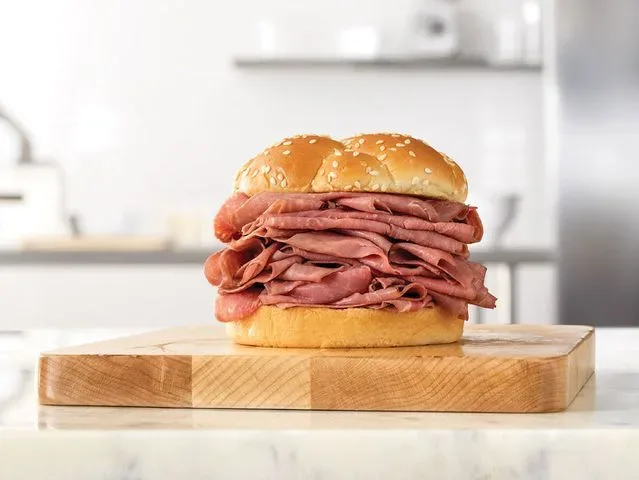
The sandwiches looked nothing like the pictures on the menu boards. They had about half the meat he expected. The roast beef wasn’t even the right color—the ads showed rare, pinkish meat, but what he got looked gray and completely cooked through.
Joseph didn’t just shrug it off. He took pictures. Then he called a lawyer.
What’s the Big Claim?
Joseph says Arby’s ads show sandwiches with at least double the meat customers actually receive, achieved through photography tricks like stacking all the meat at the front of the sandwich or using props to make portions appear larger.
He’s also claiming the quality is wrong—ads display rare roast beef, but the actual sandwiches contain fully cooked meat that looks completely different.
His lawsuit covers these sandwiches:
- Classic Roast Beef
- Double Roast Beef
- Half Pound Roast Beef
- Classic Beef ‘N Cheddar
- Double Beef ‘N Cheddar
- Half Pound Beef ‘N Cheddar
- Smokehouse Brisket
The lawsuit says these problems show up everywhere—on menu boards inside restaurants, on Arby’s website, and on food delivery apps like Uber Eats and DoorDash.
Arby’s Tried to Kill the Case—And Failed
Arby’s wanted this lawsuit gone. Fast.
They filed a motion to dismiss in 2024, arguing their photos were just “puffery”—you know, the kind of exaggeration everyone expects in advertising.
The court wasn’t buying it.
In October 2025, Judge Nusrat J. Choudhury denied the motion to dismiss, ruling that the photos weren’t just subjective opinions but could be seen as factual misrepresentations under New York’s consumer protection laws.
That’s a big deal. It means the case is moving forward to the discovery phase, where Arby’s will have to hand over internal documents, emails, and details about how they create their advertising photos.
Related article: Michael Jordan NASCAR Settlement Amount, Michael Jordan Just Beat NASCAR—Here’s What the Settlement Means
The Shrinkflation Lawsuit Nobody Expected
Just when you thought Arby’s had enough legal trouble, another lawsuit hit in January 2025.
Melissa Nelson from Queens, New York filed a separate case claiming Arby’s secretly shrank their fries and drinks without telling customers or lowering prices.
Here’s what allegedly happened:
Arby’s got rid of the kids’ size completely, then bumped everything up—the old kids’ size became the new small, the old small became the new medium, and the old medium became the new large.
Same prices. Smaller portions. No warning to customers.
The New York Post even did their own test. They bought small, medium, and large fries from a local Arby’s and found all three sizes contained nearly the same amount of fries.
Why This Matters for Regular People
Think about it. You’re on a tight budget. Food prices are already crazy high.
You walk into Arby’s expecting to get what the picture shows. Instead, you get half the meat or way fewer fries than before, but you’re still paying full price.
Joseph’s complaint specifically mentions how troubling this is during high inflation, especially for lower-income consumers who are already struggling financially.
It’s not just about a sandwich. It’s about whether companies can show you one thing and give you something completely different.
What Joseph Wants from This Lawsuit
Joseph isn’t asking for a crazy amount. He wants two things:
Money back: He wants Arby’s to compensate everyone in New York who bought these sandwiches since September 5, 2020, and paid more than they should have based on the misleading ads.
Stop the ads: He’s seeking injunctive relief—a court order that would force Arby’s to either fix their advertising to show accurate portions or stop selling these sandwiches altogether.
The proposed class action exceeds $5 million in value and could include over 100 plaintiffs.
What About Melissa’s Shrinkflation Case?
Melissa’s lawsuit is newer and follows a different legal path.
Her case comes after Congress passed the Shrinkflation Prevention Act in 2024, which treats shrinkflation as an unfair or deceptive business practice.
She’s trying to represent all New Yorkers who bought fries and drinks at Arby’s before the sizes were secretly changed.
This case is still early. No court rulings yet.
Are There Other Fast Food Lawsuits Like This?
Yes. Arby’s isn’t alone.
Taco Bell and Burger King have recently faced similar false advertising lawsuits claiming they misrepresent the amount of beef and other ingredients in their products.
This seems to be a growing trend. Customers are fed up with menu pictures that don’t match reality, especially when food is expensive and budgets are tight.
What Happens Next?
For the meat lawsuit, the case is moving into discovery. That means:
- Arby’s has to share internal documents
- Lawyers can request emails about how ads are created
- They might depose employees about advertising practices
- Expert witnesses could analyze the photos versus actual sandwiches
This could take months or even years to resolve. Most of these cases end in settlements before trial.
For the shrinkflation case, it’s too early to tell. It just started in early 2025.
Is There a Settlement Yet?
No, there is no settlement for either lawsuit as of December 2025.
Both cases are still active in court. If settlements happen, here’s what you’d need to know:
Who could qualify:
- Anyone who bought the specific Arby’s sandwiches listed above in New York
- Anyone who bought fries or drinks at New York Arby’s locations before the size changes
- You’d need to have receipts or credit card statements showing your purchases (though sometimes class actions don’t require proof for small claims)
How to claim:
- Watch for announcements on class action lawsuit websites
- If the case settles, the court will approve a claims process
- You’ll likely fill out a form online with your purchase information
- Claims typically need to be submitted within 60-90 days of the settlement being approved
Where to check for updates:
- TopClassActions.com
- ClassAction.org
- The official lawsuit website (if one gets created after settlement)
- The court docket for Case No. 2:23-cv-06593 in the U.S. District Court for the Eastern District of New York
The Bottom Line
Arby’s is in hot water over two separate issues—misleading sandwich photos and secretly shrinking portions.
The sandwich case survived Arby’s attempt to dismiss it and is moving forward. The shrinkflation case is brand new but taps into a bigger conversation about corporate practices during tough economic times.
Neither case has settled yet. But if you’ve bought these Arby’s items in New York and felt ripped off, you might eventually get something back.
For now, the lawsuits are a reminder: those glossy menu photos might promise more than what actually lands on your tray.
Stay Updated: Check TopClassActions.com regularly for any settlement announcements. If a settlement is reached, you’ll see instructions there on how to file a claim and what documentation you might need.
About the Author

Sarah Klein, JD, is a licensed attorney and legal content strategist with over 12 years of experience across civil, criminal, family, and regulatory law. At All About Lawyer, she covers a wide range of legal topics — from high-profile lawsuits and courtroom stories to state traffic laws and everyday legal questions — all with a focus on accuracy, clarity, and public understanding.
Her writing blends real legal insight with plain-English explanations, helping readers stay informed and legally aware.
Read more about Sarah