
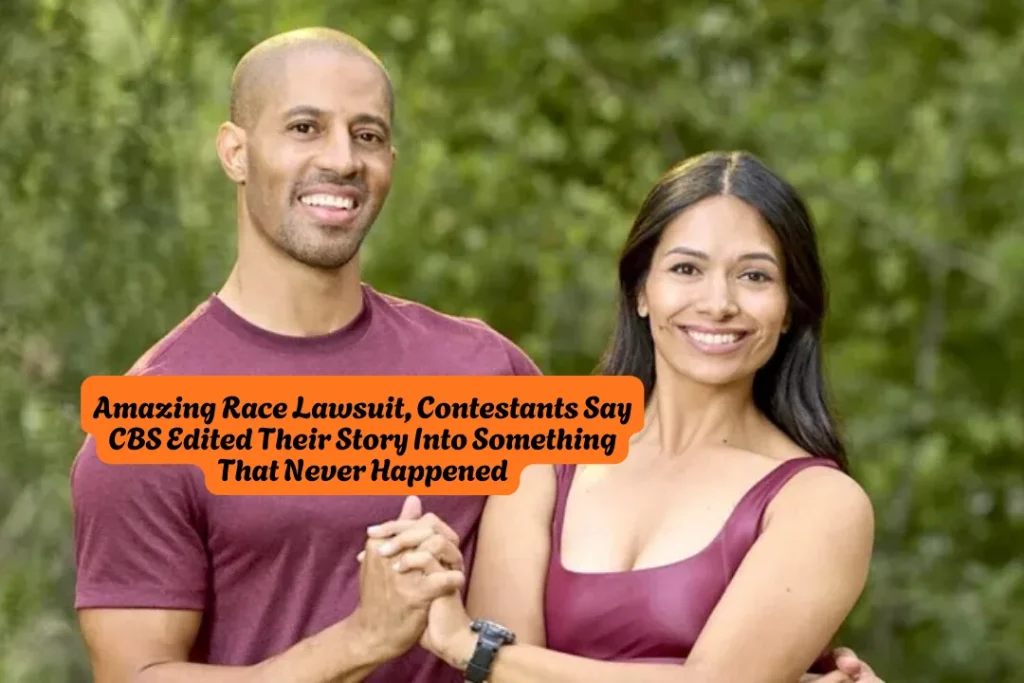
Amazing Race Lawsuit, Contestants Say CBS Edited Their Story Into Something That Never Happened
Jonathan and Ana Towns, contestants on Season 37 of The Amazing Race, filed an $8 million defamation lawsuit on March 4, 2026 in Los Angeles Superior Court against World Race Productions, CBS, Paramount Global, ABC Signature, and Jerry Bruckheimer Films. The couple claims the show deliberately edited footage to make Jonathan look like an abusive husband — while suppressing material that told a different story. No settlement has been reached as of March 12, 2026.
Quick Facts
| Field | Detail |
| Case Name | Towns et al. v. World Race Productions et al. |
| Court | Los Angeles Superior Court |
| Date Filed | March 4, 2026 |
| Plaintiffs | Jonathan Towns; Ana Rivera Towns |
| Defendants | World Race Productions; CBS; Paramount Global; ABC Signature (now 20th Television/Disney); Jerry Bruckheimer Films |
| Claims | Defamation (libel); false light invasion of privacy |
| Damages Sought | More than $8,000,000 compensatory + punitive damages |
| Additional Relief | Court injunction to re-edit Season 37; public apology; appropriate disclaimers about Jonathan’s ASD diagnosis |
| Season Filmed | May–June 2024 |
| Season Aired | March 5–May 15, 2025 |
| Plaintiffs’ Placement | Third place, Season 37 |
| Legal Representation | Pro se — plaintiffs are representing themselves |
| Trial | Jury trial demanded |
| Settlement | None — active litigation |
What Actually Happened?
Jonathan and Ana Towns competed on Season 37 of The Amazing Race, which filmed from May through June 2024 and aired from March through May 2025. They finished third. Viewers who watched the season saw Jonathan frequently snapping at his wife, calling her names, and shutting her down mid-conversation — behavior that generated significant backlash on social media during the broadcast.
After the season aired, Jonathan revealed that his extreme reactions on the race were because he has autism. That disclosure came after he received a formal diagnosis of autism spectrum disorder following the conclusion of filming. The diagnosis, the couple argues, reframes everything viewers saw — and everything the producers chose to put on screen.
The lawsuit was filed March 4, 2026 in Los Angeles Superior Court by the Towns themselves, who are representing themselves without an attorney. The 25-page complaint names five defendants: World Race Productions, CBS, Paramount Global, ABC Signature, and Jerry Bruckheimer Films. It seeks more than $8,000,000 in damages, a public apology, and a court order requiring producers to re-edit the season.
What Does the Lawsuit Allege?
The complaint makes three separate sets of allegations — manipulated editing, competition rigging, and failure to provide mental health support during production.
The couple alleges the show deliberately smeared Jonathan by using decontextualized footage that made him look like a morally depraved, brutal and abusive spouse, while at the same time omitting material that put Jonathan in a more humanizing light. They say no other contestants were treated that way in the final cut.
The complaint alleges producers possessed the evidentiary materials necessary to depict Jonathan accurately and completely but made a deliberate determination to suppress those materials — substituting instead a constructed, false, and highly damaging portrayal manufactured through systematic juxtaposition of decontextualized footage, willful omission of material exculpatory and humanizing content, and disproportionate inclusion of narratively irrelevant but inflammatory content.
The lawsuit also states that Jonathan experienced a meltdown and clear emotional anguish during filming, raised concerns with human resources about production bias, and was told the competition was being administered fairly. The complaint says no medical, psychological, or pastoral support was offered to the couple before, during, or after filming.
On the competition rigging allegation, the complaint claims that as early as the first leg, the Towns observed a pattern of questionable conduct that materially influenced the outcome of the competition, communicated their concerns, and were met with what they describe as continued and repeated sabotage of their race efforts by producers who then became overtly hostile toward them.
What Laws Were Allegedly Violated?
- Defamation — Libel, California Civil Code — Under California law, libel is a false and unprivileged written or broadcast statement that causes injury to a person’s reputation. The complaint argues the edited broadcast constituted a false statement of fact — not protected editorial opinion — because producers had access to footage that told an accurate story and deliberately chose not to use it. California courts distinguish between protected editorial judgment and the knowing publication of a false impression.
- False Light Invasion of Privacy — A tort claim separate from defamation that applies when someone is portrayed publicly in a false and highly offensive way — even if no single statement is technically false. The complaint argues the selective editing created an overall false impression of Jonathan as an intentional abuser, meeting this standard even if individual clips were technically real footage.
- Intentional Infliction of Emotional Distress (IIED) — A California tort claim requiring extreme and outrageous conduct that causes severe emotional harm. The complaint alleges producers witnessed Jonathan in emotional crisis, assured the couple the process was fair, and then deliberately used that crisis footage against him — conduct the complaint argues goes well beyond the bounds of decency.
- Punitive Damages Standard, California Civil Code § 3294 — California law allows punitive damages when a defendant acts with malice, oppression, or fraud. The complaint explicitly characterizes producers’ conduct as calculated, sustained, and malicious — language chosen to meet the legal threshold for punitive damages above the $8,000,000 base claim.
Who Does This Lawsuit Affect?
This is an individual lawsuit — not a class action — so there is no class of affected consumers and no claim form. However, the case raises broader questions for anyone who has appeared on reality television:
- You may be affected as a viewer if you watched The Amazing Race Season 37 and formed opinions about Jonathan Towns based on the broadcast.
- You may be affected as a former reality TV participant if you believe your own edit misrepresented your behavior — this case could set precedent for similar claims.
- You may be affected as a parent or individual with autism spectrum disorder whose behavior has been publicly mischaracterized — the complaint’s ASD argument is being closely watched by disability rights advocates.
No action is required and no claim form exists. This case will be decided entirely between the Towns and the named defendants.
What Are the Defendants Saying?
Neither CBS nor 20th Television had issued a public response to the lawsuit at the time of publication. Paramount and Jerry Bruckheimer Films also did not comment. None of the five named defendants have filed a formal answer in Los Angeles Superior Court as of March 12, 2026.
Reality TV contracts typically include broad editorial discretion clauses giving producers the right to edit footage in any manner they choose. Lawyers familiar with similar cases expect the defendants to file a motion to dismiss arguing the complaint is barred by the contract the Towns signed before appearing on the show. AllAboutLawyer.com will update this section when any defendant responds publicly or files a court document.
Why Is the Pro Se Detail Important?
Jonathan and Ana filed this lawsuit themselves — without a lawyer — and are representing themselves in what is called a pro se complaint. This is a significant legal risk worth understanding.
Pro se litigants — people who represent themselves in court — face the same procedural rules as licensed attorneys. California courts do not relax filing deadlines, evidence rules, or motion standards for self-represented parties. Defamation cases involving large media companies are among the most procedurally complex in civil litigation. The defendants will be represented by experienced entertainment law firms.
Reality TV defamation suits are usually hard to pursue because of the contracts most individuals sign to appear on reality TV. Those contracts almost universally grant producers broad rights to edit footage, select which material to broadcast, and construct narratives — creating a significant legal hurdle for any contestant claiming their portrayal was defamatory.
What Happens Next?
- Defendants will almost certainly file a motion to dismiss. The request for a public apology and a forced re-edit would be unusual outcomes in defamation litigation and, if granted, would represent a rare instance of a court ordering substantive changes to previously aired unscripted television content. Courts rarely order media outlets to alter broadcast content — making that part of the relief unlikely to survive.
- The contract is the central legal obstacle. The Towns signed a participation agreement before filming. Defendants will argue that agreement gave producers full editorial discretion and waived any defamation claims arising from the edit. The Towns will need to convince the court that even a valid contract cannot immunize knowingly false portrayals.
- The ASD angle is legally significant. The complaint’s argument that Jonathan’s behavior was a manifestation of undiagnosed autism — not intentional cruelty — is the most novel and potentially influential part of the case. If the court accepts this framing, it could affect how reality TV producers handle neurodivergent contestants going forward.
- Precedent implications are real regardless of outcome. This lawsuit could set a new precedent for reality TV editing, encourage contestants to negotiate stronger contract protections, and lead networks to add disclaimers regarding the editing of footage.
- The case could be dismissed quickly or drag on for years. If the defendants’ motion to dismiss succeeds, the case ends before trial. If it survives, discovery — including access to all raw footage from Season 37 — would begin, and the case could take two to three years to resolve.
This page will be updated as the case develops.
This lawsuit raises the same questions about media accountability and editorial ethics currently at the center of the Marciano Brunette lawsuit — another active defamation case in which a reality TV participant alleges producers deliberately weaponized edited footage to damage their reputation. Both cases could shape how unscripted television contracts are negotiated and enforced going forward.
For a broader look at how CBS and Paramount have handled defamation claims in recent years, the Stephen Colbert lawsuit article on AllAboutLawyer.com explains the network’s $16 million Trump settlement and what it reveals about how Paramount weighs legal risk against editorial independence.
Important Case Dates
| Milestone | Date |
| Season 37 filming begins | May 2024 |
| Season 37 filming ends | June 2024 |
| Jonathan Towns diagnosed with ASD | After filming, before broadcast |
| Season 37 premiere | March 5, 2025 |
| Season 37 finale | May 15, 2025 |
| Towns v. World Race Productions filed | March 4, 2026 |
| Deadline first reports the lawsuit | March 5, 2026 |
| Defendants’ Answer or Motion to Dismiss Due | TBD |
| Discovery Period | TBD |
| Trial Date (if case survives dismissal) | TBD |
| Settlement (if reached) | TBD |
Frequently Asked Questions
Is the Amazing Race lawsuit real?
Yes. Towns et al. v. World Race Productions et al. was filed March 4, 2026 in Los Angeles Superior Court. The complaint was obtained and reported by Deadline, TMZ, and Entertainment Weekly. No settlement has been reached and the case is in its earliest stage. The defendants have not yet filed a formal response.
How much money are the Amazing Race contestants suing for?
The couple is seeking more than $8 million in damages, along with punitive damages, a public apology, a court injunction requiring producers to re-edit Season 37, and appropriate disclaimers about Jonathan’s autism spectrum disorder diagnosis. The punitive damages amount is unspecified — it would be determined by a jury if the case goes to trial.
Do Jonathan and Ana have a lawyer for this lawsuit?
No. The complaint was filed in Los Angeles by the Towns themselves, who are representing themselves in the jury-seeking complaint. Representing yourself against five defendants — including CBS and Paramount — in a complex defamation case is a significant legal disadvantage. The defendants will be represented by experienced entertainment law attorneys.
Is it possible to win a defamation lawsuit against a reality TV show?
It is legally possible but historically very difficult. Reality TV defamation suits are usually hard to pursue because of the contracts most individuals sign to appear on reality TV. Those contracts typically grant producers sweeping rights to edit footage and construct narratives. To win, the Towns would need to prove the editing crossed from protected editorial judgment into the knowing publication of a false factual impression — a high legal bar under California law.
What is false light invasion of privacy — and how is it different from defamation?
Defamation requires proving a specific false statement caused harm to your reputation. False light invasion of privacy is broader — it applies when you are portrayed publicly in a false and highly offensive way, even if no single statement is technically untrue. The Towns are bringing both claims because the editing involved selective omission rather than outright false statements — making false light a potentially stronger legal theory for their situation.
Did Jonathan Towns have autism during filming?
According to the lawsuit, Jonathan’s autism spectrum disorder diagnosis was unknown to all parties at the time of filming. He was diagnosed after the season concluded. The complaint argues that behaviors visible in the broadcast — including what viewers interpreted as emotional cruelty — were behavioral manifestations of an undiagnosed neurological condition, not intentional acts of abuse.
Can the court actually force CBS to re-edit the show?
This is the most legally unusual part of the complaint. Courts very rarely order media companies to alter previously broadcast content — doing so raises serious First Amendment concerns about prior restraint on editorial decisions. Legal experts expect this part of the relief request to face the strongest resistance and be the least likely to succeed even if the Towns prevail on their defamation claims.
Has anything like this happened before with reality TV editing?
The case arrives at a moment when the broader landscape of reality television editing is under increasing scrutiny. Former contestants from shows including The Bachelor, Real Housewives, and America’s Next Top Model have complained about harmful edits, but very few have sued successfully. Most cases settle quietly or get dismissed based on the participation contracts contestants signed before filming began.
Sources & References
- Deadline: Amazing Race Lawsuit — Contestants Sue Paramount and Producers for Defamation, March 5, 2026 (Credible entertainment industry source — first to report)
- The Wrap: Amazing Race Contestants Sue CBS, Paramount, ABC Signature and Bruckheimer, March 6, 2026 (Credible entertainment industry source)
- TMZ: Amazing Race Contestants Sue CBS, Paramount for $8M, March 5, 2026 (Credible — obtained complaint directly)
- Entertainment Weekly: Amazing Race Contestants Sue CBS for $8 Million, March 2026 (Credible entertainment source)
Last Updated: March 12, 2026
Disclaimer: This article is for informational purposes only and does not constitute legal advice. Legal claims and outcomes depend on specific facts and applicable law. For advice regarding a particular situation, consult a qualified attorney.
About the Author

Sarah Klein, JD, is a licensed attorney and legal content strategist with over 12 years of experience across civil, criminal, family, and regulatory law. At All About Lawyer, she covers a wide range of legal topics — from high-profile lawsuits and courtroom stories to state traffic laws and everyday legal questions — all with a focus on accuracy, clarity, and public understanding.
Her writing blends real legal insight with plain-English explanations, helping readers stay informed and legally aware.
Read more about Sarah