
Admiral Alvin Holsey Retires Friday After Clash With Hegseth Over Venezuela Strikes
Admiral Alvin Holsey relinquishes command of U.S. Southern Command on Friday, December 12, 2025 at 10:30 a.m., ending a tenure that lasted just over one year amid reported tensions with Defense Secretary Pete Hegseth over controversial military strikes in the Caribbean. CNN reports that tensions had been simmering for weeks before Holsey announced his retirement, with Hegseth believing Holsey wasn’t moving quickly or aggressively enough to combat drug traffickers, while SOUTHCOM raised concerns about whether the operations were lawful.
What Happened: The Breaking Timeline
October 6, 2025: Holsey offered to resign during a heated meeting with Hegseth and Chairman of the Joint Chiefs Dan Caine at the Pentagon.
October 16, 2025: Hegseth announced Holsey’s retirement on social media platform X without providing an explanation.
December 12, 2025: Holsey officially retires after 37 years of service, with Air Force Lt. Gen. Evan L. Pettus assuming command.
The retirement comes just days after the fifth U.S. military strike on suspected drug boats off Venezuela, which killed six people.
The Controversy: Venezuela Boat Strikes Under Legal Scrutiny
The Trump administration has provided little legal justification for the strikes, which the president first announced September 2 during a White House press conference, claiming they are military self-defense operations under U.S. Title 10.
Legal Concerns: Legal experts speaking to Reuters and The Associated Press questioned whether the September 2, 2025 “double tap” strike—which killed two survivors from an initial strike—could amount to a war crime.
White House Press Secretary Karoline Leavitt confirmed that Frank Bradley ordered the controversial “double tap” strike that killed survivors.
Both Republican and Democratic lawmakers have raised concerns over the legality of the strikes.
Related Article: What Is a Collaborative Divorce Coach? Your Complete Guide to Navigating Divorce Without Court Fight
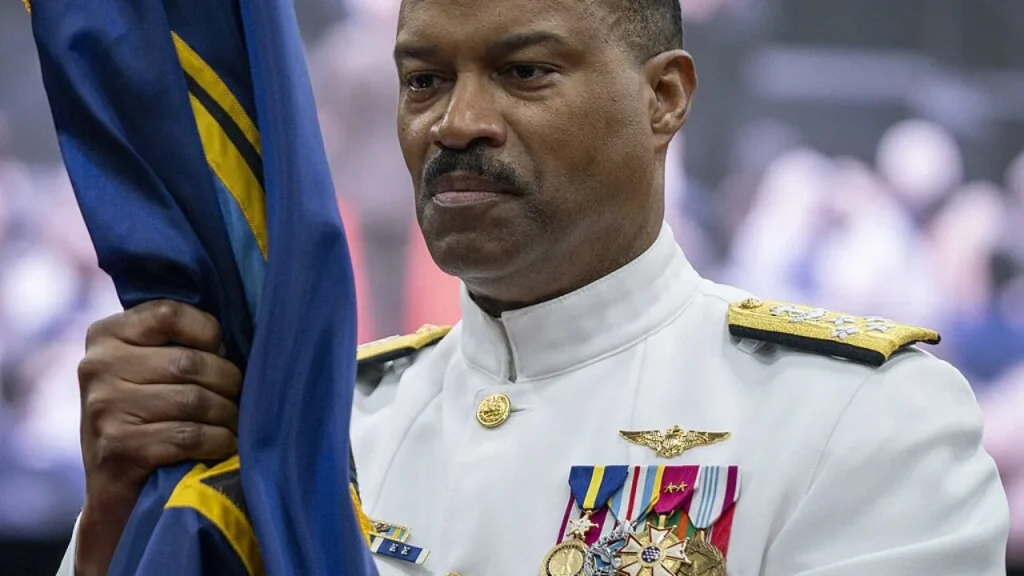
What Defense Secretary Hegseth Said
“On behalf of the Department of War, we extend our deepest gratitude to Admiral Alvin Holsey for his more than 37 years of distinguished service to our nation as he plans to retire at year’s end,” Hegseth stated on X.
Officials at the Pentagon did not provide additional information and referred media outlets to Hegseth’s social media statement.
What Admiral Holsey Said
“It’s been an honor to serve our nation, the American people and support and defend the Constitution for over 37 years,” Holsey wrote in his retirement statement.
“Serving as your commander and deputy for the past 34 months has been a tremendous honor. The SOUTHCOM team has made lasting contributions to the defense of our nation and will continue to do so.”
Holsey did not publicly state a reason for his early retirement.
Congressional Response: “Alarming Signal”
Senator Jack Reed, ranking Democrat on the Senate Armed Services Committee, stated: “Admiral Holsey’s resignation only deepens my concern that this administration is ignoring the hard-earned lessons of previous U.S. military campaigns and the advice of our most experienced warfighters.”
Reed called the early retirement “an alarming signal” about instability in the chain of command during a Caribbean military buildup.
Who Is Admiral Alvin Holsey?
Background:
- Native of Fort Valley, Georgia, commissioned through Naval ROTC at Morehouse College in 1988 with a bachelor’s degree in Computer Science
- One of few African Americans to hold the rank of four-star admiral
- Served as commander of Carrier Strike Group 1 from 2018 to 2020
- Commanded the USS Makin Island, the Navy’s first hybrid electric propulsion warship, from 2013 to 2014
SOUTHCOM Command:
- Sworn in as commander of Southern Command in November 2024
- Such assignments typically last three years; Holsey served less than one year
- Replaced Army Gen. Laura Richardson, the first woman to lead SOUTHCOM
The Caribbean Military Buildup
Currently, about 10,000 U.S. forces are backing counternarcotics operations in the Caribbean, according to a DOD official, with most stationed in Puerto Rico while others are on ships.
Hegseth announced Operation Southern Spear on November 13, 2025, a large-scale military and surveillance operation in the SOUTHCOM area of responsibility designed to remove “narco-terrorists from our Hemisphere.”
The Disputed Strikes: What We Know
September 2, 2025: First strike announced by President Trump at White House press conference, including controversial “double tap” killing survivors
Subsequent Strikes: U.S. military conducted at least five strikes by mid-October 2025
Most Recent: Strike killed six people on a suspected drug-carrying submarine days before Holsey’s retirement announcement
Administration Claims: The New York Times reported the administration told lawmakers it views individuals allegedly trafficking drugs as “unlawful combatants.”
Pattern of Military Leadership Changes
Holsey becomes the latest top military official to step down in recent weeks. Gen. Thomas Bussiere, a top Air Force commander, announced retirement for “personal and family reasons.” The head of U.S. Special Operations Command, Gen. Bryan Fenton, retired in early October.
Hegseth has replaced numerous senior officers since taking office, including firing former Chairman of the Joint Chiefs Gen. CQ Brown, Admiral Lisa Franchetti (former Chief of Naval Operations), Gen. James Slife (former vice chief of staff of the Air Force), and Lt. Gen. Jeffrey Kruse (former head of Defense Intelligence Agency).
Retired Rear Admiral Mark Montgomery noted: “I’d probably lean more towards we’re conducting extremely unusual operations in Southern Command right now that a reasonable person could disagree with the legality of.”
Legal Framework: What Laws Apply?
Title 10 Authority: The Trump administration claims strikes are military self-defense operations under Title 10 of the U.S. Code, which governs armed forces operations.
Laws of Armed Conflict: Legal experts question whether strikes comply with international humanitarian law, particularly regarding proportionality and distinction between combatants and civilians.
War Powers: Congressional authorization questions arise: “Any operation to intervene militarily in Venezuela—especially without congressional authorization—would be unwise and dangerous,” Reed stated.
War Crimes Concerns: “Double tap” strikes that target survivors raise potential violations of the Geneva Conventions and Rome Statute.
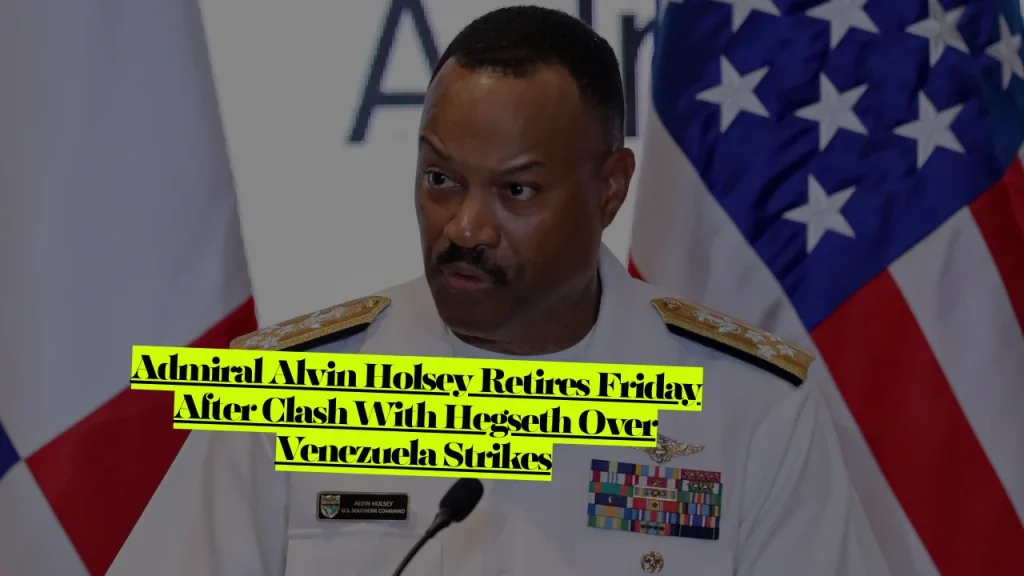
Disputed Claims About Resignation
Sean Parnell, chief spokesperson at the Pentagon, called a New York Times report that Holsey “raised concerns” about the boat strikes “Fake News,” writing: “This is a total lie. Never happened. There was no hesitation or concerns about this mission.”
The Times’ official communications account replied: “We are confident in our reporting.”
Parnell did not directly comment on CNN’s similar report citing sources about tensions between Holsey and Hegseth.
What Happens Friday
The relinquishment-of-command ceremony takes place at SOUTHCOM headquarters at 10:30 a.m. on Friday, December 12, 2025.
Air Force Lt. Gen. Evan L. Pettus will assume command from Holsey.
The ceremony marks the official transition of leadership for U.S. military operations across Latin America and the Caribbean during the ongoing and controversial counter-narcotics campaign.
Broader Implications
For Military Leadership: The rapid turnover of senior commanders raises questions about civil-military relations and whether experienced officers feel empowered to provide candid military advice.
For Caribbean Operations: The command transition occurs mid-operation, with strikes continuing and legal questions unresolved.
For Congressional Oversight: Lawmakers from both parties demand clarity on legal authority, rules of engagement, and operational justification for the strikes.
For International Law: The precedent of striking boats in international waters without clear legal justification could affect future military operations and international norms.
Frequently Asked Questions
When does Admiral Holsey officially retire?
Admiral Holsey retires from the U.S. Navy on Friday, December 12, 2025 at 10:30 a.m. during a relinquishment-of-command ceremony at SOUTHCOM headquarters.
Why did Admiral Holsey retire early?
CNN reports that tensions existed between Holsey and Defense Secretary Hegseth over Caribbean strikes, with SOUTHCOM raising concerns about whether operations were lawful. Holsey offered to resign during an October 6 meeting but did not publicly state a reason for retirement. Pentagon officials deny reports of disagreement.
How long did Admiral Holsey serve as SOUTHCOM commander?
Holsey served just over one year, taking command in November 2024. These positions typically last three years.
What are the Venezuela boat strikes?
The U.S. military has conducted at least five strikes against boats alleged to be carrying drugs off Venezuela’s coast. The strikes have killed multiple people, including a controversial “double tap” strike on September 2, 2025 that killed survivors from an initial strike.
Are the strikes legal?
Legal experts have raised questions about the strikes’ legality. The administration claims they’re self-defense operations under Title 10, but experts question compliance with international humanitarian law. Some suggest the September 2 “double tap” could constitute a war crime. Both Republican and Democratic lawmakers have raised concerns.
Who replaces Admiral Holsey?
Air Force Lt. Gen. Evan L. Pettus assumes command of U.S. Southern Command on December 12, 2025.
Is this part of a broader pattern of military leadership changes?
Yes. Defense Secretary Hegseth has replaced numerous senior officers in 2025, including the Chairman of the Joint Chiefs, Chief of Naval Operations, and heads of other major commands. Several other senior commanders have also retired or been removed.
What is Operation Southern Spear?
Hegseth announced Operation Southern Spear on November 13, 2025—a large-scale military and surveillance operation designed to remove “narco-terrorists from our Hemisphere.” The operation involves about 10,000 U.S. forces in the Caribbean.
Disclaimer: This article provides information about Admiral Alvin Holsey’s retirement and related military operations based on verified news sources and public statements. It is not legal advice. Readers should consult official government sources and legal experts for specific questions about military operations and international law.
Sources: U.S. Southern Command official press releases, CNN reporting, NPR reporting, The New York Times, The Washington Post, The Hill, DefenseScoop, Snopes fact-checking, Pentagon statements, and verified Congressional statements (December 2025).
About the Author

Sarah Klein, JD, is a licensed attorney and legal content strategist with over 12 years of experience across civil, criminal, family, and regulatory law. At All About Lawyer, she covers a wide range of legal topics — from high-profile lawsuits and courtroom stories to state traffic laws and everyday legal questions — all with a focus on accuracy, clarity, and public understanding.
Her writing blends real legal insight with plain-English explanations, helping readers stay informed and legally aware.
Read more about Sarah