
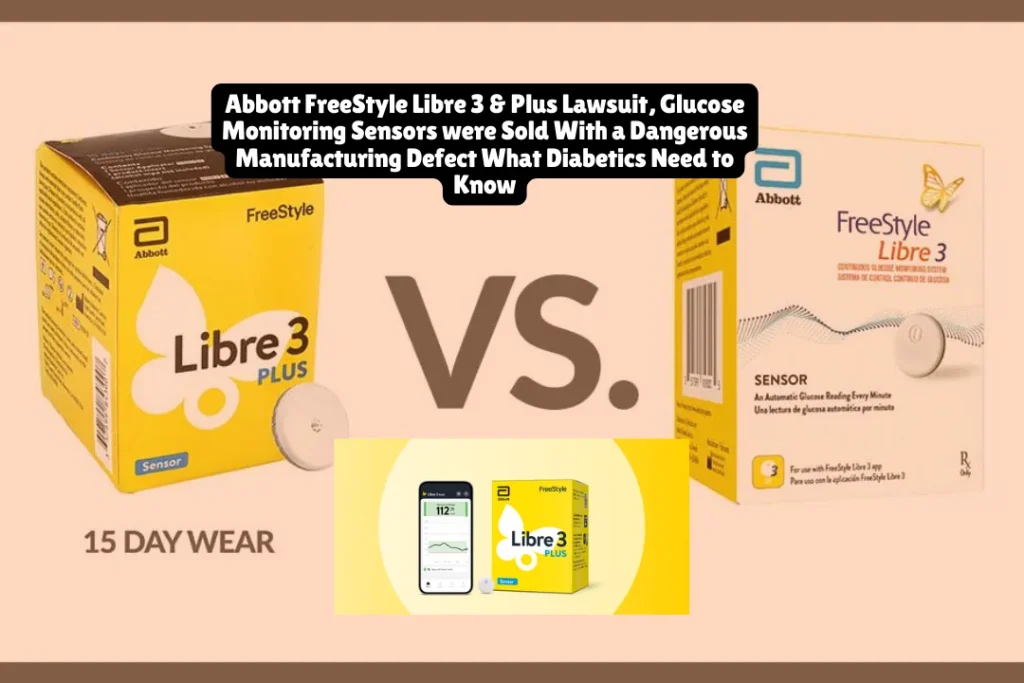
Abbott FreeStyle Libre 3 & Plus Lawsuit, Glucose Monitoring Sensors were Sold With a Dangerous Manufacturing Defect What Diabetics Need to Know
A class action lawsuit and multiple individual lawsuits have been filed against Abbott Diabetes Care over allegations that its FreeStyle Libre 3 and FreeStyle Libre 3 Plus continuous glucose monitoring sensors were sold with a dangerous manufacturing defect — and that Abbott knew about the problem for over a year before telling the public. No settlement exists yet and no claims window is open. This article explains what happened, what the lawsuits allege, who may qualify to take legal action, and exactly what you should do right now.
Key Case Status Box
| Item | Details |
| Lawsuit Status | Active — multiple cases filed, early stages |
| Settlement | None — no settlement exists |
| Claim Filing Window | Not open |
| Class Action Case Name | Shroff, et al. v. Abbott Diabetes Care Inc., et al. |
| Class Action Case No. | 3:26-cv-00351 |
| Class Action Court | U.S. District Court, Northern District of California |
| Wrongful Death Case Filed | Alameda County Superior Court, February 2, 2026 |
| Products Involved | FreeStyle Libre 3 and FreeStyle Libre 3 Plus sensors |
| Recall Date | November 24, 2025 |
| Sensors Affected | Approximately 3 million in the U.S. |
| Reported Serious Injuries | ~800 worldwide (as of early 2026) |
| Reported Deaths | 7 worldwide |
| Official FDA Recall Info | FDA.gov |
| Check Your Serial Number | Abbott.com |
Important: No court has ruled on these allegations. Abbott denies liability. Any website claiming you can file a settlement claim right now is providing false information.
What Happened: The Defect and the Recall
The FreeStyle Libre 3 and FreeStyle Libre 3 Plus are wearable continuous glucose monitoring systems used by people with diabetes to track blood sugar levels throughout the day and night. These devices are commonly used by individuals with Type 1 diabetes, insulin-dependent Type 2 diabetes, and others who require close, ongoing glucose monitoring to manage their condition safely. Each system uses a small disposable sensor worn on the back of the upper arm.
In November 2025, Abbott warned the public that some of its continuous glucose monitoring sensors were providing incorrect low glucose warnings. Internal testing identified the issue — carbon building up in the sensors during the manufacturing process — and determined that approximately 3 million CGM sensors were affected. The sensors were distributed in the United States, Canada, and several European countries.
The recall notice was issued on December 3, 2025, and affects specific lots of the FreeStyle Libre 3 Plus Sensor Kit, identified by serial numbers T60003522 and T60003216. According to Abbott, the sensors may provide incorrect low glucose readings, which could lead to excessive carbohydrate intake or improper insulin dosing. “If undetected, incorrect low glucose readings over an extended period may lead to wrong treatment decisions for people living with diabetes,” the recall states.
This was not the first time Abbott recalled these sensors. On July 24, 2024, Abbott announced a voluntary medical device correction for FreeStyle Libre 3 sensors in the U.S. after users were receiving erroneously high glucose results. The FDA later classified that action as a Class I recall — the agency’s most serious designation, reserved for products that could reasonably cause serious adverse health effects or death.
The lawsuits allege that even after Abbott reported it had received 736 serious injury reports as of November 14, 2025, it waited another 10 days to issue a public correction notice — depriving users of further opportunities to switch to a safer monitoring system.
What the Lawsuits Allege
Multiple lawsuits have now been filed, each making overlapping but distinct claims. Here is what each case alleges.
Class Action Lawsuit — Shroff v. Abbott
Lead plaintiff Bijoy Shroff, a Florida resident, claims Abbott knowingly sold FreeStyle Libre 3 and FreeStyle Libre 3 Plus glucose sensors with a defect that caused them to report falsely low glucose readings, while failing to disclose the defect and only initiating a recall after hundreds of serious injuries and seven deaths were reported. Shroff further argues Abbott sold the sensors as being effective for monitoring glucose levels — including by marketing them as having “unsurpassed accuracy” to the point they eliminated the need for fingersticks — while failing to disclose that they were defective.
Shroff claims Abbott is guilty of fraudulent omission or concealment and unjust enrichment, and violated the California Consumers Legal Remedies Act and the Florida Unfair and Deceptive Trade Practices Act. He wants to represent a nationwide class and Florida subclass of consumers who purchased the FreeStyle Libre 3 or the FreeStyle Libre 3 Plus glucose sensors.
Class Action Lawsuit — Taylor v. Abbott
A second class action, Christopher Taylor et al. v. Abbott Diabetes Care Inc. et al., was filed by plaintiffs from Tennessee and Mississippi — both diabetics who began using the sensors in 2024 and received dangerously inaccurate glucose readings compared to traditional fingerstick results. The lawsuit presents claims of fraudulent omission, unjust enrichment, breach of unfair competition law, and violations of the Mississippi Consumer Protection Act and the Tennessee Consumer Protection Act.
Taylor and Chambers allege Abbott knew or should have known of this problem since at least 2024, after identifying the issue through its own internal testing. Despite having this information, the lawsuit claims the manufacturer refused to issue warnings or recalls for more than a year while placing profits over patient safety.
Wrongful Death Lawsuit — Ford v. Abbott
McCune Law Group filed a wrongful death lawsuit against Abbott Diabetes Care Inc. and Abbott Laboratories in Alameda County Superior Court on February 2, 2026. The lawsuit stems from the November 17, 2025 death of 68-year-old Michael Leroy Ford of Alameda, California. According to the complaint, Mr. Ford died following cardiac arrest allegedly triggered when his FreeStyle Libre 3 Plus sensor displayed a critically low glucose reading of 68 mg/dL — when his actual blood glucose level was significantly higher.
The complaint alleges Abbott knew about the manufacturing defect through internal testing but failed to disclose the problem until after Mr. Ford’s death. According to the complaint, approximately 1.5 million defective sensors had already been used or expired by the time Abbott publicly announced the defect.
What Abbott Said in Marketing — vs. What the Lawsuits Allege
Understanding the gap between Abbott’s marketing claims and what plaintiffs allege is the core of these cases.
Abbott marketed the FreeStyle Libre 3 as providing “unsurpassed accuracy” with the “world’s smallest and most accurate 14-day glucose sensor,” and actively promoted the elimination of traditional finger-stick testing.
The FreeStyle Libre sensors are intended to replace traditional diabetes treatment and testing procedures, such as regular finger-pricking, and are implanted onto a user to provide 14 days of real-time blood glucose level reports.
The lawsuits allege this marketing was directly misleading. By telling consumers the sensors were accurate enough to replace fingersticks entirely, Abbott allegedly encouraged users to rely exclusively on sensor data for life-critical treatment decisions — including whether to take insulin, how much to eat, and whether to seek emergency care.
An Abbott spokesperson responded: “We’re committed to ensuring the safety and quality of our products.” Abbott has not publicly admitted liability in any of the cases.
What the Defect Actually Did to Patients
Diabetics must keep their blood sugars stable in order to avoid dangerous consequences to their health. A low or high blood sugar can cause difficulties that can even prove fatal. An inaccurate CGM puts you at serious risk. Acute consequences of out-of-control glucose levels in diabetics include immediate symptoms like increased thirst and urination, blurred vision, fatigue, fruity-smelling breath, hyperventilation, and rapid heartbeat, as well as life-threatening conditions such as diabetic ketoacidosis.
The defect originated from a specific production line and caused affected FreeStyle Libre 3 and Libre 3 Plus sensors to falsely indicate hypoglycemia even when a patient’s actual blood sugar levels were normal or elevated. This can mislead users into taking insulin they do not need, increasing the risk of severe hypoglycemia, confusion, loss of consciousness, and other life-threatening complications.
The complaint contends that Abbott has known of the glucose monitor defect from its own internal testing and market surveillance, and given the fact that the company recalled some of the sensors in July 2024 due to incorrect high glucose readings, the shifting defects — going from dangerously high to dangerously low inaccuracies within 18 months — demonstrates a systemic failure in Abbott’s quality controls.
Who May Qualify to Take Legal Action
There are two separate tracks for potential legal action, and they apply to different groups of people.
Track 1 — Class Action (Economic Damages)
The Abbott glucose monitor class action lawsuit seeks to represent all individuals in the United States who purchased the FreeStyle Libre 3 or FreeStyle Libre 3 Plus sensors during the applicable statute of limitations period.
You may potentially qualify for the class action if:
- You purchased a FreeStyle Libre 3 or FreeStyle Libre 3 Plus sensor in the U.S.
- Your sensor was covered by the July 2024 recall or the November 2025 medical device correction
- You did not necessarily need to suffer a physical injury — purchasing the product based on allegedly false marketing claims may be sufficient
Track 2 — Individual Personal Injury or Wrongful Death Lawsuit
You may qualify for a FreeStyle Libre lawsuit if you or a loved one used a recalled or allegedly defective FreeStyle Libre 3 or Libre 3 Plus sensor and then suffered serious glucose-related injuries that can be tied to inaccurate readings or missed alerts. Both adults and children may qualify because people as young as 2 years old can use these devices.
Specific qualifying injuries cited in lawsuits include:
- Severe hypoglycemia (dangerously low blood sugar)
- Loss of consciousness or seizure
- Cardiac events
- Hospitalization resulting from inaccurate glucose readings
- Wrongful death of a family member who relied on a defective sensor
While a class action lawsuit has been filed in California, it is unrelated to personal injury lawsuits. So far, plaintiffs’ attorneys have not requested injury case consolidation into multidistrict litigation (MDL), which is a possibility if case numbers grow.
Products NOT Currently Included in Lawsuits
Libre 2 and earlier Libre CGMs are not currently included in these lawsuits. The FDA recall and Abbott medical device correction only apply to certain Libre 3 and Libre 3 Plus devices and do not affect other FreeStyle Libre devices such as the Libre 2 or Libre 2 Plus.
How to Check if Your Sensor Is Recalled
Patients using the FreeStyle Libre 3 Plus Sensor are advised to check the sensor serial number on the company website to see if they are affected. If confirmed, users should stop using the sensor immediately, dispose of it, and request a replacement. Abbott assures that no other products in the FreeStyle Libre line are impacted by this recall.
The two recalled serial numbers confirmed in official notices are T60003522 and T60003216. Check your sensor’s packaging or your Abbott app to locate your serial number.
What to Do Right Now
Whether you experienced a physical injury or simply purchased a recalled sensor, your next steps depend on your situation.
If your sensor is recalled and you have NOT been injured:
- Stop using the recalled sensor immediately and request a free replacement from Abbott
- Keep all packaging — the box, sensor wrapper, and any receipts or pharmacy records
- Document your purchase — check Amazon, pharmacy apps, insurance records, or credit card statements for proof of purchase
- Monitor this case — check ClassAction.org and TopClassActions.com for updates on the class action settlement, when and if one is announced
If you or a loved one suffered a physical injury from a defective sensor:
- Seek medical attention immediately if you have not already done so
- Document everything — photos of the sensor readings vs. fingerstick results, dates, medical records, and hospital bills
- Preserve the defective sensor and packaging — do not throw anything away
- Report your injury to the FDA at MedWatch.FDA.gov — this creates an official record that can support litigation
- Contact a product liability attorney — individual injury cases may be worth significantly more than a class action payout; many firms handling this case offer free consultations. McCune Law Group (McCuneLawGroup.com), Lynch Carpenter LLP, and Weitz & Luxenberg are among the firms actively handling these cases
- Act quickly — product liability claims have statutes of limitations that vary by state
If a family member died after using a recalled sensor:
McCune Law Group has launched a nationwide investigation into injuries and deaths potentially linked to the FreeStyle Libre 3 and FreeStyle Libre 3 Plus sensors. Contact a wrongful death attorney immediately. Time limits apply and evidence preservation is critical.
Frequently Asked Questions
1. Is there an Abbott FreeStyle Libre 3 settlement I can file for right now? No. As of February 17, 2026, no settlement has been reached in any of the FreeStyle Libre 3 lawsuits. No publicly announced settlements are available, and no jury trials have been scheduled.
2. Which Abbott glucose sensors are included in the lawsuits? The lawsuits currently involve the FreeStyle Libre 3 and FreeStyle Libre 3 Plus sensors. The Libre 2 and earlier Libre CGMs are not currently included.
3. How do I know if my FreeStyle Libre 3 sensor is recalled? Check your sensor packaging or Abbott app for your serial number. The two confirmed recalled serial numbers are T60003522 and T60003216. Visit Abbott’s website and use their serial number look-up tool to confirm your specific device.
4. What was wrong with the FreeStyle Libre 3 sensors? Internal testing identified carbon building up in the sensors during the manufacturing process, causing approximately 3 million CGM sensors to provide incorrect low glucose readings. Incorrect low glucose readings over an extended period may lead to wrong treatment decisions for people living with diabetes, such as excessive carbohydrate intake or skipping or delaying insulin doses.
5. Did Abbott know about the defect before the recall? The lawsuits allege Abbott knew or should have known of this problem since at least 2024, after identifying the issue through its own internal testing, and that the manufacturer sat on this information for more than a year while placing profits over patient safety. Abbott has not admitted this allegation.
6. How many people were hurt by the defective FreeStyle Libre 3 sensors? Abbott reported 736 serious injuries and seven deaths linked to incorrect readings as of November 2025. More recent reports cite approximately 800 serious injuries worldwide.
7. Do I need proof of injury to join the class action? In the class action, neither plaintiff Taylor nor Chambers indicate they suffered physical injuries from the recalled sensor. They seek class action status for themselves and other similarly situated consumers who purchased the device believing they were buying a safe and effective glucose sensor. Physical injury is not required for the class action track — but it is required for individual personal injury lawsuits.
8. What is the difference between the class action and an individual lawsuit? The class action seeks economic damages for all consumers who purchased defective sensors, regardless of physical injury. Individual personal injury or wrongful death lawsuits seek compensation for specific medical harm — hospitalizations, pain and suffering, lost income, or death — and typically result in much larger individual payouts.
9. Can children qualify for a FreeStyle Libre 3 lawsuit? Yes. Both adults and children may qualify because people as young as 2 years old can use these devices. A parent or guardian would file on behalf of a minor child.
10. What law firms are handling FreeStyle Libre 3 lawsuits? The class action plaintiff Bijoy Shroff is represented by (Eddie) Jae K. Kim, Tiffine E. Malamphy, and Kelly K. Iverson of Lynch Carpenter LLP, and A. Brooke Murphy of Murphy Law Firm. McCune Law Group filed the wrongful death case in Alameda County and has launched a nationwide investigation into injuries and deaths linked to the sensors. Weitz & Luxenberg is also actively investigating claims.
Last Updated: February 17, 2026. This article will be updated when verified court filings, settlement information, or official case developments become publicly available. All information above is drawn from verified court filings, FDA records, and authoritative legal reporting.
Disclaimer: This article is for informational purposes only and does not constitute legal or tax advice. Settlement terms, eligibility, and payment amounts are subject to court approval and may change. For official information, always refer to the settlement administrator or the official settlement website.
About the Author

Sarah Klein, JD, is a licensed attorney and legal content strategist with over 12 years of experience across civil, criminal, family, and regulatory law. At All About Lawyer, she covers a wide range of legal topics — from high-profile lawsuits and courtroom stories to state traffic laws and everyday legal questions — all with a focus on accuracy, clarity, and public understanding.
Her writing blends real legal insight with plain-English explanations, helping readers stay informed and legally aware.
Read more about Sarah