
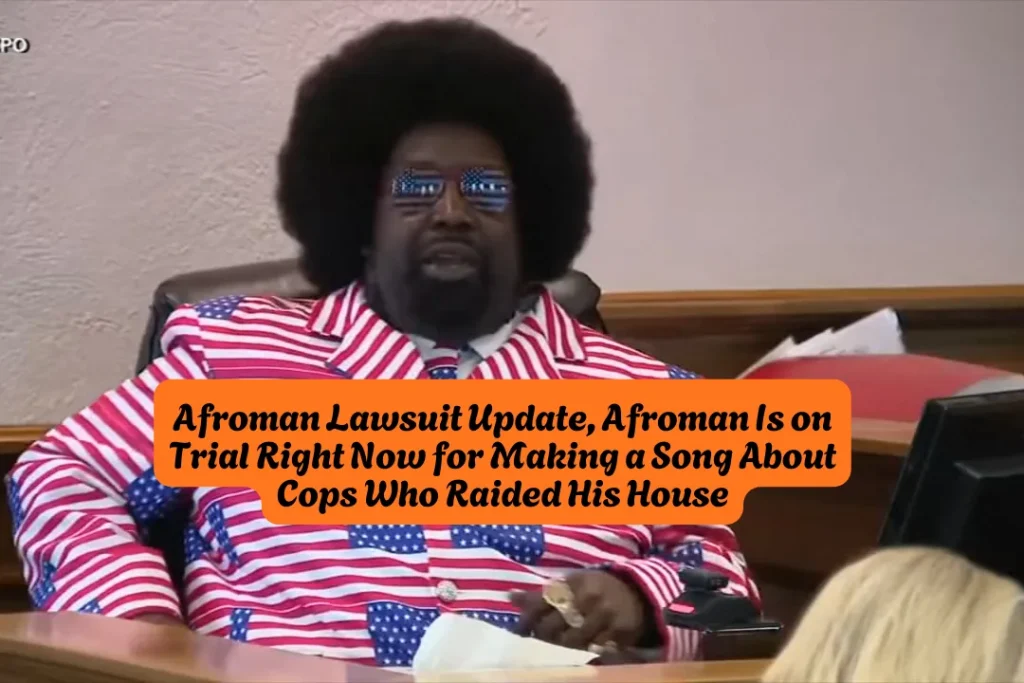
Afroman Lawsuit Update, Afroman Is on Trial Right Now for Making a Song About Cops Who Raided His House
Seven Ohio sheriff’s deputies raided rapper Afroman’s home in August 2022, found nothing, filed no charges, and then sued him — because he made a music video about it. As of today, March 18, 2026, an Ohio jury is actively deliberating on whether Afroman is liable for defamation and invasion of privacy. The case has drawn national attention and ACLU support, and the verdict could affect every American’s right to criticize police using their own security footage.
Case Snapshot
| Field | Detail |
| Case Name | Cooley v. Foreman AKA Afroman |
| Plaintiff(s) | Shawn Cooley, Lisa Phillips, Randy Walters, Brian Newland, and three other Adams County sheriff’s deputies |
| Defendant(s) | Joseph Foreman (Afroman) |
| Allegation Type | Defamation, invasion of privacy, right of publicity (use of likeness without consent) |
| Court & Jurisdiction | Adams County Common Pleas Court, Ohio |
| Date Filed | March 2023 |
| Case Status | JURY DELIBERATING — as of March 18, 2026 |
| Verdict / Outcome | TBD — jury deliberating today |
| Amount Awarded / Settled | TBD — unspecified damages sought |
| Key Attorney(s) | TBD (deputies’ counsel); Afroman self-framed defense as free speech |
| Docket Number | TBD — Adams County Common Pleas Court |
What’s Happening Right Now
- The jury is currently deliberating in Adams County, Ohio on whether Afroman is civilly liable for the defamation and privacy claims brought by the seven deputies.
- Afroman took the stand on Tuesday, March 17, and told the jury the deputies have only themselves to blame. “All of this is their fault,” he testified. “If they hadn’t wrongly raided my house, there would be no lawsuit, I would not know their names, they wouldn’t be on my home surveillance system, and there would be no songs.”
- Deputy Lisa Phillips gave emotional testimony about the impact of Afroman’s videos, breaking down in tears as the videos played in court and describing being publicly mocked over her gender and sexuality.
- No verdict has been announced. This article will update when the jury returns its decision.
What Is This Case Actually About?
In August 2022, Adams County sheriff’s deputies executed a search warrant at Afroman’s home in Winchester, Ohio as part of an investigation into possible drug trafficking and kidnapping. Deputies entered with weapons drawn, broke down his door, and searched the entire property. They found no evidence of criminal activity and filed no charges against Afroman.
During the raid, deputies seized $5,000 in cash, which was later returned. Afroman says the cash came back $400 short, which the Adams County Sheriff’s Office attributed to a counting error. Afroman says the department told him it was not responsible for paying to repair the damage the raid caused to his home.
Instead of moving on quietly, Afroman did what he has always done — he turned it into music. He used his own home security footage to create a series of music videos, including the now-viral track “Lemon Pound Cake,” named after a moment during the raid when a deputy allegedly paused, gun drawn, to examine a lemon pound cake sitting on the kitchen counter. He also sold merchandise featuring the deputies’ images captured on his security cameras. The videos racked up hundreds of thousands of views.
In March 2023, the seven deputies filed a civil lawsuit against Afroman, claiming his videos subjected them to public scrutiny, harassment, and death threats. They argued Afroman falsely portrayed them as corrupt or abusive, and sought significant damages along with a court order to stop him from using their images.
Who Is Involved?
Afroman (Joseph Edgar Foreman) is a 51-year-old rapper best known for the 2000 hit “Because I Got High.” He took the stand on March 17, 2026, telling the jury he had every right to use footage from his own security cameras to document what happened in his own home. He has remained publicly defiant throughout the legal battle, posting new videos and performing in an American flag suit in the days before trial. He frames the entire lawsuit as a First Amendment issue.
The Seven Deputies are Adams County sheriff’s officers including Shawn Cooley, Lisa Phillips, Randy Walters, and Brian Newland. Each deputy took the stand during the trial. Deputy Phillips gave emotional testimony about the impact of Afroman’s videos, saying community members mocked her and made accusations about her gender and sexuality after the videos circulated widely. The deputies argue their reputations and mental health suffered lasting damage.
The ACLU entered the case as a friend of the court. The ACLU filed an amicus brief arguing the lawsuit is a classic SLAPP suit — a Strategic Lawsuit Against Public Participation — designed to silence criticism of public officials, which the First Amendment most strongly protects.
Timeline of Key Events
| Date | Event |
| August 21, 2022 | Adams County deputies raid Afroman’s home in Winchester, Ohio |
| August 2022 | No charges filed; seized cash returned (Afroman says $400 short) |
| Late 2022–Early 2023 | “Lemon Pound Cake” music video and related merch released using raid footage |
| March 2023 | Seven deputies file civil lawsuit: defamation, invasion of privacy, right of publicity |
| April 20, 2023 | Pretrial scheduling call held in Adams County court |
| April 19, 2023 | ACLU files amicus brief supporting Afroman’s motion to dismiss as a SLAPP suit |
| 2023–2025 | Motion to dismiss argued; some claims dismissed, defamation and privacy claims survive |
| March 4, 2026 | Afroman confirmed for trial starting March 16 |
| March 16, 2026 | Trial begins; jury selection; deputies’ testimony begins |
| March 17, 2026 | Afroman takes the stand; Deputy Phillips gives tearful testimony |
| March 18, 2026 | Jury begins deliberations — ONGOING |
| TBD | Verdict expected |
What Could Happen Next?
An eight-person jury must decide whether Afroman crossed the line from protected free speech into defamation, or whether the deputies are using civil litigation to suppress legitimate criticism of their conduct. The jury faces several layered questions: Did Afroman make false statements of fact in his videos, or did he express protected opinion and artistic parody? Can officers who entered a private home under a warrant claim a privacy interest in footage taken there? Does monetizing that footage through merchandise change the legal analysis?
If the jury finds in favor of the deputies, Afroman could face financial damages — though the specific amount sought has not been publicly confirmed. A ruling against him could also set a precedent allowing law enforcement officers to pursue civil defamation claims against citizens who publicly criticize police conduct using their own recorded footage.
If the jury sides with Afroman, it would reinforce the First Amendment principle that criticism of public officials — especially on matters of public concern like police conduct — receives the strongest constitutional protection. The ACLU has argued throughout the case that nothing the First Amendment protects more strongly than criticism of government actors, which serves as a vital democratic check on official power.
Why This Case Matters Far Beyond Afroman
Most people watching this trial are not Afroman fans. They are watching because the outcome affects anyone who has ever recorded police activity on their phone, home camera, or dashcam — and then shared it publicly.
The Foundation for Individual Rights and Expression (FIRE) warned that a verdict against Afroman would have a “chilling” effect on free speech, particularly in cases involving satire and criticism of police. If deputies can sue homeowners for using their own security footage to criticize a raid, the implications extend well beyond music.
Legal observers note that if the deputies win, platforms may tighten policies for videos showing identifiable officers, pushing toward mandatory face-blurring and limiting monetization of law enforcement content. If Afroman wins, commentary and artistic criticism using on-duty officer footage remains on safer legal ground — though platforms may still apply stricter ad policies on sensitive content regardless of the legal outcome.
Important Dates & Milestones
| Milestone | Date |
| Raid on Afroman’s Home | August 21, 2022 |
| “Lemon Pound Cake” Released | Late 2022 |
| Lawsuit Filed by Deputies | March 2023 |
| ACLU Amicus Brief Filed | April 19, 2023 |
| Some Claims Dismissed | 2023–2024 |
| Trial Begins | March 16, 2026 |
| Afroman Testifies | March 17, 2026 |
| Jury Begins Deliberations | March 18, 2026 |
| Verdict | TBD |
| Appeal Deadline | TBD |
| Final Resolution | TBD |
Frequently Asked Questions
Why are cops suing Afroman?
Seven Adams County, Ohio sheriff’s deputies sued Afroman in March 2023 after he used his own home security footage — from a 2022 raid on his house — to create music videos and sell merchandise. The deputies claim his videos caused humiliation, emotional distress, and damaged their reputations. No charges were ever filed against Afroman from the original raid.
What is the “Lemon Pound Cake” song about?
“Lemon Pound Cake” is a music video Afroman created using security camera footage of the August 2022 police raid on his home. The title comes from a moment during the raid when a deputy allegedly paused — gun drawn — to examine a lemon pound cake on Afroman’s kitchen counter. The video mocks the deputies by name and went viral with hundreds of thousands of views.
What happened in the Afroman trial so far?
Trial began March 16, 2026. Each of the seven deputies testified about the emotional and reputational harm they say the videos caused. Afroman took the stand on March 17 and told the jury the deputies have only themselves to blame. As of March 18, the jury is actively deliberating and no verdict has been reached.
Has Afroman responded to the lawsuit?
Yes — loudly and consistently. Afroman has maintained from the start that the lawsuit is a violation of his First Amendment rights. He continued posting new videos throughout the legal battle, released new songs about the case, and testified in his own defense. He told the jury he was simply exercising his right to free speech as an American.
What does this case mean for everyday people?
The outcome could affect anyone who films police activity on their property and shares it publicly. A verdict against Afroman could open the door for officers to sue citizens for criticizing police conduct using their own recorded footage. A verdict in Afroman’s favor would strengthen the legal argument that such speech is protected — especially when it concerns the conduct of public officials.
What is defamation, and why does it matter here?
Defamation is a false statement of fact presented as true that damages someone’s reputation. To win, the deputies must prove Afroman’s videos made false factual claims — not just that the content was unflattering or offensive. Courts typically give strong protection to opinion, parody, and satire, especially when the subject is a public official performing official duties.
What is a SLAPP suit?
A SLAPP suit — Strategic Lawsuit Against Public Participation — is a legal action filed to silence or intimidate critics rather than to win on the merits. The ACLU argued this case fits that definition, saying it seeks to stop a citizen from criticizing police conduct using his own footage and artistic expression.
When will we know the verdict?
The jury began deliberating on March 18, 2026. No timeline for a verdict has been announced. This article will update when the jury returns its decision.
Last Updated: March 18, 2026
Disclaimer: This article is for informational purposes only and does not constitute legal advice. The jury is actively deliberating as of this publication date; facts will be updated upon verdict. Allegations described have not been proven in court unless otherwise stated. For advice regarding a particular situation, consult a qualified attorney.
About the Author

Sarah Klein, JD, is a licensed attorney and legal content strategist with over 12 years of experience across civil, criminal, family, and regulatory law. At All About Lawyer, she covers a wide range of legal topics — from high-profile lawsuits and courtroom stories to state traffic laws and everyday legal questions — all with a focus on accuracy, clarity, and public understanding.
Her writing blends real legal insight with plain-English explanations, helping readers stay informed and legally aware.
Read more about Sarah