
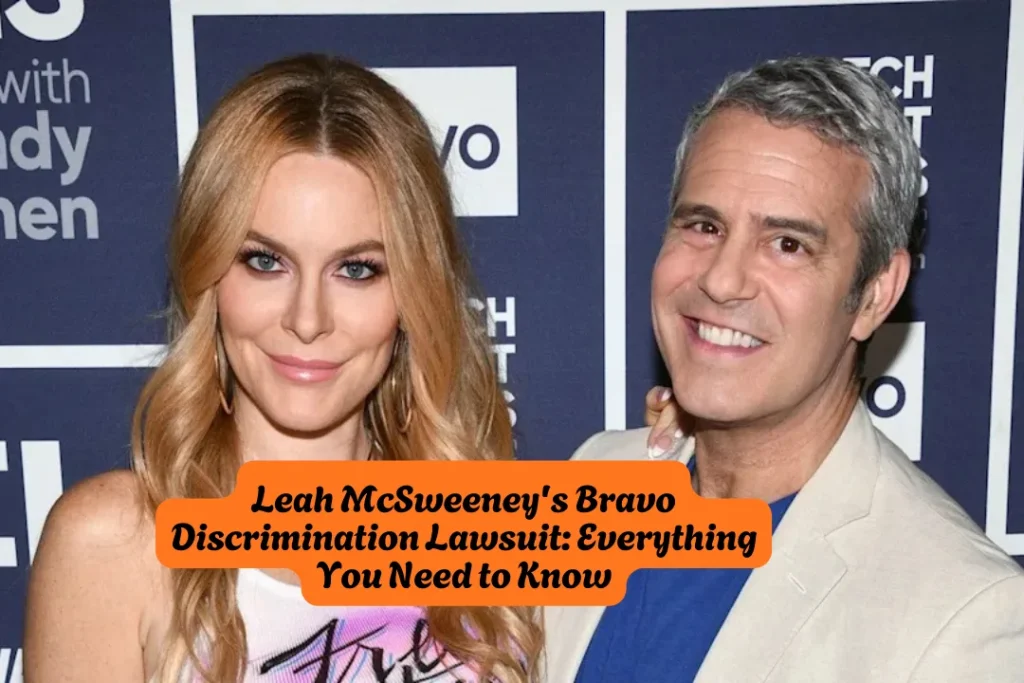
Leah McSweeney’s Bravo Discrimination Lawsuit, Everything You Need to Know
Former Real Housewives of New York City star Leah McSweeney sued Bravo Media, executive producer Andy Cohen, and several co-defendants in February 2024, alleging disability discrimination, a hostile work environment, and retaliation tied to her alcohol use disorder. A federal judge dismissed several claims in March 2025 but allowed three key allegations — disability discrimination, hostile work environment, and failure to accommodate — to proceed. The case is now moving forward in public federal court after a judge denied a bid to move it to private arbitration in March 2026.
Case Snapshot
| Field | Detail |
| Case Name | McSweeney v. Cohen et al. |
| Plaintiff(s) | Leah McSweeney |
| Defendant(s) | Andy Cohen, Bravo Media LLC, NBCUniversal Media LLC, Warner Bros. Discovery Inc., Shed Media US Inc., Lisa Shannon, John Paparazzo, Darren Ward |
| Allegation Type | Disability discrimination, hostile work environment, failure to accommodate, retaliation |
| Court & Jurisdiction | U.S. District Court, Southern District of New York |
| Date Filed | February 27, 2024 |
| Case Status | Active Litigation — proceeding to discovery in federal court |
| Verdict / Outcome | TBD |
| Amount Awarded / Settled | TBD — unspecified damages sought |
| Key Attorney(s) | Gary Adelman and Sarah M. Matz, Adelman Matz P.C. (Plaintiff); Orin Snyder (Cohen) |
| Docket Number | 1:24-cv-01503-LJL |
Case Status & Latest Update
- In March 2026, Judge Lewis Liman denied Bravo and Cohen’s request to move the case to private arbitration, ruling that the defendants had already waived that right by litigating in federal court first.
- Three claims — disability discrimination, hostile work environment, and failure to accommodate — are proceeding toward trial as of early 2026.
- On July 8, 2025, the court partially granted a stay of discovery, permitting only limited evidence gathering to prevent the destruction of documents while the arbitration dispute was resolved.
- The next major milestone is full discovery, which will allow McSweeney’s attorneys to request documents and conduct depositions of Bravo executives.
What Is the Leah McSweeney Lawsuit About?
McSweeney filed her federal lawsuit in the Southern District of New York against Cohen, several producers, and corporate entities including Bravo Media LLC, NBCUniversal Media LLC, Warner Bros. Discovery Inc., and Shed Media US Inc. The complaint alleges years of disability discrimination, retaliation, and the creation of a hostile work environment tied to her alcohol use disorder and mental health conditions.
McSweeney claims that despite disclosing her history of sobriety and relapse before joining RHONY, producers repeatedly pressured her to drink alcohol on camera, discouraged her from remaining sober, and weaponized her relapse into a central storyline for ratings. The lawsuit alleges that when McSweeney attempted to maintain sobriety, she was mocked, labeled “boring,” threatened with lost pay, and ultimately sidelined from future Bravo projects.
The complaint details incidents during RHONY Seasons 12 and 13 and Real Housewives Ultimate Girls Trip in which McSweeney says she was denied reasonable accommodations, prevented from attending Alcoholics Anonymous meetings, and pressured to continue filming during panic attacks and family emergencies. She alleges that these actions contributed to severe emotional distress, suicidal ideation, and psychiatric hospitalization.
The lawsuit also alleges that Cohen allegedly used his position to encourage other Bravo cast members to publicly discredit McSweeney after she filed suit. An amended complaint filed in November 2025 names 24 current and former Real Housewives cast members — including Luann de Lesseps, Kyle Richards, Melissa Gorga, and Lisa Vanderpump — claiming Cohen directed and induced them to publicly disparage McSweeney’s character and truthfulness.
Who Is Involved?
Leah McSweeney is a New York-based fashion entrepreneur and founder of the streetwear brand Married to the Mob. She appeared in RHONY Seasons 12 and 13 (2020–2021) and in one season of Real Housewives Ultimate Girls Trip. She is the plaintiff in this case and is represented by attorneys Gary Adelman and Sarah M. Matz of Adelman Matz P.C.
Andy Cohen is the executive producer of the Real Housewives franchise and host of Bravo’s Watch What Happens Live. Cohen’s attorney Orin Snyder called McSweeney’s allegations “false, offensive and defamatory” and demanded a retraction of the cocaine-related claims in a letter sent on March 6, 2024. Cohen has described the lawsuit as a “shakedown” and denied all allegations of substance use or favoritism.
Bravo Media LLC, NBCUniversal Media LLC, Warner Bros. Discovery Inc., and Shed Media US Inc. are the corporate defendants. Bravo and the production companies have argued that McSweeney was an independent contractor — not an employee — and therefore not entitled to certain workplace protections.
Producers Lisa Shannon, John Paparazzo, and Darren Ward are named as individual co-defendants alongside the corporate entities.
Timeline of Key Events
| Date | Event |
| 2020–2021 | McSweeney appears in RHONY Seasons 12 and 13 |
| 2022 | McSweeney films Real Housewives Ultimate Girls Trip in Thailand |
| September 6, 2023 | McSweeney files complaint with the New York State Division of Human Rights (NYSDHR) |
| October 6, 2023 | NYSDHR dismisses her administrative claims |
| January 9 & 23, 2024 | EEOC issues Right to Sue letters |
| February 27, 2024 | McSweeney files federal lawsuit in SDNY (Case No. 1:24-cv-01503) |
| March 6, 2024 | Cohen’s attorney sends retraction demand letter to McSweeney’s counsel |
| May 2024 | Defendants move to dismiss the complaint in its entirety |
| November 14, 2024 | Federal court hears oral arguments on motion to dismiss |
| March 31, 2025 | Judge Liman issues 100-page ruling; three key claims survive, others dismissed |
| July 8, 2025 | Court partially stays discovery pending arbitration motion |
| November 2025 | McSweeney files amended complaint naming 24 additional Bravo cast members |
| March 2026 | Judge denies Bravo and Cohen’s motion to compel private arbitration |
What Could Happen Next?
The case now enters full discovery, the phase where both sides exchange documents, review internal communications, and conduct depositions under oath. This phase is particularly significant here because Judge Liman noted that Bravo and Cohen’s push for private arbitration appeared motivated by the prospect of civil discovery that would become part of the public record in federal court.
McSweeney’s legal team must prove three core claims at trial: that her alcohol use disorder qualifies as a disability under federal and New York law, that the defendants created working conditions severe enough to constitute a hostile work environment, and that the defendants failed to provide reasonable accommodations for her disability. A federal judge already found that alcoholism can qualify as a protected disability under federal and state law, allowing those claims to survive the motion to dismiss.
The defendants could still appeal the arbitration ruling or pursue settlement negotiations before trial. Employment discrimination cases of this type typically take one to three years from filing to resolution, meaning a trial or settlement could occur in 2026 or 2027.
Why Does This Case Matter?
This lawsuit carries consequences well beyond Leah McSweeney and Bravo. It directly challenges how reality television producers classify and treat cast members — specifically, whether participants on long-running reality shows qualify as employees entitled to disability protections, or whether networks can shield themselves by labeling talent as independent contractors.
McSweeney frames her lawsuit as an indictment of a broader production culture that allegedly incentivizes excessive drinking, emotional distress, and public humiliation as entertainment. If the court rules in her favor on the disability discrimination claims, it could set a precedent requiring reality TV producers to provide reasonable accommodations to cast members with known disabilities — a potential industrywide shift.
The case also raises questions about retaliation tactics in entertainment. Court documents allege that Cohen used his influence to direct current and former Real Housewives cast members to publicly disparage McSweeney’s character after she filed suit, with those cast members allegedly hoping such loyalty would advance their own careers. If proven, that allegation could establish new legal exposure for entertainment executives who allegedly mobilize talent networks to silence critics.
Important Dates & Milestones
| Milestone | Date |
| Lawsuit Filed | February 27, 2024 |
| EEOC Right to Sue Issued | January 9 & 23, 2024 |
| Motion to Dismiss Filed | July 17, 2024 |
| Oral Arguments on Motion to Dismiss | November 14, 2024 |
| Judge’s 100-Page Ruling (3 Claims Survive) | March 31, 2025 |
| Arbitration Stay of Discovery | July 8, 2025 |
| Amended Complaint Filed | November 2025 |
| Arbitration Motion Denied | March 2026 |
| Trial Start Date | TBD |
| Final Resolution | TBD |
Frequently Asked Questions
What is the Leah McSweeney lawsuit about?
McSweeney, a former Real Housewives of New York City cast member, alleges that Bravo producers and executive producer Andy Cohen discriminated against her based on her alcohol use disorder and mental health conditions. She claims producers pressured her to drink on camera and retaliated against her when she stayed sober.
Who filed the lawsuit against Bravo and Andy Cohen?
Leah McSweeney filed the lawsuit on February 27, 2024, in the U.S. District Court for the Southern District of New York. Her attorneys are Gary Adelman and Sarah M. Matz of Adelman Matz P.C.
What happened in the Leah McSweeney case so far?
A federal judge dismissed several claims in March 2025 but allowed three — disability discrimination, hostile work environment, and failure to accommodate — to proceed. In March 2026, a judge denied Bravo and Cohen’s attempt to move the case to private arbitration. The case is now moving into full discovery in public federal court.
Has Andy Cohen responded to the lawsuit?
Yes. Cohen has denied all allegations. His attorney called the claims “false, offensive and defamatory” and demanded a retraction in March 2024. Cohen has also publicly described the lawsuit as a “shakedown.” Bravo and the production companies have also argued that McSweeney was an independent contractor, not an employee.
What does this lawsuit mean for everyday people?
The case could reshape how reality TV cast members are legally classified. If the court rules that McSweeney was an employee entitled to disability accommodations, it may require reality TV producers to follow workplace discrimination laws that have historically not applied to reality talent.
What is disability discrimination under U.S. law?
The Americans with Disabilities Act (ADA) prohibits employers from discriminating against workers with qualifying disabilities, which can include alcohol use disorder under certain conditions. Employers must also provide reasonable accommodations unless doing so causes undue hardship to the business.
Can an employer retaliate against someone for filing a discrimination lawsuit?
No. U.S. law prohibits retaliation against employees who file discrimination complaints or engage in other legally protected activity. McSweeney’s lawsuit includes a retaliation claim, alleging that defendants took adverse actions against her — including mobilizing other cast members to discredit her — after she pursued legal action.
When will Leah McSweeney’s lawsuit be resolved?
No trial date has been set. The case is currently in the discovery phase. Based on the timeline of similar employment discrimination cases in federal court, a trial or settlement could occur in 2026 or 2027, though that timeline depends on motions, appeals, and whether the parties negotiate a settlement.
Sources & References
- Court Filing: McSweeney v. Cohen et al., Case No. 1:24-cv-01503-LJL — PACER Docket
- Court Document: Judge Liman’s March 31, 2025 Motion to Dismiss Ruling (Courthouse News PDF)
- Wire Report: Courthouse News Service — Judge Guts McSweeney’s Toxic Workplace Claims
- Wire Report: Variety — Andy Cohen Fires Back at McSweeney’s Allegations
Last Updated: March 18, 2026
Disclaimer: This article is for informational purposes only and does not constitute legal advice. Allegations described in this article have not been proven in court unless otherwise stated. Legal claims and outcomes depend on specific facts and applicable law. For advice regarding a particular situation, consult a qualified attorney.
About the Author

Sarah Klein, JD, is a licensed attorney and legal content strategist with over 12 years of experience across civil, criminal, family, and regulatory law. At All About Lawyer, she covers a wide range of legal topics — from high-profile lawsuits and courtroom stories to state traffic laws and everyday legal questions — all with a focus on accuracy, clarity, and public understanding.
Her writing blends real legal insight with plain-English explanations, helping readers stay informed and legally aware.
Read more about Sarah