
Garcia v. Starbucks Lawsuit, Jury Awards $50M to Delivery Driver Burned by Unsecured Hot Tea at Drive-Through
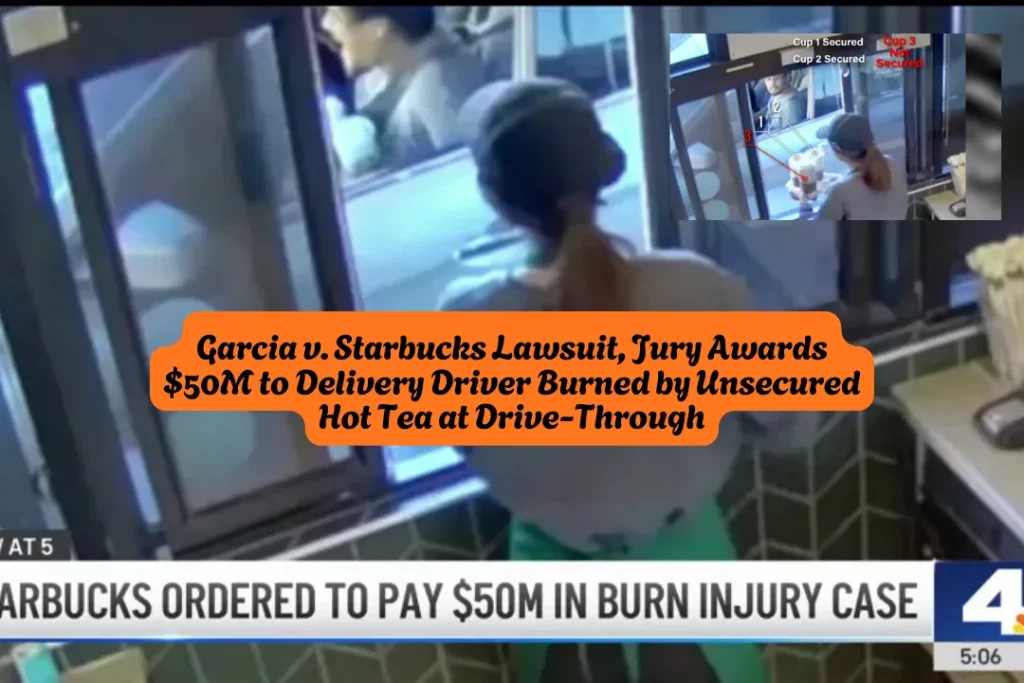
A Los Angeles jury found Starbucks 100% liable for a hot tea spill that permanently disfigured a delivery driver — then awarded him $50 million after Starbucks turned down two settlement offers and took the case to trial.
Michael Garcia was picking up drinks at a drive-through in Los Angeles when he suffered severe burns, disfigurement, and debilitating nerve damage to his genitals when hot drinks spilled onto his lap. On March 14, 2025, a Los Angeles County jury ruled in his favor, awarding him $50 million in damages. Starbucks has appealed. No payment has been made.
Quick Case Snapshot
| Field | Detail |
| Case Name | Michael Garcia v. Starbucks Corporation |
| Court | Los Angeles County Superior Court |
| Incident Date | February 8, 2020 |
| Lawsuit Filed | 2020 |
| Verdict Date | March 14, 2025 |
| Plaintiff | Michael Garcia, Postmates delivery driver |
| Defendant | Starbucks Corporation |
| Jury Verdict | $50,000,000 — compensatory damages |
| Liability Finding | Starbucks 100% liable |
| Judge | Hon. Elihu Berle (trial); Hon. Shaller (post-trial motions) |
| New Trial Motion | Denied — June 2025 |
| Current Status | ✅ Verdict upheld — Starbucks appeal pending in California Court of Appeal |
What Happened — The Complete Story
On February 8, 2020, Michael Garcia, 34, was picking up three Medicine Ball drinks at the Starbucks location in West Adams, Los Angeles. A Starbucks barista handed Garcia the order, but one of the hot drinks was not fully pushed into the carrier. The drink fell out of the container and onto Garcia.
The drink caused third-degree burns to Garcia’s genitals and inner thighs. He required multiple surgeries, including skin grafts, resulting in permanent scarring and disfigurement. The injuries left Garcia with lasting physical and emotional effects, including sexual dysfunction.
Garcia filed suit in California Superior Court in 2020, accusing Starbucks of negligence for failing to secure the drink properly before handing it over at the drive-through window.
The Two Offers Starbucks Turned Down
This detail is what the judge and legal observers focused on most sharply after the verdict.
Garcia initially rejected a $3 million pre-trial offer due to confidentiality restrictions. Starbucks later offered $30 million, but the parties could not agree on terms. The final $50 million verdict, combined with interest and attorney fees, creates a total exposure of $61.7 million for Starbucks.
The trial judge did not hide his view of that decision. Judge Shaller criticized Starbucks for rejecting settlement opportunities, stating the company “asked for this verdict” by proceeding to trial.
What the Jury Decided
The jury found Starbucks 100% liable for the spill. Starbucks was not found to have shared fault — the full responsibility landed on the company.
The jury awarded Garcia $50 million in compensatory damages — intended to cover his physical injuries, emotional distress, and significant loss of quality of life. Garcia’s attorneys had not asked for a specific dollar amount, leaving the number entirely to the jury.
Plaintiff’s attorney Nicholas Rowley said after the verdict: “Starbucks frivolously denied liability and lost big. Justice was served.”
Garcia’s attorney Nick Rowley said in a press release that Garcia’s “life has been forever changed” by the accident and that “no amount of money can undo the permanent catastrophic harm he has suffered.”
What Starbucks Said
Starbucks said it plans to appeal, adding that it has “always been committed to the highest safety standards in our stores.” Starbucks attorney Rich Moore called the jury’s verdict “grossly excessive” and “wildly disproportionate” to the injuries suffered by the plaintiff, adding that the award was “exponentially higher than any verdict in American history for a case like this.”
Starbucks argued that Garcia may have contributed to his own injuries through his own actions — a legal defense known as contributory negligence. The jury rejected that argument entirely.
The Judge Upheld the Full $50 Million — Then Starbucks Appealed
A Los Angeles judge rejected a motion by Starbucks to reduce or invalidate the $50 million jury award in June 2025. Following Judge Shaller’s denial of all post-trial motions, Starbucks filed a notice of appeal to the California Court of Appeal.
The appeal is currently pending. No payment timeline has been set. Garcia has not received any money from the verdict yet.
Why This Verdict Is Historic
According to the Expert Institute, Garcia’s $50 million verdict was the third-highest personal injury payout of 2025, ranking behind only two cases involving severe brain and spine injuries.
The case drew immediate comparisons to the 1992 McDonald’s hot coffee lawsuit — one of the most famous personal injury cases in American legal history. As AllAboutLawyer.com has previously reported in our McDonald’s hot coffee lawsuit breakdown, that case resulted in a jury awarding nearly $3 million to 79-year-old Stella Liebeck, which was later reduced and settled confidentially. The key difference in the Starbucks case: Starbucks was found to be 100% at fault, while in the McDonald’s case the jury found McDonald’s was only 80% at fault. There was also no punitive damages component in the Starbucks verdict — the entire $50 million was compensatory, meaning the jury believed Garcia’s personal losses were worth that amount.
What Laws Were at Issue?
Negligence — California law requires businesses to exercise reasonable care when serving customers. A negligence claim requires the plaintiff to prove: the defendant owed a duty of care, they breached that duty, the breach caused the injury, and the injury resulted in real damages. Garcia’s lawsuit said a Starbucks employee did not wedge the scalding-hot tea firmly enough into a takeout tray. The jury found that breach caused his injuries — and that Starbucks bore 100% of the responsibility.
Premises Liability — Under California law, business owners have a duty to maintain a safe environment for customers. Failure to do so can result in legal liability for injuries caused by unsafe conditions. Drive-through service windows fall within this duty.
Current Status & What Happens Next
- Starbucks filed its notice of appeal to the California Court of Appeal after Judge Shaller denied all post-trial motions in June 2025.
- The appeal will focus primarily on whether the $50 million award is legally excessive — Starbucks’s central argument throughout post-trial proceedings.
- California appellate courts rarely overturn jury verdicts on damages alone unless the amount shocks the conscience or is unsupported by the evidence. The fact that Judge Shaller — who presided over the full trial — upheld the award signals that bar will be difficult for Starbucks to clear.
- A final resolution through the appeal process typically takes 18 to 36 months from the filing of the notice of appeal. Garcia is unlikely to receive any payment before 2027 at the earliest.
- If Starbucks loses the appeal, it faces total exposure of $61.7 million when interest and attorney fees are included.
This page will be updated as the appeal progresses.
Important Case Dates
| Milestone | Date |
| Incident at West Adams Drive-Through | February 8, 2020 |
| Lawsuit Filed | 2020 |
| Trial Begins | Early March 2025 |
| Jury Verdict — $50M Awarded | March 14, 2025 |
| Post-Trial Motions Denied | June 2025 |
| Notice of Appeal Filed | June 2025 |
| California Court of Appeal Ruling | TBD — est. 2026–2027 |
| Payment to Garcia | TBD — pending appeal outcome |
Frequently Asked Questions
Has Michael Garcia received the $50 million yet?
No. Starbucks appealed the verdict immediately after the judge denied its post-trial motions in June 2025. Garcia will not receive payment until the appeal is resolved — which could take until 2027 or later.
Why did the jury award $50 million specifically?
Garcia’s attorneys did not request a specific dollar amount — they left the number to the jury. The $50 million covers Garcia’s physical injuries, emotional distress, and significant loss of quality of life, including permanent sexual dysfunction and disfigurement requiring multiple surgeries and skin grafts.
Could the $50 million be reduced on appeal?
Yes — Starbucks’s primary argument on appeal is that the award is excessive. However, the trial judge already reviewed and upheld the full amount after Starbucks argued it was “grossly excessive.” Appellate courts give significant deference to jury verdicts that a trial judge has already affirmed.
Is this similar to the McDonald’s hot coffee case?
Both cases involve burns from hot beverages handed at a drive-through and both triggered national debate about corporate responsibility. The key differences: in the McDonald’s case the jury found the company 80% at fault and most of the award was punitive damages, later reduced by the judge. In Garcia’s case, Starbucks was found 100% liable, the full $50 million is compensatory, and the judge declined to reduce it at all. For the full McDonald’s comparison, see AllAboutLawyer.com’s McDonald’s hot coffee lawsuit breakdown.
Does this mean I can sue Starbucks if I burn myself on a hot drink?
Not automatically. To win a negligence claim, you must prove the injury was caused by Starbucks’s failure to exercise reasonable care — not simply that the drink was hot. Garcia succeeded because the evidence showed a barista failed to secure the drink in the carrier before handing it over. Burns from properly served beverages face a much higher legal bar. If you have suffered an injury at a business due to what you believe was negligence, consult a personal injury attorney to evaluate your specific facts.
Related Reading on AllAboutLawyer.com: This case draws direct comparison to the most famous hot beverage lawsuit in U.S. history — see our full breakdown of the McDonald’s hot coffee lawsuit: Stella Liebeck’s burn pictures, facts, and legal legacy to understand how courts evaluate negligence in hot beverage cases and why the Starbucks verdict is legally significant. For another major personal injury negligence case involving corporate liability and catastrophic injury, see our coverage of the Adriana Chechik TwitchCon injury case.
Last Updated: March 14, 2026
This article is for informational purposes only and does not constitute legal advice. Allegations in a complaint are not findings of fact. All parties are presumed innocent unless and until proven otherwise in court.
About the Author

Sarah Klein, JD, is a licensed attorney and legal content strategist with over 12 years of experience across civil, criminal, family, and regulatory law. At All About Lawyer, she covers a wide range of legal topics — from high-profile lawsuits and courtroom stories to state traffic laws and everyday legal questions — all with a focus on accuracy, clarity, and public understanding.
Her writing blends real legal insight with plain-English explanations, helping readers stay informed and legally aware.
Read more about Sarah