
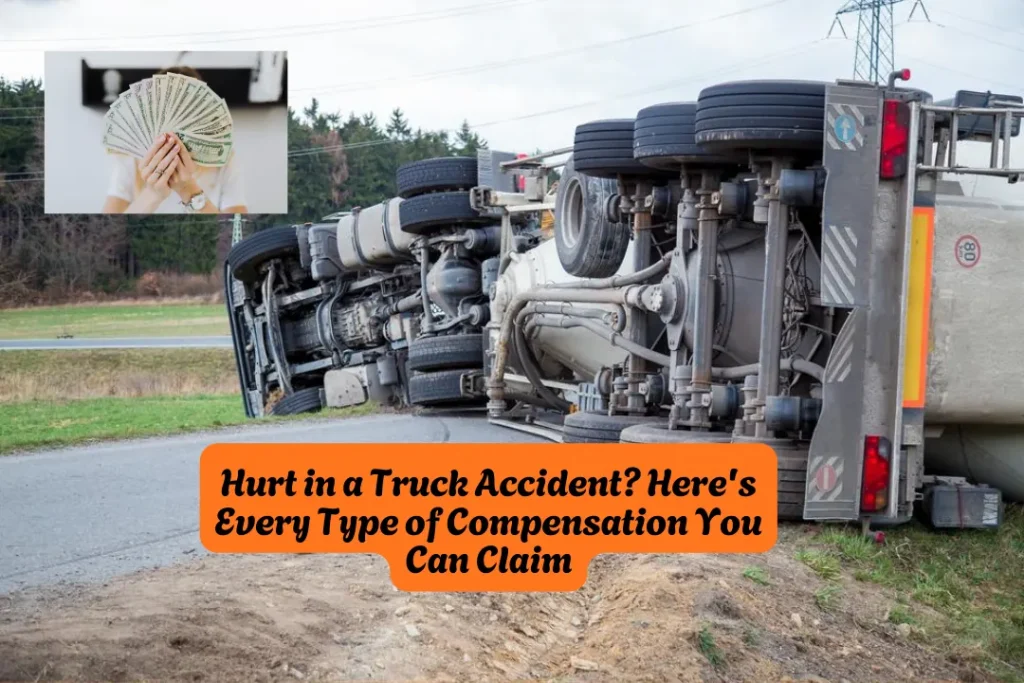
Hurt in a Truck Accident? Here’s Every Type of Compensation You Can Claim
You can claim compensatory damages for medical expenses, lost wages, pain and suffering, and property damage after a truck accident. In cases involving severe negligence or wrongful death, you may also recover punitive damages. Total compensation depends on injury severity, liability strength, and available insurance coverage.
What truck accident compensation can you claim?
You can claim compensatory damages for medical expenses, lost wages, pain and suffering, and property damage after a truck accident. In cases involving severe negligence or wrongful death, you may also recover punitive damages. Total compensation depends on injury severity, liability strength, and available insurance coverage.
Most people injured in truck accidents have no idea how much they are leaving on the table.
They know about medical bills. Maybe lost wages. But truck accident compensation covers far more than that — and the difference between a basic claim and a fully documented one can be hundreds of thousands of dollars.
Commercial trucks weigh up to 80,000 pounds. According to NHTSA, large trucks were involved in 5,837 fatal crashes in 2022, representing 14% of all U.S. traffic fatalities. When these crashes happen, the physical, financial, and emotional damage extends far beyond what shows up on a hospital invoice.
This guide explains every category of truck accident damages you may be entitled to claim — from current medical bills to future lost earning capacity, from pain and suffering to punitive damages. Understanding what the law allows you to recover is the first step toward making sure you receive it.
To understand how legal representation shapes the total compensation you can recover, learn more about how a truck accident lawyer can help maximize your compensation.
Types of Truck Accident Compensation You Can Claim
Truck accident compensation falls into two main categories: compensatory damages and punitive damages. Most victims qualify for compensatory damages. Punitive damages apply in cases involving gross negligence or reckless conduct.
Here is a full breakdown of what you can claim:
| Damage Type | Category | What It Covers |
| Medical expenses (current) | Compensatory | Hospital bills, surgery, medication, therapy |
| Medical expenses (future) | Compensatory | Ongoing treatment, long-term care, rehabilitation |
| Lost wages | Compensatory | Income missed during recovery |
| Lost earning capacity | Compensatory | Reduced ability to work permanently |
| Pain and suffering | Compensatory | Physical pain and emotional distress |
| Property damage | Compensatory | Vehicle repair or replacement |
| Wrongful death damages | Compensatory | Funeral costs, lost future income, grief |
| Punitive damages | Punitive | Punishment for gross negligence or recklessness |
Additionally, some victims recover compensation for disability, disfigurement, and loss of consortium — the impact the injuries have on their relationship with a spouse or family.
Understanding which categories apply to your case is critical. Furthermore, many victims never claim future medical expenses or lost earning capacity simply because they did not know these were recoverable.
Compensatory Damages: Your Core Truck Accident Claim
Compensatory damages are designed to make you financially whole. They cover every real, documented loss you suffered because of the crash.
Medical Expenses
Your claim can include every medical cost tied to the accident — past and future. This covers emergency room visits, surgeries, hospital stays, physical therapy, prescription medications, assistive devices, and any ongoing specialist care your injuries require.
Future medical expenses are especially important in severe injury cases. A life care planner can project the total cost of treatment over your lifetime. Courts and insurers must account for those projected costs when calculating your compensation.
Lost Wages and Lost Earning Capacity
If your injuries kept you out of work — even for a few weeks — you can claim every dollar of income you missed. Pay stubs, tax returns, and employer letters document this clearly.
However, the larger category is lost earning capacity. If your injuries permanently reduce your ability to work, earn promotions, or return to your previous profession, you can claim the projected difference in lifetime earnings. Economic experts calculate this figure using your age, career trajectory, and the nature of your disability.
Pain and Suffering
Pain and suffering damages cover the physical and emotional impact of your injuries. There is no receipt for this — but it is very real compensation. Insurers apply a multiplier of 1.5x to 5x your economic damages to estimate this value. Severe, permanent injuries receive higher multipliers.
Speaking with a truck accident attorney can help you understand your legal options and determine what compensation you may be entitled to claim at no cost.
Punitive Damages: When the Trucking Company Crossed a Line
Not every truck accident qualifies for punitive damages. However, when a trucking company or driver acted with gross negligence — and the evidence proves it — courts award additional money specifically to punish that behavior and deter it in the future.
Common triggers for punitive damages in truck accident cases include:
- A driver who continued operating after logging violations of the 11-hour daily driving limit under 49 CFR Part 395
- A trucking company that knowingly skipped mandatory vehicle maintenance
- A carrier that falsified driver logbooks to hide hours-of-service violations
- A company that retained a driver with a history of drug or alcohol violations
- An operator that overloaded cargo beyond federal weight limits
Under the legal doctrine of respondeat superior, trucking companies are held liable for their drivers’ negligent conduct during employment. This means you can pursue the company’s insurance policy — not just the driver personally.
Courts have consistently held trucking companies liable for awards exceeding $1,000,000 when drivers worked beyond safe hours. In cases involving deliberate regulatory violations, punitive damages can double or triple your total recovery.
For a closer look at how negligence drives compensation higher, explore what a tractor-trailer accident lawyer does to build high-value claims.
Wrongful Death Compensation in Truck Accident Cases
When a loved one is killed in a truck accident, surviving family members can pursue a wrongful death claim. This is separate from a personal injury claim and is filed on behalf of the deceased person’s estate and dependents.
Wrongful death compensation can include:
- Funeral and burial expenses
- Lost future income the deceased would have earned
- Loss of companionship, guidance, and emotional support
- Medical costs incurred before death
- Pain and suffering the victim experienced before dying
Wrongful death cases involving large commercial carriers regularly result in settlements of $1,500,000 to $5,000,000 or more. The presence of minor children, a high-earning spouse, or evidence of gross negligence all push these figures higher.
What Increases or Decreases Your Truck Accident Compensation
Understanding what affects the compensation for truck accident injuries helps you avoid costly mistakes and build a stronger claim.
Factors That Increase Compensation
- Severe or permanent injuries requiring lifetime care
- Clear FMCSA violations by the driver or carrier
- Black box data confirming speeding or reckless driving
- Multiple liable parties, including the trucking company
- Strong medical documentation and economic expert testimony
- Experienced legal representation throughout the process
Factors That Decrease Compensation
- Comparative fault — if you were partly responsible, your award is reduced by your percentage of fault
- Delayed medical treatment after the crash
- Recorded statements given to the insurance adjuster without an attorney
- Gaps in medical care that suggest your injuries are less serious
- Missing the statute of limitations — most states allow only 2–3 years to file
For real-world examples of how these factors played out in actual cases, review real semi truck accident settlement examples and what drove those outcomes.
Steps to Protect and Maximize Your Compensation Claim
What you do in the days after the crash directly impacts your final recovery amount. Follow these steps carefully:
- Seek immediate medical treatment — Document every symptom from day one, even if you feel fine initially
- Call an attorney before speaking to insurers — Everything you tell an adjuster can be used to minimize your claim
- Preserve all evidence — Request police reports, take photos of the scene, and collect witness contact information
- Follow your full treatment plan — Gaps in care give insurers leverage to argue your injuries are not serious
- Track every financial loss — Keep records of all bills, missed workdays, transportation costs, and out-of-pocket expenses
- Do not post on social media — Insurance companies actively monitor claimant accounts for inconsistencies
- Wait for maximum medical improvement — Never accept a settlement before your doctor confirms your condition has stabilized
Frequently Asked Questions
How long do I have to file a truck accident compensation claim?
In most states, you have 2–3 years from the date of the accident to file a personal injury lawsuit. Missing this deadline permanently eliminates your right to any compensation. Truck accident cases require fast action — key evidence like black box data and driver logbooks can disappear quickly, so contact an attorney immediately.
What is the average truck accident compensation amount?
Truck accident compensation varies widely based on injury severity. Minor injury cases typically result in compensation between $75,000 and $200,000. Serious injury cases often reach $500,000 to $2,000,000 or more. Wrongful death claims frequently exceed $1,500,000. Your specific amount depends on your documented losses, liability evidence, and legal representation.
What happens to my compensation if I was partially at fault?
Most states apply comparative fault rules, which reduce your compensation by your percentage of responsibility for the crash. For example, if you were 20% at fault and your total damages equal $500,000, you would receive $400,000. A few states apply contributory negligence rules that can bar recovery entirely if you share any fault. An experienced attorney can help minimize any fault attributed to you.
How long does a truck accident compensation claim take?
Straightforward cases with clear liability often resolve within 6–12 months. Complex cases involving catastrophic injuries, disputed fault, or multiple defendants can take 18 months to 3 years. Settling before you reach maximum medical improvement is one of the most expensive mistakes truck accident victims make.
Can I claim future medical expenses as part of my truck accident compensation?
Yes — future medical expenses are a fully recoverable component of your claim. A life care planner or medical expert can project the lifetime cost of your ongoing treatment, surgeries, medications, and rehabilitation. These projected costs must be included in your demand and backed by expert testimony to carry full weight in negotiations or at trial.
Legal Terms Used in This Article
Compensatory Damages: Money paid to cover your actual losses, including medical bills, lost wages, and pain and suffering. This is the most common category of truck accident compensation.
Punitive Damages: Extra money awarded to punish a defendant for especially reckless or negligent behavior. These are less common but can significantly increase your total compensation in egregious cases.
Lost Earning Capacity: Compensation for the permanent reduction in your ability to earn income due to your injuries. This is calculated using your age, profession, and the nature of your disability.
Wrongful Death Damages: Compensation available to surviving family members when a loved one is killed due to another party’s negligence. These can include lost future income, funeral costs, and loss of companionship.
Comparative Fault: A rule that reduces your compensation by your percentage of responsibility for the accident. Some states bar recovery entirely if your fault exceeds a certain threshold.
Non-Economic Damages: Compensation for losses that have no direct financial cost, such as pain and suffering, emotional distress, and loss of enjoyment of life.
Statute of Limitations: The legal deadline for filing a personal injury lawsuit. Most states set this at 2–3 years from the date of the accident.
FMCSA: The Federal Motor Carrier Safety Administration, which regulates commercial trucking safety. Violations of FMCSA rules are strong evidence of negligence and can increase your compensation significantly.
Conclusion
Truck accident compensation is not limited to your hospital bill. It covers medical expenses — current and future — lost wages, lost earning capacity, pain and suffering, property damage, and in the most serious cases, punitive damages and wrongful death recovery.
Every category matters. Every dollar you fail to document is a dollar you may never see. The trucking company’s insurer has a team dedicated to limiting what you receive. You deserve equally dedicated representation on your side.
If you or a loved one was injured in a truck accident, do not wait. Contact a truck accident attorney today for a free consultation. Our team is here to help you understand your compensation options and fight for the damages you deserve. You can also compare your situation against real trucking accident settlement amounts and the factors that shaped them.
About the Author

Sarah Klein, JD, is a former civil litigation attorney with over a decade of experience in contract disputes, small claims, and neighbor conflicts. At All About Lawyer, she writes clear, practical guides to help people understand their civil legal rights and confidently handle everyday legal issues.
Read more about Sarah