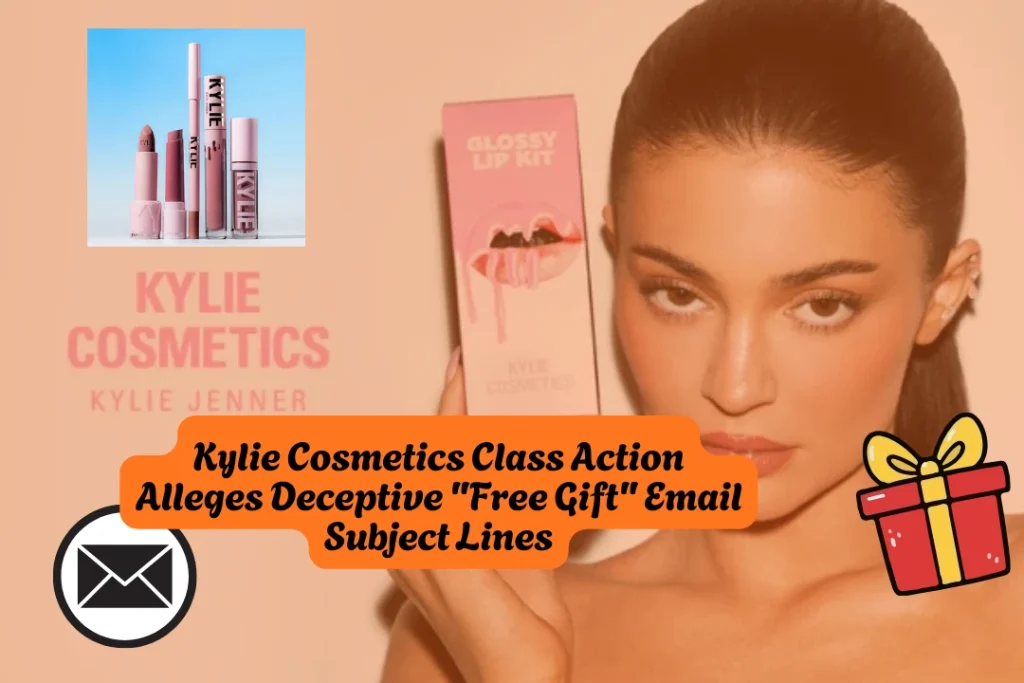
Kylie Cosmetics Class Action Alleges Deceptive “Free Gift” Email Subject Lines
A proposed class action lawsuit filed against Coty DTC Holdings LLC — the company behind Kylie Cosmetics — alleges the brand systematically used misleading “free gift” subject lines in marketing emails to trick Maryland consumers into opening messages and making purchases. Plaintiff Myesha Crooks filed the complaint on October 6, 2025, alleging the company’s email marketing practices violate the Maryland Commercial Electronic Mail Act (MCEMA).
The lawsuit claims these subject lines falsely imply the gifts are unconditional and provided at no cost — when in reality the offers are only revealed to be contingent on a qualifying minimum purchase once the recipient opens the email or reads the fine print. No settlement has been reached. The case is in active litigation.
Quick Facts
- Lawsuit Type: Proposed consumer class action — no class certified yet
- Defendant: Coty DTC Holdings LLC (Kylie Cosmetics)
- Case Name & Number: Crooks v. Coty DTC Holdings LLC, Case No. C-24-CV-25-008407
- Court: Circuit Court of Maryland for Baltimore City
- Date Filed: October 6, 2025
- Current Status: Active litigation — class certification pending
- Who May Be Affected: Maryland residents who received marketing emails from Kylie Cosmetics promising a “free gift” or “free item” within the past three years
- Potential Damages: $500 per violating email under MCEMA
- Settlement Amount: None — TBD
- Claim Deadline: Not yet established — TBD
- Official Court Records: Circuit Court of Maryland, Baltimore City
Current Status & What Happens Next
- The case was filed in October 2025 and remains in early litigation. No class has been certified by the court yet.
- The court must formally certify a class of affected Maryland consumers before any collective recovery or settlement can proceed.
- No trial date has been set. Deceptive email marketing cases of this nature typically take 12–36 months to resolve.
- This case is one of a growing wave of lawsuits filed under state commercial email laws targeting major retailers. As of February 2026, nearly 80 class action lawsuits have been filed under Washington’s Commercial Electronic Mail Act (CEMA) alone, targeting retailers for misleading email subject lines — with companies like Old Navy, Macy’s, Nike, Skechers, JCPenney, Hanes, and VistaPrint among those named.
- This article will be updated as the case progresses.
What the Lawsuit Alleges
The “Free Gift” Deception
According to the complaint, Kylie Cosmetics frequently sends emails with subject lines such as “don’t miss your free gift” or “2 FREE gifts.” The plaintiff points to specific emails sent in 2024 and 2025 that promised “2 FREE cosmic gifts” or a “FREE lip kit” yet required the consumer to spend a specific dollar amount to receive them.
The lawsuit argues this is a deliberate marketing tactic, not an honest mistake. The complaint argues that while the company has previously included purchase requirements in subject lines — such as “Free Holiday Ornament with any $40+ purchase” — it knowingly omitted these details in other campaigns to “clog” inboxes with false information.
The Core Legal Claim
The class action lawsuit asserts that Kylie Cosmetics has a direct financial incentive to use these misleading subject lines to induce consumers to consider purchases they might otherwise ignore. The complaint alleges this practice violates the Maryland Commercial Electronic Mail Act (MCEMA), a state law that prohibits commercial emails from containing false or misleading subject lines.
The lawsuit further claims the brand’s conduct caused real, measurable harm to consumers. Crooks, a Baltimore resident who has received hundreds of emails from the brand since 2023, claims she can no longer distinguish between truthful information and “spam” designed to spur a purchase.
What Is MCEMA?
The Maryland Commercial Electronic Mail Act is a state consumer protection law that prohibits businesses from sending commercial emails with subject lines that misrepresent or deceive the recipient about the contents or purpose of the message. Unlike federal law — which primarily targets unsolicited “spam” — MCEMA specifically covers misleading subject lines, even in emails consumers have opted in to receive. Violations can result in statutory damages of $500 per email, regardless of whether the consumer suffered any financial loss.
Who Could Be Included
The proposed class action seeks to represent all Maryland residents who, within the past three years, received a marketing email from Kylie Cosmetics promising a “free gift” or “free item.”
You may be included in the proposed class if you:
- Are a Maryland resident
- Received marketing emails from Kylie Cosmetics on or after October 2022
- Those emails contained subject lines referencing a “free gift,” “free item,” or similar language
- The promised free offer turned out to require a minimum purchase that was not disclosed in the subject line itself
Given that Kylie Cosmetics maintains a large national email subscriber list, the potential class could include a substantial number of Maryland consumers who received these campaigns.
Settlement Details
No settlement has been proposed or approved at this time. This section will be updated if and when a settlement is reached.
However, the potential exposure for Kylie Cosmetics is significant. Under MCEMA, each qualifying email sent to a Maryland resident carries a $500 statutory penalty. Given the brand’s high-volume email marketing operation and the multi-year class period alleged, the total damages could be substantial if the class is certified and the claims succeed at trial. For comparison, similar false advertising cases have resulted in notable settlements — the Red Bull false advertising lawsuit resolved for $13 million, demonstrating how deceptive marketing claims can carry serious financial consequences for brands.
Prior Cases & Broader Context
This lawsuit is part of a rapidly expanding wave of litigation targeting deceptive email marketing by major consumer brands.
In January 2026, L’Oréal’s Lancôme brand faced a class action in Washington State Superior Court alleging emails used subject lines advertising free gifts and urgent deadlines that required undisclosed minimum purchases or carried hidden conditions.
A similar case was filed against fashion retailer Dolls Kill, alleging the company sent an email on December 1, 2025, with the subject line “FINAL HOUR 50% OFF EVERYTHING” — purporting to represent a discount code would end in one hour — when in reality the code continued to function after the time expired.
Attorneys pursuing these cases argue that deceptive subject line tactics are not isolated mistakes — they are deliberate, algorithmically driven strategies designed to manufacture consumer anxiety and drive impulsive purchases.
The legal precedent driving much of this litigation came in April 2025, when the Washington Supreme Court ruled that a misleading email subject line alone — without requiring proof of financial harm — is sufficient injury to trigger $500 statutory damages per email. While the Kylie Cosmetics case is filed under Maryland law rather than Washington’s CEMA, the legal theory is closely parallel. The Menards $4.25M deceptive advertising settlement offers another example of how deceptive promotional claims — even those that seem minor — can escalate into major legal and financial exposure for large consumer brands.
FAQs
Is this a class action lawsuit?
Yes — it has been filed as a proposed class action. However, the court has not yet certified a class. Until certification is granted, the lawsuit formally represents only the named plaintiff, Myesha Crooks.
Has a settlement been approved?
No. There is no proposed or approved settlement at this time. The case is in the early stages of litigation in the Circuit Court of Maryland for Baltimore City.
Who may be eligible to join the class?
The proposed class includes all Maryland residents who received a marketing email from Kylie Cosmetics promising a “free gift” or “free item” within the past three years — where the actual offer turned out to require a qualifying minimum purchase not disclosed in the subject line.
Is there a claim form I can file right now?
No. There is no open claim form or claims process at this stage. If the case progresses and a class is certified, a formal notice and claims process will be announced. Monitor this page for updates.
What are the potential damages for affected consumers?
Under the Maryland Commercial Electronic Mail Act, recipients of qualifying misleading emails may be entitled to $500 per violation — with no requirement to prove actual financial harm. The volume of emails Kylie Cosmetics sends means potential aggregate damages could be significant if the class is certified.
Where can I find official case information?
The case — Crooks v. Coty DTC Holdings LLC, Case No. C-24-CV-25-008407 — is filed in the Circuit Court of Maryland for Baltimore City. Court filings are publicly accessible through Maryland’s online court records portal at casesearch.courts.state.md.us.
What should I do if I received these emails?
Do not delete any Kylie Cosmetics marketing emails you have received, particularly those with “free gift” or “free item” subject lines. Your inbox may serve as important evidence. If you are a Maryland resident and believe you received misleading emails, consult a consumer protection attorney to understand your options.
Are other beauty or retail brands facing similar lawsuits?
Yes. Nearly 80 class action lawsuits have been filed targeting retailers for misleading email subject lines, with companies including Old Navy, Macy’s, Nike, Skechers, JCPenney, Hanes, and VistaPrint among those named. L’Oréal’s Lancôme brand is also facing a 2026 class action in Washington State over comparable email marketing allegations. The Kylie Cosmetics case fits squarely within this national enforcement trend.
Last Updated: March 9, 2026
Disclaimer: This article is for informational purposes only and does not constitute legal advice. Legal claims and outcomes depend on specific facts and applicable law. For advice regarding a particular situation, consult a qualified attorney.
About the Author

Sarah Klein, JD, is a licensed attorney and legal content strategist with over 12 years of experience across civil, criminal, family, and regulatory law. At All About Lawyer, she covers a wide range of legal topics — from high-profile lawsuits and courtroom stories to state traffic laws and everyday legal questions — all with a focus on accuracy, clarity, and public understanding.
Her writing blends real legal insight with plain-English explanations, helping readers stay informed and legally aware.
Read more about Sarah