
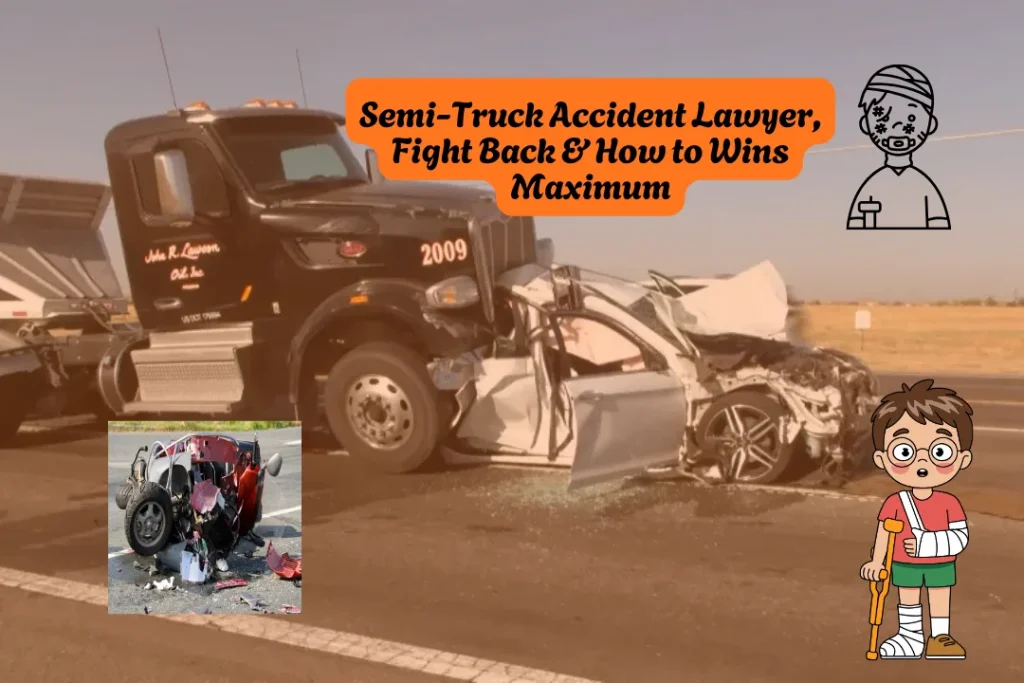
Semi-Truck Accident Lawyer, Fight Back & How To Wins Maximum
A semi-truck accident lawyer investigates your crash, pulls black box data and driver logbooks, identifies all liable parties including the trucking company, and negotiates maximum compensation with insurers. If a fair settlement is refused, your attorney takes the case to court to fight for everything you are owed.
What does a semi-truck accident lawyer do?
A semi-truck accident lawyer investigates your crash, pulls black box data and driver logbooks, identifies every liable party including the trucking company, and negotiates maximum compensation with insurers on your behalf. If a fair settlement is refused, your attorney takes the case to court to fight for every dollar you deserve.
A fully loaded semi-truck can weigh 40 times more than a passenger car. When one of these massive 18-wheelers collides with you, the damage is rarely minor.
According to the FMCSA, large truck crashes killed 5,837 people in 2022 — and left hundreds of thousands more with life-altering injuries. Yet many victims walk away with far less compensation than they deserve, simply because they did not understand their rights.
Trucking companies move fast after a crash. Their insurers send adjusters to the scene within hours. Their legal teams begin building a defense before you even leave the hospital.
A semi-truck accident lawyer is your equalizer. These attorneys know federal trucking regulations inside and out, understand how to preserve critical evidence like black box data, and have the resources to fight billion-dollar freight companies.
This guide covers everything you need to know — from who is liable and what compensation you can claim, to how the legal process works and what mistakes to avoid. Understanding personal injury law and your legal rights is the first step toward protecting your future.
Common Causes of Semi-Truck Accidents
Not all truck crashes happen the same way. Understanding what caused your accident matters — because it directly determines who is liable and what evidence your attorney needs to gather.
The Most Frequent Causes
- Driver fatigue — Violating FMCSA hours-of-service rules under 49 CFR Part 395, which limits driving to 11 consecutive hours, is one of the leading causes of 18-wheeler crashes
- Distracted driving — Texting, eating, or using GPS while operating a tractor-trailer dramatically increases stopping distances
- Speeding and aggressive driving — Commercial vehicles need far more distance to stop safely than passenger cars
- Improper cargo loading — Unsecured or overloaded freight can cause a deadly jackknife or rollover collision
- Brake and equipment failure — Worn brakes or defective tires on a 40-ton vehicle become lethal at highway speeds
- Impaired driving — Driving under the influence of alcohol, stimulants, or prescription medications
- Blind spot errors — Semi-trucks have massive blind spots on all four sides; merging without checking can be catastrophic
Each of these causes leaves a distinct evidence trail. Your attorney knows exactly where to look — and how to preserve that evidence before it disappears.
Who Is Liable in a Semi-Truck Accident?
Liability in a semi-truck crash is rarely limited to just the driver. Multiple parties often share responsibility, and identifying all of them is critical to maximizing your compensation.
Parties That May Be Held Responsible
The truck driver may be liable for negligence — including speeding, falsifying logbooks, or ignoring mandatory rest periods.
The trucking company can be held accountable under the legal doctrine of vicarious liability, which holds employers responsible for the on-duty actions of their employees. Courts have consistently ruled that trucking companies cannot escape liability by blaming their drivers when corporate pressure or poor hiring practices contributed to the crash.
The cargo loader may share fault if improperly secured freight shifted during transit and caused the accident.
A vehicle manufacturer could be liable if defective brakes, tires, or steering components played a role.
A third-party maintenance contractor may be responsible if negligent repairs left the truck in an unsafe condition.
Identifying every liable party matters because each one may carry separate insurance coverage — meaning more compensation available for your injuries and losses. You can learn more about how negligence and liability work in civil cases to better understand how these claims are built.
Steps to Take After a Semi-Truck Accident
What you do in the first 24 to 72 hours after a crash can make or break your case. Insurance adjusters begin their investigation immediately — and so should you.
Follow These Steps in Order
- Call 911 immediately — A police report is one of the most important pieces of evidence in your case
- Seek medical attention — Get evaluated even if you feel fine; traumatic brain injuries and internal bleeding often show no immediate symptoms
- Document the scene — Photograph vehicle damage, road conditions, skid marks, cargo spills, and your injuries
- Collect witness information — Get names and phone numbers from everyone who saw the crash
- Do not speak to the trucking company’s insurer — Do not give a recorded statement without an attorney present
- Send a spoliation letter — Your attorney can demand that the trucking company preserve the black box, logbooks, maintenance records, and driver history before they are erased or destroyed
- Contact a semi-truck accident lawyer immediately — The sooner you act, the stronger your case
Speaking with a semi-truck accident attorney can help you understand your legal options at no cost.
What Compensation Can You Claim After a Semi-Truck Crash?
The financial impact of a serious truck crash extends far beyond your initial hospital bill. Victims often face months or years of treatment, lost income, and lasting physical and emotional damage.
Compensation Available to Truck Accident Victims
| Compensation Type | What It Covers | Real-World Examples |
| Medical Expenses | Past and future treatment | Surgery, rehab, medication, long-term care |
| Lost Wages | Income lost during recovery | Missed work, reduced earning capacity |
| Pain & Suffering | Physical and emotional distress | Chronic pain, PTSD, anxiety, depression |
| Property Damage | Vehicle and personal belongings | Total loss replacement, repairs |
| Punitive Damages | Punishment for reckless conduct | Drunk driving, falsified logbooks |
| Wrongful Death | Losses when a victim does not survive | Funeral costs, loss of financial support |
Compensatory damages cover your actual economic and non-economic losses. In cases where a trucking company or driver acted with extreme recklessness — such as knowingly violating FMCSA safety rules — courts may also award punitive damages to punish the wrongdoer.
The Tracy Morgan lawsuit against Walmart is a well-known example. That case, which involved a fatigued tractor-trailer driver violating hours-of-service regulations, resulted in an estimated $90 million settlement — a reminder of just how serious trucking company liability can be.
How Insurance Companies Fight Semi-Truck Claims
Trucking companies carry large commercial insurance policies — often $1 million or more. However, those insurers do not simply hand over fair settlements. They fight aggressively to pay as little as possible.
Tactics Insurers Commonly Use Against Victims
- Calling you within hours of the crash to get a recorded statement they can twist against you later
- Arguing comparative fault — claiming you were partly responsible to reduce your payout
- Hiring their own medical experts to dispute the severity of your injuries
- Delaying the process for months, banking on your financial desperation
- Requesting your full medical history to find pre-existing conditions to blame
- Offering a quick, lowball settlement before you understand the full extent of your losses
Every one of these tactics has a counter-strategy. An experienced semi-truck accident lawyer handles all insurer communications, blocks damaging requests, and fights back with evidence — not emotions.
Understanding how civil law protects injured victims gives you a stronger foundation before your first conversation with any insurance adjuster.
Frequently Asked Questions
How long do I have to file a semi-truck accident lawsuit?
The statute of limitations for semi-truck accident claims varies by state, but most states give you two to three years from the date of the accident to file a lawsuit. Missing this deadline permanently eliminates your right to compensation. You should contact a semi-truck accident lawyer as soon as possible — the earlier you act, the better your chances of preserving critical evidence.
How much is a semi-truck accident settlement worth?
Settlement values vary widely based on injury severity, liability, and available insurance coverage. Minor injury cases may settle for tens of thousands of dollars, while catastrophic injury or wrongful death cases can reach into the millions. No attorney can guarantee a specific outcome, but a skilled semi-truck accident lawyer will fight to maximize every component of your claim — medical bills, lost wages, and pain and suffering included.
What if I was partly at fault for the semi-truck accident?
Most states apply comparative fault rules, which means you can still recover compensation even if you share some of the blame. Your total award is reduced by your percentage of fault. For example, if you were 20% at fault and your total damages are $500,000, you could still recover $400,000. An attorney can evaluate how your state’s specific comparative fault rules apply to your situation.
How long does a semi-truck accident lawsuit take?
Many semi-truck accident claims settle within six to eighteen months when liability is reasonably clear. However, complex cases involving multiple defendants, disputed liability, or severe injuries can take two years or longer — especially if the case goes to trial. Your attorney will give you a realistic timeline based on the specific facts of your crash.
Why is a semi-truck accident case different from a regular car accident case?
Semi-truck accidents involve a much more complex web of liability — including federal FMCSA regulations, multiple potentially responsible parties, commercial insurance policies, and specialized evidence like electronic logging device data, black box recordings, and driver qualification files. These cases require attorneys with specific trucking industry knowledge and the resources to take on large freight companies and their legal teams.
Legal Terms Used in This Article
Negligence: Failure to act with the level of care a reasonable person would use in the same situation. In semi-truck accidents, this could mean a driver who falsified logbooks or a company that ignored maintenance warnings.
Liability: Legal responsibility for causing harm or injury. In a semi-truck crash, liability may fall on the driver, the trucking company, a cargo loader, or multiple parties simultaneously.
Vicarious Liability: A legal doctrine that holds employers responsible for the on-duty actions of their employees. Trucking companies can be held liable for crashes their drivers cause while working.
Comparative Fault: A rule that assigns a percentage of blame to each party involved in an accident. Your compensation is reduced by the share of fault attributed to you.
Statute of Limitations: The legal deadline for filing a lawsuit after an injury. Missing this window — typically two to three years in most states — permanently eliminates your right to sue.
Contingency Fee: A payment structure where your attorney collects a percentage of your settlement or verdict only if you win. You owe nothing upfront, which means anyone can afford legal representation.
Punitive Damages: Additional money a court may award when a defendant acted with extreme recklessness or malice. These go beyond compensating you — they punish the wrongdoer and discourage similar behavior.
Hours of Service: Federal regulations under 49 CFR Part 395 that limit how many consecutive hours a commercial truck driver can operate a vehicle. Violations are a leading cause of semi-truck fatigue crashes.
Conclusion
A semi-truck crash changes your life in seconds. The road to recovery is long — and the legal fight that follows is complex, fast-moving, and stacked in favor of well-funded trucking companies.
You deserve an experienced semi-truck accident lawyer who knows federal trucking regulations, understands how to uncover hidden evidence, and has the courage to stand up to powerful freight companies and their insurers.
Time is not on your side. Black box data gets overwritten. Logbooks disappear. Legal deadlines approach fast.
If you or a loved one was injured in a semi-truck accident, do not wait. Contact a semi-truck accident lawyer today for a free consultation to understand your rights and options.
Legal Disclaimer
The information in this article is for general informational purposes only and does not constitute legal advice. Reading this content does not create an attorney-client relationship. Every semi-truck accident case is unique, and laws vary by state. Always consult a licensed attorney in your jurisdiction for guidance specific to your situation.
About the Author

Sarah Klein, JD, is a former civil litigation attorney with over a decade of experience in contract disputes, small claims, and neighbor conflicts. At All About Lawyer, she writes clear, practical guides to help people understand their civil legal rights and confidently handle everyday legal issues.
Read more about Sarah