
Meta Glasses Lawsuit, 7 Million Users Hit With Privacy Betrayal Class Action Filed March 2026
A class action lawsuit filed just days ago is accusing Meta of one of the most brazen privacy deceptions in consumer tech history — marketing Ray-Ban smart glasses as “built for privacy” while secretly routing intimate footage from users’ bedrooms, bathrooms, and private lives to offshore contractors in Kenya. Here is everything you need to know about the Meta glasses lawsuit, what was exposed, and what it means for the millions of people who own a pair.
Breaking: Class Action Filed March 5, 2026
On March 5, 2026, Clarkson Law Firm filed a class action lawsuit against Meta in the U.S. District Court’s Northern District of California, San Francisco Division. The false advertising suit, filed on behalf of Meta AI Glasses users, alleges that Meta is deliberately deceiving consumers about the privacy of their AI Glasses while covertly exposing their most intimate moments and personal data.
The lawsuit names plaintiffs Mateo Canu of California and Gina Bartone of New Jersey, who are represented by Clarkson Law Firm, which specializes in public interest cases. Luxottica of America — the glasses manufacturing partner — has also been named for conduct that goes against consumer protection laws.
What Triggered the Lawsuit — The Swedish Investigation
The case was ignited by an explosive investigative report published just weeks before the lawsuit was filed.
A Swedish newspaper reported that subcontractors in Kenya have raised concerns about viewing footage recorded via Ray-Ban Meta glasses. According to Svenska Dagbladet, workers have reported witnessing “intimate” material, including bathroom visits, sexual encounters, and other private details as part of their job labeling objects in videos captured on users’ smart glasses.
Contractors also saw data from bank cards and banking details on computer screens. Other footage included users watching pornography, or even filming intimate bedroom activity with their glasses. One contractor described a video where a man placed the glasses on a bedside table and left the room, after which his wife entered and changed her clothes — all unknowingly recorded and reviewed.
Meta claimed it was blurring faces in images, but sources disputed that this blurring consistently worked. The news prompted the U.K. regulator, the Information Commissioner’s Office, to investigate the matter.
What Exactly Is Meta Accused Of?
The lawsuit accuses Meta of woefully misleading customers by claiming it had put privacy front and center, while the undisclosed human review pipeline transforms the product from a personal device into a surveillance conduit, exposing consumers to unreasonable risks of dignitary harm, emotional distress, stalking, extortion, identity theft, and reputational injury.
The plaintiffs accuse Meta of violating three different California consumer protection laws and seek unspecified compensatory and punitive damages.
At the core of the case: Meta advertised the glasses using phrases like “designed for privacy, controlled by you” and “built for your privacy” — while simultaneously feeding footage into a data pipeline users couldn’t see, access, or stop.
How Many People Are Affected?
With approximately seven million pairs of Meta AI Glasses sold in 2025 alone, the lawsuit alleges that millions of users could have unknowingly contributed personal footage to Meta’s data systems. That’s two million more pairs than were sold in 2023 and 2024 combined.
Every one of those seven million buyers who used the AI features of their glasses — asking it questions, having it analyze scenes — had their footage routed to Meta’s servers and potentially reviewed by human contractors.
Related article: Purdue Pharma Lawsuit, $7.4B Settlement Approved, Purdue Becomes Knoa Pharma What Victims Need to Know in 2026
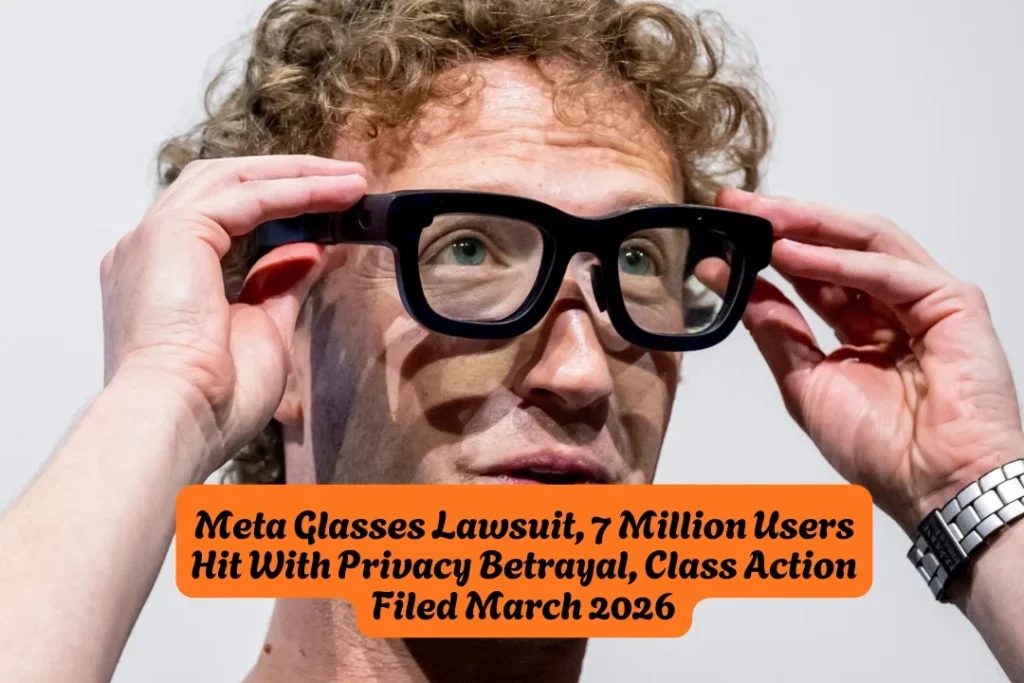
What Does Meta Say?
A spokesperson for Meta confirmed to Engadget that data from its smart glasses can be shared with human contractors in some cases. The company declined to comment on the claims in the lawsuit. “Ray-Ban Meta glasses help you use AI, hands free, to answer questions about the world around you. Unless users choose to share media they’ve captured with Meta or others, that media stays on the user’s device. When people share content with Meta AI, we sometimes use contractors to review this data for the purpose of improving people’s experience, as many other companies do.”
The key dispute: Meta says users “choose” to share content when they activate AI features. Plaintiffs argue the vast majority of users had no idea their footage was being routed to offshore contractors and had no meaningful ability to opt out.
What Data Does Meta Actually Collect From the Glasses?
Since a policy update in April 2025, voice recordings triggered by “Hey Meta” are stored in Meta’s cloud by default — and users can no longer opt out of that storage. Meta says recordings are kept for up to one year to improve its AI products. Any visual content shared with the Meta AI assistant — by asking it to analyze what it sees — is also eligible for use in AI training and product improvement.
In short: photos and videos stay local unless you share them with Meta AI. But the moment you use the AI assistant feature, that content enters Meta’s data pipeline — and you can no longer stop it.
What Should Meta Glasses Owners Do Right Now?
If you own a pair of Ray-Ban Meta smart glasses, there are concrete steps you can take immediately to reduce your exposure:
You cannot opt out of voice recording storage — that option was removed in April 2025. However, you can manually delete your recordings at any time through the Meta AI app. If you’re not using the voice assistant features, disabling the “Hey Meta” wake word entirely is the most effective way to prevent voice data from being collected.
Be mindful about when you use AI features — using Meta AI to analyze a scene is when footage is most likely to be flagged for review. Think twice before using these features in private settings. And don’t leave the glasses on or recording unattended, as several of the most disturbing incidents described by contractors involved footage captured after the wearer set the glasses down without turning them off.
Is There a Settlement or Claim Form Yet?
No. The lawsuit seeks injunctive relief to force Meta to stop misrepresenting its product, as well as restitution for consumers who bought these products based on Meta’s false claims.
The case was filed March 5, 2026 and is in its earliest stage. Meta has not yet responded to the complaint. Before any settlement or compensation can reach consumers, the case must survive a likely motion to dismiss, proceed to class certification, and either settle or go to trial — a process that typically takes years.
If you own Meta smart glasses, no action is required now. Monitor the case at the Northern District of California federal court and watch for any official settlement administrator notices in the future.
Frequently Asked Questions
Can I join the Meta glasses lawsuit?
The case seeks class action certification. If it is certified, all qualifying purchasers of Meta AI Glasses in the U.S. will automatically be included as class members without needing to sign up.
Does this affect all Ray-Ban Meta glasses?
The lawsuit targets users who activated and used the AI features — specifically the Meta AI assistant function that routes footage to Meta’s servers. Users who only use the glasses for photos, calls, or music without activating AI features have a different level of exposure.
What laws did Meta allegedly violate?
The plaintiffs accuse Meta of violating three different California consumer protection laws. These include California’s Unfair Competition Law (UCL), False Advertising Law (FAL), and Consumer Legal Remedies Act (CLRA).
Is Luxottica also being sued?
Yes. Luxottica of America, the glasses manufacturing partner, has also been named in the lawsuit for conduct that goes against consumer protection laws.
What is Clarkson Law Firm?
Clarkson Law Firm is a public interest-focused firm that over the years has filed other major lawsuits against tech giants including Apple, Google, and OpenAI.
The Bigger Picture — Meta’s Pattern of Privacy Litigation
The Meta glasses lawsuit is the latest in a long line of privacy cases against Meta. Courts have previously held the company accountable for sharing intimate health data through the Flo app, unauthorized facial recognition data collection through Instagram, and the landmark $725 million Facebook data-sharing settlement.
This new case raises the stakes further — because unlike data quietly shared in the background, the footage allegedly reviewed here came directly from inside users’ homes, bedrooms, and most private moments.
For more on Meta’s history of privacy litigation and what users can claim, read our full breakdown of the WhatsApp Class Action Lawsuit — Encryption Privacy Claims Filed January 2026 at allaboutlawyer.com.
Disclaimer: This article is for informational purposes only and does not constitute legal advice. The Meta glasses lawsuit was filed March 5, 2026 and no court has yet made any finding of liability. If you believe you have been harmed by a consumer product or privacy violation, consult a qualified attorney.
About the Author

Sarah Klein, JD, is a licensed attorney and legal content strategist with over 12 years of experience across civil, criminal, family, and regulatory law. At All About Lawyer, she covers a wide range of legal topics — from high-profile lawsuits and courtroom stories to state traffic laws and everyday legal questions — all with a focus on accuracy, clarity, and public understanding.
Her writing blends real legal insight with plain-English explanations, helping readers stay informed and legally aware.
Read more about Sarah