
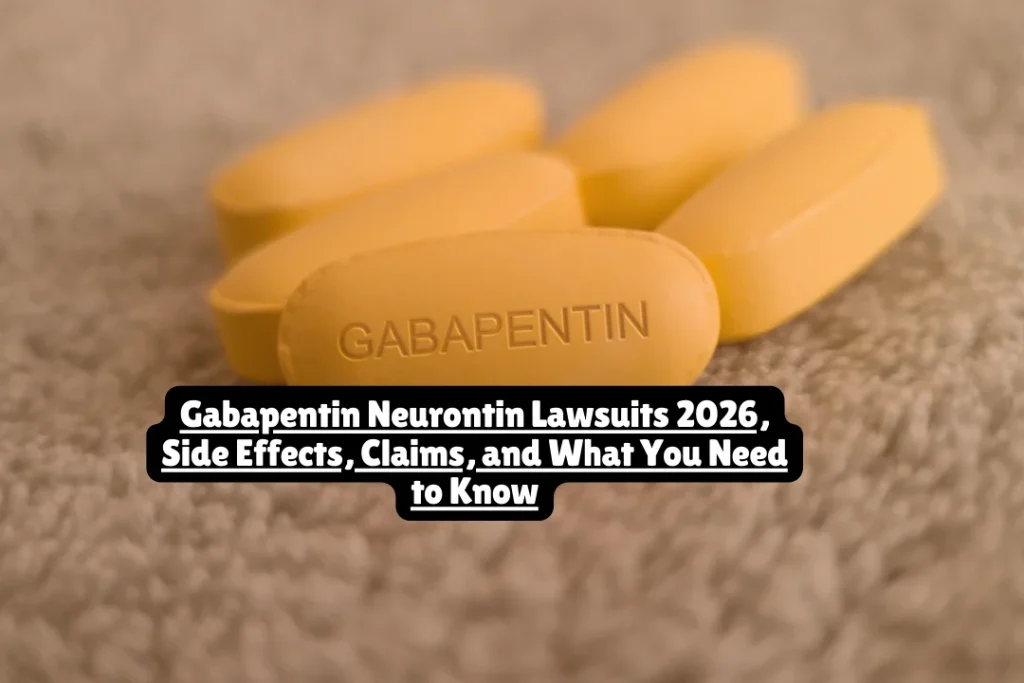
Gabapentin Neurontin Lawsuits 2026, Side Effects, Claims, and What You Need to Know
Gabapentin — sold under the brand name Neurontin — has been at the center of major lawsuits for decades, and legal activity continues into 2026. Pfizer, the drug’s manufacturer, previously paid hundreds of millions in penalties for promoting gabapentin for off-label uses, which has contributed to ongoing lawsuits and heightened regulatory attention. New cases in 2025–2026 focus on a different but equally serious concern: a newly identified link between long-term gabapentin use and cognitive decline, including dementia.
Quick Facts
| Detail | Information |
| Drug | Gabapentin (brand name: Neurontin) |
| Manufacturer | Pfizer, Inc. (acquired from Warner-Lambert / Parke-Davis in 2000) |
| FDA Approval | 1993 — seizures; postherpetic neuralgia |
| Off-Label Uses | Anxiety, chronic pain, fibromyalgia, bipolar disorder, nerve damage |
| Key Lawsuit Types | Off-label marketing, suicidal ideation, respiratory depression, cognitive decline |
| Major Past Settlement | $430M (2004, criminal + civil); $190M (Neurontin antitrust); $325M (2014) |
| Current Legal Activity | Individual personal injury suits — cognitive decline, wrongful death, respiratory harm |
| No Active Class Action Settlement | No open claim form or settlement website as of March 2026 |
What Are the Gabapentin Lawsuits About?
There are three distinct categories of gabapentin lawsuits. Understanding which applies to you is the most important first step.
1. Off-Label Marketing Lawsuits (Resolved)
In 2004, Parke-Davis — a division of Warner-Lambert acquired by Pfizer — paid $430 million to the U.S. Justice Department over claims they were illegally promoting Neurontin for off-label uses, including control of mood swings.
In June 2014, Pfizer agreed to pay $325 million to settle another lawsuit for illegal Neurontin marketing and promotion. These cases are resolved. No open claim process exists for the original off-label marketing settlements.
2. Suicidal Ideation and Wrongful Death Lawsuits (Ongoing)
By 2018, over 1,200 plaintiffs had sued Pfizer, alleging that their medication caused suicidal thoughts and behaviors. Many plaintiffs lost a loved one to suicide while taking Neurontin.
An FDA analysis of recent studies shows that patients taking antiepileptics were twice as likely to experience suicidal thoughts and behaviors compared with patients receiving a placebo. In 2008, the FDA required Neurontin and similar epilepsy drugs to carry label warnings alerting users to the risk of suicidal thoughts.
These are individual personal injury cases — not a class action — and they remain ongoing. Pfizer changed its prescribing information to include “suicide” and “suicide attempt” as infrequent adverse events, but continues to deny that scientific evidence links Neurontin to suicide.
3. Cognitive Decline and Dementia Lawsuits (Newest — 2025–2026)
This is the most active current legal development. A new study reports that people who receive six or more prescriptions of gabapentin for lower back pain are at a higher risk of developing dementia and mild cognitive impairment. Scientists found these risks were more than doubled in adults between the ages of 35 to 49 years.
Researchers’ findings in the Journal of Pain Medicine sparked the most recent round of lawsuits. Concerns over whether Pfizer had sufficiently informed physicians and patients about long-term neurological concerns were rekindled by the disclosure. What started out as doctor-to-physician rumors has grown into a nationwide ethical and legal issue.
Pfizer’s official position is that current research does not prove direct causation and that gabapentin is safe when used as directed. However, plaintiffs’ attorneys argue that Pfizer has a lengthy history of “scientifically selective marketing,” in which data showing hazards were purportedly minimized.
What Side Effects Are at the Center of Lawsuits?
Serious side effects alleged in lawsuits include suicidal thoughts, respiratory depression, and severe allergic reactions. Common side effects listed on the FDA-approved Neurontin label include dizziness, sleepiness, and driving impairment.
The FDA has also issued specific respiratory warnings. In December 2019, the FDA issued an urgent Drug Safety Communication warning that severe breathing problems might develop in patients taking gabapentin who have respiratory risk factors, including the use of narcotic pain relievers. The FDA expressly warned clinicians that combining an opioid with Neurontin raises the risk of respiratory depression.
On the overdose front, the numbers are significant. According to a report in the Journal of the American Medical Association, postmortem toxicology tests found gabapentin in nearly 10% of all overdose deaths in the United States in 2019–2020. In half of those cases, gabapentin was identified as a direct cause of death.
Is There a Current Open Lawsuit or Settlement I Can Join?
There is no active class action settlement or open claim process for gabapentin as of March 2026. All major past class action settlements — the $430M criminal resolution, the $190M antitrust settlement, and the $325M marketing settlement — are closed.
Current gabapentin litigation in 2026 consists of individual personal injury lawsuits filed by people who suffered specific documented harm — such as a suicide attempt, wrongful death, cognitive decline, or respiratory injury — while taking gabapentin. These are not class actions and do not have a centralized claim form.
If you believe you or a family member suffered harm from gabapentin, you would need to consult a licensed personal injury or pharmaceutical litigation attorney who can evaluate your individual case.
Who May Have Grounds to Pursue an Individual Lawsuit?
Based on verified case types currently active, you may have potential grounds to consult an attorney if:
- You or a family member experienced suicidal thoughts, a suicide attempt, or died by suicide while taking gabapentin
- You experienced respiratory depression or breathing failure, particularly if combined with opioids
- You developed dementia or significant cognitive decline after long-term gabapentin use (particularly 6+ prescriptions)
- You suffered wrongful death linked to gabapentin overdose, especially in combination with other drugs
- You were prescribed gabapentin off-label for a condition without being informed of the risks
Personal injury lawsuits generally must be filed within two years of the incident, and statutes of limitations vary by state. Cognitive decline cases are particularly complex because the harm may take years to become apparent. Acting promptly is important.
What Has the FDA Done?
The FDA has warned about breathing problems with seizure and nerve pain medications, including gabapentin and pregabalin, particularly for patients with respiratory risk factors.
There has not been a recall of all gabapentin or Neurontin. However, in 2014, Aurobindo Pharma USA voluntarily recalled certain gabapentin supplies because of manufacturing defects, with some capsules found to be empty.
More recently, an FDA Class II recall revealed manufacturing flaws involving contaminants in gabapentin capsules, which lowered public trust in quality controls despite assurances that risks were low.
Frequently Asked Questions
Is there an active gabapentin class action lawsuit I can join in 2026?
No. There is no open class action settlement or active claim form for gabapentin as of March 2026. The major past settlements are closed. Current cases are individual personal injury lawsuits. If you believe you were harmed, consult a licensed attorney to assess your specific situation.
What are the most serious side effects alleged in gabapentin lawsuits?
Lawsuits have alleged suicidal thoughts and behaviors, respiratory depression, severe allergic reactions, and cognitive impairment. The newest wave of lawsuits in 2025–2026 focuses specifically on dementia and cognitive decline in long-term users.
Did Pfizer know about the risks and fail to warn patients?
Pfizer’s efforts to promote gabapentin were described by whistleblower Dr. David Franklin as “profoundly effective.” The company suppressed study results, used ghostwriters, and gave generous “consultation fees” to doctors to promote the drug for off-label uses, the whistleblower alleged. Pfizer has denied that current research proves causation for the side effects at issue in new cases.
How much has Pfizer paid in gabapentin-related lawsuits so far?
In 2004, Pfizer paid $430 million to the U.S. Justice Department over illegal marketing. In 2014, Pfizer paid $325 million to settle another Neurontin marketing lawsuit. A separate $190 million antitrust class action settlement was also reached. Total gabapentin-related legal costs to Pfizer exceed $1 billion.
What should I do if I think I was harmed by gabapentin?
Do not stop taking any prescribed medication without first consulting your doctor. For legal concerns, gather your prescription records, medical records, and any documented evidence of harm. Then consult a licensed personal injury attorney who handles pharmaceutical litigation to evaluate whether you have an individual case.
This article is for informational purposes only and does not constitute legal advice. Allegations in complaints are not findings of fact. All parties are presumed innocent unless proven otherwise in court. If you are experiencing suicidal thoughts, please contact the 988 Suicide and Crisis Lifeline by calling or texting 988 immediately.
Last Updated: March 4, 2026
About the Author

Sarah Klein, JD, is a licensed attorney and legal content strategist with over 12 years of experience across civil, criminal, family, and regulatory law. At All About Lawyer, she covers a wide range of legal topics — from high-profile lawsuits and courtroom stories to state traffic laws and everyday legal questions — all with a focus on accuracy, clarity, and public understanding.
Her writing blends real legal insight with plain-English explanations, helping readers stay informed and legally aware.
Read more about Sarah