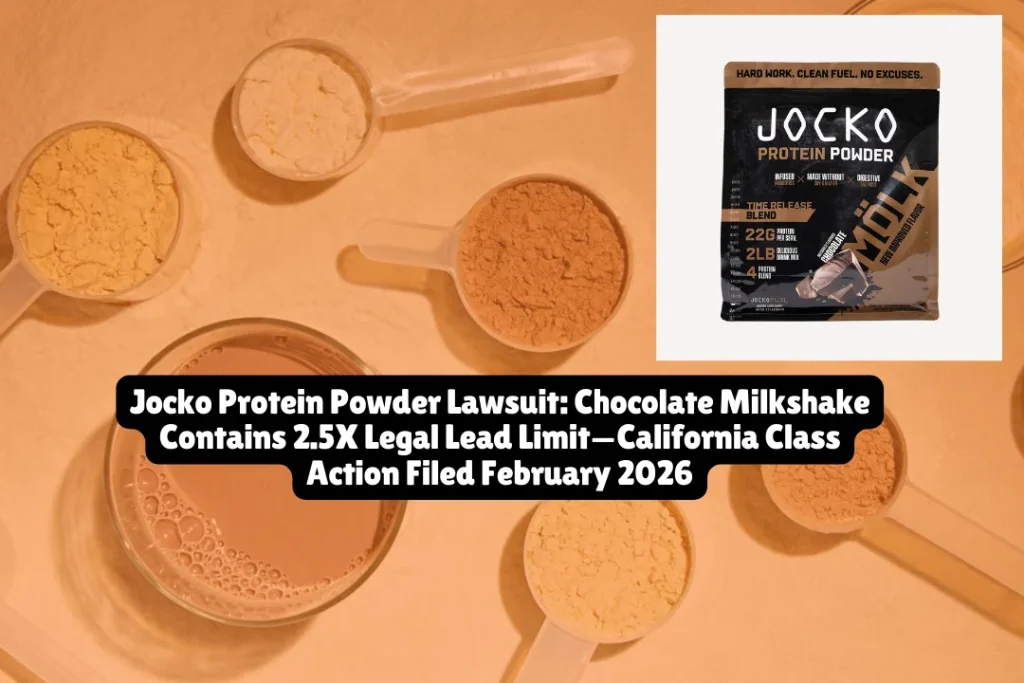
Jocko Protein Powder Lawsuit, Chocolate Milkshake Contains 2.5X Legal Lead Limit—California Class Action Filed 9 February 2026
A class action lawsuit filed on February 9, 2026, alleges Jocko Fuel’s Protein Powder Mölk Protein Blend in Chocolate Milkshake flavor contains 1.326 micrograms of lead per serving—more than 2.5 times California’s maximum allowable dose level of 0.5 micrograms per day for reproductive toxicity.
If you’ve been drinking Jocko’s chocolate protein shakes marketed as “CLEAN FUEL,” you may have been consuming dangerous levels of lead without knowing it. This lawsuit comes months after Consumer Reports testing exposed widespread lead contamination across the protein powder industry.
The Lawsuit Allegations Against Jocko
The 22-page lawsuit seeks to represent all California residents who purchased Jocko’s Protein Powder Mölk Protein Blend in Chocolate Milkshake flavor within the four years prior to February 9, 2026, and do not claim any personal injury from consuming it.
The case claims Jocko falsely advertises its protein powder as “CLEAN FUEL” when independent testing commissioned by the plaintiff’s counsel in January 2025 at an FDA-approved accredited laboratory found lead levels that violate California’s Proposition 65 statute.
The lawsuit charges that Jocko deliberately misrepresented the health properties of its protein powder by prominently promoting its “CLEAN” identity on labels, including representations that it is naturally sweetened and contains few ingredients—all while allegedly concealing dangerous lead contamination.
What Products Are Affected
The lawsuit specifically targets Jocko Fuel’s Protein Powder Mölk Protein Blend in Chocolate Milkshake flavor. This includes both the powder form and the ready-to-drink Jocko Fuel Mölk Protein Shake in chocolate.
Consumer Reports testing from October 2025 found that Jocko Fuel Mölk Protein Shake was 199% higher than the safe daily lead limit, recommending consumers limit consumption to 2¾ to 6¼ servings per week.
The chocolate-flavored products are sold at major retailers including Amazon, Walmart, GNC, Vitamin Shoppe, and through Jocko Fuel’s website. If you’ve purchased any chocolate-flavored Jocko protein products since 2022, check your pantry immediately.
The Health Risks of Lead Exposure
According to the lawsuit, many health agencies including the World Health Organization outline that there is “no level of exposure to lead that is known to be without harmful effects.”
Lead exposure over time can cause severe health risks including impaired neurological function, organ damage, anemia, seizures, and in extreme cases, coma and death. Children, pregnant women, and people with compromised immune systems face particularly high risks.
Lead lingers in the body, so even small amounts add up over time. Unlike occasional treats, protein powder is often part of daily routines. Some consumers drink protein shakes multiple times per day as meal replacements, potentially multiplying their lead exposure.
Why Lead Is in Protein Powder
Lead is a naturally occurring element that is difficult to avoid, particularly in plant-based products, as plants absorb lead from soil and water as they grow. However, manufacturers have a legal duty to test their products and warn consumers when contamination exceeds safe levels.
Jocko Fuel was among five companies that did not respond to Consumer Reports’ requests for comment when they shared testing results and methodology. The company’s silence contrasts with other manufacturers who at least acknowledged the issue and explained their testing protocols.
Your Legal Rights as a California Consumer
The lawsuit was filed under three California consumer protection laws:
- California Unfair Competition Law
- California Consumers Legal Remedies Act
- California False Advertising Law
These statutes provide strong remedies for consumers misled by product marketing and contaminated food products. Similar cases, like the $500M Nestlé’s Class Action, Vital Proteins Accused Of Poisoning Millions With Lead-Contaminated Collagen, show courts take heavy metal contamination seriously.
You don’t need to have suffered health effects to be part of this class action. The lawsuit specifically represents consumers who purchased the product and do not claim personal injury—meaning you can seek compensation simply for buying a product marketed as “clean” that allegedly contained dangerous lead levels.
What You Should Do Now
If you purchased Jocko chocolate protein products:
Stop using the products immediately. Even if you haven’t experienced symptoms, lead exposure is cumulative and harmful at any level.
Save all documentation including receipts, order confirmations, product packaging, and photos of the lot codes. This evidence will be crucial for any potential claim.
Consider switching to dairy-based protein powders, which Consumer Reports found contain significantly less lead than plant-based options. Plant-based protein powders contained nine times more lead than dairy proteins on average.
If you experienced health issues:
Consult a healthcare provider immediately and request blood testing for lead levels. Document all symptoms, medical visits, and expenses.
While this class action excludes personal injury claims, you may be able to file a separate individual product liability lawsuit seeking compensation for medical expenses, lost wages, and pain and suffering. Contact a product liability attorney to discuss your options.
How This Lawsuit Relates to Other Food Contamination Cases
This Jocko lawsuit is part of a broader wave of legal action against supplement manufacturers. The Colgate Class Action Lawsuit, What Consumers Need To Know About Claims, Eligibility, And Deadlines 2026 similarly alleges lead and heavy metal contamination in consumer products marketed to vulnerable populations.
Additionally, Jocko Fuel faces a separate proposed class action filed on January 26, 2026, in New York federal court alleging its chocolate protein shakes contain unsafe levels of cadmium—another toxic heavy metal. The New York lawsuit claims Jocko misleads consumers into thinking its shakes are made with “just premium protein and functional ingredients” tested for safety.
The Supplement Industry’s Lead Problem
Over two-thirds of the protein products analyzed by Consumer Reports contained more lead in a single serving than safety experts claim is safe to consume in a day, with some exceeding it by over 10 times.
The problem isn’t limited to Jocko. Brands including Huel, Momentous, Vega, Orgain, and dozens of others tested above safe levels. However, Jocko’s complete silence when confronted with test results—combined with their prominent “CLEAN FUEL” marketing—makes this lawsuit particularly significant.
The FDA does not pre-approve supplements before they hit shelves, leaving testing up to manufacturers. There are no enforceable federal limits on heavy metals in protein powders. California’s Proposition 65 provides the strongest consumer protections, which is why this lawsuit was filed under California law.
What Happens Next
The case is now in early stages. The court must certify it as a class action, which typically takes 6-12 months. If certified, all eligible California consumers who purchased the chocolate Jocko products will be notified and given the opportunity to file claims.
You do not need to hire a lawyer to participate in a class action settlement. If a settlement is reached, a claims administrator will set up a website with instructions for filing claims.
Typical compensation in contaminated food class actions ranges from $5 to $500 per person for basic refund claims, with higher amounts possible for consumers who made extensive purchases over multiple years.
Frequently Asked Questions
What is the Jocko lawsuit about?
The lawsuit alleges Jocko Fuel’s chocolate milkshake protein powder contains lead levels 2.5 times higher than California’s safe limit while marketing the product as “CLEAN FUEL.” It seeks compensation for California consumers who purchased the misbranded product.
Which Jocko products are affected?
The lawsuit targets Jocko Protein Powder Mölk Protein Blend in Chocolate Milkshake flavor, including both powder and ready-to-drink shake forms. Vanilla and other flavors are not specifically mentioned in this lawsuit.
Do I need proof of purchase to file a claim?
Claim requirements haven’t been established yet since no settlement exists. However, save any receipts, order confirmations, or credit card statements showing Jocko purchases. Some settlements allow claims without receipts for limited amounts.
What compensation can I expect?
Settlement amounts haven’t been determined. Similar contaminated food cases typically pay $5-$50 for simple refunds, with higher amounts for consumers who purchased large quantities or can document health effects requiring individual product liability claims.
Am I eligible if I live outside California?
This specific lawsuit only represents California purchasers. However, if a settlement is reached, residents of other states may be able to file individual claims or join separate litigation in their jurisdictions.
Last Updated: February 15, 2026
Disclaimer: This article is for informational purposes only and does not constitute legal advice. For guidance on your specific situation, consult with a qualified attorney.
Stay vigilant about what you consume: When products marketed as “clean” and “natural” allegedly contain toxic heavy metals, knowing your rights protects both your health and your wallet.
Stay informed, stay protected. — AllAboutLawyer.com
About the Author

Sarah Klein, JD, is a licensed attorney and legal content strategist with over 12 years of experience across civil, criminal, family, and regulatory law. At All About Lawyer, she covers a wide range of legal topics — from high-profile lawsuits and courtroom stories to state traffic laws and everyday legal questions — all with a focus on accuracy, clarity, and public understanding.
Her writing blends real legal insight with plain-English explanations, helping readers stay informed and legally aware.
Read more about Sarah