
Circle K Arizona Lottery Ticket Lawsuit What You Need to Know 2026
Quick Facts
- Lawsuit type: Declaratory judgment complaint (civil lawsuit to determine property ownership)
- Filed by: Circle K Stores Inc.
- Defendants: Store manager Robert Gawlitza and the Arizona Lottery
- Court: Maricopa County Superior Court, Arizona
- Status: Active — filed February 17, 2026; pending court ruling
- Prize at stake: $12.8 million (Arizona Lottery “The Pick” drawing, November 24, 2025)
- Claim deadline: May 23, 2026 (180 days after the drawing)
- Is this a class action? No — this is a single-ticket ownership dispute, not a class action settlement
- Official court records: Maricopa County Superior Court (Arizona)
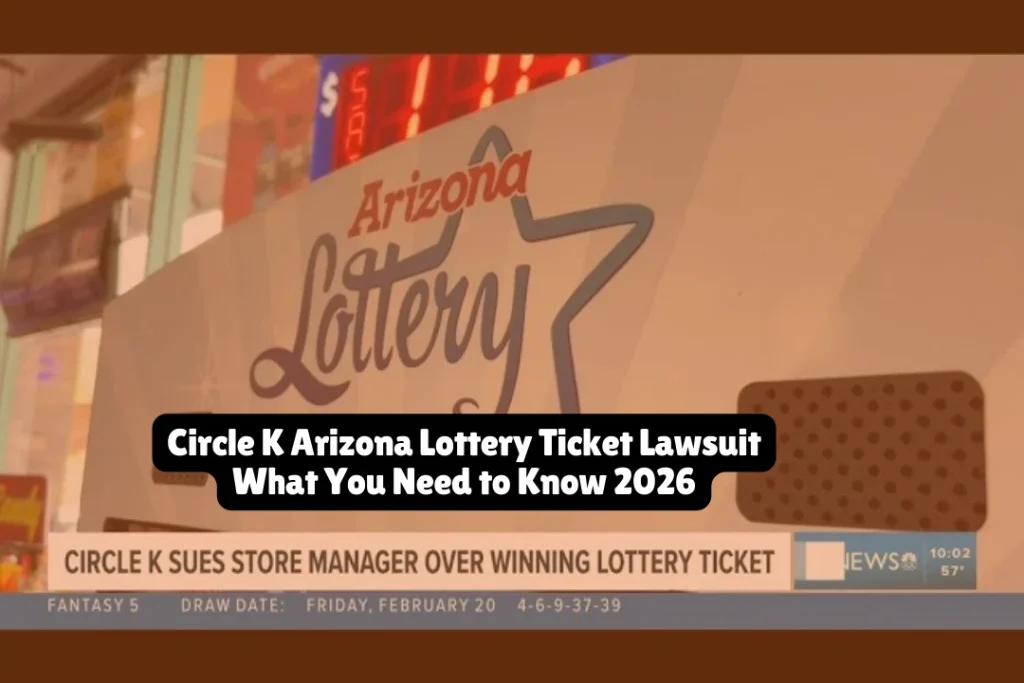
Circle K Stores filed a declaratory judgment complaint in Maricopa County Superior Court asking a judge to decide who legally owns a $12.8 million Arizona Lottery ticket. The lawsuit names store manager Robert Gawlitza and the Arizona Lottery as defendants. The dispute centers on 25 unpaid tickets left over from when a customer ordered 85 tickets for the November 24, 2025 draw at the Circle K store but paid for only 60 tickets — one of which later matched the winning numbers. This is not a class action lawsuit, and no settlement fund exists for consumers to claim. However, the outcome of this case may affect how Arizona Lottery ticket ownership disputes are handled going forward.
What Is the Lawsuit About?
On November 24, 2025, a customer asked an employee at the Circle K store in Scottsdale to replay previously used numbers for that evening’s drawing of The Pick. The clerk printed 85 tickets, each costing $1, but the customer only paid for 60 before leaving the store. The remaining 25 tickets were set aside and not sold to another customer.
Later that day, one of the unsold tickets matched all six winning numbers, making it a jackpot winner worth $12.8 million — the fourth-largest prize in the history of The Pick and the largest Arizona lottery jackpot since 2019.
The following morning, store manager Robert Gawlitza arrived for his shift and learned a winning ticket had been printed at the store. He located the remaining tickets and confirmed one was the jackpot winner. Gawlitza then clocked out, removed his Circle K uniform and purchased the tickets — including the winning ticket — from another employee for $10. He signed the back of the ticket. Circle K management learned what had happened and directed that the ticket be held at the company’s corporate offices, where it remains.
Circle K is not asking the court to award the jackpot to the company outright. The lawsuit does not seek the jackpot itself — the company asks the court to determine the lawful owner so the $12.8 million can be paid to the proper party.
Is This a Class Action Lawsuit?
No. This is not a class action lawsuit, and there is no settlement fund available for consumers to claim money from. A class action lawsuit involves a large group of consumers who share similar claims against a company. This case is a one-party ownership dispute over a single lottery ticket.
The lawsuit is a declaratory judgment complaint, which is a specific type of civil case. A declaratory judgment does not award damages — it allows a court to define the legal rights of the parties when ownership or responsibility is disputed. Companies often seek such orders when holding property or funds subject to competing claims.
The three parties with potential stakes in the outcome are: the original customer who left the tickets behind, store manager Robert Gawlitza, and Circle K (as the retailer). The Arizona Lottery is named only as a nominal party. The Arizona Lottery issued a statement: “The AZL is a nominal party to the lawsuit; there are no allegations of wrongdoing for the Arizona Lottery. The Arizona Lottery is only party to the lawsuit for the purpose of binding the AZL to any court order issued as a result of the suit.”
If you are searching for a class action settlement involving Circle K or the Arizona Lottery, no such settlement currently exists related to this case.
Related article: Blue Cross Blue Shield $2.67B Settlement, Eligibility, Payments & Status
What Legal Questions Does the Court Need to Answer?
The case turns on three separate legal questions, all of which a Maricopa County judge must resolve:
1. Was the ticket ever validly sold? The customer who originally requested the tickets only paid for 60 of the 85 printed. The case turns on a basic question of property law: whether the customer abandoned the ticket or merely left it behind. Under long-standing legal principles, abandoned property may be claimed by someone who takes possession of it, but abandonment requires intent.
2. Who does Arizona law say owns the ticket? Circle K cited Arizona Administrative Code § R19-3-213(D)(1), which states: “All draw game ticket sales are final. If a retailer accepts a returned draw game ticket from a player or generates a draw game ticket refused by the player and the retailer does not resell the ticket, the Lottery shall deem the draw game ticket to be owned by the retailer.” Arizona state Representative Jeff Weninger summarized it plainly: “It is in the administrative rules that basically says if they overprint, the retailer owns the tickets.”
3. Did the store manager’s purchase violate lottery rules? Arizona Lottery rules prohibit store employees from playing any lottery game “while working” — which may explain why Gawlitza clocked out and changed clothes before making the purchase. Whether that move satisfies the spirit or the letter of the rule is for the court to determine.
What Does This Mean for the Original Customer?
The customer who walked away from those 25 tickets has not been publicly identified and has not filed a competing claim, based on court records available at the time of writing. If that customer believes they have a legal right to the prize, they would need to retain an attorney and potentially intervene in the Maricopa County Superior Court case before the May 23, 2026 deadline. Arizona Lottery rules require a winning ticket to be presented and validated before payment. Tickets must be signed and submitted within a specified time period.
If you believe you are the customer who purchased tickets at Circle K, 5601 E. Bell Road, Scottsdale, on November 24, 2025, and left tickets behind, you should consult a licensed Arizona attorney as soon as possible given the approaching claim deadline.
Lawsuit Status
On February 17, 2026, Circle K filed the lawsuit naming Gawlitza and the Arizona Lottery as defendants, asking the court to decide who rightfully owns the ticket, which matched the winning numbers of 3, 13, 14, 15, 19, and 26.
As of February 28, 2026, the case is active and pending before Maricopa County Superior Court. No ruling has been issued. The $12.8 million prize remains held at Circle K’s corporate offices. No settlement has been proposed, and no claim period is open for members of the public.
The Arizona Lottery issued a statement: “This is a unique situation and we are not aware of any prior litigation of this sort involving the Arizona Lottery.”
What This Means for Arizona Lottery Ticket Buyers
This case does not affect ordinary lottery ticket purchasers in Arizona. If you buy a ticket, pay for it, and keep it, your ownership is straightforward. What this case does is expose a gap in practice: what happens when tickets are printed but not fully paid for, and later turn out to be winners.
Lottery commissions and retailers across the country will likely be watching this case. Whatever the court decides could shape how these disputes are handled going forward — and may prompt Arizona to update its lottery rules to address this type of situation more clearly. Arizona state Rep. Jeff Weninger said: “It might be something after the court case is played out that we look at and say, OK, do we need this in actual law if a situation like this happens?”
For everyday consumers, the practical takeaway is simple: always pay for every lottery ticket you request, take possession of all tickets you purchase, and sign the back of any winning ticket immediately.
Key Dates
| Event | Date |
| Winning drawing (The Pick) | November 24, 2025 |
| Lawsuit filed by Circle K | February 17, 2026 |
| Prize claim deadline | May 23, 2026 |
| Court ruling | Pending |
Frequently Asked Questions
Is this a class action lawsuit?
No. This is a declaratory judgment complaint filed by Circle K in Maricopa County Superior Court. It asks a judge to determine who owns a single $12.8 million lottery ticket. No class of consumers is involved, and there is no settlement fund available for the public to claim.
Has a settlement been approved?
No. No settlement has been proposed or approved in this case. The lawsuit was filed on February 17, 2026, and a judge has not yet issued a ruling. The $12.8 million prize remains on hold at Circle K’s corporate offices.
Who may be eligible to claim the jackpot?
Only the parties named in the lawsuit — store manager Robert Gawlitza, Circle K Stores, and potentially the original customer who left the tickets behind — may have standing to claim the prize. A Maricopa County judge will determine who is legally entitled to the money.
Is there a claim form for consumers to fill out?
No. There is no public claim form. This is not a consumer settlement. Ordinary Arizona Lottery ticket buyers are not eligible to submit claims in this case.
Where can I find official case information?
Court filings are available through the Maricopa County Superior Court public records system at superiorcourt.maricopa.gov. The Arizona Lottery’s official website is arizonalottery.com.
What is the deadline in this case?
The ticket must be claimed within 180 days of the drawing. That deadline falls on May 23, 2026. If no valid claim is made by that date, Arizona Lottery rules govern how the unclaimed prize money is redistributed.
What happens if no one claims the prize by May 23, 2026?
If nobody makes a valid claim by then, a portion of the jackpot goes to the Lottery’s beneficiaries, and the rest goes back into the prize pool. This has occurred before in Arizona — a $14.6 million The Pick jackpot went unclaimed in 2019, and the money was redirected to state programs.
What does “declaratory judgment” mean?
A declaratory judgment is a court order that defines the legal rights of the parties in a dispute without awarding money damages. Circle K filed this type of complaint because it holds the ticket but does not want to claim it unilaterally — it wants a judge to decide who is legally entitled to it first.
If You Have a Lottery Ticket Dispute in Arizona
This case is unique, but lottery ticket disputes do occur. If you believe your rights as a lottery ticket purchaser have been violated — for example, if a retailer refused to honor a winning ticket, overcharged you, or failed to properly process your ticket — you have options:
- Arizona Attorney General’s Consumer Protection Division: azag.gov/consumer-protection
- Arizona Lottery Player Relations: arizonalottery.com/contact
- Consult a licensed Arizona consumer attorney for any dispute involving significant prize money or retailer misconduct
Last Updated: February 28, 2026
This article is for informational purposes only and does not constitute legal advice. Legal claims and outcomes depend on specific facts and applicable law. For advice regarding a particular situation, consult a qualified attorney. Always verify eligibility and deadlines on official settlement or case websites before filing a claim.
About the Author

Sarah Klein, JD, is a licensed attorney and legal content strategist with over 12 years of experience across civil, criminal, family, and regulatory law. At All About Lawyer, she covers a wide range of legal topics — from high-profile lawsuits and courtroom stories to state traffic laws and everyday legal questions — all with a focus on accuracy, clarity, and public understanding.
Her writing blends real legal insight with plain-English explanations, helping readers stay informed and legally aware.
Read more about Sarah