
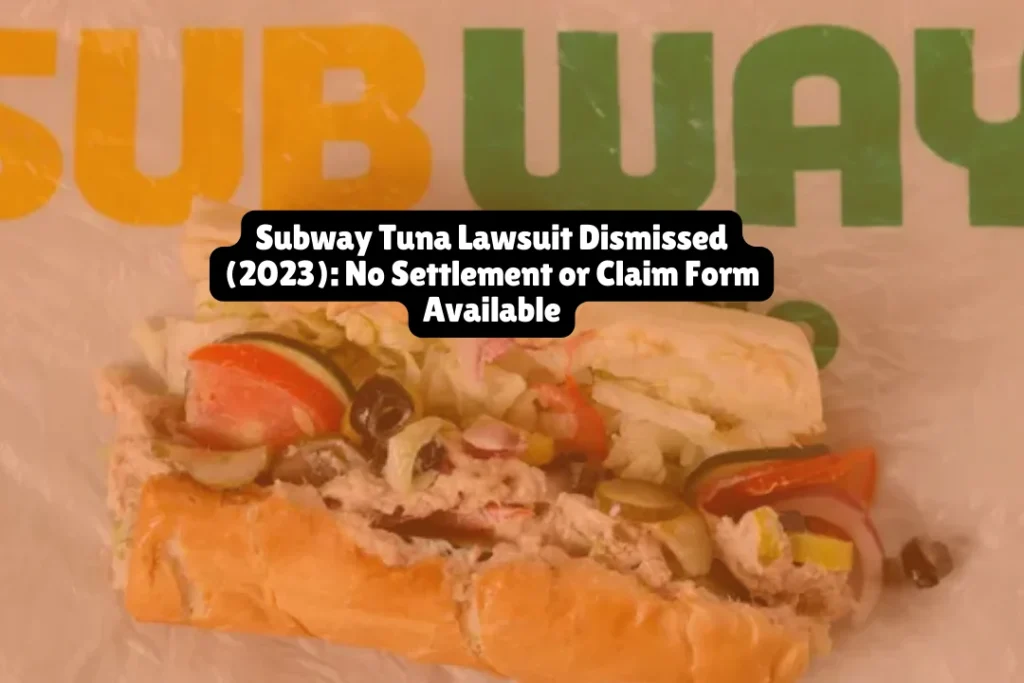
Subway Tuna Lawsuit Dismissed 2023, No Settlement or Claim Form Available
The Subway tuna lawsuit was dismissed “with prejudice” in August 2023, meaning it is a permanent dismissal and cannot be brought back to court. There is no settlement, no claim form, and no compensation available to consumers who purchased Subway tuna products.
Subway Tuna Lawsuit Overview
The class action lawsuit was filed in January 2021 by plaintiffs Karen Dhanowa and Nilima Amin in the U.S. District Court for the Northern District of California. The plaintiffs claimed Subway’s tuna sandwiches didn’t contain real tuna, sparking massive media coverage and national controversy.
The lawsuit went through three versions. Initially, the plaintiffs alleged Subway’s tuna products contained “absolutely no tuna” but were instead “a mixture of various concoctions.” A revised complaint submitted in November 2021 alleged that out of 20 samples tested, 19 contained no detectable tuna DNA, while all 20 samples contained chicken DNA, 11 had pork DNA, and seven had cattle DNA.
How the Case Ended
Plaintiff Nilima Amin filed a motion to voluntarily dismiss the case in April 2023 because of her health, specifically citing pregnancy-related complications. U.S. District Judge Jon Tigar granted the dismissal with prejudice in August 2023.
“With prejudice” is legal language meaning the case is permanently closed and cannot be refiled later. This is final—the lawsuit is dead.
No Settlement Exists
Unlike successful class actions covered in articles like Hyundai and Kia Ordered to Pay $200 Million Settlement Over TikTok Car Theft Trend, the Subway tuna case never reached settlement. The plaintiff dropped the lawsuit before it could proceed to trial or settlement negotiations.
Subway maintained throughout the litigation that it “serves 100% real, wild-caught tuna.” The company even launched SubwayTunaFacts.com to defend its products and commissioned independent lab testing that confirmed tuna DNA in every sample tested.
Why DNA Testing Was Controversial
Subway’s lawyers explained that the fish is “processed at a very high temperature, so that its DNA is denatured”. This means cooking breaks down tuna DNA, making it difficult or impossible to detect in standard lab tests—the same reason you can’t easily DNA-test canned tuna from grocery stores.
Judge Tigar previously dismissed earlier versions of the lawsuit, finding the plaintiffs failed to adequately prove their claims met federal pleading standards for fraud cases.
What You Must Know
No Money Available: There is no settlement fund, claim form, or compensation for consumers who bought Subway tuna products. Anyone claiming otherwise is spreading misinformation.
Case Cannot Be Refiled: The “with prejudice” dismissal means this specific lawsuit is permanently closed. While new lawsuits could theoretically be filed by different plaintiffs with different evidence, this particular case is finished.
Subway Sought Sanctions: After the dismissal, Subway filed a motion requesting sanctions of $617,955 against the plaintiff’s attorneys, calling the lawsuit “frivolous litigation”. Judge Tigar later denied this sanctions request.
Common Misconceptions
Don’t believe claims that a settlement is “still processing” or deadlines are “coming soon”—the case ended in 2023 with no settlement. Don’t confuse this with other food industry class actions that did settle, like cases covered in McDonald’s Customers Serve Up Class Action After Data Breach.
The New York Times investigation that found “no amplifiable tuna DNA” in samples doesn’t prove fraud—experts confirmed their testing methods couldn’t reliably detect DNA in heavily processed, cooked tuna.
What to Do Next
Nothing Required: No action is needed from consumers who purchased Subway tuna products. There’s no claim to file, no deadline to meet, and no settlement to join.
Verify Information: If you see ads or emails about a “Subway tuna settlement,” they’re false. Check official court records at the U.S. District Court for the Northern District of California (Case No. 4:21-cv-00498-DMR) to confirm the dismissal.
Report Scams: Fraudsters sometimes create fake settlement websites for dismissed cases. Report suspicious claims to the FTC at ReportFraud.ftc.gov.
Where to Find Official Information
- Court Case: Nilima Amin, et al., v. Subway Restaurants Inc., et al., Case No. 4:21-cv-00498-DMR
- Court: U.S. District Court for the Northern District of California
- Status: Dismissed with prejudice, August 2023
- Subway’s Statement: SubwayTunaFacts.com
FAQs
What was the Subway tuna lawsuit about?
The lawsuit claimed Subway’s tuna sandwiches didn’t contain real tuna but were instead made with other animal proteins. The case was dismissed “with prejudice” in August 2023, which means it is a permanent dismissal and cannot be brought back to court.
Is there a settlement or claim form?
No. The lawsuit was dismissed before reaching settlement, and no compensation fund exists.
Can I still file a claim?
No. There is no active lawsuit, no settlement, and no claims process.
What is the deadline to file?
There is no deadline because there is no settlement. The case ended permanently in August 2023.
What compensation is available?
None. The lawsuit was dismissed, so no settlement money is available to consumers.
When will I receive payment?
Never. No settlement was reached, so no payments will be distributed.
Did Subway admit wrongdoing?
No. Subway vigorously denied all claims throughout the litigation and continues to maintain it uses 100% real tuna.
Last Updated: February 10, 2026
Disclaimer: This article provides information about the dismissed Subway tuna lawsuit for educational purposes only. It is not legal advice.
The case is closed. There’s no claim to file.
Stay informed, stay protected. — AllAboutLawyer.com
About the Author

Sarah Klein, JD, is a licensed attorney and legal content strategist with over 12 years of experience across civil, criminal, family, and regulatory law. At All About Lawyer, she covers a wide range of legal topics — from high-profile lawsuits and courtroom stories to state traffic laws and everyday legal questions — all with a focus on accuracy, clarity, and public understanding.
Her writing blends real legal insight with plain-English explanations, helping readers stay informed and legally aware.
Read more about Sarah