
Leah McSweeney Lawsuit 2026, Bravo Discrimination Case Moves to Trial — What Reality TV Stars Should Know
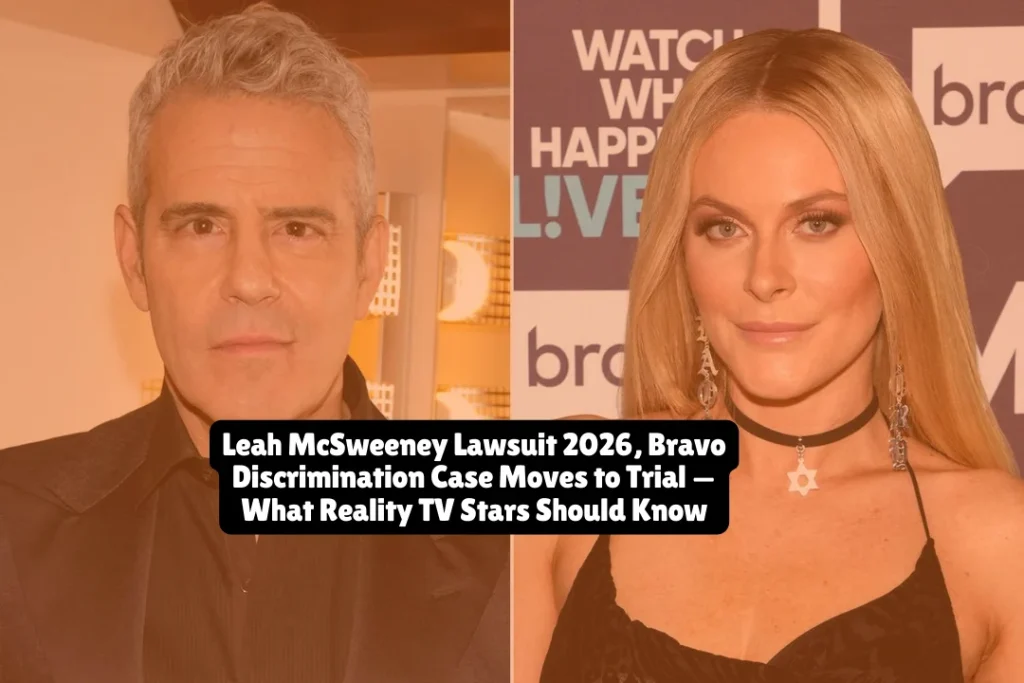
Former Real Housewives of New York star Leah McSweeney is suing Bravo, Andy Cohen, and network executives for disability discrimination, hostile work environment, and retaliation after producers allegedly pressured her to drink alcohol despite her sobriety. A federal judge dismissed some claims but allowed three major allegations to proceed to trial, setting a precedent that could reshape reality TV workplace protections.
As of February 2026, industry insiders report Cohen is reconciling with former Bravo stars who may serve as witnesses—suggesting the network is concerned about the case’s outcome.
Case Background: What Leah McSweeney Is Alleging
McSweeney filed her lawsuit in February 2024 in Manhattan federal court against Andy Cohen, Bravo Media, NBCUniversal, Warner Bros. Discovery, Shed Media, and several producers including Lisa Shannon, John Paparazzo, and Darren Ward.
The former RHONY cast member, who appeared in seasons 12-13 from 2020-2021, alleges producers created a “rotted workplace culture” that exploited her alcohol use disorder for ratings. According to court filings, she disclosed her alcoholism and sobriety before joining the show but claims producers deliberately pressured her to drink, mocked her sobriety efforts, and retaliated when she tried to maintain recovery.
Her complaint describes the environment as “psychological warfare intentionally weaponized to break Ms. McSweeney’s psyche.” She also alleges producers prevented her from visiting her dying grandmother by threatening pay cuts or termination if she left the filming location.
The Legal Claims That Survived Dismissal
On March 31, 2025, Judge Lewis Liman of the Southern District of New York issued a 100-page ruling allowing three key claims to proceed:
Disability Discrimination: McSweeney’s alcoholism qualifies as a disability under federal and New York law. The court found her allegations that producers discriminated based on this disability were sufficient to survive dismissal.
Hostile Work Environment: The lawsuit alleges producers created conditions so severe that they interfered with her ability to work safely. Specifically, she claims they pressured her to relapse and punished her for maintaining sobriety.
Failure to Provide Reasonable Accommodation: During filming of Real Housewives Ultimate Girls Trip in Thailand, McSweeney requested access to AA meetings to support her sobriety. The court found her claim that Bravo failed to facilitate these accommodations could proceed.
Judge Liman dismissed her sexual harassment claims and some other allegations, ruling they either fell outside legal protections or exceeded statute of limitations deadlines.
Critically, the judge rejected Bravo’s First Amendment defense—that editorial decisions about reality TV content shield them from discrimination claims. The ruling establishes that while networks have creative freedom, they cannot use it to violate workplace protections.
Current Case Status and Procedural Battles
The case now moves toward the discovery phase, where McSweeney’s attorneys can subpoena internal documents, emails, and testimony from Bravo executives and producers.
However, Bravo is fighting to move the case into private arbitration rather than public court proceedings. In July 2025 filings reviewed by Page Six, network lawyers argued McSweeney’s RHONY contract includes an arbitration clause requiring private dispute resolution.
McSweeney’s attorney Gary Adelman opposes this move, arguing the public has a “right to know” how reality stars are allegedly mistreated behind the scenes. If Bravo succeeds in forcing arbitration, it would prevent public disclosure of internal communications and shield executives from giving under-oath testimony in open court.
Coordinated Retaliation Allegations
In November 2025, McSweeney filed amended claims alleging Andy Cohen orchestrated a “coordinated attack” using other Bravo stars to publicly discredit her after she filed the lawsuit.
The amended complaint names 24 current and former Real Housewives cast members—including Luann de Lesseps, Kyle Richards, Melissa Gorga, Kandi Burruss, Lisa Vanderpump, Heather Dubrow, and Dorinda Medley—claiming Cohen “directed and/or induced” them to publicly disparage McSweeney’s character and truthfulness.
According to court documents, McSweeney alleges these stars wouldn’t have made their statements “but for Cohen’s direction and/or inducement” and did so hoping to “curry favor with Cohen” to advance their entertainment careers.
Why This Case Matters Beyond Bravo
McSweeney’s lawsuit is part of a broader “reality TV reckoning” that includes cases from NeNe Leakes (racial discrimination), Caroline Manzo (sexual assault during filming), and Below Deck crew members (hostile work environment).
Bethenny Frankel has been leading efforts to create a reality TV union that would establish mental health protections, fair treatment standards, and workplace safety requirements—similar to protections already mandated for scripted television workers.
If McSweeney prevails or reaches a substantial settlement, it could establish precedents requiring reality TV networks to provide mental health support, honor sobriety requests, and face liability when exploiting cast members’ vulnerabilities for ratings.
Common Misconceptions About the Case
Misconception 1: “Reality TV stars aren’t real employees, so employment laws don’t apply.”
Reality: While reality stars typically work as independent contractors, anti-discrimination laws still apply. The judge’s March 2025 ruling confirmed that creative industries cannot use First Amendment protections to evade workplace discrimination laws.
Misconception 2: “Drinking is part of the show, so cast members can’t complain about alcohol.”
Reality: The court distinguished between showing alcohol on screen (permissible creative choice) and what happens behind the scenes. Pressuring someone with a known disability to engage in harmful behavior crosses legal lines regardless of creative freedom.
Misconception 3: “McSweeney can’t win because she signed a contract.”
Reality: Even if arbitration clauses are enforced, contracts cannot waive fundamental anti-discrimination rights. Employment agreements that violate federal or state civil rights laws are unenforceable.
What Is the Leah McSweeney Lawsuit About?
McSweeney is suing Bravo, Andy Cohen, and network executives for disability discrimination, hostile work environment, and failure to provide reasonable accommodations related to her alcohol use disorder. She alleges producers pressured her to drink despite knowing she was in recovery, retaliated when she maintained sobriety, and created conditions that caused her to relapse.
What Are the Main Allegations?
The lawsuit claims producers created a “rotted workplace culture” that exploited her addiction for ratings, mocked her sobriety, denied access to AA meetings during filming in Thailand, and prevented her from visiting her dying grandmother by threatening termination. She also alleges Andy Cohen coordinated other Bravo stars to publicly discredit her after she filed the lawsuit.
What Is the Current Status of the Lawsuit?
As of February 2026, three major claims—disability discrimination, hostile work environment, and failure to accommodate—are proceeding to trial after a federal judge’s March 2025 ruling. Bravo is attempting to force the case into private arbitration. The case is in discovery, where attorneys gather evidence through document subpoenas and depositions.
What Damages Is Leah McSweeney Seeking?
Court filings do not specify exact monetary damages, but workplace discrimination cases can recover compensatory damages for emotional distress, medical expenses, lost wages, and career harm. If gross negligence is proven, punitive damages may also be available to punish the defendants and deter similar conduct.
When Will the Case Be Resolved?
Employment discrimination cases typically take 1-3 years from filing to resolution. McSweeney filed in February 2024, so the case could settle or go to trial in 2026 or 2027. If Bravo succeeds in forcing arbitration, the timeline may accelerate but proceedings would remain confidential.
For reality TV professionals facing similar workplace issues, understanding RHOA Star Brit Eady Sues Bravo For $20M After Kenya Moore’s Explicit Photo Scandal shows the pattern of workplace discrimination claims against the network.
Last Updated: February 10, 2026
Disclaimer: This article provides informational content only and does not constitute legal advice. Consult a qualified employment attorney for case-specific guidance.
What to Do Next: If you work in reality TV and experience workplace discrimination, document incidents, report to HR or management, and consult an employment attorney to understand your rights.
Stay informed, stay protected. — AllAboutLawyer.com
About the Author

Sarah Klein, JD, is a licensed attorney and legal content strategist with over 12 years of experience across civil, criminal, family, and regulatory law. At All About Lawyer, she covers a wide range of legal topics — from high-profile lawsuits and courtroom stories to state traffic laws and everyday legal questions — all with a focus on accuracy, clarity, and public understanding.
Her writing blends real legal insight with plain-English explanations, helping readers stay informed and legally aware.
Read more about Sarah