
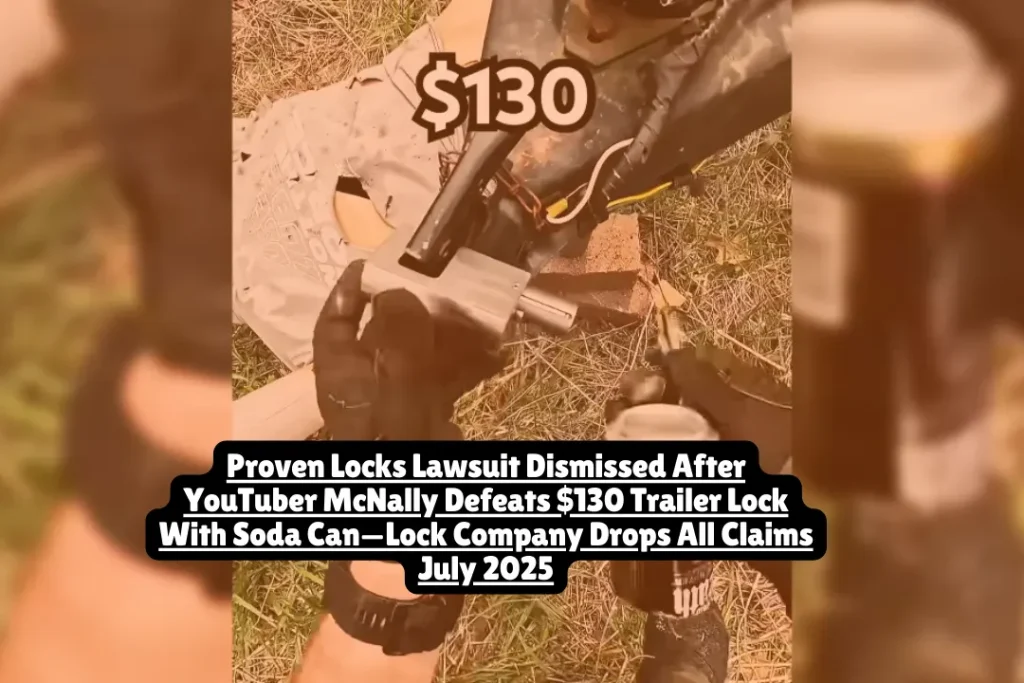
Proven Locks Lawsuit Dismissed After YouTuber McNally Defeats $130 Trailer Lock With Soda Can—Lock Company Drops All Claims July 2025
Proven Industries voluntarily dismissed its eight-count federal lawsuit against lockpicking YouTuber Trevor McNally in July 2025, just weeks after a Florida judge denied their emergency motion for a preliminary injunction. The company sued McNally in May 2025 (Case No. 8:25-cv-01119) for copyright infringement, defamation, and six other claims after he demonstrated on video how to bypass their $130 trailer hitch lock using a strip of aluminum from a soda can. No settlement was reached, no compensation is available, and McNally was never found liable for any allegations.
What The Proven Industries vs McNally Lawsuit Was About
The legal battle began in March 2025 when Proven Industries posted a promotional video titled “YOU GUYS KEEP SAYING YOU CAN EASILY BREAK OFF OUR LATCH PIN LOCK.” The 90-second clip showed someone attacking their model 651 trailer hitch lock with a sledgehammer to prove its durability, taunting critics that they would “prove a lot of you haters wrong.”
An Instagram user commented on the video, suggesting Proven introduce their lock to McNallyOfficial, a former Marine turned lockpicking YouTuber with over 7 million followers. Proven Industries replied that McNally and other YouTubers only target “cheap locks” because they’re “fast and easy to bypass or pick.” Big mistake.
On April 3, 2025, McNally posted a response video showing himself watching Proven’s promotional clip while casually swinging his legs and sipping from an apple juice box. He then silently approached the $130 lock and defeated it in seconds using a shim created from an empty Liquid Death seltzer can. The video went viral, accumulating over 10 million views.
The Eight-Count Federal Lawsuit
Proven Industries didn’t take this well. Owner Ron Lee sent McNally a cryptic “be prepared!” message, then accidentally-on-purpose texted McNally’s wife in what McNally described as an attempt to “intimidate me and my family.” This became concerning after McNally discovered Lee is a three-time felon who had previously hired someone “to throw a brick through the window of his ex-wife.”
Proven’s lawyers filed multiple DMCA copyright takedown notices against McNally’s video. When that didn’t work, on May 1, 2025, Proven filed a federal lawsuit in the Middle District of Florida charging McNally with copyright infringement, defamation by implication, false advertising, violating the Florida Deceptive and Unfair Trade Practices Act, tortious interference with business relationships, unjust enrichment, civil conspiracy, and trade libel.
The lawsuit’s filings repeatedly mentioned McNally’s juice box, arguing that his “childlike leg-swinging” made their product seem laughable. According to court documents, Proven claimed McNally made it appear easier than it actually is to bypass the lock and falsely presented the effort required.
McNally’s Devastating Response
McNally didn’t back down. On May 23, 2025, he published a video showing him obtaining the lock from an Amazon locker and opening it out of its original packaging, with a shim made on-site. He then published three more videos, all demonstrating the exploit in various ways. Each video made Proven’s lawsuit look worse.
The court case turned into a disaster for Proven Industries. At the June 13, 2025 hearing before Judge Mary S. Scriven, Proven’s own lawyer admitted their employee had replicated McNally’s shim trick. McNally’s defense attorney asked the obvious question: “When you did it yourself, did it occur to you for one moment that maybe the best thing to do, instead of file a lawsuit, was to fix [the lock]?”
Judge Scriven ruled McNally’s videos constituted fair use—they were transformative, included commentary through visual parody, and accurately depicted a legitimate security flaw. The judge denied Proven’s emergency motion for a preliminary injunction and told both sides: “I will pray that you all come to a resolution of the case that doesn’t require all of this. This is a capitalist market and people say what they say. As long as it’s not false, they say what they say.”
The Voluntary Dismissal And Failed Cover-Up
Weeks later, on July 7, 2025, Proven Industries filed a notice of voluntary dismissal, withdrawing the entire lawsuit. The dismissal was “without prejudice,” meaning Proven theoretically reserves the right to refile later. However, the damage was done.
Court documents detailing Proven’s losses—including customer complaints, declining sales, and social media backlash—had already been publicly filed and distributed through CourtListener and legal databases. When Proven tried filing a motion to seal embarrassing documents, it was too late; the information was already public.
Proven’s legal team noted that Proven Industries never once asked to seal any documents until after they lost. Not before the hearing. Not during. Only after the court denied their emergency motion for a preliminary injunction. They had promoted the lawsuit online, boasted about how they would expose McNally, encouraged people to search for the case, and submitted supposedly “sensitive” documents without sealing or redaction.
What This Means For Product Reviews And Consumer Rights
McNally’s case reinforces that consumers have First Amendment rights to test products and share results publicly. Product reviews, even unfavorable ones backed by evidence, are protected speech. Copyright law doesn’t prohibit using short clips of promotional videos in transformative commentary or parody.
Similar to other defamation and product liability cases like the Proven Locks lawsuit dismissed lock company voluntarily drops case after YouTuber exposes 130 lock flaw with soda can, companies cannot silence legitimate product criticism through intimidation lawsuits. The legal principle of fair use protects reviewers who accurately demonstrate product flaws, even when those demonstrations harm a company’s reputation.
The Streisand Effect played out perfectly. By suing McNally, Proven Industries amplified the story to heights it would never have reached otherwise. Millions more people learned about the lock’s vulnerability because the company tried to suppress the information through litigation.
Case Status And Current Situation
The case was officially closed on October 21, 2025, when Judge Scriven issued an endorsed order of dismissal. Court records show the date terminated as October 21, 2025, with the last known filing on October 22, 2025.
McNally was never found liable for any of the eight counts alleged. Voluntary dismissal typically indicates the plaintiff recognized they would lose at trial. Potentially, McNally could file a malicious prosecution claim or seek attorney fees under anti-SLAPP statutes designed to prevent lawsuits aimed at silencing critics, though he has not publicly announced any such plans as of February 2026.
Proven Industries continues operating. The company’s social media accounts remain active, though comments are often disabled on posts following the harassment they received from McNally’s followers during the lawsuit.
Frequently Asked Questions
What Was The Proven Industries McNally Lawsuit About?
Proven Industries sued lockpicking YouTuber Trevor McNally for copyright infringement, defamation, and six other claims after he demonstrated on video how to bypass their $130 trailer hitch lock using aluminum from a soda can. The lawsuit was filed May 1, 2025 in Florida federal court.
Did Proven Industries Win The Lawsuit Against McNally?
No. Proven Industries voluntarily dismissed the entire lawsuit on July 7, 2025, weeks after the judge denied their motion for a preliminary injunction. McNally was never found liable for any allegations.
Was There A Settlement In The McNally Lawsuit?
No public settlement was announced. Both sides agreed to pay their own attorney fees. The case ended without any court determination that McNally violated laws.
What Happened To The Proven Lock After The Lawsuit?
Proven Industries continues operating and selling locks. However, the lawsuit generated massive negative publicity, with millions of people learning about the lock’s vulnerability through the Streisand Effect.
Can Companies Sue YouTubers For Product Reviews?
Companies can sue, but reviewers are protected by First Amendment rights and fair use doctrine. McNally’s case demonstrates that accurate product testing and criticism, even when unfavorable to the company, is protected speech.
What Is The Streisand Effect?
The Streisand Effect occurs when attempting to suppress information only amplifies it. Proven’s lawsuit made McNally’s video reach millions more viewers than it would have otherwise.
Could McNally Sue Proven Industries Back?
Potentially. McNally could file a malicious prosecution claim or seek attorney fees under anti-SLAPP statutes designed to prevent lawsuits aimed at silencing critics. However, he has not publicly announced any such plans as of February 2026.
Last Updated: February 8, 2026
Disclaimer: This article provides information about the Proven Industries vs McNally lawsuit based on publicly available court filings and news reports. It is not legal advice.
If a company threatens you with legal action for posting honest product reviews, consult with a First Amendment attorney. Organizations like the Electronic Frontier Foundation provide resources about fair use and free speech protections.
Stay informed, stay protected. — AllAboutLawyer.com
About the Author

Sarah Klein, JD, is a licensed attorney and legal content strategist with over 12 years of experience across civil, criminal, family, and regulatory law. At All About Lawyer, she covers a wide range of legal topics — from high-profile lawsuits and courtroom stories to state traffic laws and everyday legal questions — all with a focus on accuracy, clarity, and public understanding.
Her writing blends real legal insight with plain-English explanations, helping readers stay informed and legally aware.
Read more about Sarah