
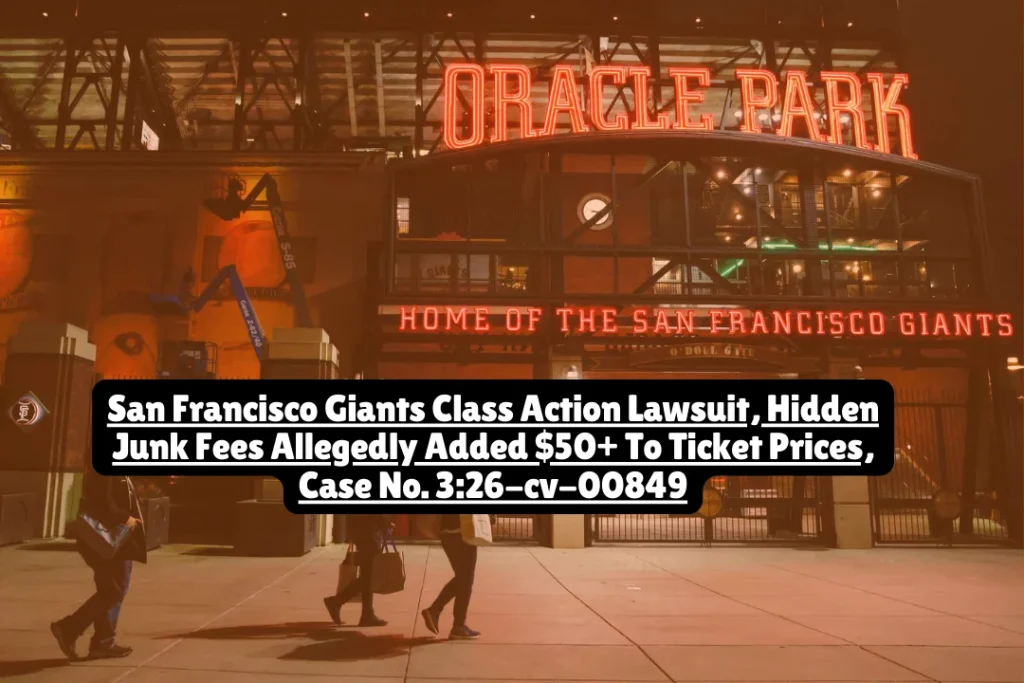
San Francisco Giants Class Action Lawsuit, Hidden Junk Fees Allegedly Added $50+ To Ticket Prices, Case No. 3:26-cv-00849
A class action lawsuit filed January 27, 2026, accuses the San Francisco Giants of charging hidden junk fees that inflated ticket prices by up to 45% before the practice stopped in July 2024. The lawsuit seeks refunds for hundreds of thousands of fans who paid service, convenience, and processing fees not disclosed in advertised prices.
What The Giants Ticket Fee Lawsuit Alleges
Plaintiff Juan Flores filed a 25-page complaint in U.S. District Court for the Northern District of California alleging the San Francisco Giants systematically deceived fans through drip pricing tactics. According to the lawsuit, the team advertised tickets at one price but added mandatory fees—including service fees, convenience fees, handling fees, and order processing fees—only at checkout, often increasing final costs by more than $50 per transaction.
The complaint claims the Giants violated California’s Consumers Legal Remedies Act, Unfair Competition Law, and False Advertising Law through these practices. While California’s Honest Pricing Act took effect July 1, 2024, and the Giants stopped charging undisclosed fees around that time, the lawsuit focuses on violations under pre-existing consumer protection statutes.
The lawsuit alleges the Giants employed countdown timers during checkout to pressure consumers into completing purchases before they could review fee information or read the 15-page Terms and Conditions. This created false urgency while interfering with informed purchasing decisions, according to court filings.
Who Qualifies For The Class Action
The proposed class includes all individuals who purchased tickets to San Francisco Giants games through the MLB Ballpark app or MLB.com desktop and mobile versions and paid service fees, convenience fees, order processing fees, or similar charges not included in originally displayed prices. The lawsuit estimates hundreds of thousands of consumers were affected by the allegedly deceptive pricing practices.
The case is currently in early litigation stages, with no settlement reached or class certification granted yet. Eligibility requirements may change as the lawsuit progresses through court proceedings.
Juan Flores’ Experience Illustrates The Allegations
The named plaintiff’s purchase illustrates the complaint’s central claims. Flores bought two tickets to an April 6, 2024 game between the Giants and San Diego Padres that were advertised at $10 each. After entering his account information on MLB.com and selecting delivery and payment options, Flores discovered the total cost was $29—not the expected $20.
The final price included a $5.50 convenience fee and $3.50 order processing fee, representing a 45% increase over the advertised price. According to the complaint, Flores wouldn’t have purchased the tickets if the full price had been disclosed upfront, but by the time he saw the total cost, he had already invested substantial time and psychologically committed to the purchase.
Giants Join Red Sox And Nationals Facing Similar Litigation
The San Francisco Giants became the third MLB team sued over ticket fee practices since September 2025. The Boston Red Sox face a January 2026 class action in Massachusetts federal court alleging false advertising through undisclosed fees. That lawsuit claims the Red Sox charged a $7 order fee exceeding actual processing costs for electronic tickets.
The Washington Nationals have defended similar litigation since September alleging years of junk fee charges and misleading price disclosures. These cases reflect growing scrutiny of ticketing industry practices following consumer backlash over fees during high-profile events like Taylor Swift’s Eras Tour.
The Federal Trade Commission refers to these practices as “drip pricing” or “bait and switch” advertising, where total prices aren’t disclosed until late in checkout after consumers have invested time and effort selecting products.
California’s Honest Pricing Act Changed Industry Practices
California enacted Senate Bill 478, known as the Honest Pricing Act, which took effect July 1, 2024. The law prohibits advertising or displaying prices that don’t include all mandatory charges except taxes and shipping for most consumer transactions, including tickets and events.
The Giants discontinued the challenged fee disclosure practices around mid-2024, presumably when the Honest Pricing Act became effective. However, the lawsuit argues the team hasn’t refunded fans the millions in allegedly wrongful fees charged before July 2024.
The complaint relies on California’s broader consumer protection laws predating the Honest Pricing Act, including statutes addressing unfair competition and false advertising that existed before the new legislation.
How The Lawsuit Could Progress
The case is in preliminary stages with no settlement announced or class certification granted. Flores seeks to represent a nationwide class of ticket purchasers, though the Giants could challenge class certification arguing individual issues prevent collective resolution.
The lawsuit demands the Giants repay unlawfully charged junk fees but doesn’t specify a damage amount. Similar consumer protection settlements have varied widely depending on total class size, documented harm, and settlement negotiations.
The Giants declined to comment on the lawsuit. The case is assigned to the U.S. District Court for the Northern District of California under Case No. 3:26-cv-00849.
What Consumers Should Know About Ticket Fee Lawsuits
Multiple industries face similar litigation over hidden fees and drip pricing. The Ticketmaster Faces Billion-Dollar Reckoning Class Action Lawsuit Your Ticket Fees Could Mean Cash Back In 2026 demonstrates how fee disclosure practices across the live entertainment industry are drawing legal challenges and regulatory scrutiny.
Consumer protection attorneys emphasize that class actions addressing seemingly small recurring fees can generate significant liability when charged to millions of customers. Even modest individual recoveries can prompt industry-wide changes in billing transparency.
The FTC and state regulators increasingly scrutinize junk fees across consumer services. California’s Honest Pricing Act represents one state’s legislative approach, while federal proposals would require all-in pricing disclosures nationwide.
No Settlement Or Claims Process Exists Yet
Because no settlement has been reached and class certification hasn’t been granted, there is no claims process or deadline for Giants ticket purchasers. If the case settles or proceeds to judgment, affected consumers would receive official notice with claim instructions and deadlines.
Related Article: Panera Bread Data Breach Class Action Lawsuits, Two Separate Incidents, $2.5M Settlement Approved Plus New January 2026 Breach Affecting 14 Million
Consumers who believe they paid undisclosed fees on Giants tickets should save all documentation, including purchase confirmations, email receipts, credit card statements, and screenshots showing advertised prices versus final charges. This evidence could support future claims if a settlement is reached.
Class members are automatically included if certification is granted unless they opt out. Opting out preserves individual lawsuit rights but forfeits class settlement benefits.
What Is The San Francisco Giants Hidden Junk Fees Class Action Lawsuit?
The lawsuit alleges the Giants violated California consumer protection laws by advertising ticket prices that excluded mandatory fees revealed only at checkout, using drip pricing tactics and countdown timers to pressure purchases before consumers could review full costs.
Which Consumers Are Eligible For Compensation?
The proposed class includes anyone who purchased Giants tickets through MLB Ballpark app or MLB.com and paid service, convenience, or processing fees not included in originally displayed prices. No settlement or class certification exists yet.
How Many Consumers Are Affected?
The lawsuit estimates hundreds of thousands of fans were affected by allegedly deceptive pricing practices before the Giants stopped charging undisclosed fees in July 2024. Exact numbers haven’t been disclosed in court filings.
What Deceptive Practices Did The Giants Allegedly Use?
The complaint alleges the Giants advertised lower ticket prices, revealed additional fees only at final checkout, used countdown timers creating false urgency, and made it difficult to review fee information or Terms and Conditions before purchase completion.
How Do I Check If I Am Eligible?
Review your Giants ticket purchase records from before July 2024. If you paid service fees, convenience fees, or processing fees not disclosed in the initially advertised price, you may fall within the proposed class.
How Do I File A Claim In The Giants Class Action?
No claims process exists yet because no settlement has been reached and class certification hasn’t been granted. If the case settles, affected consumers will receive official notice with claim instructions.
What Is The Deadline To File A Claim?
No claim deadline exists yet. If a settlement is reached or the case proceeds to judgment with class certification, official notices will provide specific deadlines, typically 60-180 days after settlement approval.
Where Can I Find Official Information About The Lawsuit?
The case is Flores v. San Francisco Baseball Associates LLC, Case No. 3:26-cv-00849, in the U.S. District Court for the Northern District of California. Court filings are available through PACER or by contacting the plaintiff’s attorneys at Almeida Law Group LLC and Tycko & Zavareei LLP.
Last Updated: February 7, 2026
Disclaimer: This article provides informational content only and does not constitute legal advice. Consult an attorney for guidance on your specific situation.
If you purchased Giants tickets before July 2024 and paid undisclosed fees, save your purchase documentation. Watch for official class action notices as this litigation progresses.
Stay informed, stay protected. — AllAboutLawyer.com
About the Author
Sarah Klein, JD, is a licensed attorney and legal content strategist with over 12 years of experience across civil, criminal, family, and regulatory law. At All About Lawyer, she covers a wide range of legal topics — from high-profile lawsuits and courtroom stories to state traffic laws and everyday legal questions — all with a focus on accuracy, clarity, and public understanding.
Her writing blends real legal insight with plain-English explanations, helping readers stay informed and legally aware.
Read more about Sarah