
What Is a Notarized Letter? Requirements & How to Get One 2026
A notarized letter is a document that has been verified and signed by a notary public, an authorized official who ensures the identity of the signer and confirms that they are signing the document willingly. Having a document notarized is the same as swearing under oath in a court of law—you are saying that the facts contained in the document are true. As of January 2026, all 50 states allow some form of remote online notarization (RON), making it easier than ever to get letters notarized from home.
What You Came to Know: How Notarized Letters Work
What Makes a Letter “Notarized”?
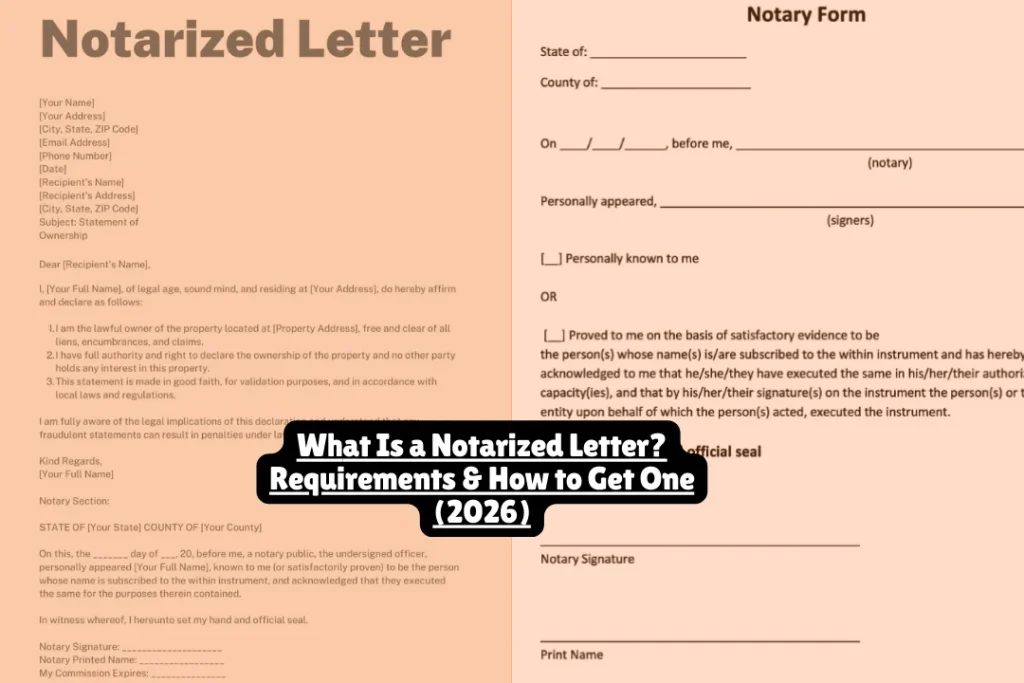
When a letter is notarized, it means the notary public has verified the identities of the signatories and confirmed the authenticity of their signatures. The notary adds three critical elements:
Notary Signature – The notary signs the document confirming they witnessed the signing.
Official Seal or Stamp – The notary applies an official seal or stamp, certifying the document’s authenticity.
Notarial Certificate – A statement confirming when, where, and how the notarization occurred.
What Documents Need Notarization in 2026?
Notarized letters are commonly used in various legal, financial, and contractual situations where the validity of a document must be assured. Common examples include:
- Affidavits and sworn statements (similar to small estate affidavits used in probate)
- Power of attorney documents
- Consent letters for minors traveling internationally
- Proof of residency letters for school enrollment
- Employment verification letters
- Real estate documents and deeds
Can You Notarize a Letter Yourself?
No. The only person who can notarize a document is a notary public. You cannot notarize your own signature or act as a notary for family members in most states due to conflict-of-interest rules.
What You Must Know: Critical Notarization Rules for 2026
Remote Online Notarization Is Now Legal Nationwide
As of January 2026, all U.S. states recognize RON to some degree. RON takes authentication even further than in-person notarization by using established identity proofing technologies, including identity verification and knowledge-based authentication (KBA).
During RON, you present a government-issued ID to your device’s camera, and the RON solution confirms the ID’s visual, physical and cryptographic security features. Many states also require answering personal background questions verified through third-party databases.
Don’t Sign Before Meeting the Notary
You must sign the document in front of the notary, as pre-signed documents may not be accepted. The notary’s job is to witness your signature—not verify a signature that already exists.
Notaries Don’t Verify Content Accuracy
The notary public does not provide legal advice or confirm that the document’s content is accurate. They only verify the identity of the signer and witness the signing. If your letter contains legal claims or factual assertions, you’re responsible for their truthfulness.
💡 Pro Tip
Many banks offer free notary services to account holders, but they often require appointments and may not notarize all document types. Online notary services ($25-$50) provide 24/7 availability and typically complete the process in under 5 minutes.
Related Article: FERPA Law, What Student Privacy Rights You Have & How Schools Must Protect Your Records
What to Do Next: Getting Your Letter Notarized
Step 1: Prepare Your Letter Properly
Make sure you leave enough space for signatures and leave enough space for the notary to add their acknowledgment. Include:
- Full names and addresses of all signers
- Clear statement of the letter’s purpose
- Date (leave blank until signing in front of notary)
- Signature lines with printed names underneath
- Space for notary certificate (usually 3-4 inches at bottom)
Step 2: Find a Notary Public
Notaries are all over the place—you can usually find notary services at banks, law offices, shipping centers (like UPS stores), government buildings, and online platforms.
Online Notary Platforms: Notarize.com, NotaryCam, Proof—available 24/7, cost $25-$50
In-Person Options: Banks (often free for customers), UPS stores ($15-$25), law firms, county clerk offices
Step 3: Bring Proper Identification
The notary will need to verify your identity using the identification documents. Acceptable IDs include:
- State-issued driver’s license or ID card
- U.S. passport or passport card
- Military ID
- Permanent resident card
Step 4: Sign in Front of the Notary
The notary will ask you to confirm your identity, verify you’re signing willingly, and may ask you to swear or affirm the contents are true. Americans collectively notarize 1.25 billion documents each year, and each transaction is a milestone moment for someone.
How Much Does Notarization Cost in 2026?
State laws cap notary fees. As of January 2026:
- California: $15 per signature
- Texas: $6-$10 per notarial act
- New York: $2 per signature (traditional), $25 for RON
- Florida: $10 per signature (traditional), up to $25 for RON
Online notaries typically charge $25-$50 per session regardless of state maximums because they provide premium convenience.
FAQs About Notarized Letters
How long is a notarized letter valid?
Notarization confirms authenticity at the time of signing—it doesn’t expire. However, institutions may require recent notarizations (within 30-90 days) depending on their policies.
Can a notarized letter be used in court?
Yes. Notarized affidavits and sworn statements are admissible as evidence in most courts, similar to how probate courts accept notarized affidavits for estate administration.
What’s the difference between acknowledgment and jurat?
An acknowledgment confirms you signed willingly; a jurat requires you to swear the contents are true under oath. Notaries determine which applies based on document language.
Do I need a lawyer to notarize a letter?
No. Notaries are not attorneys and don’t provide legal advice. If your letter involves complex legal matters, consult an attorney before notarization.
Can notaries refuse to notarize?
Yes. Notaries can refuse if you lack proper ID, appear coerced, seem mentally impaired, or the document appears fraudulent or incomplete.
Is online notarization as valid as in-person?
Yes. As of January 2026, RON documents are legally equivalent to traditionally notarized documents in all states that permit RON.
IMPORTANT DISCLAIMER: This article provides general educational information about notarized letters, notary public services, and notarization processes as of February 2026. It is not legal advice and does not create an attorney-client relationship. Notary requirements, remote online notarization regulations, and document validity may vary by state and change over time. AllAboutLawyer.com does not provide legal advice or personal recommendations. For specific guidance regarding notarized letter requirements for your situation, consult with a qualified attorney, review your state’s notary public regulations, or contact your state’s Secretary of State office.
Bottom Line: A notarized letter is a document authenticated by a notary public who verifies your identity and witnesses your signature. As of 2026, you can get letters notarized in person at banks, UPS stores, and government offices, or online through RON platforms. Costs range from free (some banks) to $50 (online services). Never sign before meeting the notary, and remember that notarization confirms who signed—not whether the content is accurate.
For more information about legal documents and estate planning, explore our guides on probate procedures in Texas and small estate affidavits.
Stay informed, stay protected. — AllAboutLawyer.com
Last Updated: February 4, 2026 — We keep this current with the latest legal developments
Official Sources Referenced:
- National Notary Association
- State notary public regulations (CA, TX, NY, FL)
- Remote Online Notarization (RON) standards 2026
About the Author

Sarah Klein, JD, is a licensed attorney and legal content strategist with over 12 years of experience across civil, criminal, family, and regulatory law. At All About Lawyer, she covers a wide range of legal topics — from high-profile lawsuits and courtroom stories to state traffic laws and everyday legal questions — all with a focus on accuracy, clarity, and public understanding.
Her writing blends real legal insight with plain-English explanations, helping readers stay informed and legally aware.
Read more about Sarah