
Celtic Sea Salt Lawsuit, Case Dismissed April 2025 But Can Be Refiled, What The Lead And Arsenic Allegations Mean For Consumers Still Using The Product
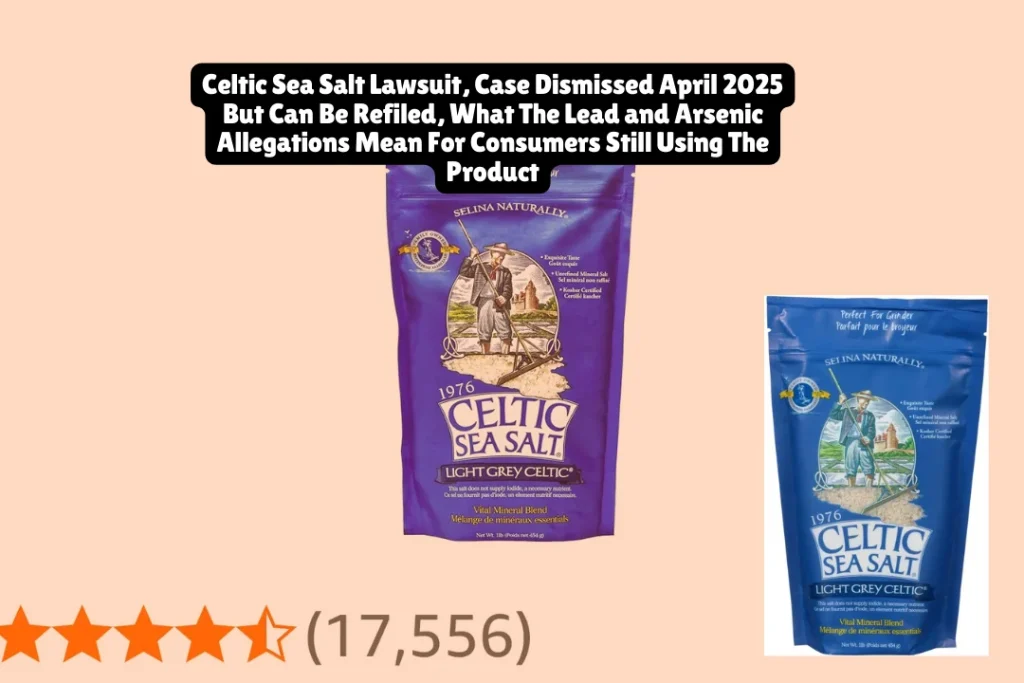
If you bought Celtic Sea Salt’s Fine Ground or Light Grey varieties, you should know the February 2025 lawsuit alleging dangerous lead and arsenic contamination was voluntarily dismissed in April 2025. However, the dismissal allows class claims to be refiled, meaning new litigation could emerge while the company maintains its products meet WHO safety guidelines despite containing 460 parts per billion of lead.
What The Celtic Sea Salt Lawsuit Alleged
Plaintiff Mark Gonzalez filed Gonzalez v. Celtic Ocean International, LLC, Case No. 2:25-cv-01177 in the U.S. District Court for the Central District of California on February 11, 2025. The lawsuit claimed Celtic Sea Salt’s Fine Ground and Light Grey varieties contained dangerous levels of heavy metals—specifically 460 parts per billion (ppb) of lead and 140 ppb of arsenic.
According to the complaint, laboratory testing using EPA-approved methods revealed these contamination levels in products marketed as “doctor recommended,” “quality certified,” and containing “vital minerals.” Gonzalez alleged these marketing claims misled health-conscious consumers into believing the salt was safe when it actually exceeded California Proposition 65 safety thresholds.
California’s Prop 65 requires warning labels for products containing more than 0.5 micrograms of lead per daily serving. The lawsuit claimed a standard serving of Celtic Sea Salt exceeded this limit by nearly ten times, exposing consumers to toxic heavy metals without proper disclosure.
April 2025 Dismissal And Current Status
On April 11, 2025, Gonzalez voluntarily dismissed the lawsuit. Court records show the plaintiff’s individual claims were dismissed with prejudice (cannot be refiled), but the putative class claims were dismissed without prejudice (can be reworked and refiled in a future lawsuit).
This means while Gonzalez personally settled or abandoned his claims, other consumers who purchased Celtic Sea Salt during the proposed class period can still file new lawsuits alleging the same contamination issues. As of February 2026, no new class action has been filed, but the legal window remains open.
Celtic Ocean International has publicly stated the lawsuit is resolved and maintains no court has ever found unsafe lead levels in their products. The company emphasizes that Celtic Sea Salt is naturally occurring and unrefined, and trace amounts of lead appear in virtually all sea salts due to environmental pervasiveness.
What Testing Revealed About Lead And Arsenic Levels
Independent testing cited in the dismissed lawsuit found Celtic Sea Salt contained 460 ppb of lead and 140 ppb of arsenic. To understand the significance, compare these to regulatory thresholds:
Lead: The CDC states there are no safe levels of lead in blood. The World Health Organization sets a Codex limit at 0.0002 percent (2,000 ppb) for salt. Celtic Sea Salt’s 460 ppb falls below this international standard but exceeds California’s stricter Proposition 65 threshold requiring consumer warnings.
Arsenic: The EPA states consuming arsenic above 10 ppb increases risk of cancer, impaired brain development, and immune system issues. At 140 ppb, Celtic Sea Salt’s arsenic levels are 14 times the EPA’s maximum contaminant level for drinking water.
Celtic Ocean International maintains these levels align with WHO guidelines and points out that lead exists in trace amounts in many everyday products including paint, water systems, and foods grown in contaminated soils. The company’s Certificates of Analysis show lead ranges between 420-650 ppb depending on batches.
Similar heavy metal contamination lawsuits like 500m-nestles-class-action like the $500M Vital Proteins case demonstrate growing consumer concern about toxic substances in health products marketed as safe and beneficial.
Who Would Have Qualified If The Lawsuit Proceeded
If a new class action is filed and certified, potential class members would likely include anyone in the United States who purchased Celtic Sea Salt’s Fine Ground or Light Grey varieties during the applicable statute of limitations period—typically 1-4 years depending on the specific legal claims.
The original complaint focused on violations of California’s Consumers Legal Remedies Act, Unfair Competition Law, and breach of implied warranties. Future lawsuits could expand to include additional products or time periods.
No proof of purchase would likely be required for modest claims (similar to other food contamination settlements), though documentation strengthens higher-value claims.
What Consumers Must Know About Continued Use
The products remain on shelves. Celtic Sea Salt continues selling Fine Ground and Light Grey varieties nationwide with no FDA recall or ban. The company maintains products are safe when used as directed.
Prop 65 warnings are absent. Despite allegations of exceeding California’s lead thresholds, Celtic Sea Salt packaging does not include Proposition 65 warnings stating “This product contains chemicals known to the State of California to cause cancer.”
Accumulation is the concern. Heavy metals accumulate in the body over time. Even low-level repeated exposure can cause serious health effects including kidney damage, cardiovascular disease, cancer, and developmental delays in children, according to the FDA and CDC.
Alternatives exist. The lawsuit noted competitors like Jacobsen Salt Co. produce sea salt with no detectable heavy metals, suggesting contamination is not inevitable in all sea salt production.
Consumer protection cases involving false “non-toxic” marketing claims like hexclad-lawsuit like the $2.5M HexClad settlement show companies increasingly face liability for misleading health and safety representations.
What To Do If You Use Celtic Sea Salt
Check your pantry. If you have Celtic Sea Salt Fine Ground or Light Grey varieties, review the company’s position at CelticSeaSalt.com and decide whether continued use aligns with your health priorities.
Consider alternatives. Research sea salt brands with publicly available third-party testing showing no detectable or minimal heavy metal content.
Document purchases. Save receipts and product packaging in case new litigation emerges with settlement opportunities.
Monitor legal developments. Search PACER using “Celtic Ocean International” or check AllAboutLawyer.com for updates on whether new class actions are filed.
Report health issues. If you experienced health problems potentially linked to heavy metal exposure, consult a physician and document medical records. Contact a product liability attorney for individual harm claims separate from class actions.
Frequently Asked Questions
What is the Celtic Sea Salt lawsuit about?
The lawsuit alleged Celtic Sea Salt’s Fine Ground and Light Grey products contained 460 ppb of lead and 140 ppb of arsenic while being marketed as healthy, doctor-recommended salt. The case claimed this violated California consumer protection laws by failing to warn about Proposition 65 threshold exceedances.
Is the Celtic Sea Salt lawsuit still active in February 2026?
No. The original lawsuit was voluntarily dismissed April 11, 2025. However, only the individual plaintiff’s claims were dismissed with prejudice—putative class claims were dismissed without prejudice, meaning new class actions can still be filed.
Who was eligible to join the Celtic Sea Salt class action?
The lawsuit sought to represent anyone in the United States who purchased Celtic Sea Salt’s Fine Ground or Light Grey varieties during the applicable limitations period. No specific settlement was reached before dismissal.
How much compensation could consumers receive?
Unknown. The lawsuit was dismissed before settlement negotiations or trial. If new litigation results in a settlement, compensation typically depends on total claims filed, documented harm, and settlement fund size—potentially ranging from $20-$200 per claimant in typical food contamination cases.
What proof would be needed to file a claim?
For class action settlements, minimal or no proof is typically required for small claims. Higher-value individual claims would need purchase receipts, product packaging, medical records documenting health issues, and evidence linking harm to Celtic Sea Salt consumption.
Can I still sue Celtic Sea Salt individually?
Yes. The dismissal without prejudice means consumers retain rights to file individual lawsuits or join new class actions alleging contamination, false advertising, or failure to warn about heavy metals.
What changed in February 2026 for the Celtic Sea Salt lawsuit?
Nothing new occurred in February 2026. The lawsuit remains dismissed since April 2025 with no new filings. Celtic Ocean International continues selling products without changes to formulation or labeling, maintaining their position that products meet international safety standards.
Last Updated: February 1, 2026
Disclaimer: This article provides information about the Celtic Sea Salt litigation based on court filings and public statements. It is not legal advice.
Call to Action: Monitor court records for new Celtic Sea Salt class action filings and save purchase documentation in case settlement opportunities emerge.
Stay informed, stay protected. — AllAboutLawyer.com
About the Author
Sarah Klein, JD, is a licensed attorney and legal content strategist with over 12 years of experience across civil, criminal, family, and regulatory law. At All About Lawyer, she covers a wide range of legal topics — from high-profile lawsuits and courtroom stories to state traffic laws and everyday legal questions — all with a focus on accuracy, clarity, and public understanding.
Her writing blends real legal insight with plain-English explanations, helping readers stay informed and legally aware.
Read more about Sarah