
Stanley Zhong College Rejection Lawsuit, What You Need to Know About the Case and Recent Updates
The Stanley Zhong college rejection lawsuit involves allegations of systemic racial discrimination against Asian-American applicants by major U.S. universities. As of January 30, 2026, the case remains in active litigation, with federal lawsuits filed against the University of California system, Cornell University, and the University of Washington.
Stanley Zhong, a software prodigy hired by Google at age 18 for a PhD-level role, claims that despite his near-perfect credentials, his rejection from 16 of 18 schools was due to illegal “racial quotas” and biased admissions practices. This guide covers the current legal status, the specific claims being made, and what the 2026 developments mean for higher education law.
Who Is Stanley Zhong and What Is the Lawsuit About?
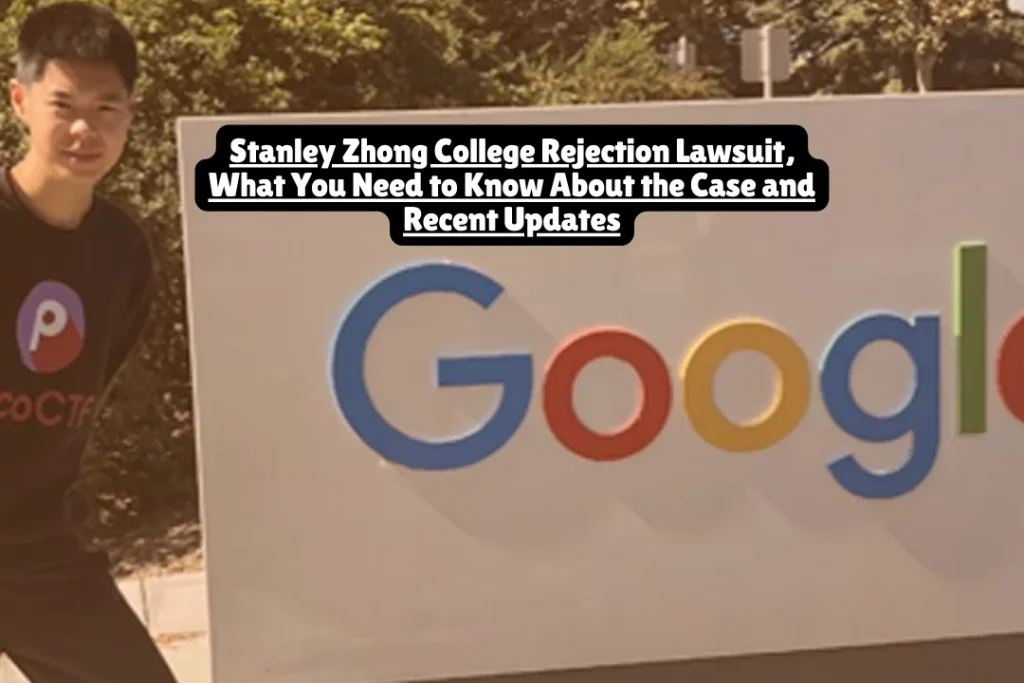
Stanley Zhong is a Palo Alto high school graduate who made headlines in late 2023 after being hired by Google as a full-time software engineer—a role typically requiring an advanced degree—immediately after high school. Despite having a 4.42 weighted GPA, a 1590 SAT score, and a tech startup featured by Amazon Web Services, he was rejected by 16 out of the 18 colleges to which he applied.
The rejections came from top-tier institutions including:
- The University of California System (Berkeley, UCLA, Davis, San Diego, Santa Barbara)
- Cornell University
- MIT, Stanford, and Caltech
- University of Michigan and University of Washington
The lawsuits, largely organized by Stanley and his father, Nan Zhong, through the group Students Who Oppose Racial Discrimination (SWORD), allege that these institutions continue to use race as a factor in admissions to suppress Asian-American enrollment, violating the Equal Protection Clause of the 14th Amendment and Title VI of the Civil Rights Act.
Current Case Status: What’s Happening in January 2026?
As of January 30, 2026, there has been no global settlement, but the litigation has expanded into several distinct legal fronts.
- University of California (Eastern District of California): This is the primary federal suit. The UC system has denied all allegations, claiming they have adhered to California’s Proposition 209 (which banned race-based admissions in 1996). As of early 2026, the case is in the discovery phase, with the plaintiffs seeking “transparency and third-party oversight” of the UC’s “holistic review” process.
- Cornell University (Northern District of New York): Filed in March 2025, this suit alleges Cornell engaged in racially discriminatory practices. The case is currently navigating motions to dismiss filed by the university.
- Self-Representation and AI: Notably, the Zhongs are representing themselves (pro se) after failing to find a law firm willing to take the case. They have openly used AI tools to help draft their massive legal filings, a move that hasn’t yet hindered the progression of their claims in court.
What Are the Legal Claims and Relief Sought?
The legal basis for the suits rests on the landmark Supreme Court decision in Students for Fair Admissions (SFFA) v. Harvard. The plaintiffs argue that universities are circumventing the SFFA ruling through “holistic reviews” and “personal essays” that function as a “secret box” for racial balancing.
The relief sought in the Stanley Zhong lawsuits includes:
- Declaratory Relief: A court statement that the universities’ current practices are unconstitutional.
- Injunctive Relief: Court orders forcing universities to adopt fully race-blind admissions processes.
- Damages: While the primary goal is policy change, the suits seek compensatory and punitive damages for emotional distress and reputational damage.
- Transparency: A demand for the release of internal admissions data to show exactly how Asian-American applicants are scored compared to other groups.
What You Must Know
What the Lawsuit Covers vs. What It Doesn’t
It is a common misconception that this lawsuit is about Stanley “wanting a spot” in college. In reality, the lawsuit is a “cause case” intended to set a precedent for future applicants. It does not cover private institutions that do not receive federal funding (though most major universities do). It also does not challenge the right of a college to reject a qualified candidate—it only challenges rejections based on protected characteristics like race.
The Role of the U.S. Department of Education
The lawsuits also name the U.S. Department of Education as a defendant. The Zhongs allege that the department failed to properly investigate or act upon civil rights complaints regarding Asian-American discrimination in admissions. This adds a regulatory layer to the case, suggesting that federal oversight of civil rights in education is insufficient.
Implications for College Admissions in 2026
If the Zhongs win or force a settlement, it could lead to mandatory transparency in how admissions officers score applicants. This would mean that “holistic review”—the process of looking at a student’s life experience rather than just grades—would be subject to much stricter judicial scrutiny to ensure it isn’t being used as a proxy for race.
What to Do Next
How to Stay Informed
You can track the progress of these cases by searching for Case No. 3:25-cv-00365 (Cornell) or the UC system filings in the Sacramento federal court. Official updates are also often posted on the Students Who Oppose Racial Discrimination (SWORD) website.
Monitor Admissions Policy Changes
Parents and students should keep an eye on how universities are changing their “Personal Insight Questions” or “Diversity Statements.” If a school’s policy seems to prioritize racial identity over merit, it may be affected by the outcome of the Zhong litigation.
Gathering Documentation for Similar Situations
If you believe you have been unfairly rejected based on race, maintain a detailed record of your standardized test scores, unweighted GPA, and extracurricular achievements. If legal counsel is needed, seek attorneys specializing in civil rights law or education law.
FAQs
What is the Stanley Zhong lawsuit about?
It is a civil rights lawsuit alleging that major universities, including the University of California, discriminated against Stanley Zhong by rejecting him based on his race (Asian-American) despite his exceptional qualifications.
Did Stanley Zhong win his lawsuit?
As of January 2026, the case is still in progress. There has been no final ruling or settlement, although several universities are attempting to have the cases dismissed.
Where is Stanley Zhong now?
Stanley is currently working as a full-time software engineer at Google, having accepted the job offer shortly after his high school graduation and college rejections.
Who is the defendant in the Stanley Zhong case?
The primary defendants include the University of California system, the University of Washington, Cornell University, and the U.S. Department of Education.
Can I join the Stanley Zhong lawsuit?
While the suit was filed by the Zhongs and the organization SWORD, it is not currently a traditional “class action” with an open claim form. However, SWORD aims to represent all “similarly situated” Asian-American students.
Last Updated: January 30, 2026
Disclaimer: This article is for informational purposes only and does not constitute legal advice. Please consult with a qualified attorney regarding your specific legal rights.
Stay informed, stay protected. — AllAboutLawyer.com
About the Author

Sarah Klein, JD, is a licensed attorney and legal content strategist with over 12 years of experience across civil, criminal, family, and regulatory law. At All About Lawyer, she covers a wide range of legal topics — from high-profile lawsuits and courtroom stories to state traffic laws and everyday legal questions — all with a focus on accuracy, clarity, and public understanding.
Her writing blends real legal insight with plain-English explanations, helping readers stay informed and legally aware.
Read more about Sarah