
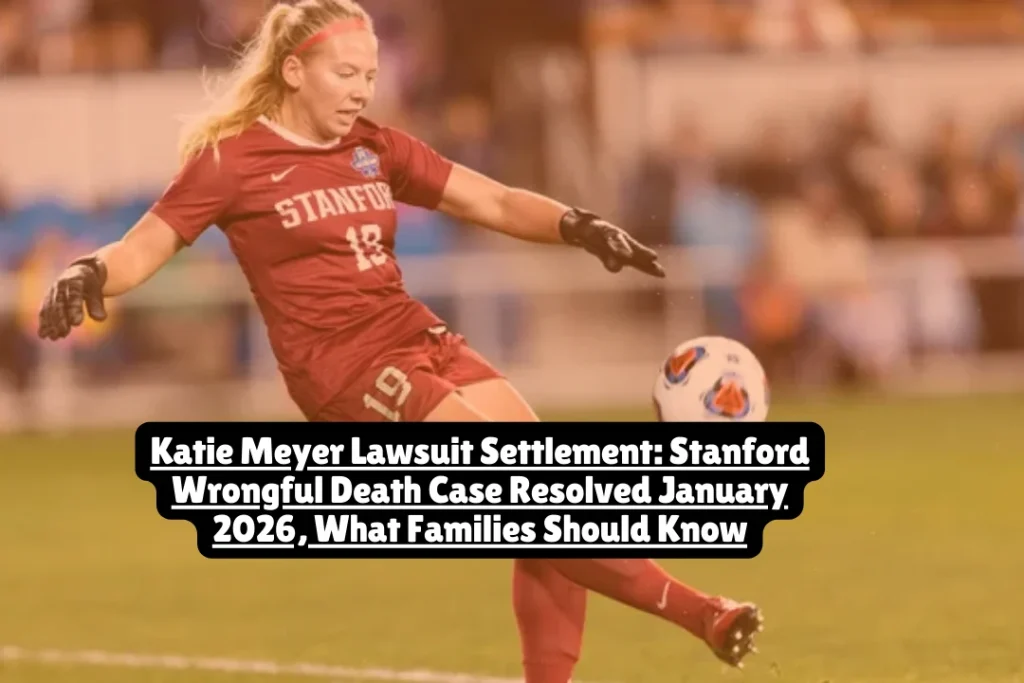
Katie Meyer Lawsuit Settlement, Stanford Wrongful Death Case Resolved January 2026, What Families Should Know
Stanford University and the family of Katie Meyer reached a settlement on January 26, 2026, resolving the wrongful death lawsuit filed after the 22-year-old soccer goalkeeper’s death in March 2022. The settlement includes mental health initiatives, the Katie Meyer Leadership Award, adoption of Katie Meyer’s Law principles, and retirement of her jersey number.
What Is the Katie Meyer Lawsuit?
The Katie Meyer lawsuit was a wrongful death case filed by Katie’s parents against Stanford University in November 2022, alleging the university’s handling of a disciplinary matter contributed to Katie’s death by suicide on March 1, 2022.
Katie Meyer was Stanford women’s soccer team captain and starting goalkeeper who led the team to a 2019 NCAA championship. At her death, she faced disciplinary action for allegedly spilling coffee on a Stanford football player.
The lawsuit stated Stanford “negligently and recklessly” sent Katie a disciplinary notice with “threatening language regarding sanctions and potential ‘removal from the university.'” The complaint alleged this caused Katie “to suffer an acute stress reaction that impulsively led to her suicide.” Stanford disputed responsibility. The case was scheduled for trial in 2026 before settlement.
Who Are the Parties Involved?
The Meyer Family: Steven and Gina Meyer filed the wrongful death lawsuit seeking accountability for their daughter’s death.
Stanford University: The defendant maintained it followed proper procedures and was not responsible for Katie’s death.
What Were the Key Legal Claims?
The complaint alleged Stanford “negligently and recklessly” sent Katie the disciplinary notice on February 28, 2022, indicating her degree would be put on hold and the charge could result in expulsion. The lawsuit alleged Stanford knew its disciplinary process placed students at risk but failed to provide adequate mental health support. The central allegation was Stanford’s actions caused Katie to suffer an acute stress reaction leading to her suicide. Stanford denied wrongdoing and settled to avoid prolonged litigation.
What Did the Settlement Include?
On January 26, 2026, Stanford and the Meyer family announced a resolution. While financial terms were not disclosed, the settlement includes several initiatives honoring Katie.
Stanford will collaborate with Katie’s family to launch a mental health initiative for student-athletes at the Wu Tsai Neurosciences Institute. Stanford Athletics will establish the annual Katie Meyer Leadership Award for exceptional student-athletes.
Stanford committed to adopt principles of Katie Meyer’s Law—a 2024 California law requiring colleges to provide designated advisers during disciplinary proceedings. Katie’s number 19 will be retired honoring her impact on Stanford women’s soccer.
What You Must Know About Wrongful Death Cases
In wrongful death lawsuits involving universities, plaintiffs must prove the institution owed a duty of care, breached that duty, and the breach caused the death. Courts increasingly recognize universities may have special relationships with students creating duties to protect them from foreseeable harm.
Most wrongful death cases settle before trial to avoid uncertainty, expense, and emotional toll. The Meyer family’s settlement does not constitute admission of liability by Stanford—it represents both parties’ determination that collaboration would better honor Katie’s legacy.
What Is Katie Meyer’s Law?
Katie Meyer’s Law (California AB 2584) was signed in September 2024, requiring California colleges receiving state financial aid to provide students facing disciplinary proceedings with access to an independent adviser of their choosing—an attorney, family member, or mentor.
Prior to this law, many universities restricted legal representation during disciplinary proceedings. The law recognizes students facing serious sanctions need support. Stanford’s commitment to adopt these principles extends protections to its disciplinary processes.
What 2025–2026 Developments Changed the Case?
The case was scheduled for trial in 2026 when settlement was announced. Both parties had engaged in extensive discovery, and the approaching trial likely motivated resolution.
California’s passage of Katie Meyer’s Law in 2024 demonstrated legislative recognition that university disciplinary procedures needed reform. This may have influenced Stanford’s willingness to adopt similar principles. Katie’s death became part of a national conversation about student-athlete mental health and university duty of care.
What to Do If You’re Affected by Similar Issues
If facing university disciplinary proceedings or dealing with a student death, take these steps.
Keep detailed records of all university communications including emails, letters, and disciplinary notices. Documentation becomes critical evidence if legal action becomes necessary.
If facing disciplinary proceedings, prioritize mental health. Contact campus counseling or call 988 (Suicide & Crisis Lifeline) if experiencing thoughts of self-harm.
California law guarantees students the right to an adviser in disciplinary proceedings. Consult an attorney experienced in student disciplinary matters if facing serious sanctions. For families who lost a student, consult a wrongful death attorney. Most work on contingency fees.
Frequently Asked Questions
What was the settlement amount in the Katie Meyer lawsuit?
The financial terms were not disclosed. Settlement agreements often include confidentiality provisions preventing disclosure of monetary details.
Can other families sue universities for student suicides?
Yes, but these cases are legally complex. Families must prove the university owed a duty of care, breached it, and the breach caused the death. Success requires evidence that university actions created foreseeable risks.
Does Stanford admit fault by settling?
No. Settlement agreements typically state the defendant does not admit liability. Stanford’s settlement does not constitute admission the university caused Katie’s death.
What happens to students facing Stanford disciplinary proceedings?
Students will benefit from Stanford’s commitment to adopt Katie Meyer’s Law principles, providing access to advisers during hearings.
Is Katie Meyer’s Law only in California?
Yes, Katie Meyer’s Law applies only to California colleges receiving state financial aid. However, individual universities elsewhere may voluntarily adopt similar policies.
Content Warning: This article discusses suicide. If you or someone you know is experiencing thoughts of suicide and needs support now, call or text 988 or chat with the Suicide & Crisis Lifeline at 988lifeline.org.
Last Updated: January 27, 2026
Disclaimer: This article is for informational purposes only and does not constitute legal advice.
If you’re navigating university disciplinary proceedings or dealing with the loss of a student, understanding your legal rights is essential. Consider consulting with an attorney experienced in education law or wrongful death litigation.
Stay informed, stay protected. — AllAboutLawyer.com
About the Author

Sarah Klein, JD, is a licensed attorney and legal content strategist with over 12 years of experience across civil, criminal, family, and regulatory law. At All About Lawyer, she covers a wide range of legal topics — from high-profile lawsuits and courtroom stories to state traffic laws and everyday legal questions — all with a focus on accuracy, clarity, and public understanding.
Her writing blends real legal insight with plain-English explanations, helping readers stay informed and legally aware.
Read more about Sarah