
Can You Open Carry in California? Court Says Yes—But the Ruling Hasn’t Taken Effect Yet 2026
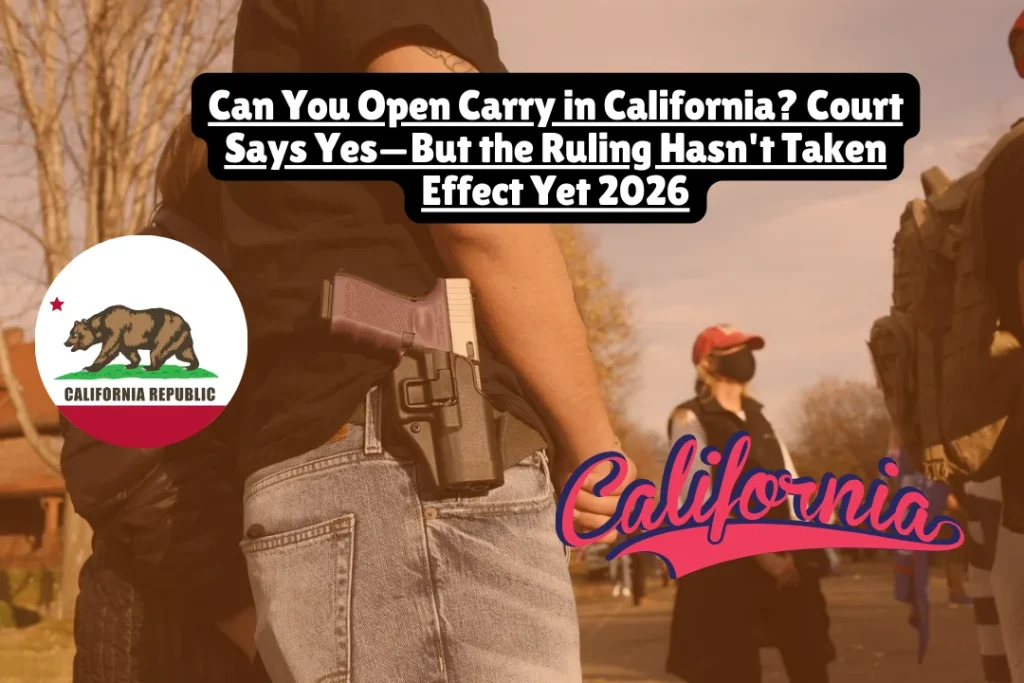
A federal appeals court ruled California’s urban open carry ban unconstitutional on January 2, 2026. However, the ruling hasn’t taken effect—California Attorney General guidance dated January 7, 2026 confirms existing open carry restrictions remain enforceable until the Ninth Circuit issues its mandate, typically 21 days after the ruling.
Confusion exists because the court decision conflicts with current enforcement, California may appeal the ruling, and most gun owners don’t understand the difference between a court ruling and when that ruling becomes legally effective.
How California’s Open Carry Laws Currently Work While Court Ruling Is Pending
California Penal Code § 25850 prohibits carrying loaded firearms in public places or on streets in incorporated cities or prohibited areas of unincorporated territories. California Penal Code § 26350 prohibits openly carrying unloaded handguns in public places or on public streets where it is unlawful to discharge a weapon.
These statutes effectively banned open carry in counties with populations exceeding 200,000—covering approximately 95% of California’s population. Open carry means your firearm is visible through ordinary observation, not concealed under clothing or in bags.
What the Ninth Circuit Ruled in Baird v. Bonta
On January 2, 2026, a three-judge panel of the Ninth Circuit Court of Appeals ruled 2-1 in Baird v. Bonta that California’s ban on open carry in urban counties violates the Second Amendment. The court applied the standard from New York State Rifle & Pistol Association v. Bruen (2022), which requires firearm restrictions to be consistent with historical traditions of regulation.
Judge Lawrence VanDyke wrote that California’s urban open carry ban affecting 95% of the state’s population cannot stand because open carry “is part of this Nation’s history and tradition” dating to the Founding era. The court found no historical analog supporting such a sweeping ban.
Why the Ruling Hasn’t Changed California Law Yet
Under Federal Rule of Appellate Procedure 41, the Ninth Circuit’s decision doesn’t take effect until the court issues its “mandate”—typically 21 days after publication of the opinion. California Attorney General Rob Bonta issued Information Bulletin 2026-DLE-04 on January 7, 2026, instructing law enforcement that California’s open carry restrictions “remain in effect and should continue to be followed.”
Before the mandate issues, California can petition for rehearing by the full Ninth Circuit en banc, appeal to the U.S. Supreme Court, or seek a stay of the ruling. Governor Gavin Newsom’s office stated California is “reviewing the opinion and considering all options” and believes “this decision will not stand.”
Concealed Carry Still Requires Permits in California
While the Baird ruling addressed open carry, concealed carry in California still requires a Concealed Carry Weapon (CCW) permit issued by county sheriffs or police chiefs. After the Supreme Court’s Bruen decision, California became a “shall-issue” state, meaning authorities must issue permits to applicants who meet statutory requirements and demonstrate good cause.
Requirements include being at least 21 years old, completing firearms training, passing background checks, demonstrating good moral character, and showing good cause for issuance. Unlike states with constitutional carry laws like Alabama, California maintains strict permit requirements for concealed carry.
Where California Law Prohibits Firearms Regardless of How You Carry
Even if the Baird ruling takes effect and open carry becomes legal, numerous locations prohibit firearms entirely.
Schools, Government Buildings, and Sensitive Places
California Penal Code § 626.9 prohibits firearms on K-12 school grounds. California Penal Code § 171b bans firearms in state and local public buildings and at public meetings. These restrictions apply whether firearms are carried openly or concealed.
Senate Bill 2, which took effect in 2024, designated 26 categories of “sensitive places” where firearms are prohibited even for CCW permit holders. These include parks, playgrounds, churches, banks, bars, stadiums, zoos, libraries, amusement parks, and parking areas of restricted locations.
Federal Property and Tribal Lands
Federal law prohibits firearms in federal buildings, post offices, and secure areas of federal facilities regardless of state law. These restrictions apply in California just as nationwide.
California’s tribal lands maintain sovereignty over firearm regulations. California CCW permits may not be honored on tribal property, and tribal courts may impose separate firearm restrictions.
Why California Gun Owners Face Confusion About Open Carry Status
The disconnect between what courts say and what law enforcement currently enforces creates unprecedented confusion.
Related Article: Is Ohio an Open Carry State? Yes—And Constitutional Carry Means No Permit Needed for Concealed Carry Either 2026
Court Ruling Versus Actual Enforcement
The Baird decision said California’s urban open carry ban is unconstitutional. However, California Attorney General guidance explicitly states the ban remains enforceable until the court issues its mandate. Gun owners face criminal prosecution if they openly carry firearms based on the court ruling alone.
This legal limbo mirrors complexity in other states where court decisions take time to implement. Understanding when laws actually change—not just when courts rule—parallels challenges gun owners face with Oregon’s local open carry restrictions where state law conflicts with city ordinances.
Pending Appeals May Reverse the Ruling
California can petition the full Ninth Circuit to rehear the case en banc with 11 judges instead of the three-judge panel. The full court could reverse the panel decision. California could also appeal to the U.S. Supreme Court, which might take years to resolve.
Gun owners who openly carry firearms before the mandate issues and while appeals are pending risk felony charges under California Penal Code provisions that remain enforceable.
Common Misconceptions About California’s Current Open Carry Status
You Can Openly Carry Firearms Now Because the Court Ruled the Ban Unconstitutional
False. The court ruling hasn’t taken effect. California Attorney General guidance dated January 7, 2026 explicitly states existing open carry restrictions remain enforceable until the Ninth Circuit issues its mandate. Openly carrying firearms now violates California Penal Code § 25850 and § 26350.
Gun owners who act on the court decision before it becomes effective face Class A misdemeanor charges punishable by up to one year in county jail.
Concealed Carry Permits Allow You to Openly Carry Firearms
California CCW permits authorize concealed carry only. If your firearm becomes visible—even inadvertently—you may violate concealed carry conditions. The Baird ruling addressed open carry bans, not concealed carry permits.
Even when the Baird ruling takes effect, CCW permit holders should understand their permits authorize concealed carry, not open carry, unless regulations change.
The Ruling Means Open Carry Is Legal Everywhere in California
Even if the Baird ruling takes effect, it only addressed the ban in counties with populations exceeding 200,000. Sensitive place restrictions under SB 2, school zone prohibitions, government building bans, and federal property restrictions remain in effect.
Open carry—if it becomes legal—will still be prohibited in parks, schools, churches, government buildings, and 26 other categories of sensitive places.
What California Gun Owners Should Do While Legal Status Remains Uncertain
Do Not Openly Carry Firearms Until the Court Issues Its Mandate
Existing California open carry restrictions remain enforceable as of January 26, 2026. Do not openly carry firearms based on the Baird ruling alone. Wait until the Ninth Circuit issues its mandate and California Attorney General confirms the ruling has taken effect.
Violations of California Penal Code § 25850 (carrying loaded firearms in public) and § 26350 (carrying unloaded handguns openly) remain prosecutable as misdemeanors punishable by up to one year in jail.
Monitor Official Updates From California Attorney General
Check the California Department of Justice website for updates on the Baird ruling’s status. The Attorney General will issue guidance when the mandate is issued or if California successfully appeals the decision.
Subscribe to firearms law updates from California DOJ Bureau of Firearms or consult with California firearms attorneys who track regulatory changes.
Understand Concealed Carry Remains Your Legal Option
If you want to carry firearms for self-defense in California, obtain a CCW permit from your county sheriff or police chief. Concealed carry with a valid permit remains legal while open carry restrictions are being litigated.
CCW permits require firearms training, background checks, and good cause demonstrations, but they provide legal authority to carry firearms concealed in most public places outside sensitive locations.
Frequently Asked Questions About California Open Carry Laws in 2026
Can You Open Carry in California?
Not yet. While a federal court ruled California’s urban open carry ban unconstitutional on January 2, 2026, the ruling hasn’t taken effect. California Attorney General guidance confirms existing open carry restrictions remain enforceable until the court issues its mandate, typically 21 days after the ruling.
Do You Need a Permit to Open Carry in California?
Under current law, open carry is prohibited in counties with populations exceeding 200,000 (95% of California) regardless of permits. If the Baird ruling takes effect, California may be required to allow open carry without permits in urban counties, though this remains uncertain pending appeals.
Where Can You Not Open Carry in California?
Even if open carry becomes legal, firearms are prohibited on K-12 school grounds, in government buildings, at public meetings, and in 26 categories of sensitive places including parks, churches, banks, bars, stadiums, libraries, and amusement parks under SB 2. Federal buildings also prohibit firearms.
What Is the Difference Between Open Carry and Concealed Carry in California?
Open carry means your firearm is visible through ordinary observation. Concealed carry means the firearm is hidden from view and requires a California CCW permit. Currently, concealed carry with a permit is legal while open carry remains prohibited in most of California.
What Are the Penalties for Carrying a Firearm in Prohibited Locations in California?
Violating California Penal Code § 25850 (carrying loaded firearms) or § 26350 (carrying unloaded handguns openly) is a Class A misdemeanor punishable by up to one year in county jail. Carrying in sensitive places or school zones may result in felony charges.
Can You Open Carry in California If You’re Visiting From Another State?
Not currently. California’s open carry prohibitions apply equally to residents and non-residents. Visitors from states that permit open carry must comply with California law while in the state. The Baird ruling, if it takes effect, would change this for urban counties.
Last Updated: January 26, 2026
Disclaimer: This article provides general information about California’s open carry laws and ongoing litigation and is not legal advice. Individuals facing firearm-related legal issues should consult qualified attorneys for case-specific guidance.
If you have questions about your firearm carry rights in California or face legal issues related to firearm possession, contact local law enforcement for current enforcement guidance or consult an attorney experienced in California firearm law and Second Amendment litigation.
Stay informed, stay protected. — AllAboutLawyer.com
Sources Cited:
- Baird v. Bonta, No. 24-565 (9th Cir. Jan. 2, 2026)
- California Attorney General Information Bulletin 2026-DLE-04 (Jan. 7, 2026)
- California Penal Code § 25850 (Carrying Loaded Firearms in Public)
- California Penal Code § 26350 (Openly Carrying Unloaded Handguns)
- California Penal Code § 626.9 (Gun-Free School Zone Act)
- California Penal Code § 171b (Possession of Firearms in Public Buildings)
- New York State Rifle & Pistol Association v. Bruen, 597 U.S. 1 (2022)
- 18 U.S.C. § 922 (Federal Firearm Regulations)
About the Author
Sarah Klein, JD, is a licensed attorney and legal content strategist with over 12 years of experience across civil, criminal, family, and regulatory law. At All About Lawyer, she covers a wide range of legal topics — from high-profile lawsuits and courtroom stories to state traffic laws and everyday legal questions — all with a focus on accuracy, clarity, and public understanding.
Her writing blends real legal insight with plain-English explanations, helping readers stay informed and legally aware.
Read more about Sarah
if a person has gone through NRA training and passes all testing then why should there be a fee to pay for concealed permits and why hasnt the nineth circuit court settle this yet carry or conceal i just as soon not show that im carrying a weapon. That right there makes me a target for the bad person. hopefully we can get it sorted out thanks for listening