
12th Man Lawsuit, Texas A&M Donor Breach of Contract Case Cleared for Trial After Judge Denies Dismissal (2025)
A Brazos County judge cleared the way for trial in June 2025 in a breach of contract lawsuit where 36 Texas A&M donors claim the 12th Man Foundation violated lifetime seating and parking agreements worth approximately $4.6 million. The lawsuit, originally filed in 2017, alleges the Foundation broke promises made to endowed scholarship donors from the 1970s through early 1990s.
State District Judge George Jerrell Wise denied the Foundation’s summary judgment motion on June 19, 2025, ensuring the case will proceed to trial after years of procedural battles and appeals.
What the 12th Man Foundation Donor Lawsuit Is About
The lawsuit involves 36 individuals from 16 families who donated between $20,000 and $50,000 each to the 12th Man Foundation’s Permanently Endowed Scholarship Program during the 1970s, 1980s, and early 1990s. They collectively contributed over $400,000 when Texas A&M’s athletic department struggled financially.
In exchange for their donations, these endowed donors received written agreements promising lifetime or 30-year benefits including “best available” parking and seating at Kyle Field, tickets for home and away games, and the option to upgrade seat and parking locations at no additional cost.
The donors claim the Foundation significantly diminished these benefits after Kyle Field renovations following Texas A&M’s 2012 move to the Southeastern Conference. The stadium renovation project cost $485 million and expanded capacity to 102,733 seats, transforming the venue into one of college football’s largest stadiums.
Legal Claims and Breach of Contract Allegations
The lawsuit alleges breach of contract and violation of “The Rule of Aggie Culture,” referencing Texas A&M’s Honor Code that states “An Aggie does not lie, cheat or steal, or tolerate those who do.”
According to court filings, the 12th Man Foundation began implementing a new fundraising system in 2007 designed to attract larger donations from new “mega-donors.” This Priority Points Program required additional contributions for donors to maintain their seat locations and parking benefits.
The plaintiffs argue the Foundation “reclaimed and resold, at a higher price, the highest value benefits to a ‘new generation’ of Aggie alumni,” violating contractual promises made decades earlier. By 2015, the Foundation declared that endowed donor seats no longer carried the guaranteed lifetime benefits originally promised.
The lawsuit estimates donors lost seating rights now valued at approximately $4.6 million. The case covers 60 seats at Kyle Field and 18 parking spaces.
Case Timeline and Current Legal Status
The dispute’s origins trace back to 2011, making this a decade-long legal battle. The lawsuit was formally filed in 2017 in Newton County before being transferred to Brazos County, where Texas A&M is located.
Three donors have died since the lawsuit was filed, underscoring the age of the original agreement holders and the lengthy litigation timeline.
The case survived multiple procedural challenges including dismissal motions and appeals on various legal issues before Judge Wise’s June 2025 ruling allowing it to proceed to trial.
Lead attorney Brent Coon, representing the donors, called the situation “a shameful example of how big-time college sports has caused athletic booster organizations to frankly abuse their older alumni who had been avid supporters for decades.”
No trial date has been set as of January 2026.
Separate 12th Man Trademark Enforcement Cases
Texas A&M trademarked “12th Man” in 1990 and has aggressively defended this intellectual property through separate legal actions unrelated to the donor lawsuit.
The university sued the Seattle Seahawks in 2006, settling with the NFL team agreeing to pay licensing fees. In 2016, the Seahawks signed a new five-year deal paying $140,000 ($18,000 annually plus $10,000 for trademark protection support) for limited use in the Pacific Northwest.
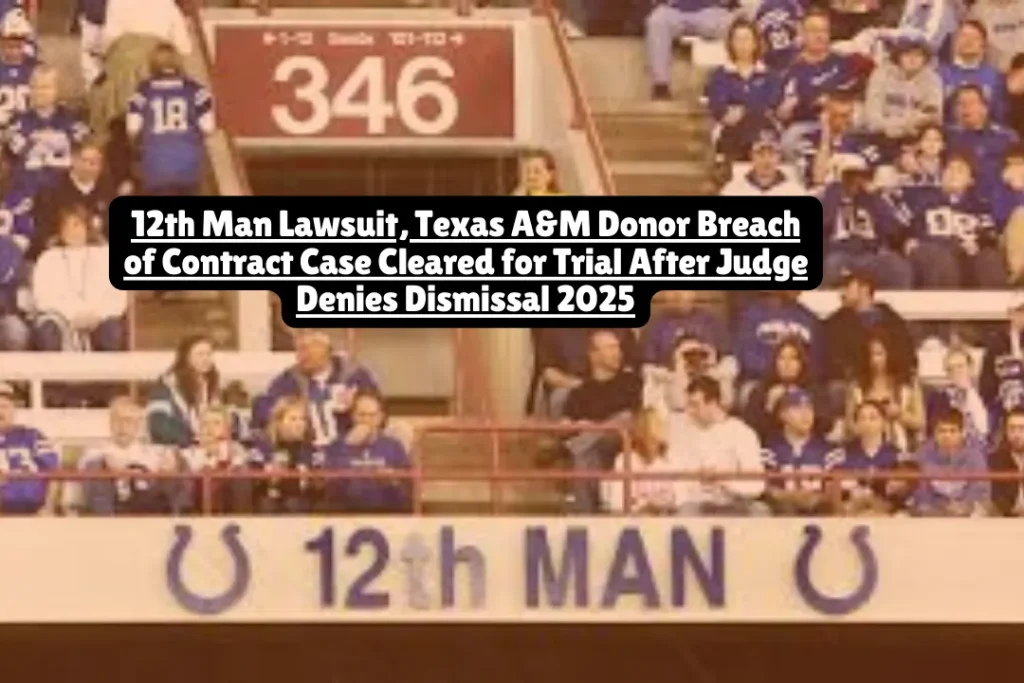
Texas A&M also sued the Indianapolis Colts in November 2015 after the team ignored cease-and-desist letters. The case settled in February 2016 with the Colts agreeing to remove “12th Man” from their Ring of Honor and cease all use of the trademarked phrase.
These trademark enforcement lawsuits demonstrate Texas A&M’s commitment to protecting the “12th Man” brand but are entirely separate from the donor breach of contract case.
What Donors Can Learn from This Case
The 12th Man Foundation donor lawsuit highlights critical issues about enforceability of charitable giving agreements and donor rights when organizations change fundraising models.
Attorney Brent Coon stated his team is now “well-positioned to take depositions of all the decision-makers within the foundation and also find out who bought our clients’ seat locations out from under them and how much they are paying for them.”
The case raises questions about whether athletic foundations can unilaterally modify long-term donor benefit agreements, particularly when those agreements were made in exchange for substantial financial contributions during periods when institutions needed support.
Similar Turtle WoW Lawsuit cases involving intellectual property protection show how organizations defend valuable assets, though trademark cases differ significantly from breach of contract donor disputes.
How to Protect Your Rights as a Donor
Document All Donation Agreements
Always obtain written documentation of benefits promised in exchange for charitable contributions. Keep copies of all agreements, correspondence, and promotional materials describing donor benefits.
Understand Your Legal Options
If an organization modifies or eliminates promised benefits, consult attorneys specializing in contract law or nonprofit legal issues. Many states provide specific protections for charitable donors.
Monitor Changes to Donor Programs
Stay informed about policy changes affecting donor benefits. Organizations implementing new priority point systems or fundraising models may impact existing agreements.
Frequently Asked Questions
What is the 12th Man lawsuit about?
The lawsuit involves 36 Texas A&M donors suing the 12th Man Foundation for breach of contract, claiming the Foundation violated lifetime seating and parking agreements worth approximately $4.6 million after Kyle Field renovations in 2012.
Who are the plaintiffs in the 12th Man lawsuit?
The plaintiffs are 36 individuals from 16 families who donated $20,000 to $50,000 each to the Foundation’s Permanently Endowed Scholarship Program during the 1970s, 1980s, and early 1990s, collectively contributing over $400,000.
What is the current status of the 12th Man donor lawsuit?
Judge George Jerrell Wise denied the Foundation’s dismissal motion on June 19, 2025, clearing the case for trial. No trial date has been set as of January 2026.
How much are the donors seeking?
The lawsuit estimates donors lost seating rights now valued at approximately $4.6 million covering 60 seats at Kyle Field and 18 parking spaces.
What legal claims are involved?
The lawsuit alleges breach of contract for violating written agreements promising lifetime or 30-year benefits, and violation of “The Rule of Aggie Culture” under Texas A&M’s Honor Code.
Are the 12th Man trademark lawsuits related to the donor case?
No. Texas A&M’s trademark enforcement lawsuits against NFL teams like the Seattle Seahawks and Indianapolis Colts are entirely separate from the donor breach of contract case.
When will the case go to trial?
No trial date has been set as of January 2026, though the case is cleared to proceed after surviving dismissal attempts and appeals spanning over a decade.
Last Updated: January 26, 2026
Disclaimer: This article provides general information about the 12th Man lawsuit and is not legal advice. Individuals should consult qualified attorneys specializing in contract law or nonprofit legal issues for case-specific guidance.
Stay informed about your rights as a donor and understand how charitable agreements should be honored. — AllAboutLawyer.com
About the Author

Sarah Klein, JD, is a licensed attorney and legal content strategist with over 12 years of experience across civil, criminal, family, and regulatory law. At All About Lawyer, she covers a wide range of legal topics — from high-profile lawsuits and courtroom stories to state traffic laws and everyday legal questions — all with a focus on accuracy, clarity, and public understanding.
Her writing blends real legal insight with plain-English explanations, helping readers stay informed and legally aware.
Read more about Sarah