
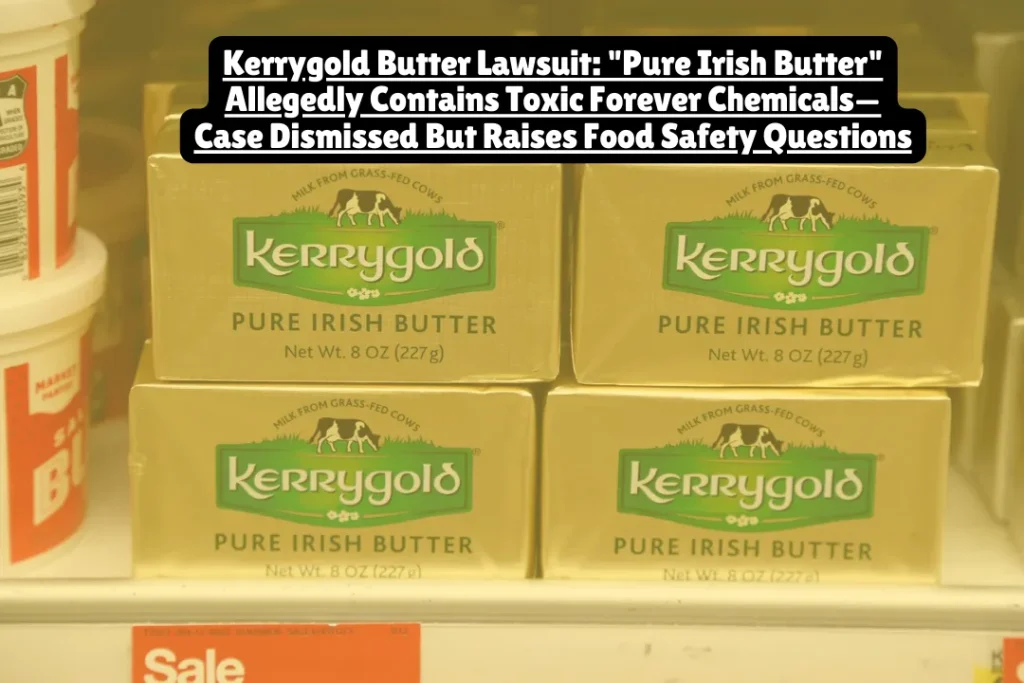
Kerrygold Butter Lawsuit, “Pure Irish Butter” Allegedly Contains Toxic Forever Chemicals—Case Dismissed But Raises Food Safety Questions
A class action lawsuit against Kerrygold butter alleging the product’s “Pure Irish Butter” labeling was misleading because the packaging contained harmful PFAS “forever chemicals” was dismissed with prejudice in August 2024. However, the case raised critical questions about food packaging safety and consumer protection that continue to impact the food industry. Separate earlier litigation challenging Kerrygold’s grass-fed claims also ended without court findings against the company.
While no settlement details were disclosed and consumers cannot currently file claims, the Kerrygold legal battles highlight growing concerns about chemical contamination in food packaging and transparency in food labeling—issues that affect millions of butter consumers nationwide.
What the Kerrygold Lawsuit Alleged
The PFAS “Forever Chemicals” Case
Carolyn Winans filed a class action lawsuit on February 14, 2023, in the U.S. District Court for the Eastern District of New York (Case No. 2:23-cv-01198) against Ornua Foods North America Inc., the company that owns Kerrygold.
The lawsuit alleged that Kerrygold’s foil butter packaging contained per- and polyfluoroalkyl substances, commonly known as PFAS or “forever chemicals.” These synthetic chemicals persist in the environment and human body for extended periods and have been linked to serious health concerns including reproductive issues, developmental problems in children, and increased cancer risk.
Winans claimed that PFAS from the packaging migrated into the butter itself, making the “Pure Irish Butter” label misleading and deceptive. She alleged this violated New York consumer protection laws including deceptive business practices, false advertising, and selling adulterated or misbranded food.
The lawsuit pointed to Kerrygold’s temporary recall in New York and California in late 2023 after both states enacted laws banning PFAS in food packaging effective December 31, 2023. Kerrygold products were pulled from shelves before the ban took effect.
The Court Initially Denied Dismissal
In April 2024, U.S. District Judge Frederic Block denied Ornua’s motion to dismiss the case, finding the plaintiff’s “migration theory” plausible.
The parties did not dispute that PFAS existed in the packaging. Judge Block ruled that a reasonable consumer could interpret “Pure Irish Butter” as a claim about the butter itself being pure, and that PFAS contamination could be material to consumers.
The court also rejected Ornua’s argument that the company didn’t know about PFAS in its packaging, noting that Ornua recalled products in response to the New York law, suggesting awareness of the chemical’s presence.
Case Dismissed in August 2024
On August 14, 2024, both parties filed a joint stipulation of dismissal. Judge Block dismissed the case with prejudice, meaning it cannot be refiled.
Court documents do not mention any settlement agreement or payment. Both sides agreed to pay their own attorney fees. The case ended without any court determination that Ornua violated laws or that PFAS was present in the butter itself—only in the packaging.
What You Must Know
Earlier Grass-Fed Claims Litigation
The PFAS case wasn’t Kerrygold’s only labeling challenge. In 2018, a separate class action lawsuit was filed in California federal court alleging Kerrygold misled consumers with “grass-fed” claims.
That lawsuit claimed Kerrygold’s cows were fed soy, corn, and genetically modified grains instead of exclusively grass, making labels stating “made with milk from grass-fed cows” and “All Natural” deceptive.
The outcome of that earlier case is not clearly documented in public records, but no major settlement or court ruling against Kerrygold emerged from the grass-fed litigation.
What Are PFAS Chemicals and Why They Matter
PFAS are a group of thousands of synthetic chemicals used in countless consumer products for their water-resistant and non-stick properties. They’re called “forever chemicals” because they don’t break down naturally in the environment or human body.
Research has associated PFAS exposure with health problems including thyroid disease, high cholesterol, pregnancy complications, liver damage, kidney disease, and certain cancers. The Centers for Disease Control and Prevention notes that most people in the United States have measurable PFAS in their blood.
Food packaging is a major source of PFAS exposure. These chemicals can migrate from packaging materials into the food itself, particularly fatty foods like butter that can absorb PFAS more readily.
Similar to issues raised in Kraft Heinz class action lawsuits from securities claims to food labeling controversies, the Kerrygold case highlights how consumers increasingly challenge food companies over ingredient transparency and labeling accuracy.
Kerrygold Returned to Shelves with New Packaging
Following the 2023 recalls, Kerrygold announced in January 2024 that its products would return to U.S. store shelves after making “packaging changes” to comply with New York and California PFAS bans.
The company did not specify what packaging changes were made or confirm whether previous packaging contained PFAS, stating only that the products now meet all regulatory requirements.
Kerrygold has consistently denied wrongdoing, with a company spokesperson stating: “We believe these claims lack merit and we look forward to rigorously defending the integrity of our products.”
Industry-Wide Implications
The Kerrygold litigation is part of a broader wave of lawsuits challenging PFAS in food packaging. Other food companies have faced similar claims, and regulatory pressure is increasing.
Multiple states beyond New York and California have enacted or proposed PFAS bans in food packaging. The Food and Drug Administration announced in February 2024 that major food packaging manufacturers agreed to phase out certain PFAS chemicals.
Cases like Whole Foods class action lawsuits $650K settlement over deceptive hot cocoa packaging and Balance of Nature $9.95M false advertisement class action settlement demonstrate consumers’ increasing willingness to challenge misleading product claims through class action litigation.
What to Do Next
No Current Settlement or Claims Process
Since the Kerrygold PFAS case was dismissed without a settlement, there is no claims process for consumers to join or compensation available.
If you purchased Kerrygold butter, you cannot currently file a claim related to this lawsuit. The dismissal with prejudice means the case is permanently closed.
Protect Yourself from PFAS Exposure
While the Kerrygold case ended, concerns about PFAS in food packaging remain valid. Here’s what consumers can do:
Check product packaging materials. Glass, uncoated paper, and certain plastics generally contain less PFAS than coated or water-resistant packaging.
Consider buying butter in paper wrapping rather than foil-wrapped sticks when possible, though butter sold in foil has returned to shelves with reformulated packaging.
Stay informed about PFAS regulations in your state. Many states maintain consumer protection websites listing banned substances and recalled products.
Monitor Future Legal Developments
Food labeling and packaging safety litigation continues to evolve. Consumers concerned about PFAS and other chemical contaminants should:
Follow state attorney general consumer protection announcements about food safety recalls and lawsuits.
Check the FDA’s website for updates on PFAS in food packaging regulations and voluntary phase-out agreements.
Watch for class action settlement announcements if new litigation emerges involving products you’ve purchased.
When to Consult an Attorney
If you believe you’ve been harmed by a food product’s false advertising or contamination, consider consulting a consumer protection attorney for individual evaluation.
Most consumer attorneys offer free consultations. They can advise whether you have individual claims separate from any class actions.
Consumer protection laws vary by state, and some jurisdictions provide stronger protections than others for food labeling disputes.
Frequently Asked Questions
What was the Kerrygold butter lawsuit about?
The main Kerrygold lawsuit alleged the butter’s “Pure Irish Butter” label was misleading because the product’s foil packaging contained PFAS “forever chemicals” that could migrate into the butter. A separate earlier lawsuit challenged grass-fed labeling claims. The PFAS case was dismissed in August 2024 without any settlement or court determination against Kerrygold.
Can I file a claim or get compensation from the Kerrygold lawsuit?
No. The lawsuit was dismissed with prejudice on August 14, 2024, with no settlement agreement disclosed. There is no claims process and no compensation available to consumers who purchased Kerrygold products.
Did Kerrygold admit the butter contained PFAS?
No. Kerrygold denied all allegations and did not admit any wrongdoing. While the parties did not dispute that PFAS existed in the packaging, no court made any determination that PFAS was present in the butter itself or that Kerrygold violated any laws.
Is Kerrygold butter still sold in stores?
Yes. Kerrygold returned to U.S. store shelves in January 2024 after making packaging changes to comply with New York and California laws banning PFAS in food packaging. The company stated the products now meet all regulatory requirements.
What happened to the grass-fed labeling lawsuit?
A separate class action lawsuit filed in 2018 challenged Kerrygold’s grass-fed claims, alleging cows were fed soy, corn, and GMO grains. Public records do not show any major settlement or court ruling against Kerrygold from that litigation.
Are there other food packaging PFAS lawsuits?
Yes. Food companies across the industry have faced lawsuits over PFAS in packaging. Many states have enacted laws banning PFAS in food packaging, and the FDA announced manufacturer agreements to phase out certain PFAS chemicals in February 2024.
What should I know about PFAS in food?
PFAS are synthetic chemicals found in many food packaging materials that can migrate into food. They persist in the environment and human body and have been linked to various health concerns. Consumers can reduce exposure by choosing products with minimal packaging and staying informed about state PFAS bans and recalls.
Last Updated: January 24, 2026
Disclaimer: This article provides general information only and does not constitute legal advice.
Stay informed about food labeling lawsuits and consumer protection developments—knowledge protects your health and your wallet.
Stay informed, stay protected. — AllAboutLawyer.com
About the Author

Sarah Klein, JD, is a licensed attorney and legal content strategist with over 12 years of experience across civil, criminal, family, and regulatory law. At All About Lawyer, she covers a wide range of legal topics — from high-profile lawsuits and courtroom stories to state traffic laws and everyday legal questions — all with a focus on accuracy, clarity, and public understanding.
Her writing blends real legal insight with plain-English explanations, helping readers stay informed and legally aware.
Read more about Sarah