
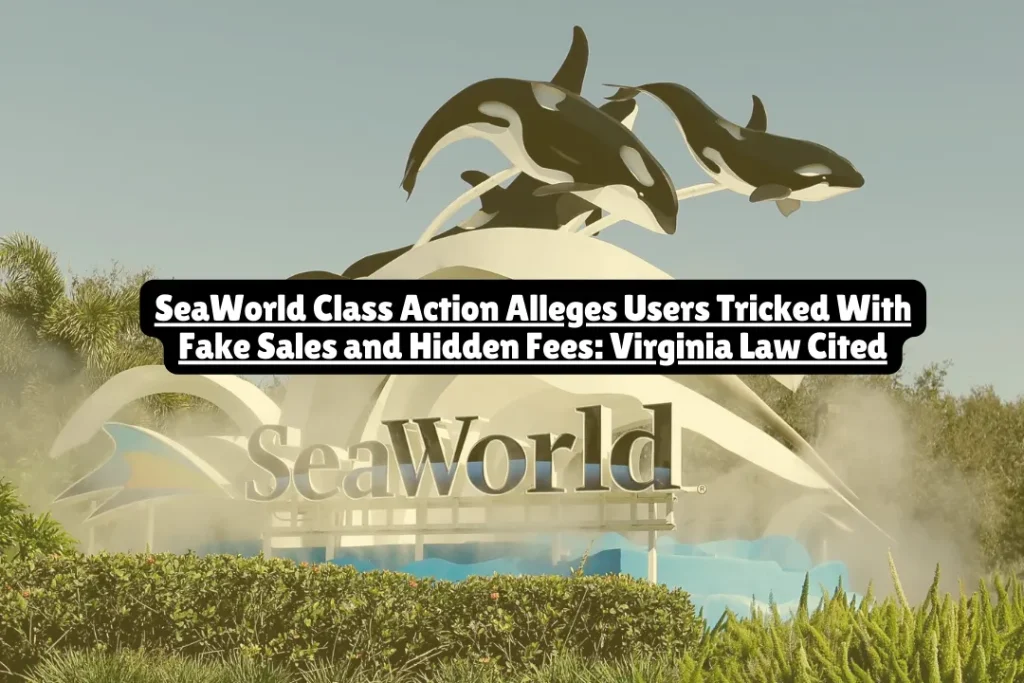
SeaWorld Class Action Alleges Users Tricked With Fake Sales and Hidden Fees, Virginia Law Cited
A Virginia consumer filed a class action lawsuit in November 2025 alleging that SeaWorld’s parent company, United Parks & Resorts, uses deceptive “bait-and-switch” tactics by advertising low ticket prices, then adding hidden mandatory fees only at the final checkout stage. The lawsuit claims this practice violates Virginia’s consumer protection laws requiring upfront pricing transparency.
Matthew Beeman filed the lawsuit in U.S. District Court for the Middle District of Florida (Case No. 6:25-cv-01931) after purchasing tickets to Busch Gardens Williamsburg and Water Country USA. Here’s what happened—and what it means for theme park customers.
What SeaWorld Allegedly Did
Beeman purchased four tickets in July 2025 through three separate transactions, and nearly $40 in service fees were added to his purchases. But these fees didn’t appear until the very end of the checkout process.
The website displayed an amount labeled “taxes and fees” earlier in the process, but the final itemized total revealed none of this was actually taxes—it was all fees. Fees started at $11.99 per purchase for one ticket and increased with the number of tickets ordered.
The lawsuit alleges SeaWorld deliberately designed its checkout process to trap customers. After selecting tickets, buyers must click through multiple optional add-on screens while a countdown timer warns their booking will expire. By the time hidden fees appear, customers have already invested significant time and psychological commitment.
How the Alleged Scheme Works
The Federal Trade Commission describes this tactic as “drip pricing”—a technique where companies advertise only part of a product’s price and reveal additional charges later as consumers move through the buying process.
According to the complaint, this multi-step process increases consumer commitment so that by the time hidden fees are revealed, people who have already spent time and effort are more likely to complete the transaction.
Beeman’s lawsuit claims SeaWorld’s alleged tactics force consumers to pay upward of 20 percent more than if the actual price was disclosed upfront.
What Laws SeaWorld Allegedly Violated
The lawsuit accuses United Parks & Resorts of breaking Virginia’s transparent pricing law through these “bait and switch” tactics.
Virginia Senate Bill 1212, signed into law in May 2025, requires suppliers to clearly and conspicuously display the total price of goods or services, including all mandatory fees or surcharges, in any advertisement or display. The law specifically targets the elimination of hidden fees typically disclosed only at the point of sale.
Virginia’s Consumer Protection Act also prohibits using deception, fraud, false pretense, or misrepresentation in consumer transactions. Violations can result in significant penalties.
Who May Be Eligible to Join
Beeman is seeking to represent a class of consumers who purchased tickets to Busch Gardens Williamsburg or Water Country USA on a ticketing website operated by SeaWorld where all mandatory fees were not included in the initially displayed or advertised price.
The lawsuit asks for class action certification for Virginia residents who purchased tickets without seeing the full cost upfront. Reports indicate SeaWorld Orlando uses the same fee practice, with fees beginning at $11.99 per purchase.
What Relief the Lawsuit Seeks
Beeman demands a jury trial and requests declaratory relief and an award of statutory damages of $500 per violation, or $1,000 per willful violation, plus attorneys’ fees and costs.
The case is currently pending, with no settlement or court rulings reported as of January 2026.
What You Must Know
Understanding Your Consumer Rights
Virginia’s new pricing transparency law protects consumers from hidden fee schemes. If you purchased SeaWorld tickets and were charged undisclosed fees, you may have legal rights under state consumer protection statutes.
Similar class action lawsuits have targeted other entertainment venues for deceptive pricing practices, including Ticketmaster and other theme parks.
Similar Cases in the Industry
Lake Compounce recently faced a similar class action lawsuit when a guest sued Festival Fun Parks for failing to disclose service fees until the final stages of the ticket purchase process.
This isn’t SeaWorld’s only legal battle. In August 2025, a California court granted final approval to a $1.5 million settlement resolving claims that SeaWorld auto-renewed annual passes without proper customer consent.
What to Do Next
Gather Your Purchase Records
If you bought SeaWorld or Busch Gardens tickets and were charged hidden fees, save all documentation:
- Email confirmations showing advertised prices
- Credit card statements showing final charges
- Screenshots of checkout pages (if available)
- Receipts itemizing “taxes and fees”
Monitor the Case Status
Check federal court dockets for updates on Beeman v. United Parks & Resorts Inc., Case No. 6:25-cv-01931. Class action status has not yet been certified, but eligible consumers may be notified if certification is granted.
Preserve Your Evidence
Don’t delete emails, receipts, or purchase confirmations. These documents could be critical if you’re included in a settlement class.
When to Seek Legal Advice
If you were charged substantial hidden fees or purchased multiple tickets during the applicable time period, consider consulting a consumer protection attorney. They can evaluate whether you have individual claims beyond any class action.
Frequently Asked Questions
What exactly is SeaWorld accused of doing?
The lawsuit alleges SeaWorld advertises low ticket prices but conceals mandatory service fees until the final checkout screen, forcing consumers to pay significantly more than the advertised price. This practice allegedly violates Virginia’s pricing transparency law.
Who can join this class action lawsuit?
The proposed class covers consumers who purchased tickets to Busch Gardens Williamsburg or Water Country USA where mandatory fees were not included in the initially displayed price. Class certification has not yet been granted.
How much are the hidden fees?
Fees start at $11.99 per transaction for one ticket and increase based on the number of tickets purchased, with some consumers paying nearly $40 in undisclosed fees.
What compensation might be available?
The lawsuit seeks statutory damages of $500 per violation or $1,000 per willful violation under Virginia consumer protection laws, plus attorneys’ fees and costs. Actual settlement amounts would depend on case outcomes.
Is there a deadline to file a claim?
No claim deadline currently exists because the case is still pending and class certification hasn’t been granted. However, statutes of limitations may apply to individual claims.
What should I do if I paid hidden fees?
Preserve all purchase documentation, including emails, receipts, and credit card statements. Monitor the case for updates about class certification and potential settlement opportunities. Consider filing complaints with the FTC and Virginia Attorney General.
Does this affect SeaWorld Orlando tickets too?
While the current lawsuit focuses on Virginia purchases, reports indicate SeaWorld Orlando uses the same hidden fee practices. Consumers in other states may have separate claims under their own consumer protection laws.
Last Updated: January 24, 2026
Disclaimer: This article provides general information only and does not constitute legal advice.
Have you experienced hidden fees when buying theme park tickets? Share your experience in the comments below and stay informed about your consumer rights.
Stay informed, stay protected. — AllAboutLawyer.com
About the Author

Sarah Klein, JD, is a licensed attorney and legal content strategist with over 12 years of experience across civil, criminal, family, and regulatory law. At All About Lawyer, she covers a wide range of legal topics — from high-profile lawsuits and courtroom stories to state traffic laws and everyday legal questions — all with a focus on accuracy, clarity, and public understanding.
Her writing blends real legal insight with plain-English explanations, helping readers stay informed and legally aware.
Read more about Sarah