
Proven Locks Lawsuit Dismissed, Lock Company Voluntarily Drops Case After YouTuber Exposes $130 Lock Flaw With Soda Can
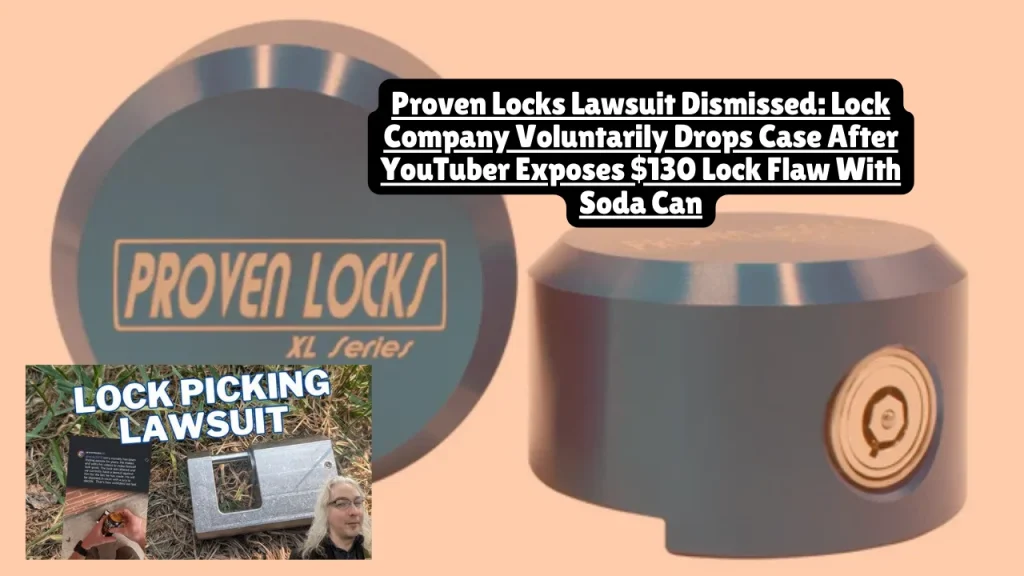
Proven Industries voluntarily dismissed its eight-count federal lawsuit against lockpicking YouTuber Trevor McNally in July 2025, just weeks after a Florida judge denied their emergency motion for a preliminary injunction. The company sued McNally in May 2025 for copyright infringement, defamation, and six other claims after he demonstrated on video how to bypass their $130 trailer hitch lock using a strip of aluminum from a soda can.
The lawsuit backfired spectacularly as McNally continued releasing videos showing even easier ways to defeat Proven’s locks, ultimately forcing the company to withdraw all claims and face public humiliation.
How A Juice Box Led To An Eight-Count Federal Lawsuit
The legal battle began in March 2025 when Proven Industries posted a promotional video titled “YOU GUYS KEEP SAYING YOU CAN EASILY BREAK OFF OUR LATCH PIN LOCK.” The 90-second clip showed someone attacking their trailer hitch lock with a sledgehammer to prove its durability, taunting critics that they would “prove a lot of you haters wrong.”
An Instagram user commented on the video, suggesting Proven introduce their lock to McNallyOfficial, a former Marine turned lockpicking YouTuber with over 7 million followers. Proven Industries, drunk on confidence, replied that McNally and other YouTubers only target “cheap locks” because they’re “fast and easy to bypass or pick.”
Big mistake. On April 3, 2025, McNally posted a response video showing himself watching Proven’s promotional clip while casually swinging his legs and sipping from an apple juice box. He then silently approached the $130 lock and defeated it in seconds using a shim created from an empty Liquid Death seltzer can.
Proven Industries didn’t take this well. Owner Ron Lee sent McNally a cryptic “be prepared!” message, then accidentally-on-purpose texted McNally’s wife in what McNally described as an attempt to “intimidate me and my family.” Proven employees blasted McNally with spurious claims, and lawyers hit him with DMCA copyright takedown notices.
The Federal Lawsuit That Made Everything Worse
On May 1, 2025, Proven Industries filed an eight-count complaint in U.S. District Court for the Middle District of Florida (Case No. 8:25-cv-01119) alleging copyright infringement, defamation by implication, false advertising, unfair trade practices, tortious interference, unjust enrichment, civil conspiracy, and trade libel.
The complaint cited McNally’s juice box at least five separate times. “McNally appears swinging his legs and sipping from an apple juice box, conveying to the purchasing public that bypassing Plaintiff’s lock is simple, trivial, and even comical,” one passage read.
Proven claimed McNally edited the video to make their lock appear easier to defeat than it actually was, alleging he had secretly disassembled the lock beforehand to examine its internal components and manufacture a custom-fit shim.
McNally’s response? He released more videos. On May 23, 2025, he filmed himself retrieving a brand-new Proven lock from an Amazon locker, opening it from its original packaging, and defeating it on-site with a shim made from another soda can—all in one continuous take. He then released three additional videos demonstrating the same vulnerability in different Proven products.
Related article: Terry Crews Sexual Assault Lawsuit, How A 240-Pound NFL Star’s Fight Against A Hollywood Agent Helped Launch The #MeToo Movement
Similar to false advertising cases like the Celsius Drink lawsuit settlement where companies faced legal consequences for misleading marketing claims, Proven’s lawsuit highlighted how product performance claims must match reality.
Court Denies Injunction, Company Retreats
On June 13, 2025, Judge Mary S. Scriven held a hearing on Proven’s emergency motion for a preliminary injunction seeking to force McNally to remove all videos. During the proceeding, Proven’s own lawyer admitted their employee had replicated McNally’s shim technique successfully.
McNally’s attorney asked the obvious question that devastated Proven’s case: “When you did it yourself, did it occur to you for one moment that maybe the best thing to do, instead of file a lawsuit, was to fix the lock?”
The court ruled McNally’s videos constituted fair use—they were transformative, included commentary through visual parody, and accurately depicted a legitimate security flaw. The videos weren’t copyright infringement; they were consumer product testing.
Judge Scriven denied Proven’s request for a preliminary injunction. Weeks later, on July 7, 2025, Proven Industries filed a notice of voluntary dismissal, withdrawing the entire lawsuit.
But the damage was done. The court documents detailing Proven’s losses—including customer complaints, declining sales, and social media backlash—had already been publicly filed and distributed through CourtListener and legal databases. When Proven tried filing a motion to seal embarrassing documents, it was too late; the information was already public.
What You Must Know
The Streisand Effect In Action
Proven Industries’ lawsuit exemplifies the Streisand Effect—attempting to suppress information only amplifies it. McNally’s original video had millions of views, but Proven’s legal threats generated exponentially more attention from mainstream media outlets including Ars Technica, Vice, Futurism, and Boing Boing.
The lockpicking community rallied behind McNally. Donations poured in for his legal defense. Canadian lawyer and YouTuber Ian Runkle uploaded a full legal breakdown of the case, linking the entire unsealed trial transcript for public review.
In consumer protection lawsuits, courts determine liability based on verified evidence and applicable product safety standards. Proven’s own admission that their employee successfully replicated the bypass proved McNally’s videos weren’t fabricated or misleading.
Lessons For Product Manufacturers
Security researchers and consumer advocates perform valuable services by testing products and exposing flaws. Medeco, when their high-security Biaxial M3 lock was compromised, contacted researcher Marc Weber Tobias and worked with him to improve future designs rather than suing him.
Many companies in the security industry hire ethical hackers, former burglars, and lockpickers as consultants to test products before releasing them to market. Proven could have hired McNally or other skilled lockpickers to identify vulnerabilities; instead, they chose litigation.
Similar to the Balance of Nature $9.95M false advertisement class action settlement where a company faced consequences for marketing claims unsupported by evidence, Proven’s “unbreakable lock” marketing collided with demonstrable reality.
What to Do Next
Accessing Case Documents
The Proven Industries v. Trevor McNally case is Case No. 8:25-cv-01119-MSS-LSG in the U.S. District Court for the Middle District of Florida. Court documents are publicly accessible through PACER at pacer.uscourts.gov or free through CourtListener at courtlistener.com.
Key documents include the original complaint, McNally’s opposition to the preliminary injunction, the hearing transcript, the court’s order denying the injunction, and the final voluntary dismissal notice.
Consumer Product Testing Rights
McNally’s case reinforces that consumers have First Amendment rights to test products and share results publicly. Product reviews, even unfavorable ones backed by evidence, are protected speech. Copyright law doesn’t prohibit using short clips of promotional videos in transformative commentary or parody.
If a company threatens you with legal action for posting honest product reviews, consult with a First Amendment attorney. Organizations like the Electronic Frontier Foundation provide resources about fair use and free speech protections.
FAQs
Did Proven Industries win or lose the lawsuit?
Proven Industries voluntarily dismissed the lawsuit on July 7, 2025, after the court denied their motion for a preliminary injunction. Voluntary dismissal typically indicates the plaintiff recognized they would lose at trial. McNally was never found liable for any of the eight counts alleged.
Can McNally sue Proven Industries for filing a frivolous lawsuit?
Potentially. McNally could file a malicious prosecution claim or seek attorney fees under anti-SLAPP statutes designed to prevent lawsuits aimed at silencing critics. However, as of January 2026, McNally has not publicly announced plans to countersue.
Did the lawsuit stop McNally from making lockpicking videos?
No. McNally continued releasing videos throughout the litigation, demonstrating additional Proven lock vulnerabilities. The lawsuit actually increased his visibility and subscriber count. He remains active as of January 2026, testing locks from various manufacturers.
Is the Proven lock actually insecure?
McNally’s videos demonstrate that the Proven trailer hitch lock can be defeated using improvised shims made from soda cans or other thin metal. Proven’s own employee successfully replicated the technique, which the company’s lawyer admitted in court. Multiple lockpicking experts have verified McNally’s findings.
Did Proven Industries go out of business?
As of January 2026, Proven Industries continues operating and selling locks. However, the company’s reputation suffered significant damage. Consumer reviews frequently reference the McNally controversy, and sales reportedly declined following the viral videos and failed lawsuit.
What happened to the juice box McNally was drinking?
The apple juice box became an iconic symbol of how easily McNally defeated Proven’s “unbreakable” lock. Proven’s complaint mentioned the juice box five times, arguing it made their product appear “trivial and even comical” to bypass. The juice box detail was widely mocked in media coverage of the case.
Can companies sue people for negative product reviews?
Companies can sue, but truthful negative reviews are protected speech under the First Amendment. Courts apply fair use analysis to determine whether using company promotional materials in reviews constitutes infringement. Product testing videos that accurately demonstrate product performance are generally protected, even when unflattering to manufacturers.
Last Updated: January 20, 2026
Disclaimer: This article provides general information about the Proven Industries lawsuit and is not legal advice for your specific situation.
Have you tested products that didn’t perform as advertised? Share your experiences to help other consumers make informed purchasing decisions.
Stay informed, stay protected. — AllAboutLawyer.com
About the Author

Sarah Klein, JD, is a licensed attorney and legal content strategist with over 12 years of experience across civil, criminal, family, and regulatory law. At All About Lawyer, she covers a wide range of legal topics — from high-profile lawsuits and courtroom stories to state traffic laws and everyday legal questions — all with a focus on accuracy, clarity, and public understanding.
Her writing blends real legal insight with plain-English explanations, helping readers stay informed and legally aware.
Read more about Sarah