
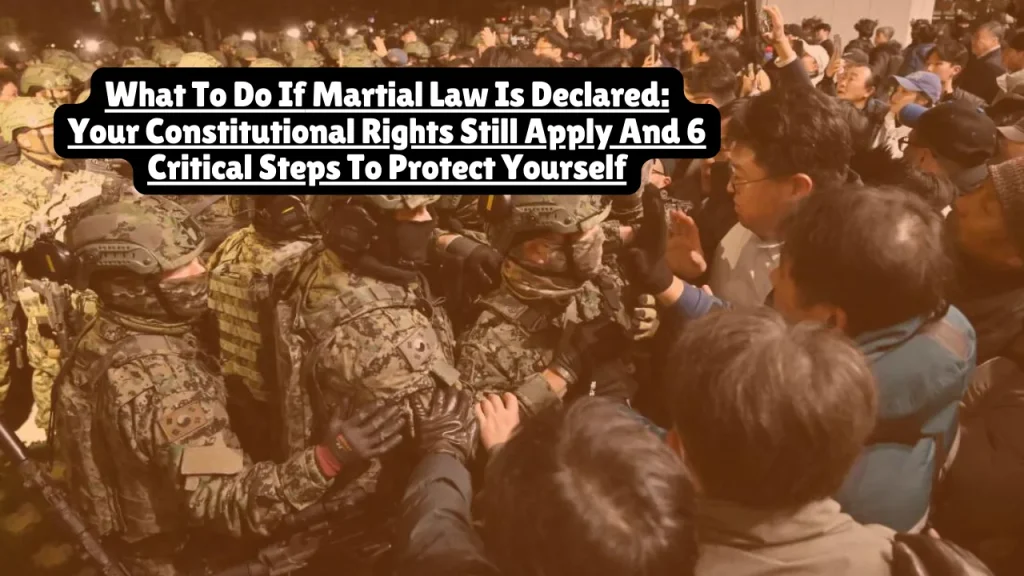
What To Do If Martial Law Is Declared? Your Constitutional Rights Still Apply And 6 Critical Steps To Protect Yourself
If martial law is declared, your immediate steps should be: (1) stay informed through official government channels and credible news sources; (2) comply with lawful orders from military and law enforcement authorities; (3) document any government actions affecting your rights or property; (4) protect your family, home, and essential documents; (5) know that constitutional protections remain in effect even during martial law; and (6) consult an attorney if your rights are violated or if you face arrest or legal action. Martial law—the temporary suspension of ordinary law and substitution of military authority for civilian authority—is governed by the Constitution and can only be declared during national emergencies when civil authorities cannot function.
While martial law has been declared at both the federal and state levels by state governors and President Abraham Lincoln during the Civil War, any actions taken under that authority must still comply with the Constitution.
Understanding The Constitutional Basis For Martial Law
The Constitution divides war powers between Congress and the President. Congress, under Article I, Section 8, is empowered to declare war and call forth the militia to suppress an insurrection, repel an invasion, or execute the Laws of the Union.
The President’s authority to declare martial law stems from Article II, Section 2 of the U.S. Constitution, which designates the President as Commander in Chief. However, this power is limited by the Insurrection Act (10 U.S.C. § 251-255) and the Posse Comitatus Act (18 U.S.C. § 1385).
The Insurrection Act: When Military Can Enforce Civilian Law
The Insurrection Act authorizes the president to deploy military forces inside the United States to suppress rebellion or domestic violence or to enforce the law in certain situations. The statute allows the President to use military force when a state government requests assistance, when federal law cannot be enforced through ordinary judicial proceedings, or to protect civil rights when state authorities fail to do so.
The Insurrection Act has been invoked about 30 times throughout American history. The last invocation occurred in 1992 during the Los Angeles riots following the Rodney King verdict.
The Posse Comitatus Act: Limits On Military Power
The Posse Comitatus Act forbids the use of federal military personnel to participate in civilian law enforcement unless doing so is expressly authorized by a statute or the Constitution. This law ensures the military cannot be routinely used to police American citizens.
The Insurrection Act is the primary exception to these restrictions. When invoked, it temporarily allows military personnel to perform law enforcement functions that would otherwise be prohibited.
What Rights Remain Protected During Martial Law
Troops deployed under the Insurrection Act may not violate individuals’ constitutional rights. They may not, for example, search a person’s home without a warrant. The Constitution remains the supreme law of the land even during martial law.
Your Fourth Amendment protection against unreasonable searches and seizures continues to apply. Military or law enforcement personnel still need warrants or probable cause to search your property. Your Fifth Amendment right to due process means you cannot be detained indefinitely without charges or access to courts.
The First Amendment protects your right to free speech and peaceful assembly, though reasonable time, place, and manner restrictions may be imposed during emergencies. The Eighth Amendment prohibits cruel and unusual punishment regardless of martial law status.
Courts Retain Authority To Review Martial Law
Federal courts maintain jurisdiction to review martial law declarations and determine whether they comply with constitutional limits. Martial law can be declared during times of war, insurrection, widespread civil unrest, or various national emergencies, but it is permitted only when civilian authorities cannot effectively maintain order or ensure public safety.
Congress can limit or terminate martial law declarations. The President cannot impose martial law indefinitely or without constitutional justification.
Martial Law vs. Emergency Declarations
Emergency declarations under the Stafford Act allow federal disaster assistance and National Guard deployment without invoking martial law. The Stafford Act allows the military to be used to respond to natural disasters, public health crises, and other similar events without waiving the restrictions of the Posse Comitatus Act.
State emergencies grant governors additional powers such as curfews, movement restrictions, and resource allocation. However, these remain civilian-led operations under normal legal authority.
Martial law represents a fundamentally different situation where military authority replaces civilian government functions. Understanding this distinction helps you recognize what powers authorities actually possess during crises.
Immediate Steps If Martial Law Is Declared
Stay informed through official channels including FEMA (fema.gov), your state emergency management agency, local law enforcement, and credible news sources. Understand the scope, duration, and specific restrictions in your area.
Comply with lawful orders from military and law enforcement while remaining aware of your constitutional rights. Lawful orders include curfews, movement restrictions, and assembly limitations reasonably related to the emergency. You can comply while internally noting whether orders seem to exceed constitutional authority.
Protect Your Family And Documentation
Ensure your family has essential supplies, important documents, and information about where to shelter. Keep original copies of birth certificates, passports, property deeds, and insurance documents in a secure, accessible location.
Document any government actions that affect your rights or property. Take photos if safe to do so, keep detailed records noting dates and times, record officer names and badge numbers, and identify witnesses. This documentation becomes crucial if you later need to challenge government actions in court.
What To Do If Your Rights Are Violated
If military or law enforcement personnel violate your constitutional rights—such as conducting warrantless searches, denying due process, or restricting protected speech beyond reasonable emergency measures—seek legal counsel immediately.
Contact the American Civil Liberties Union (aclu.org), your state bar association’s lawyer referral service, or legal aid organizations in your area. Many attorneys offer free initial consultations, and civil rights organizations may provide representation if your constitutional rights have been violated.
If arrested or detained, exercise your right to remain silent beyond providing your name and identification. Do not answer questions about your activities, associations, or beliefs without an attorney present. Similar to ICE arrest powers beyond immigration when federal agents can detain citizens, your constitutional protections apply even when military personnel are involved.
Frequently Asked Questions
What Is Martial Law And When Can It Be Declared?
Martial law is the temporary substitution of military authority for civilian government during extreme emergencies when civilian authorities cannot maintain order. It can be declared in response to invasion, rebellion, insurrection, or when civil authority completely breaks down. The President may invoke the Insurrection Act, or state governors may declare martial law within their states under state constitutional authority.
What Are My Constitutional Rights During Martial Law?
Your fundamental constitutional rights remain in effect during martial law. The Fourth Amendment protects against unreasonable searches—authorities still need warrants or probable cause. The Fifth Amendment guarantees due process and prohibits indefinite detention without charges. First Amendment rights to speech and assembly continue, though reasonable restrictions may apply. You retain the right to legal counsel and court access.
What Is The Difference Between Martial Law And An Emergency Declaration?
Emergency declarations allow disaster response, National Guard deployment, and resource allocation while maintaining civilian government control. Martial law replaces civilian authority with military control and suspends normal legal processes. Emergency declarations are common; martial law is extraordinarily rare. Emergency powers are defined by statute; martial law powers are broader but still constitutionally limited.
Can The President Declare Martial Law Without Congress?
Yes, the President can invoke the Insurrection Act without congressional approval in specific circumstances. However, Congress retains authority to limit or terminate martial law through legislation. Courts can review whether a martial law declaration complies with constitutional requirements. The President’s authority is not unlimited—it must be justified by genuine emergency conditions.
How Long Can Martial Law Last?
There is no fixed time limit, but martial law must be temporary and proportionate to the emergency. Martial law must only be used as a last resort and is confined to the locality of actual war. Courts can review whether continued martial law remains constitutionally justified. Congress can terminate it through legislation.
What Should I Do If I Believe My Rights Have Been Violated During Martial Law?
Document everything—dates, times, locations, officer identification, witnesses, and specific actions that violated your rights. Contact an attorney immediately, especially if you’ve been arrested or detained. File complaints with civil rights organizations like the ACLU. Know that just as your rights when ICE stops you citizens green card holders and undocumented protect you during federal encounters, constitutional protections apply during martial law.
Last Updated: January 20, 2026
Disclaimer: This article is for informational purposes only and does not constitute legal advice; consult an attorney for guidance on your specific situation or questions about your rights and obligations during martial law.
Call to Action: Understanding your constitutional rights during emergencies is critical to protecting yourself and your family. If martial law is declared in your area, remember that the Constitution remains in effect and you have the right to legal counsel if authorities violate your rights. Document any concerning government actions and consult an attorney immediately if you face arrest or believe your constitutional protections have been violated.
Stay informed, stay protected. — AllAboutLawyer.com
Sources Cited:
- U.S. Constitution, Article I, Section 8; Article II, Section 2
- Insurrection Act, 10 U.S.C. §§ 251-255
- Posse Comitatus Act, 18 U.S.C. § 1385
- Brennan Center for Justice. “The Insurrection Act, Explained.” https://www.brennancenter.org/our-work/research-reports/insurrection-act-explained
- Brennan Center for Justice. “The Posse Comitatus Act, Explained.” https://www.brennancenter.org/our-work/research-reports/posse-comitatus-act-explained
- Congressional Research Service. “Defense Primer: Legal Authorities for the Use of Military Forces.” https://www.congress.gov/crs-product/IF10539
- League of Women Voters. “What You Need to Know About the National Guard, the Insurrection Act, and Martial Law.” https://www.lwv.org/blog/what-you-need-know-about-national-guard-insurrection-act-and-martial-law
- Federal Emergency Management Agency (FEMA): fema.gov
- American Civil Liberties Union: aclu.org
About the Author

Sarah Klein, JD, is a licensed attorney and legal content strategist with over 12 years of experience across civil, criminal, family, and regulatory law. At All About Lawyer, she covers a wide range of legal topics — from high-profile lawsuits and courtroom stories to state traffic laws and everyday legal questions — all with a focus on accuracy, clarity, and public understanding.
Her writing blends real legal insight with plain-English explanations, helping readers stay informed and legally aware.
Read more about Sarah