
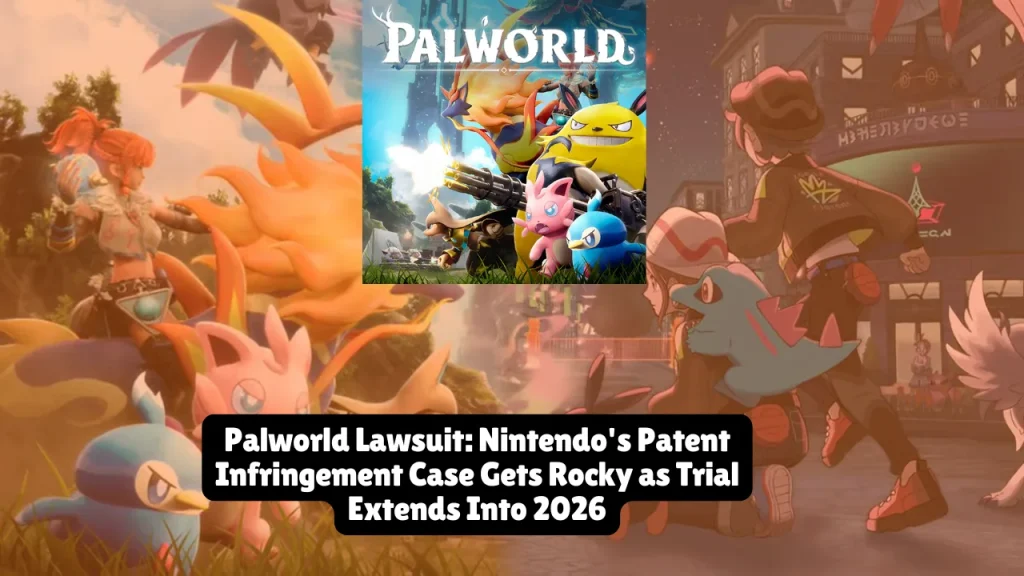
Palworld Lawsuit, Nintendo’s Patent Infringement Case Gets Rocky as Trial Extends Into 2026
Nintendo and The Pokémon Company sued Pocketpair in September 2024, alleging Palworld infringes three patents covering creature-capture mechanics and ridable character systems. The case has faced major setbacks in late 2025 after Japan’s Patent Office rejected a key Nintendo patent for lacking originality.
The lawsuit filed in Tokyo District Court seeks approximately 10 million yen (roughly $66,000) in damages plus an injunction blocking Palworld distribution in Japan. As of January 2026, the case has yet to reach trial.
What Is the Palworld Lawsuit About?
Palworld is a creature-collection survival game developed by Pocketpair Inc. that launched in January 2024. Players capture creatures called “Pals” using sphere-shaped objects, build bases, and explore an open world—mechanics some consider similar to Pokémon.
On September 19, 2024, Nintendo and The Pokémon Company filed patent infringement claims in Tokyo District Court. The plaintiffs allege Palworld violates three specific patents related to gameplay mechanics—not character designs.
The legal claims focus on patent infringement—unauthorized use of patented inventions without permission. Nintendo’s patents cover systems for capturing creatures by aiming and throwing objects, determining capture success rates, and switching between riding different creatures in open-world environments.
The Patents at the Center of the Case
Nintendo asserts three Japanese patents in its complaint:
Patent JP7493117 covers the basic creature-capture mechanism where players aim at a character using an analog stick and button press, followed by a system check that determines whether ownership transfers to the player.
Patent JP7545191 expands on the capture system, adding elements like aiming mechanisms, success-rate indicators, and the action of launching an item to catch a character. Nintendo filed this patent in June 2024—five months after Palworld’s release—and received expedited approval in August 2024.
Patent JP7528390 relates to riding creatures and smoothly switching between different ridable objects in a game environment.
These patents are valid only in Japan under Japanese first-to-file patent law, meaning the timing of when Palworld launched versus when patents were filed doesn’t affect their legal enforceability.
Who Are the Parties Involved?
The plaintiffs are Nintendo Co., Ltd. and The Pokémon Company, which jointly own patents covering various Pokémon game mechanics. Both companies filed the lawsuit together, seeking damages and injunctive relief.
The defendant is Pocketpair Inc., a Japanese game developer based in Tokyo. Pocketpair created Palworld, which sold 8 million copies in six days and reached 25 million players within one month of its January 2024 release.
The case is being heard in Tokyo District Court, where patent infringement disputes involving Japanese companies are typically adjudicated.
Current Status: Major Setbacks for Nintendo
The lawsuit has encountered significant obstacles since filing:
October 2025: Japan Patent Office rejected Nintendo’s patent application 2024-031879, which is part of the same patent family as the ones cited in the lawsuit. The JPO found the application lacked originality, citing prior art from games including ARK: Survival Evolved (2015), Monster Hunter 4 (2013), Kantai Collection, Pocketpair’s own earlier game Craftopia, and even Pokémon GO (2016).
Legal analyst Florian Mueller of Games Fray described the rejected patent as a “key building block” in Nintendo’s broader patent strategy. While this specific patent isn’t directly cited in the lawsuit, it sits between patents JP7493117 and JP7545191—both of which are in the complaint.
July 2025: Nintendo amended patent JP7528390 during active litigation, an uncommon move that delayed proceedings. The vague language in the proposed amendment drew criticism and required parts of the case to be reexamined.
November 2024: Pocketpair released Patch v0.3.11, removing the ability to summon Pals by throwing Pal Spheres. Players now use a static summon mechanic next to their character instead.
January 2026: Pocketpair implemented additional changes in Patch v0.5.5, replacing Pal-based gliding with a glider item. Pals still provide passive gliding buffs, but players must carry a glider in inventory.
As of January 2026, the case remains in pre-trial proceedings. Legal experts expect the lawsuit to extend well into 2026 due to multiple delays and ongoing patent examinations. No trial date has been scheduled.
Pocketpair’s Defense Strategy
Pocketpair has mounted an aggressive defense arguing the patents are invalid due to prior art—publicly known technology or game mechanics that existed before the patents were filed.
The company cited numerous examples of creature-capture mechanics in earlier games, including ARK: Survival Evolved, Monster Hunter 4, and even games from the Zelda franchise. Pocketpair also referenced player-created mods like Pixelmon (for Minecraft) and NukaMon (for Fallout 4) as evidence these mechanics were already part of the gaming ecosystem.
Nintendo pushed back, arguing that mods shouldn’t count as prior art because they require an underlying game framework to exist and aren’t full games themselves. Tokyo District Court continues examining these arguments.
What This Means for Gaming Industry Patent Law
This case represents a strategic shift in how gaming companies protect intellectual property. Rather than pursuing copyright infringement claims over character designs—which would face challenges under the idea-expression dichotomy in copyright law—Nintendo chose patent litigation.
Patent infringement cases in gaming typically focus on specific technical implementations rather than creative expression. Nintendo’s approach targets how gameplay mechanics function, not the artistic look of Palworld’s creatures.
If Nintendo succeeds, it could set precedent allowing companies to claim broad ownership over common game mechanics like capturing creatures or mounting ridable characters. Many industry observers worry this could stifle innovation and limit creative freedom in game development.
If Pocketpair prevails, it would reinforce the principle that gameplay mechanics with extensive prior art cannot be monopolized through late-stage patent filings.
Common Misconceptions About the Lawsuit
Many people assume this is a copyright case about character design similarities. It’s not. Nintendo specifically avoided copyright claims and filed only patent infringement allegations.
The lawsuit does not involve trademark disputes—disputes over brand names, logos, or commercial identifiers. Nintendo isn’t claiming Palworld’s name or branding infringes Pokémon trademarks.
Some believe Palworld could be immediately removed from stores. While Nintendo seeks an injunction, Palworld remains available worldwide as of January 2026. The injunction, if granted, would likely apply only to Japan initially.
Nintendo is seeking relatively modest damages of approximately $66,000. This suggests the lawsuit aims more at establishing legal precedent and potentially forcing gameplay changes than recovering financial losses.
Legal Risks Pocketpair Faces
If the court rules against Pocketpair, the company faces several potential consequences:
Financial damages: Payment of approximately 10 million yen ($66,000) plus late fees, though legal costs will likely far exceed this amount.
Injunctive relief: A court order blocking Palworld distribution in Japan. This wouldn’t immediately affect availability in other countries since the patents are Japan-specific.
Required game modifications: Forced removal or alteration of gameplay mechanics found to infringe Nintendo’s patents. Pocketpair has already made some preventive changes.
Precedent for future cases: If Nintendo secures additional U.S. patents on similar mechanics—which it filed for in February and March 2025—Pocketpair could face lawsuits in other jurisdictions.
How to Follow the Case
Court proceedings in Tokyo District Court are public, though documents may only be available in Japanese. PACER access does not apply as this is a Japanese court case, not a U.S. federal case.
For official statements, monitor Pocketpair’s official Twitter/X account (@Palworld_EN) and website, where the company has posted updates about litigation-related game changes.
Legal news outlets covering gaming industry intellectual property include Windows Central, Games Fray (which provides detailed patent analysis), Techdirt, and major gaming publications like Game Rant and PC Gamer.
Watch for upcoming developments including Nintendo’s response to the JPO patent rejection (deadline was late December 2025), potential trial date announcements, settlement negotiations (though none are currently reported), and Pocketpair’s continued prior art defense arguments.
What Game Developers Should Know
This lawsuit highlights risks in the creature-collection game genre. Developers creating similar mechanics should consult intellectual property attorneys to review gameplay systems against existing patents.
Consider filing defensive patent applications for unique gameplay innovations to establish prior art and protect your own work. Document development timelines to demonstrate when specific mechanics were created.
Understand that fair use—a copyright doctrine allowing limited use of copyrighted material—doesn’t apply to patents the same way. Patent law doesn’t have the same transformative work exceptions.
If you’re developing creature-collection mechanics, research existing patents in your target markets. Japan, the United States, and European Union all maintain separate patent systems with different filing requirements and protections.
When You May Need Legal Help
If you’re developing games with creature-capture mechanics, mounting systems, or other features similar to Palworld or Pokémon, consult a patent attorney before launch. They can conduct freedom-to-operate searches to identify potential infringement risks.
Small indie developers should be especially cautious. While Pocketpair has resources to fight Nintendo in court, smaller studios may not be able to afford prolonged litigation.
If you receive a cease-and-desist letter or patent infringement notice, don’t ignore it. Consult an intellectual property lawyer immediately to understand your options and potential defenses.
Palworld’s Future Amid Litigation
Despite ongoing litigation, Pocketpair remains committed to developing Palworld. The company released version 1.0 in September 2025 after over a year in early access.
In January 2026, Pocketpair announced plans for a Palworld trading card game launching July 30, 2026. The timing raised eyebrows given the ongoing patent dispute, though the company appears confident in its legal position.
Palworld received four nominations in Steam’s Best of 2025 Awards, including second place for most-played game. The game remains commercially successful and continues receiving updates.
However, Pocketpair acknowledged in official statements that the lawsuit has limited how much information they can share publicly and forced gameplay compromises they found disappointing.
Frequently Asked Questions
What is the Palworld lawsuit about?
Nintendo and The Pokémon Company sued Pocketpair in September 2024, claiming Palworld infringes three Japanese patents covering creature-capture mechanics and ridable character systems. The case focuses on gameplay mechanics, not character design similarities.
Who sued Pocketpair over Palworld?
Nintendo Co., Ltd. and The Pokémon Company jointly filed the patent infringement lawsuit in Tokyo District Court. Both companies own patents related to Pokémon game mechanics.
What is the current status of the Palworld lawsuit?
As of January 2026, the case remains in pre-trial proceedings with no trial date scheduled. The lawsuit has faced significant delays after Japan’s Patent Office rejected a key Nintendo patent in October 2025 for lacking originality. Legal experts expect the case to continue throughout 2026.
Is Palworld being removed or shut down?
No. Palworld remains available worldwide as of January 2026. Nintendo seeks an injunction that would block distribution in Japan if successful, but the game hasn’t been removed from any platforms yet. Pocketpair continues developing new content and plans a trading card game launch in July 2026.
Could Pocketpair lose the Palworld lawsuit?
It’s uncertain. Nintendo faces significant challenges after Japan’s Patent Office found its patents lack originality and cited prior art from older games. However, court decisions aren’t bound by patent office findings. If Nintendo loses, it undermines their patent strategy; if Pocketpair loses, they face damages and potential gameplay restrictions in Japan.
What does this mean for other creature-collection games?
If Nintendo prevails, it could establish precedent allowing companies to patent common gameplay mechanics, potentially limiting innovation in the creature-collection genre. If Pocketpair wins, it reinforces that mechanics with extensive prior art cannot be monopolized through patent claims.
How does patent law apply to video game mechanics?
Patent law protects specific technical implementations of game systems, not creative expression. Unlike copyright—which protects artistic works like character designs—patents cover how gameplay features function mechanically. This allows companies to claim ownership over technical processes, though patents must demonstrate originality and inventive steps beyond existing prior art.
Last Updated: January 18, 2026
Disclaimer: This article is for informational purposes only and does not constitute legal advice. For specific legal concerns about intellectual property or patent infringement, consult a qualified attorney.
What to Do Next: Stay informed about gaming industry intellectual property developments and protect your creative work. Follow court proceedings for precedent-setting outcomes that could affect game development practices.
Stay informed, stay protected. — AllAboutLawyer.com
About the Author

Sarah Klein, JD, is a licensed attorney and legal content strategist with over 12 years of experience across civil, criminal, family, and regulatory law. At All About Lawyer, she covers a wide range of legal topics — from high-profile lawsuits and courtroom stories to state traffic laws and everyday legal questions — all with a focus on accuracy, clarity, and public understanding.
Her writing blends real legal insight with plain-English explanations, helping readers stay informed and legally aware.
Read more about Sarah