
Michael Irvin Lawsuit, Settled $100M Defamation Case After 45-Second Hotel Chat Nearly Destroyed Career
Hall of Fame wide receiver Michael Irvin settled his $100 million defamation lawsuit against Marriott International in September 2023 after allegations of sexual misconduct stemming from a brief hotel lobby conversation threatened his broadcasting career. Though Marriott paid nothing and maintained its employees’ version of events, Irvin regained his NFL Network position just days after dismissing the suit with prejudice.
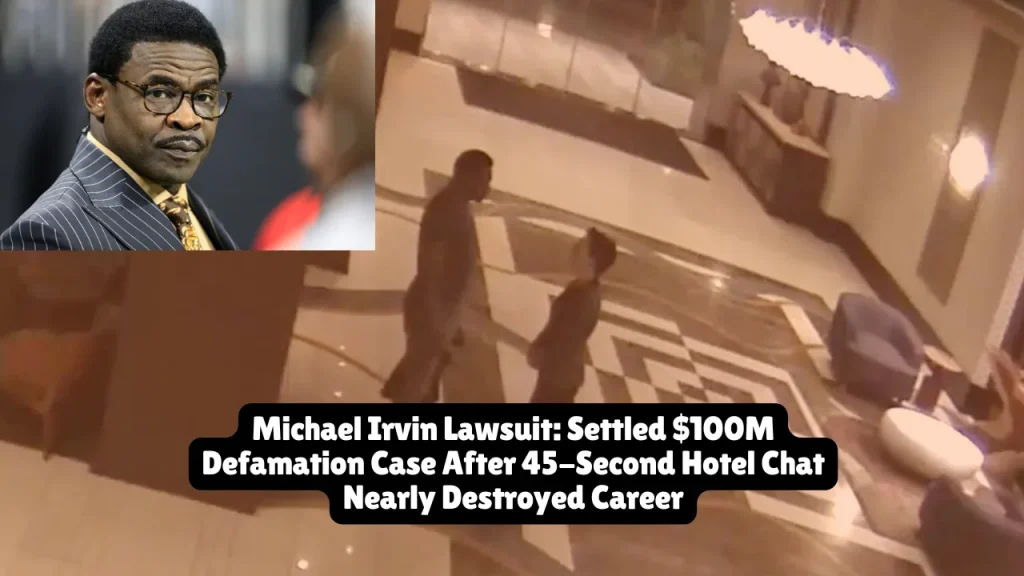
The case, which began February 2023 when a female Renaissance Phoenix Downtown Hotel employee accused Irvin of inappropriate conduct, centered on whether a 45-second lobby interaction constituted sexual harassment or friendly small talk. Surveillance footage showed the conversation ending with a handshake, contradicting claims of aggressive misconduct.
What Was the Michael Irvin Lawsuit About?
The Super Bowl Week Hotel Incident
On February 5, 2023, Michael Irvin returned to the Renaissance Phoenix Downtown Hotel after dinner and drinks during Super Bowl LVII week in Arizona. The former Dallas Cowboys star was in Phoenix on assignment for NFL Network to cover the Super Bowl between the Philadelphia Eagles and Kansas City Chiefs.
According to Irvin’s lawsuit, he had a “brief, friendly interaction” lasting no longer than one minute with a Marriott employee in the hotel lobby. Witnesses verified that Irvin “casually exchanged pleasantries with one of the hotel employees, shook her hand, and went to his room alone,” the complaint stated.
However, Marriott reported to the NFL that Irvin had acted inappropriately. Within hours, NFL Network pulled Irvin from all Super Bowl coverage without explanation. The hotel also kicked Irvin out and banned him from all Marriott properties nationwide.
Marriott’s Sexual Misconduct Allegations
In March 2023 court filings, Marriott accused Irvin of making vulgar sexual comments to the female employee. The hotel’s response alleged Irvin appeared intoxicated, approached the woman unsolicited, told her she was attractive, touched her arm without consent causing her to step back uncomfortably, and asked whether she knew anything about having “a big Black man inside of [her].”
Marriott’s filing claimed Irvin attempted to grab the victim’s hand again after she pulled away. The hotel argued these actions justified removing Irvin and reporting the incident to NFL Network pursuant to the league’s express instructions for handling misconduct complaints.
Irvin vehemently denied the allegations. He told Dallas radio station KRLD he didn’t remember details of the conversation because “I had a few drinks, to tell you the truth,” but insisted “there was no sexual wrongdoing. We shook hands. Then I left. That’s all I know.”
The $100 Million Defamation Lawsuit
On February 9, 2023—just four days after the incident—Irvin filed a $100 million defamation lawsuit in Collin County, Texas, against Marriott International, the Renaissance Phoenix Downtown Hotel, and the unnamed female employee identified as “Jane Doe.”
The lawsuit brought three legal claims. Defamation allegations argued Marriott made false statements damaging Irvin’s reputation. Tortious interference with business relationships claimed Marriott reported false information to NFL Network costing Irvin work. False light invasion of privacy alleged Marriott portrayed Irvin in a false, offensive manner.
Irvin’s attorney Levi McCathern released surveillance video from the hotel showing a calm, brief conversation ending with a handshake. “It is clear Michael is the latest victim of our cancel culture where all it takes is an accusation to ruin a person’s life,” McCathern told USA TODAY Sports.
What You Must Know About Public Figure Defamation Cases
The Actual Malice Standard for Public Figures
Under New York Times Co. v. Sullivan, public figures like Irvin face a higher burden proving defamation than private citizens. Irvin would need to prove Marriott acted with “actual malice”—meaning the hotel either knew its statements were false or acted with reckless disregard for the truth.
This elevated standard makes celebrity defamation cases significantly harder to win. Similar to the DK Metcalf defamation case where a Lions fan alleges false racism accusations, proving actual malice requires demonstrating defendants knew claims were false when made.
Private citizens only need to prove the defendant was negligent—that they should have known the statement was false. The actual malice standard protects media organizations and businesses from frivolous lawsuits while still allowing public figures to pursue legitimate defamation claims when defendants act with knowledge of falsity.
Why Irvin Settled Without Payment
In September 2023, Irvin dismissed his lawsuit “with prejudice”—meaning he can never refile those claims. Marriott released a statement saying: “We have always stood behind our people and their version of events and believe Mr. Irvin’s suit had no merit whatsoever.”
So technically Marriott “won” the financial battle. But Irvin got what he really wanted: NFL Network immediately reinstated him, and he appeared on NFL GameDay Morning that same Sunday.
Industry observers speculate Irvin settled for less than he could have won at trial because he needed to end the lawsuit to get his job back. NFL Network likely wouldn’t reinstate him while litigation was ongoing, especially given the league’s exposure in the case. Marriott claimed it reported the incident to the NFL pursuant to the league’s own protocols, meaning NFL might eventually have been forced to produce documents about its investigation.
How Surveillance Footage Changed Everything
The surveillance video became the case’s turning point. Unlike many “he said, she said” disputes, this incident occurred in a public hotel lobby with security cameras recording.
The footage showed Irvin and the employee standing approximately two feet apart during a conversation lasting under two minutes. Irvin briefly touched her arm. The interaction ended with a cordial handshake. There was no kiss, hug, or aggressive physical contact visible on camera.
However, the video had no audio. This meant Marriott could still argue Irvin made vulgar sexual comments even though his body language appeared friendly. Without audio evidence, both sides’ accounts of what was said remained in dispute.
Similar to the Netflix Baby Reindeer defamation case where video evidence plays a crucial role, contemporaneous recordings can make or break misconduct allegations—but only if they capture the complete picture including audio.
Employment Consequences Without Due Process
The NFL Network suspended Irvin for seven months based solely on Marriott’s complaint without conducting its own investigation or allowing Irvin to present his defense. This highlights how quickly employers can terminate or suspend workers based on unproven accusations.
No criminal charges were ever filed against Irvin. Police received no complaint from the employee. Yet Irvin lost months of income and suffered severe reputational damage before clearing his name.
This pattern appears in many high-profile cases. Similar to the H3H3 lawsuit involving defamation claims, once accusations become public, career consequences often precede legal determinations of truth.
What to Do If You Face Similar False Accusations
Document Everything Immediately
If accused of workplace or public misconduct, immediately preserve all evidence. Request surveillance footage, security camera recordings, or witness statements before they’re deleted. Most businesses retain video for only 30-90 days.
Write down your recollection of events while memory is fresh, including exact times, locations, witnesses present, and conversation details. Even if you don’t remember specifics like Irvin, document what you do recall and acknowledge gaps in memory honestly.
Save all communications—texts, emails, social media messages—related to the incident or accusations. Screenshot anything that might disappear. Don’t delete your own messages even if embarrassing, as destruction of evidence can be used against you.
Consult a Defamation Attorney Quickly
Contact an employment or defamation attorney within days of false accusations surfacing. Statutes of limitations for defamation claims are typically one to three years depending on your state, but acting quickly preserves evidence and legal options.
An attorney can send preservation letters demanding employers and accusers retain all evidence including video footage, interview notes, and internal communications. Without these letters, critical evidence often disappears before litigation begins.
Defamation cases are expensive and difficult to win, particularly for public figures. Most attorneys offer free initial consultations to evaluate whether your situation justifies litigation or whether other remedies—like negotiated settlements or public statements—make more sense.
Know When to Settle vs. Fight
Irvin’s decision to settle without payment but regain his job illustrates that “winning” a lawsuit doesn’t always mean maximum financial recovery. Sometimes the goal is clearing your name, restoring employment, or ending ongoing damage.
Consider what you actually want: money, a job back, public vindication, or simply to move on. Settlement terms can include public apologies, agreed-upon statements about what occurred, letters of recommendation, or confidentiality provisions preventing parties from discussing the case.
Fighting defamation cases to trial takes years and costs hundreds of thousands in legal fees. Even if you ultimately win, the time, expense, and continued public attention may outweigh the benefits of a smaller but quicker settlement.
FAQs About the Michael Irvin Lawsuit
What was the Michael Irvin lawsuit about?
Michael Irvin sued Marriott International and a hotel employee for $100 million alleging defamation, tortious interference with business relationships, and false light invasion of privacy. The lawsuit stemmed from February 2023 allegations that Irvin made inappropriate sexual comments to a female employee at a Phoenix hotel during Super Bowl week, which led to his removal from NFL Network coverage.
Did Michael Irvin win his lawsuit against Marriott?
No. Irvin dismissed the lawsuit with prejudice in September 2023, and Marriott paid nothing. However, Irvin achieved his primary goal of returning to NFL Network immediately after settling. Marriott maintained its employees’ version of events and stated the lawsuit had “no merit whatsoever,” though Irvin regained his broadcasting position.
What did the surveillance video show?
Hotel surveillance footage showed a brief conversation between Irvin and the employee lasting under two minutes in the lobby. The video showed them standing about two feet apart, Irvin briefly touching her arm, and the interaction ending with a cordial handshake. However, the video had no audio, so verbal statements remained disputed.
What were the allegations against Michael Irvin?
Marriott alleged Irvin appeared intoxicated, told the employee she was attractive, touched her arm without consent causing her to step back uncomfortably, and asked whether she knew anything about having “a big Black man inside of [her].” Marriott claimed Irvin attempted to grab her hand again after she pulled away.
Why did Michael Irvin settle if he believed he was innocent?
Legal experts speculate Irvin settled to regain his NFL Network position, which likely required ending the lawsuit. While he received no money from Marriott, NFL Network reinstated him immediately after the settlement. Continuing litigation could have taken years while keeping him off air, costing more in lost income than any potential settlement recovery.
Were criminal charges filed against Michael Irvin?
No. No criminal charges were ever filed against Irvin related to the hotel incident. The employee did not file a police report, and no law enforcement investigation occurred. The matter remained a civil dispute between Irvin and Marriott.
What does this case mean for defamation law?
The Irvin case illustrates challenges public figures face proving defamation under the actual malice standard. Despite surveillance video contradicting some allegations, Marriott never acknowledged wrongdoing. The case also highlights how employers often suspend or terminate workers based on unproven accusations without independent investigation, and how settlements can achieve career restoration even without financial recovery or admission of fault.
Last Updated: January 18, 2026
Disclaimer: This article provides general information about the Michael Irvin defamation lawsuit for educational purposes only and does not constitute legal advice. For guidance specific to your defamation or employment situation, consult a qualified attorney licensed in your state.
Facing false accusations at work? Document everything immediately, preserve all evidence including video footage and communications, and consult an employment attorney to protect your rights and reputation.
Stay informed, stay protected. — AllAboutLawyer.com
About the Author

Sarah Klein, JD, is a licensed attorney and legal content strategist with over 12 years of experience across civil, criminal, family, and regulatory law. At All About Lawyer, she covers a wide range of legal topics — from high-profile lawsuits and courtroom stories to state traffic laws and everyday legal questions — all with a focus on accuracy, clarity, and public understanding.
Her writing blends real legal insight with plain-English explanations, helping readers stay informed and legally aware.
Read more about Sarah