
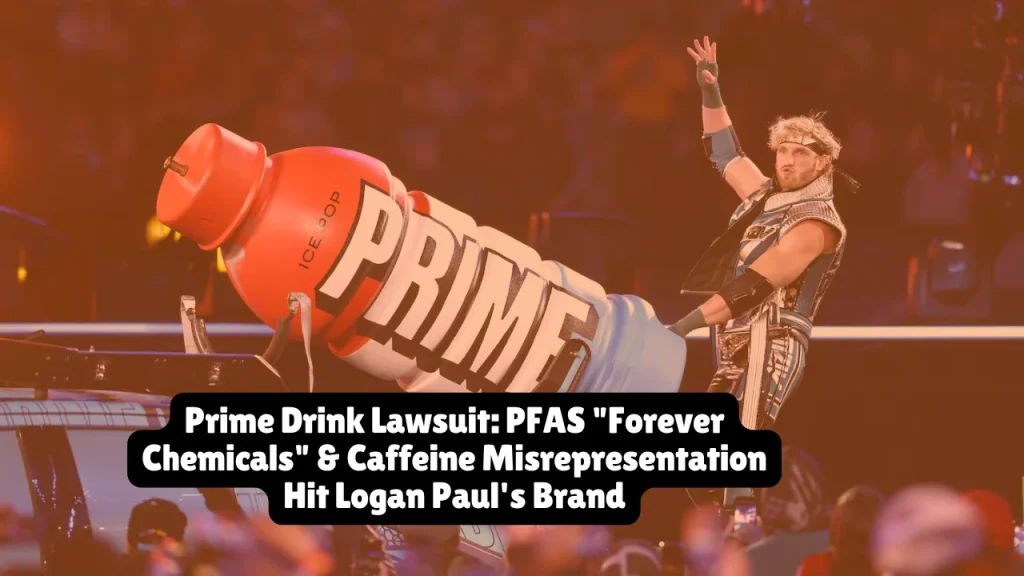
Prime Drink Lawsuit, PFAS “Forever Chemicals” & Caffeine Misrepresentation Hit Logan Paul’s Brand
Prime Hydration faces multiple class action lawsuits alleging the beverage contains undisclosed PFAS “forever chemicals” and misrepresents caffeine levels. Founded by YouTube stars Logan Paul and KSI in 2022, the brand now battles consumer fraud claims that could affect millions who purchased Prime drinks believing they were healthy sports beverages.
The lead lawsuit, filed August 2023 in California, claims independent testing found harmful PFAS in Prime Hydration grape flavor despite marketing emphasizing antioxidants, electrolytes, and vitamins. A separate April 2024 lawsuit alleges Prime Energy drinks contain 215-225mg of caffeine—exceeding the advertised 200mg—equivalent to nearly two Red Bulls per can.
What Is the Prime Drink Lawsuit About?
The PFAS “Forever Chemicals” Allegations
Elizabeth Castillo filed a class action lawsuit in the U.S. District Court for the Northern District of California on August 2, 2023, claiming Prime Hydration grape-flavored sports drinks contain per- and polyfluoroalkyl substances. PFAS are synthetic chemicals that persist in the environment and accumulate in human bodies, earning the name “forever chemicals.”
The lawsuit alleges Prime marketed its drinks as healthy hydration products containing beneficial ingredients while concealing PFAS presence. PFAS exposure has been linked to cancer, hormonal disruptions, immune system damage, and liver problems even at low exposure levels.
Castillo argues she would never have purchased Prime Hydration had the company disclosed PFAS contamination. The lawsuit seeks $5 million in damages and represents two consumer classes: a nationwide class of all U.S. purchasers and a California-specific class.
The Caffeine Misrepresentation Claims
Lara Vera filed a separate class action on April 8, 2024, in the Southern District of New York, alleging Prime Energy’s 12-ounce cans contain 215-225mg of caffeine despite labels stating 200mg. The lawsuit characterizes this as false advertising under federal and state consumer protection laws.
The complaint notes this caffeine content equals “half a dozen Coke cans or nearly two Red Bulls.” Vera claims she relied on the label when purchasing Prime Energy and paid a premium price for what she believed was accurately labeled product information.
The lawsuit argues the misrepresentation makes Prime Energy drinks misbranded under federal food labeling requirements. Prime recommends its Energy drinks for consumers 18 and older due to high caffeine content, yet the lawsuit alleges the actual levels exceed what even adult consumers expect.
Who Founded Prime and Why It Matters
Logan Paul and KSI launched Prime Hydration LLC in 2022, leveraging their combined social media following of over 100 million to create instant brand awareness. Their marketing strategy targeted younger audiences, leading to viral product launches where bottles sold for thousands of dollars during scarcity periods.
This marketing success makes the lawsuits particularly significant. Consumer protection advocates argue Prime deliberately appealed to children and teenagers while downplaying health risks. Several school districts banned Prime Energy from campuses in 2024 citing excessive caffeine and misleading advertising targeting minors.
International governments also restricted Prime sales. Canadian health officials required Prime Energy recalls in July 2023 because the products violated caffeine limits of 180mg—Canada’s maximum for energy drinks.
What You Must Know About the Prime Lawsuits
False Advertising and Consumer Protection Law Violations
Both lawsuits invoke consumer protection statutes prohibiting deceptive marketing. The PFAS lawsuit alleges violations of California’s Consumer Legal Remedies Act and Unfair Competition Law, which prohibit misleading product representations causing economic harm.
False advertising occurs when companies make material misrepresentations about product characteristics that influence purchasing decisions. Here, plaintiffs argue Prime’s “healthy” marketing contradicts undisclosed PFAS presence and understated caffeine levels.
These cases mirror broader consumer protection trends. Similar to the Shein class action lawsuits over deceptive practices and the Sierra Mist lawsuit alleging false health claims, Prime faces accountability for marketing versus reality gaps.
Prime’s Response and Ongoing Legal Status
Logan Paul denied both lawsuits publicly, calling claims “baseless” and asserting testing methodology was flawed. Regarding PFAS allegations, Paul claimed the chemicals referred to bottle materials—not the liquid itself—and that packaging complies with FDA regulations.
As of January 2026, neither lawsuit has reached settlement or trial. The PFAS case remains in discovery, where both sides exchange evidence and expert reports. The caffeine misrepresentation case filed in 2024 is in earlier preliminary stages.
A January 2025 lawsuit filed additional claims alleging Prime Energy understated caffeine content on labels, expanding the scope of consumer fraud allegations. These mounting legal challenges coincide with declining sales—UK Prime sales dropped 50% year-over-year in April 2025 according to Nielsen data.
Common Misconceptions About Prime Safety
Prime Hydration and Prime Energy are different products. Prime Hydration is a sports drink marketed for hydration without caffeine. Prime Energy contains 200mg (or allegedly more) caffeine and targets older consumers. Confusion between these product lines contributes to safety concerns.
Prime Hydration is generally considered safe in moderation for most consumers. However, the PFAS allegations, if proven, would change this safety assessment. PFAS accumulate over time, meaning even low exposure from regular consumption poses potential health risks.
Prime Energy’s caffeine levels make it inappropriate for children regardless of lawsuit outcomes. Health experts recommend children avoid energy drinks entirely due to cardiovascular risks, sleep disruption, and developmental concerns.
What to Do Next About Prime Drink Claims
How to Determine If You Qualify
You may qualify for the PFAS class action if you purchased Prime Hydration grape-flavored sports drinks for personal use in the United States during the applicable statute of limitations period. Keep purchase receipts, credit card statements, or other proof of purchase.
You may qualify for the caffeine misrepresentation lawsuit if you purchased Prime Energy drinks and relied on the 200mg caffeine label when making your purchasing decision. Documentation proving purchase history strengthens potential claims.
Similar to other T Mobile consumer protection lawsuits, class members typically don’t need to take action until settlement approval. Courts will notify eligible class members through mail or email when claim forms become available.
Monitor Official Case Updates
Check the court dockets for case developments. The PFAS lawsuit is Case No. pending in the Northern District of California. The caffeine lawsuit is in the Southern District of New York. PACER provides public access to federal court filings for registered users.
Visit ClassAction.org, which maintains updated information on Prime Hydration PFAS litigation and notifies interested consumers when claim forms open. Sign up for email alerts to receive automatic updates.
If you experienced health problems after consuming Prime drinks, document symptoms, medical visits, and treatment. While class actions typically cover economic damages like purchase price refunds, documented health issues could support individual claims for additional compensation.
When to Consult an Attorney
Most class members don’t need individual attorneys since class counsel represents the entire group. However, if you suffered significant health consequences from Prime consumption—such as hospitalization, ongoing treatment, or diagnosed conditions potentially linked to PFAS or excessive caffeine—consult a product liability attorney.
Personal injury claims operate separately from class actions and may recover compensation for medical expenses, lost wages, and pain and suffering. Consultation with qualified attorneys helps determine whether individual claims make sense for your situation.
Review your purchase history now while records remain accessible. Credit card companies typically retain transaction records for 12-24 months, making prompt action important for preserving evidence.
FAQs About the Prime Drink Lawsuit
What is the Prime drink lawsuit about?
The Prime drink lawsuit involves two separate class actions against Prime Hydration LLC. The first, filed August 2023, alleges Prime Hydration grape sports drinks contain undisclosed PFAS “forever chemicals” despite marketing as healthy beverages. The second, filed April 2024, claims Prime Energy drinks contain 215-225mg caffeine—exceeding the advertised 200mg.
Who can file a claim in the Prime lawsuit?
Anyone who purchased Prime Hydration grape-flavored sports drinks or Prime Energy drinks in the United States may qualify. The PFAS lawsuit covers both a nationwide class and a California-specific class. The caffeine lawsuit covers consumers who relied on label accuracy when purchasing Prime Energy. No claim forms are available yet as cases remain in early litigation stages.
What is PFAS and why is it dangerous?
PFAS are per- and polyfluoroalkyl substances—synthetic chemicals used in manufacturing that resist breaking down in the environment or human body. PFAS accumulate over time and have been linked to cancer, liver damage, thyroid disease, immune system problems, and developmental issues. Their persistence earns them the nickname “forever chemicals.”
How much caffeine does Prime Energy really contain?
Prime Energy labels state 200mg caffeine per 12-ounce can. The April 2024 lawsuit alleges independent testing shows actual content ranges from 215-225mg. For comparison, a 12-ounce Red Bull contains 111mg caffeine, meaning Prime allegedly contains double that amount. This exceeds Canada’s legal limit of 180mg for energy drinks.
Is Prime drink safe for children?
Prime Hydration contains no caffeine and is generally safe for children in moderation, though PFAS allegations remain unresolved. Prime Energy is explicitly recommended by the manufacturer for ages 18+ due to high caffeine content. Health experts and school districts have banned Prime Energy from children due to cardiovascular risks and developmental concerns.
What happens if Prime loses these lawsuits?
If courts rule against Prime, the company may face millions in damages paid to class members, mandatory label changes, reformulation requirements, and marketing restrictions. Prime could also face regulatory action from the FDA or FTC. Similar consumer protection cases have resulted in settlements ranging from hundreds of thousands to millions of dollars.
How do I join the Prime drink lawsuit?
Class members don’t need to “join” class actions initially. If you purchased qualifying Prime products, you’re automatically included unless you opt out. When settlements are reached, courts send notice to class members with claim form instructions. Monitor ClassAction.org for updates and check mail for official court notices if you purchased Prime drinks.
Last Updated: January 18, 2026
Disclaimer: This article provides general information about Prime drink lawsuits and does not constitute legal advice. Consult a qualified consumer protection attorney for guidance specific to your situation.
Purchased Prime and concerned about these claims? Document your purchase history now and monitor official case updates to protect your rights.
Stay informed, stay protected. — AllAboutLawyer.com
About the Author

Sarah Klein, JD, is a licensed attorney and legal content strategist with over 12 years of experience across civil, criminal, family, and regulatory law. At All About Lawyer, she covers a wide range of legal topics — from high-profile lawsuits and courtroom stories to state traffic laws and everyday legal questions — all with a focus on accuracy, clarity, and public understanding.
Her writing blends real legal insight with plain-English explanations, helping readers stay informed and legally aware.
Read more about Sarah