
Tylenol and Autism Lawsuit 2026 Update, Federal Cases Dismissed but Appeal Pending, FDA Announces New Warning Labels
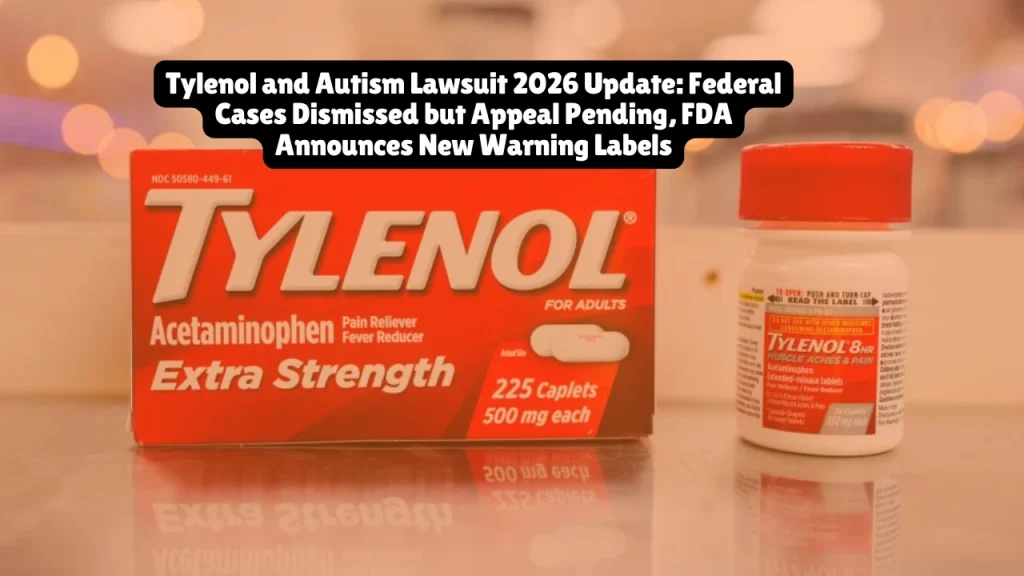
As of January 2026, the federal Tylenol autism lawsuit remains dismissed after Judge Denise Cote ruled in August 2024 that plaintiffs’ expert witnesses failed to prove acetaminophen causes autism or ADHD. However, plaintiffs have appealed to the Second Circuit Court of Appeals, and the case took a dramatic turn in September 2025 when President Trump and the FDA announced acetaminophen would carry autism warnings. The Second Circuit has not yet ruled on the appeal.
Current Status of the Tylenol Autism Litigation
The multidistrict litigation (an MDL is a legal process where similar federal cases are combined under one judge to streamline pretrial proceedings) involving approximately 500 Tylenol autism lawsuits was effectively ended in federal court when Judge Cote granted summary judgment to defendants Johnson & Johnson, Kenvue, and major retailers in August 2024. The judge concluded that plaintiffs’ five expert witnesses could not establish a reliable scientific connection between prenatal Tylenol use and autism or ADHD diagnoses in children.
Plaintiffs filed an appeal with the U.S. Court of Appeals for the Second Circuit, arguing that Judge Cote applied inappropriate standards when excluding their expert testimony. The appeal challenges whether the district court properly evaluated scientific evidence under the Daubert standard (the legal test courts use to determine if expert testimony is based on reliable scientific methods). As of January 2026, oral arguments have been held, but the Second Circuit has not issued a ruling.
FDA Warning Label Announcement Changes Everything
In September 2025, the Trump administration made a stunning announcement that shifted the entire litigation picture. President Trump declared the FDA would notify doctors that Tylenol may be linked to autism and ADHD when used by pregnant women, and the FDA initiated a label update for Tylenol to include information on autism and ADHD.
The FDA cited a “considerable body of evidence” showing an association between prenatal acetaminophen use and later diagnoses of autism or ADHD, based on large studies such as the Nurses’ Health Study II and the Boston Birth Cohort. This federal agency action directly contradicts the federal court’s finding that scientific evidence was insufficient.
The timing creates a unique legal situation. Plaintiffs pointed out to the Second Circuit that the FDA and HHS relied on the work of Dr. Andrea Baccarelli, a Harvard public health dean who served as an expert witness for the plaintiffs, when deciding to add pregnancy warnings and issue nationwide health advisories. The plaintiffs argue that if federal regulators find the science credible enough to mandate warning labels, courts should not exclude the same expert testimony.
Recent Scientific Developments
The scientific debate intensified in January 2026. A new review published in The Lancet Obstetrics, Gynecology & Women’s Health examined 43 studies and concluded that the most rigorous research, such as sibling comparison studies, provides no clear link between acetaminophen use during pregnancy and autism or ADHD. This contradicts earlier studies that suggested associations.
A 2024 Swedish study of 2.5 million children found no causal link between prenatal acetaminophen exposure and autism. However, other research published in August 2025 by Mount Sinai researchers found that prenatal acetaminophen exposure may increase neurodevelopmental disorder risks.
The conflicting scientific evidence remains at the heart of the legal dispute. Studies showing small associations may be affected by confounding factors (other variables that influence results, like the reason a pregnant woman needed pain relief in the first place) or recall bias (when mothers don’t accurately remember medication use after their child’s diagnosis).
Texas Attorney General Files State Lawsuit
In October 2025, the litigation took another significant turn. Texas Attorney General Ken Paxton sued Johnson & Johnson and Kenvue for deceptively marketing Tylenol to pregnant mothers despite knowing that early exposure to acetaminophen leads to significantly increased risk of autism and ADHD in children.
Paxton’s lawsuit builds on claims that Johnson and Johnson “willfully ignored and attempted to silence the science” around acetaminophen and autism, and takes specific aim at Kenvue as a spin-off company created to shelter Johnson and Johnson’s assets from liability. This represents the first state government action against Tylenol manufacturers over autism claims.
The state lawsuit uses different legal theories than the federal MDL. State consumer protection claims don’t face the same expert testimony hurdles that derailed federal cases, giving Texas a different path forward.
Related Article: Trinidad Chambliss Lawsuit, Ole Miss QB Sues NCAA for Sixth Year of Eligibility After Medical Waiver Denial
What You Must Know
The Appeal Could Revive Everything
The Second Circuit’s decision could either revive more than 500 federal lawsuits, allowing the MDL to proceed, or affirm the dismissal, leaving state court cases as the primary path for families pursuing claims. A ruling favoring plaintiffs would restart the entire federal litigation, potentially leading to bellwether trials (test cases that help both sides evaluate how juries might respond to the evidence and what settlement amounts might be appropriate).
If the appeal fails, federal litigation ends permanently for those 500 cases. However, this wouldn’t prevent new lawsuits in state courts, where different rules may apply.
State Court Cases Continue Independently
While federal cases are dismissed pending appeal, state court lawsuits continue in California, Illinois, Florida, and other jurisdictions. These cases operate under state product liability laws and aren’t bound by Judge Cote’s federal ruling. Some state cases have trial dates set for 2025 and 2026.
State courts may apply different standards for expert testimony and have different views on whether warning label requirements are preempted (blocked) by federal law. This creates multiple paths for families to pursue claims even if the federal appeal fails.
No Settlements Have Been Reached
Despite speculation about settlement amounts, no compensation has been paid to any plaintiff in the Tylenol autism litigation as of January 2026. Settlement projections ranging from $50,000 to $500,000 or more are estimates only, not guaranteed amounts. Any actual settlement would depend on whether plaintiffs can prove their claims either through successful appeals or state court victories.
Law firms continue investigating new cases and accepting clients, but claimants should understand that no court has yet found in favor of plaintiffs on the merits. The litigation remains uncertain.
Statute of Limitations Deadlines Still Apply
Families considering claims face strict time limits. Product liability statutes of limitations (the deadline to file a lawsuit) typically range from 2 to 4 years from when the injury was discovered or reasonably should have been discovered. In Tylenol autism cases, this usually means 2 to 4 years from the child’s autism or ADHD diagnosis.
Missing the statute of limitations deadline permanently bars your claim, regardless of its merits. If your child was diagnosed with autism or ADHD after prenatal Tylenol exposure, consult an attorney immediately to determine applicable deadlines in your state.
What to Do Next
Determine If You Have a Potential Claim
You may qualify to pursue a Tylenol autism claim if: you took Tylenol or generic acetaminophen during pregnancy (particularly during the first two trimesters when fetal brain development occurs); your child was subsequently diagnosed with autism spectrum disorder or ADHD by a qualified healthcare provider; you have medical records documenting both your acetaminophen use during pregnancy and your child’s diagnosis; and your claim falls within your state’s statute of limitations period.
Potential claims are not limited to brand-name Tylenol. Generic acetaminophen products sold by Walmart, CVS, Costco, Walgreens, Target, and other retailers are also included in the litigation.
Gather Critical Documentation
If you believe you have a claim, preserve evidence immediately. Collect prenatal medical records showing acetaminophen prescriptions or over-the-counter use documentation, pharmacy records or receipts showing Tylenol or acetaminophen purchases during pregnancy, your child’s medical records documenting autism or ADHD diagnosis with specific diagnostic dates and evaluations, records showing the severity of your child’s condition and treatment history, and any communications with healthcare providers about acetaminophen use during pregnancy.
The strength of product liability lawsuits depends heavily on documentation. Memories fade and records become harder to obtain over time, so gather evidence now even if you’re unsure about filing a claim.
Understand What Compensation Might Cover
If successful, Tylenol autism lawsuits seek compensation for medical expenses (past and future costs of autism or ADHD treatment, therapy, medications, and special education services), lost earning capacity (if the child’s condition limits future employment prospects), pain and suffering (emotional distress and reduced quality of life for both the child and family), and potentially punitive damages (additional money designed to punish the manufacturer for failing to warn consumers about known risks).
However, no compensation is guaranteed. Plaintiffs must first prove that Tylenol caused their child’s condition, which remains the central legal battle.
When Legal Consultation Is Necessary
Consult an experienced product liability attorney if: your child has been diagnosed with autism or ADHD and you took acetaminophen during pregnancy; you want to understand your state’s statute of limitations deadline; you need evaluation of whether your specific situation meets legal requirements for a claim; or you’re considering joining state court litigation while the federal appeal is pending.
Many attorneys handling Tylenol autism cases offer free case evaluations and work on contingency (they get paid only if you recover compensation). Consultation does not obligate you to file a lawsuit.
Official Resources for More Information
Court Information: The federal MDL is Case No. 1:22-md-03043 in the U.S. District Court for the Southern District of New York. Federal court dockets are available through PACER at pacer.gov.
FDA Guidance: The FDA’s statements on acetaminophen and pregnancy can be found at fda.gov. The agency emphasized that acetaminophen remains one of the only recommended fever treatments during pregnancy but urged careful consideration of risks.
CDC Autism Data: Current autism prevalence statistics and information are available at cdc.gov. As of 2023, approximately 1 in 36 children are diagnosed with autism spectrum disorder.
Texas Attorney General Lawsuit: Information about the Texas state action against Johnson & Johnson is available at texasattorneygeneral.gov.
Frequently Asked Questions
Is the Tylenol autism lawsuit still active in 2026?
The federal MDL involving approximately 500 cases was dismissed in August 2024, but plaintiffs have appealed to the Second Circuit Court of Appeals. As of January 2026, the appeal is pending and no decision has been issued. Additionally, state court cases continue independently in multiple jurisdictions, and Texas filed a new state government lawsuit in October 2025.
How much is the Tylenol autism settlement?
There is no settlement as of January 2026. No compensation has been paid to any plaintiff, and settlement amounts remain purely speculative. Legal experts have estimated potential settlements could range from $50,000 to over $500,000 depending on the severity of the child’s condition, but these are projections only, not guarantees or actual settlement offers.
Who qualifies for the Tylenol autism lawsuit?
Potential claimants include mothers who took Tylenol or generic acetaminophen during pregnancy and whose children were subsequently diagnosed with autism spectrum disorder or ADHD. You must have documentation of both your acetaminophen use and your child’s diagnosis, and your claim must fall within your state’s statute of limitations (typically 2 to 4 years from the diagnosis date).
What is the deadline to file a Tylenol autism claim?
Filing deadlines vary by state but typically range from 2 to 4 years from when the child’s autism or ADHD was diagnosed. Some states may have different rules for when the limitations period begins. Missing the statute of limitations deadline permanently bars your claim, so consult an attorney immediately if you believe you have a case.
Did the FDA approve warning labels for Tylenol and autism?
In September 2025, the FDA announced it initiated a label update process for acetaminophen products to include information on autism and ADHD risks. The agency cited considerable evidence of an association between prenatal acetaminophen use and neurodevelopmental disorders. However, the FDA also emphasized that acetaminophen remains one of the only recommended fever treatments during pregnancy and urged weighing risks carefully.
What happened in the federal Tylenol autism lawsuit?
In August 2024, Judge Denise Cote dismissed all federal MDL cases after ruling that plaintiffs’ expert witnesses failed to establish a reliable scientific connection between Tylenol and autism or ADHD. Plaintiffs appealed this decision to the Second Circuit Court of Appeals, arguing the judge applied incorrect standards when excluding expert testimony. The Second Circuit has not yet ruled on the appeal.
Can I still file a Tylenol autism lawsuit in 2026?
Yes, attorneys continue accepting new clients for potential state court lawsuits. While the federal MDL is dismissed pending appeal, state court litigation continues, and new cases can be filed if they meet eligibility requirements and fall within statute of limitations deadlines. However, no lawsuit has yet succeeded, and the outcome remains uncertain. Consult with a product liability lawyer to evaluate your specific situation.
Last Updated: January 17, 2026
Disclaimer: This article provides general information about the Tylenol autism litigation and does not constitute legal advice. No court has yet ruled in favor of plaintiffs proving Tylenol causes autism or ADHD. Individual circumstances vary, and outcomes are uncertain.
If you took acetaminophen during pregnancy and your child was diagnosed with autism or ADHD, consult with a qualified product liability attorney to understand your legal rights, applicable deadlines, and whether you may have a viable claim.
Stay informed, stay protected. — AllAboutLawyer.com
About the Author

Sarah Klein, JD, is a licensed attorney and legal content strategist with over 12 years of experience across civil, criminal, family, and regulatory law. At All About Lawyer, she covers a wide range of legal topics — from high-profile lawsuits and courtroom stories to state traffic laws and everyday legal questions — all with a focus on accuracy, clarity, and public understanding.
Her writing blends real legal insight with plain-English explanations, helping readers stay informed and legally aware.
Read more about Sarah