MyPillow Class Action Alleges Fake Discounts and Hidden “Shipping Protection” Fee Deceive Customers
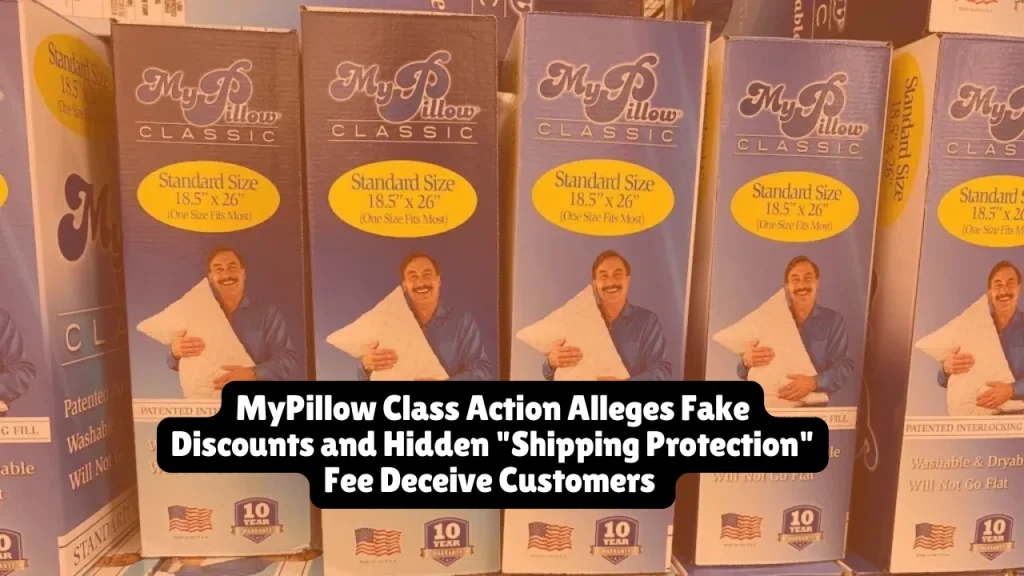
MyPillow faces a new class action lawsuit claiming the company misleads consumers by advertising fake discounts based on inflated prices that products are never actually sold at, while also charging a mandatory “shipping protection” fee at checkout that’s not disclosed upfront. Filed January 6, 2026, in California federal court, the lawsuit alleges these pricing tactics violate state consumer protection laws—and this isn’t MyPillow’s first battle over deceptive discount advertising.
What the MyPillow Class Action Alleges
California consumer Elizabeth Wood filed a class action complaint against MyPillow Inc. on January 6, 2026, in the U.S. District Court for the Northern District of California (Case No. 3:26-cv-00110). The lawsuit alleges MyPillow deceives customers through two distinct pricing schemes: displaying misleading “sale” prices based on fictitious regular prices, and adding hidden fees during checkout.
According to the complaint, MyPillow displays products on its website at inflated “regular” or “original” prices that the company never actually charges, then shows substantial “discounts” to create the illusion of a bargain. Wood claims MyPillow’s purported sales are anything but genuine—the products are never sold at the full price represented, making the discount deceptive and misleading.
The lawsuit also alleges MyPillow makes promotional codes trivially available to all consumers through its website configuration, rendering the “promotional code” pricing deals illusory. These tactics allegedly induce consumers into making purchases they otherwise wouldn’t have made, believing they’re receiving special savings.
Understanding Fake Discounts and Drip Pricing
Fake discounts occur when companies advertise products at inflated reference prices (the “regular” or “original” price shown crossed out) that don’t reflect actual market value or genuine former selling prices, then display discounted prices to make consumers believe they’re getting exceptional deals. Similar false advertising lawsuits against retailers like Lowe’s and Sleep Number have challenged this practice.
Drip pricing is when a company advertises a low base price but reveals additional mandatory fees only during the checkout process, making the final price much higher than what you expected based on the advertisement. Wood claims MyPillow violates California’s prohibition on drip pricing by charging a mandatory “shipping protection” fee at checkout that’s separate from actual shipping charges and not disclosed in the initial product pricing.
This fee appears only after consumers have already selected products and begun the purchase process—a classic drip pricing tactic that California law specifically prohibits.
Which MyPillow Products and Sales Channels Are Affected
The lawsuit targets products sold through MyPillow.com, the company’s primary online sales channel. While the complaint doesn’t specify individual product names, MyPillow sells pillows, mattress toppers, mattresses, bedding, towels, and related sleep products—all marketed through the same pricing structure that allegedly employs fake discounts.
The class action seeks to represent anyone who purchased MyPillow products in California during the applicable statute of limitations period, which typically extends back four years from the filing date.
Related article: Gulshan Management Services Data Breach Lawsuit, 377K Consumers’ SSNs Exposed in Phishing Attack
Legal Claims and MyPillow’s Response
Wood brings claims under California’s Consumers Legal Remedies Act, Unfair Competition Law, and False Advertising Law. She also alleges fraud and unjust enrichment. These statutes prohibit deceptive business practices and require honest pricing representations.
California’s Unfair Competition Law specifically prohibits drip pricing practices where mandatory fees are hidden until checkout. The False Advertising Law makes it illegal to advertise products at inflated reference prices that misrepresent genuine savings.
MyPillow has not yet issued a public response to this January 2026 lawsuit. However, the company has faced similar allegations before and has previously agreed to class action settlements to resolve claims around fake discounts and deceptive advertising.
Current Status and Class Membership
The lawsuit was filed on January 6, 2026, and remains in its earliest stages. No class certification hearing has been scheduled yet. If the court certifies the class, all California consumers who purchased MyPillow products from MyPillow.com during the applicable period would automatically become class members unless they choose to opt out.
There is currently no settlement or claim process available. Consumers do not need to take any action at this time to preserve their rights as potential class members.
What You Must Know About Discount Advertising Laws
The Federal Trade Commission provides guidance on reference pricing under 16 CFR Part 233, which requires that former price comparisons must be genuine. If a seller advertises a product as reduced from a “regular” price, that price must have been the actual selling price for a reasonably substantial period recently preceding the advertisement.
California law goes further by prohibiting perpetual sales where products are constantly advertised at “discount” prices, making the sale price the true regular price. The Better Business Bureau’s Code of Advertising similarly requires that sales offers must be for a limited time, or the deal becomes the normal price.
MyPillow has significant history with discount advertising litigation. In 2017, the company settled a nationwide class action (Amiri v. MyPillow) that challenged similar BOGO promotions and discount claims. That settlement provided payments to consumers who purchased MyPillow products between 2012 and 2017, with direct purchasers receiving $6 per pillow purchased.
The current 2026 lawsuit suggests MyPillow may have continued similar pricing practices despite previous legal challenges. This raises questions about whether the company adequately changed its advertising after the 2017 settlement.
What MyPillow Customers Should Do
If you purchased MyPillow products from MyPillow.com and believe you paid more than you should have because of fake discounts, save your order confirmations, receipts, and credit card statements. Document the advertised price you saw, the “regular” price shown crossed out, any promotional codes used, and the final checkout price including the shipping protection fee.
Take screenshots of current MyPillow.com pricing if you’re considering a purchase—capture the product page showing the crossed-out “regular” price and the sale price, then capture the checkout page showing any additional fees that weren’t disclosed earlier.
Monitor the lawsuit through the court docket system (PACER) using Case No. 3:26-cv-00110 in the Northern District of California. Class action notices are typically published if the court certifies a class or approves a settlement. Watch for updates on legal news websites that cover Celsius Drink consumer protection laws for deceptive pricing.
You can also report deceptive pricing practices to the Federal Trade Commission at ReportFraud.ftc.gov or to the California Attorney General’s consumer protection division. These agencies track complaints and may investigate companies with patterns of deceptive pricing.
If you suffered significant financial harm from multiple MyPillow purchases or want to explore individual claims separate from the class action, consider consulting a consumer protection attorney who specializes in Red Bull false advertising lawsuits.
Last Updated: January 17, 2026
Disclaimer: This article provides general information only and does not constitute legal advice. Consult a qualified attorney for advice about your specific situation.
Call to Action: If you purchased MyPillow products and believe you were deceived by fake discounts or hidden checkout fees, save your receipts and monitor this lawsuit for class action developments. For significant financial harm, consider consulting a consumer protection attorney.
Stay informed, stay protected. — AllAboutLawyer.com
About the Author

Sarah Klein, JD, is a licensed attorney and legal content strategist with over 12 years of experience across civil, criminal, family, and regulatory law. At All About Lawyer, she covers a wide range of legal topics — from high-profile lawsuits and courtroom stories to state traffic laws and everyday legal questions — all with a focus on accuracy, clarity, and public understanding.
Her writing blends real legal insight with plain-English explanations, helping readers stay informed and legally aware.
Read more about Sarah
I just ordered a couple of “MyPillows” last week.
There was, in fact, some type of shipping insurance/”package protection”, added in the cart–it had a check box, and came up with it ‘checked’, presumably by default. I noticed it and ‘un-checked’ it. I’ve seen similar on many online vendor sites.
I didn’t try ordering without a discount code, but the items I selected were posted into the cart at their full retail price. I naturally applied a discount code, and the pricing came down. Would the site have allowed me to order, at the full retail price? Dunno, I didn’t try. 😛 Guess being able to pay “full market price”, would be a pretty good defense against this particular suit.
Lindell has been, one might say, “politically active”. Perhaps not a savvy business move, but one might also wonder if at least some of these lawsuits are politically motivated.